Horribly Repressive: The Truth About Donald Trump’s Guantánamo

Please support my work as a reader-funded journalist! I’m currently trying to raise $2500 (£2000) to support my writing and campaigning on Guantánamo and related issues over the next three months of the Trump administration. If you can help, please click on the button below to donate via PayPal.
In a recent article about Guantánamo — a rarity in the US mainstream media — ABC News picked up on a sad story of medical neglect and culturally inappropriate behavior by medical personnel at the prison, as conveyed to the broadcaster by Shelby Sullivan-Bennis, an attorney who represents some of the 40 men still held.
In “‘Degrading’: Aging detainees describe health care woes at Guantánamo 18 years after 9/11,” ABC News’ Guy Davies described how a “breakdown in trust between detainees and doctors” had “reached breaking point” at the prison.
The ailments of Saifullah Paracha, Guantánamo’s oldest prisoner
Davies’ article began by looking at the case of 72-year old Saifullah Paracha, Guantánamo’s oldest prisoner, who suffers from “debilitating chest pains,” an “overactive bladder and enlarged prostate,” as well as “diabetes, coronary artery disease, diverticulosis, gout, psoriasis and arthritis,” as Sullivan-Bennis told ABC News, adding that he “has also suffered two heart attacks, one of which occurred when he was held in Bagram, in Afghanistan, before his transfer to Guantánamo” in September 2004.
A Rare Court Victory Offers Hope for Guantánamo’s “Forever Prisoners”

Please support my work as a reader-funded journalist! I’m currently trying to raise $2500 (£2000) to support my writing and campaigning on Guantánamo and related issues over the next three months of the Trump administration. If you can help, please click on the button below to donate via PayPal.
I wrote the following article for the “Close Guantánamo” website, which I established in January 2012, on the 10th anniversary of the opening of Guantánamo, with the US attorney Tom Wilner. Please join us — just an email address is required to be counted amongst those opposed to the ongoing existence of Guantánamo, and to receive updates of our activities by email.
Anyone who has been following the alleged legal basis for the ongoing imprisonment without charge or trial of prisoners at Guantánamo should be encouraged by a ruling on June 21, 2019 by a three-judge panel — consisting of Judges Patricia A. Millett, Cornelia T. L. Pillard, and Harry T. Edwards — in the D.C. Circuit Court (the Court of Appeals for the District of Columbia) in Qassim v. Trump, a case involving Khalid Qassim, a 41-year old Yemeni citizen who has been held at Guantánamo without charge or trial for over 17 years.
Close Guantánamo’s co-founder Tom Wilner argued the case before the court, and, as he explains, the court “reversed an eight-year rule that has prevented Guantánamo detainees from seeing and rebutting the evidence purportedly justifying their detentions,” as part of a ruling in which the judges granted Qassim’s request to reverse the District Court’s denial of his petition for habeas corpus.
To give some necessary perspective to the significance of the ruling, it is important to understand that, for most of Guantánamo’s history, the law has failed to offer them adequate protections against executive overreach. In a glaring demonstration of arrogant folly after the terrorist attacks of September 11, 2001, the Bush administration decided that anyone who ended up in US custody would be treated neither as a criminal (to be charged and put on trial), nor as a prisoner of war protected by the Geneva Conventions, who could be held unmolested until the end of hostilities. Instead, the prisoners were designated as “unlawful enemy combatants”; essentially, human beings without any rights whatsoever.
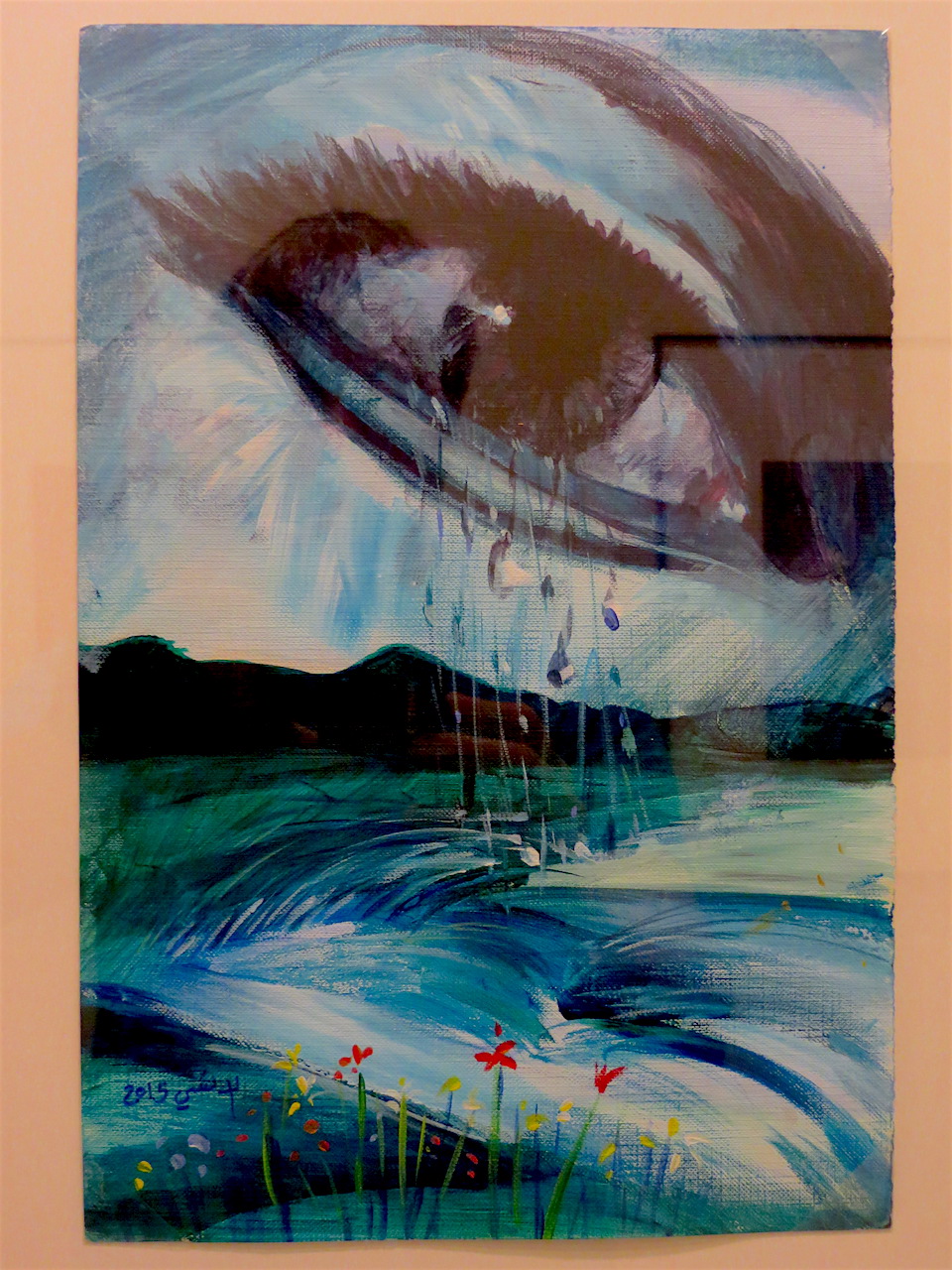
Ex-Guantánamo Prisoner Discusses Prison Artwork with the BBC, While Lawyers for “High-Value Detainee” Demand His Right to Continue Making Art
 Please support my work as a reader-funded journalist! I’m currently trying to raise $2500 (£2000) to support my writing and campaigning on Guantánamo and related issues over the next three months of the Trump administration.
I wrote the following article for the “Close Guantánamo” website, which I established in January 2012, on the 10th anniversary of the opening of Guantánamo, with the US attorney Tom Wilner. Please join us — just an email address is required to be counted amongst those opposed to the ongoing existence of Guantánamo, and to receive updates of our activities by email.
Last October, an exhibition opened in the President’s Gallery, in John Jay College of Criminal Justice in New York, that might have attracted little attention had the Pentagon not decided to make a big song and dance about it.
The exhibition, ‘Ode to the Sea: Art from Guantánamo Bay,’ featured artwork by eight former and current Guantánamo prisoners — four freed, and four still held — which was given by the prisoners to their lawyers and their families, and it was not until November that the Pentagon got upset, apparently because the promotional material for the exhibition provided an email address for anyone “interested in purchasing art from these artists.” The obvious conclusion should have been that “these artists” meant the released prisoners, who should be free to do what they want with their own artwork, but the Pentagon didn’t see it that way.
On November 15, as I explained in my first article about the controversy, a spokesman, Air Force Maj. Ben Sakrisson, said that “all Guantánamo detainee art is ‘property of the US government’ and ‘questions remain on where the money for the sales was going,’” while, at the prison itself, Navy Cmdr. Anne Leanos said in a statement that “transfers of detainee made artwork have been suspended pending a policy review.” Read the rest of this entry »
Reviewing the Guantánamo Art Show in New York That Dared to Show Prisoners As Human Beings, and Led to a Pentagon Clampdown
 Please support my work as a reader-funded journalist! I’m currently trying to raise $2500 (£2000) to support my writing and campaigning on Guantánamo and related issues over the next three months of the Trump administration.
I wrote the following article for the “Close Guantánamo” website, which I established in January 2012, on the 10th anniversary of the opening of Guantánamo, with the US attorney Tom Wilner. Please join us — just an email address is required to be counted amongst those opposed to the ongoing existence of Guantánamo, and to receive updates of our activities by email.
Back in November, a disturbing story emerged from Guantánamo — of how a ten-year policy of allowing prisoners to give away art they have made at the prison to their lawyers and, via them, to family members had been stopped by the authorities, in response to an exhibition of prisoners’ artwork at the John Jay College of Criminal Justice, part of the City University of New York, which is known for its criminal justice, forensic science, forensic psychology, and public affairs programs.
The Pentagon had taken exception to an email address provided for people who were “interested in purchasing art” from the artists featured in the show. A Pentagon spokesman, Air Force Maj. Ben Sakrisson, said on November 15 that “all Guantánamo detainee art is ‘property of the US government’ and ‘questions remain on where the money for the sales was going.’”
One problem with this position was that some of the art was by prisoners who are no longer at the prison, which surely raises questions about the extent of the Pentagon’s claimed “ownership” of their work, but the Department of Defense wasn’t interested in having that pointed out. Instead, a spokeswoman at the prison, Navy Cmdr. Anne Leanos, said in a statement that “transfers of detainee made artwork have been suspended pending a policy review,” and Ramzi Kassem, a professor at City University of New York School of Law whose legal clinic represents Guantánamo prisoners, said that one particular prisoner had been told that, if any prisoner were to be allowed to leave Guantánamo (which, crucially, has not happened under Donald Trump), “their art would not even be allowed out with them and would be incinerated instead.” Read the rest of this entry »
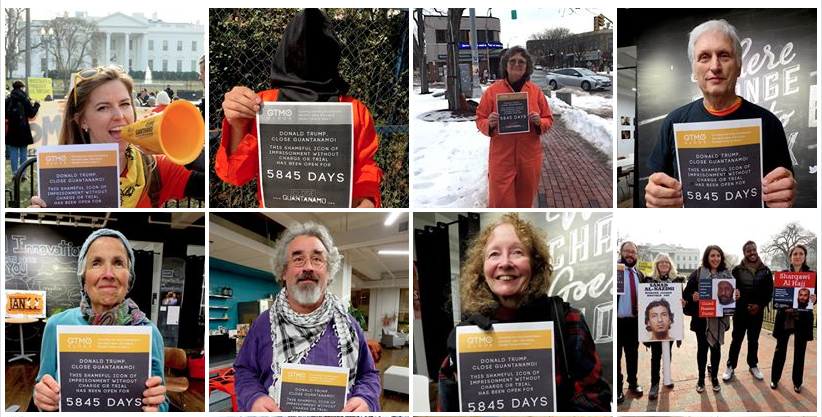
Telling Donald Trump to Close Guantánamo: My Report on an Inspiring 24 Hours of Protest and Resistance in Washington, D.C. on the 16th Anniversary of the Prison’s Opening
 Please support my work as a reader-funded journalist! I’m currently trying to raise $2500 (£2000) to support my writing and campaigning on Guantánamo and related issues over the next three months of the Trump administration, including my current visit to the US.
Thursday, Jan. 11 was the 16th anniversary of the opening of Guantánamo, and to mark the occasion, via the Close Guantánamo campaign I co-founded with the attorney Tom Wilner in 2012, we launched a new initiative: the Gitmo Clock, which counts how long Guantánamo has been open — 5,845 days on the anniversary. We’re encouraging people, throughout the year, to print the clock, take a photo with it, and send it to us, to put up on the website and to share via social media.
I arrived in New York from London on January 8, on my eighth annual visit in January to call for the closure of Guantánamo on and around the anniversary of its opening, and on Wednesday, January 10, I took the bus to Washington, D.C., to attend an event that evening, and to take part in a protest and a panel discussion the day after.
All were wonderful, inspiring occasions, providing an uplifting antidote to the anxiety and misery of life under Donald Trump as the repulsive, dysfunctional head of a disturbingly heartless Republican government. Read the rest of this entry »
Guantánamo Hunger Striker Khalid Qassim Says, “We Are Like Lab Rats,” Says Doctor Told Him, “If You Lose Organs, It Is Your Choice”
 Please support my work as a reader-funded journalist! I’m currently trying to raise $2500 (£2000) to support my writing and campaigning on Guantánamo and related issues over the next three months of the Trump administration.
Last Thursday, as I travelled across London to show solidarity with the victims of a recent injustice in the UK — the Grenfell Tower fire in June, in which 71 people died needlessly because safety standards had been so gravely eroded by those responsible for residents’ safety — the victim of another injustice, not adequately dealt with for 16 years, had an article published in the Guardian.
That victim of injustice is Khalid Qassim (aka Qasim), a Yemeni prisoner at Guantánamo, held for almost 16 years without charge or trial. That would be unacceptable if he were a prisoner of war, as it is longer than the absurdly long Vietnam War, and it is insulting to claim that any war can last forever. However, Qassim and all the men held at Guantánamo since January 2002 have never been held as prisoners of war under the Geneva Conventions, who can be held unmolested until the end of hostilities.
Instead, they are, essentially, the same prisoners without any rights whatsoever that the Bush administration first defined them as back in January 2002. Just ten of the 41 men still held are facing or have faced trials (in the military commission trial system that, in any case, is not fit for purpose), while the rest are still largely invisible, never tried, never charged, and unable to be freed except at the whim of the president. Read the rest of this entry »
Persistent Dehumanization at Guantánamo: US Claims It Owns Prisoners’ Art, Just As It Claims to Own Their Memories of Torture
 Please support my work as a reader-funded journalist! I’m currently trying to raise $2500 (£2000) to support my writing and campaigning on Guantánamo and related issues over the next three months of the Trump administration.
I wrote the following article (as “The Persistent Abuse of Guantánamo Prisoners: Pentagon Claims It Owns Their Art and May Destroy It, But U.S. Has Long Claimed It Even Owns Their Memories of Torture“) for the “Close Guantánamo” website, which I established in January 2012, on the 10th anniversary of the opening of Guantánamo, with the US attorney Tom Wilner. Please join us — just an email address is required to be counted amongst those opposed to the ongoing existence of Guantánamo, and to receive updates of our activities by email.
After years of letting Guantánamo prisoners keep the artwork they have made at the prison, subject to security screening, the Pentagon has suddenly secured widespread condemnation for banning its release, and, it is alleged by one of prisoners’ attorneys, for planning to burn it.
The story was first reported on November 16 by Carol Rosenberg of the Miami Herald, and updated on November 20. Rosenberg explained how, for years, prisoners’ art had been released “after inspection by prison workers schooled in studying material for secret messages under the rubric of Operational Security.”
However, as Rosenberg explained, “Ode to the Sea: Art from Guantánamo Bay,” an exhibition in the President’s Gallery of New York’s John Jay College of Criminal Justice until January 16, 2018, which features “paintings and other works by current and former captives” — and “which garnered international press coverage” — “apparently caught the attention of the Department of Defense,” because of an email address provided for people “interested in purchasing art from these artists.” Read the rest of this entry »
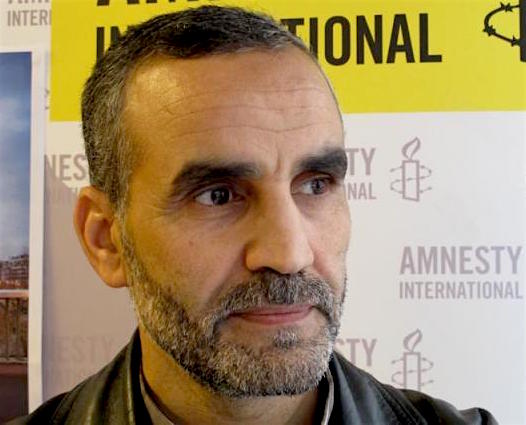
Former Guantánamo Prisoner Lakhdar Boumediene Condemns “Cruel, Sadistic” New Policy of Allowing Hunger Strikers to Starve
 Please support my work as a reader-funded journalist! I’m currently trying to raise $2500 (£2000) to support my writing and campaigning on Guantánamo and related issues over the next three months of the Trump administration.
It’s nearly a month since Guantánamo thrust its way back into the public consciousness with news from the human rights organization Reprieve that, under a new chief medical officer at Guantánamo, the rules for treating long-term hunger strikers had changed. Where, previously, those going without food were force-fed when they lost a fifth of their body weight, two hunger strikers — Ahmed Rabbani and Khalid Qassim, clients of Reprieve — indicated that, since the new appointment, on September 20, they were no longer being force-fed, and were not even being monitored.
Following further phone discussions with their clients, Reprieve suggested that what was happening was that prisoners were being left to suffer whatever damage might ensue from prolonged starving, but the medical authorities were still intending to force-feed them if it looked like they might die.
Force-feeding is a horrible process, of course, akin to torture, but although medical experts insist that mentally competent prisoners must be allowed to starve themselves to death, if they wish, that does not strike me as relevant at Guantánamo, where the men on hunger strike have never been tried or convicted of any crime, and allowing them to die would actually endorse the very reason they are hunger striking in the first place — because they are being held without charge or trial, with no end in sight to their preposterously long ordeal, and they have no other way of protesting about the injustice of their predicament. Read the rest of this entry »
Celebrities Fasting With the Hunger Striking Guantánamo Prisoners That Donald Trump Is Allowing to Die
 Please support my work as a reader-funded journalist! I’m currently trying to raise $2500 (£2000) to support my writing and campaigning on Guantánamo and related issues over the next three months of the Trump administration.
I wrote the following article for the “Close Guantánamo” website, which I established in January 2012, on the 10th anniversary of the opening of Guantánamo, with the US attorney Tom Wilner. Please join us — just an email address is required to be counted amongst those opposed to the ongoing existence of Guantánamo, and to receive updates of our activities by email.
It’s two weeks since the international human rights organization Reprieve let the world know that, under Donald Trump, the military at Guantánamo has come up with a disturbing new way of dealing with hunger strikers — allowing them to die. Previously, long-term hunger strikers who lost one-fifth of their body weight but refused to stop hunger striking were force-fed — a barbaric process that experts view as tantamount to torture, and a view that I endorse. However, although experts also state that competent hunger strikers must be allowed to die if they wish, that has always struck me as an unacceptable option for prisoners who have never been convicted of a crime. The third option, which should be implemented, is for the US government to do what the hunger strikers want — which is to be charged or released.
I broke the news of this disturbing policy change on my website on October 7, and followed up with an analysis of the New York Times’ coverage four days after. Since then there have been op-eds by the two prisoners represented by Reprieve, Ahmed Rabbani (in Newsweek) and Khalid Qassim (in the Guardian), and to accompany the coverage — finally shining a light back on Guantánamo after, for the most part, silence on the topic since Donald Trump took office — Reprieve launched a petition to Donald Trump, asking for him to allow independent medical experts to assess the health of the hunger strikers, and to close Guantánamo for good, which currently has nearly 22,000 signatures, and also encouraged supporters to fast in solidarity with the hunger strikers.
Reprieve’s founder, Clive Stafford Smith, led the way with the fasting (for five days straight), and was soon joined by others. Over a thousand days have been pledged so far, with some well-known people joining in, like music legend Roger Waters, formerly of Pink Floyd, who wrote on Facebook: Read the rest of this entry »
Ahmed Al-Darbi, Admitted Terrorist at Guantánamo, Receives 13-Year Sentence Following 2014 Plea Deal
 Please support my work as a reader-funded journalist! I’m currently trying to raise $2500 (£2000) to support my writing and campaigning on Guantánamo and related issues over the next three months of the Trump administration.
Last Friday, the US authorities secured a rare success at Guantánamo, when a panel of US military officers gave a 13-year sentence to Ahmed al-Darbi, a Saudi prisoner, for what the New York Times described as “his admitted role in a 2002 attack by Al Qaeda on a French oil tanker off the Yemeni coast.”
Al-Darbi had pleaded guilty in his military commission trial in February 2014, but his sentencing had not taken place until now because it was dependent upon him providing testimony for the trials of other prisoners, testimony that he undertook this summer, providing videotaped testimony against Abd al-Rahim al-Nashiri, who is on trial for his alleged involvement in the bombing off the USS Cole in 2000, and a deposition in the case of Abd al-Hadi al-Iraqi, another prisoner facing a trial by military commission.
Under the terms of the plea deal, as Charlie Savage described it in the New York Times, “the commission could have imposed a sentence of 13 to 15 years.” However, the prosecutors joined with al-Darbi’s defense team to ask for “the minimum available term in light of his extensive assistance to the government.” As Savage put it, al-Darbi “has renounced Islamist ideology and lived apart from the general detainee population for years.” Read the rest of this entry »











 Who's still at Guantánamo?
