“When Will My Organs Fail? When Will My Heart Stop?”: Guantánamo Hunger Striker Khalid Qassim Fears Death Under Trump’s New Policy
 Please support my work as a reader-funded journalist! I’m currently trying to raise $2500 (£2000) to support my writing and campaigning on Guantánamo and related issues over the next three months of the Trump administration.
It’s eleven days since prisoners at Guantánamo, represented by the human rights organization Reprieve, reminded a forgetful world of the never-ending injustice of the prison. Ahmed Rabbani, a Pakistani prisoner, and Khalid Qassim (aka Qasim), a Yemeni, both long-term hunger strikers, told their lawyers that, since September 20, “a new Senior Medical Officer (SMO) stopped tube-feeding the strikers, and ended the standard practice of closely monitoring their declining health.”
I wrote about the plight of the hunger strikers — and Donald Trump’s disturbing new policy — in an article last Saturday, but at the time the rest of the world’s mainstream media showed no interest in it. It took another four days for the New York Times to report on the story, and even then Charlie Savage accepted assurances from the US authorities that “an 11-year-old military policy permitting the involuntary feeding of hunger-striking detainees remained in effect,” an assertion that I regard as untrustworthy, because the US military has a long track record of being untrustworthy when it comes to telling the truth about Guantánamo.
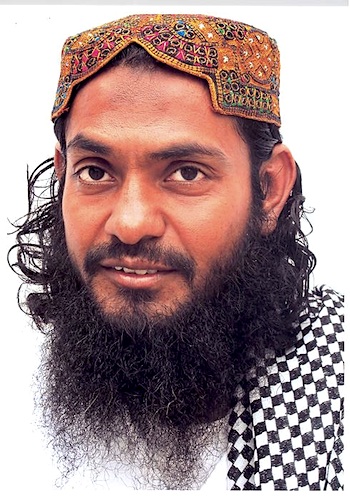
Last Thursday, Reprieve followed up on its initial reporting by securing an op-ed in Newsweek by Ahmed Rabbani, entitled, “Dear President Trump, Close Guantánamo Bay and Give Us a Fair Trial”, which I reported here, and on Friday the Guardian gave Khalid Qassim the opportunity to comment. His article, “I am in Guantánamo Bay. The US government is starving me to death,” is cross-posted below, and I hope you have time to read it, and will share it if you find it useful. Read the rest of this entry »
Guantánamo Hunger Striker Ahmed Rabbani, Left to Die by Trump, Calls for “Basic Justice – a Fair Trial or Freedom”
 Please support my work as a reader-funded journalist! I’m currently trying to raise $2500 (£2000) to support my writing and campaigning on Guantánamo and related issues over the next three months of the Trump administration.
It’s now nine days since the international human rights organization Reprieve issued a shocking press release, explaining that two clients at Guantánamo, the Pakistani Ahmed Rabbani, and Khalid Qassim (aka Qasim), a Yemeni, both hunger striking to protest about the injustice of their seemingly endless imprisonment without charge or trial, had told them that, since September 20, following new instructions from Donald Trump, “a new Senior Medical Officer (SMO) stopped tube-feeding the strikers, and ended the standard practice of closely monitoring their declining health.”
I immediately wrote an article about the news, and was, frankly, astonished that it took another four days for the mainstream media to respond — and when that happened, it was just the New York Times paying attention, and, to my mind, giving too much credibility to the authorities, via a spokesman who claimed that the military’s “11-year-old military policy permitting the involuntary feeding of hunger-striking detainees remained in effect.” Given the lies we have heard from the military at Guantánamo over the years, I asked, in an analysis of the New York Times article, why we should trust them.
Expanding on the story further, Reprieve, on Thursday, secured coverage in Newsweek — a description of the current situation, made in a phone call to Clive Stafford Smith, the founder of Reprieve, by Ahmed Rabbani, who has been at Guantánamo, without charge or trial, for just over 12 years, and who, before that, was held and tortured for 545 days in CIA “black sites” including the disgusting “black site” in Afghanistan, codenamed COBALT, which was known to the prisoners as the “dark prison.” Read the rest of this entry »
New York Times Finally Reports on Trump’s Policy of Letting Guantánamo Hunger Strikers Die; Rest of Mainstream Media Still Silent
 Please support my work as a reader-funded journalist! I’m currently trying to raise $2500 (£2000) to support my writing and campaigning on Guantánamo and related issues over the next three months of the Trump administration.
So today, five days after the lawyer-led human rights organization Reprieve issued a press release, about how two of their clients had told them that, since September 20, prisoners on a long-term hunger strike were no longer being force-fed, and four days after I reported it (exclusively, as it turned out), the New York Times emerged as the first — and so far only — mainstream media outlet to cover the story, although even so its headline was easy to ignore: “Military Is Waiting Longer Before Force-Feeding Hunger Strikers, Detainees Say.”
As Charlie Savage described it, military officials at Guantánamo “recently hardened their approach to hunger-striking prisoners,” according to accounts given by prisoners to their lawyers, “and are allowing protesters to physically deteriorate beyond a point that previously prompted medical intervention to force-feed them.”
“For years,” Savage continued, “the military has forcibly fed chronic protesters when their weight dropped too much. Detainees who refuse to drink a nutritional supplement have been strapped into a restraint chair and had the supplement poured through their noses and into their stomachs via nasogastric tubes.” Read the rest of this entry »
Trump’s Disturbing New Guantánamo Policy: Allowing Hunger Strikers to Starve to Death
 Please support my work as a reader-funded journalist! I’m currently trying to raise $2500 (£2000) to support my writing and campaigning on Guantánamo and related issues over the next three months of the Trump administration.
Disturbing news from Guantánamo, via the human rights organization Reprieve. Yesterday, in a press release, Reprieve explained that the authorities at Guantánamo have stopped force-feeding hunger-striking prisoners, a practice that has existed for ten years, because of a new Trump administration policy.”
Hunger strikers have existed at Guantánamo almost since the prison opened, and in 2013 a prison-wide hunger strike drew worldwide condemnation for President Obama’s inaction in moving towards closing the prison, as he had promised on his second day in office. Inconvenienced by Republican lawmakers, who had raised considerable obstacles to the release of prisoners, Obama had chosen not to challenge the Republicans, and had, instead, done nothing. The hunger strike changed all that, but towards the end of 2013, after the release of prisoners resumed, the authorities at Guantánamo stopped reporting the numbers of men who were on a hunger strike.
According to Reprieve, since that time, some prisoners have continued with their hunger strikes, “peacefully protesting a lack of charges or a trial,” although very little has been heard about them, with just one example reported in recent years — that of Sharqawi al-Hajj, a Yemeni held without charge or trial at Guantánamo since September 2004, whose case I reported on last month, when he weighed just 104 pounds, and when, after he refused to submit to being force-fed, he “lost consciousness and required emergency hospitalization.” Read the rest of this entry »












 Who's still at Guantánamo?
