Archive for July, 2026
Hamas Agrees to Disarm, But Only If Israel Leaves Gaza
Please click on either of the ‘Donate’ or ‘Buy’ buttons below (via PayPal or Stripe) to make a donation towards the $2,500 (£2,000) I’m trying to raise to support my work as a reader-funded investigative journalist, commentator and activist over the next three months. To get links to all my work in your inbox, please also consider taking out a free or paid subscription to my new Substack newsletter.
UPDATE: On August 5, I spoke to Chris Cook for his Gorilla Radio show in Canada, about this article, and about the ongoing persecution of Palestine Action activists and their supporters in the UK. Listen to the whole show on Substack here. I’m in the second half-hour; Yves Engler in the first.
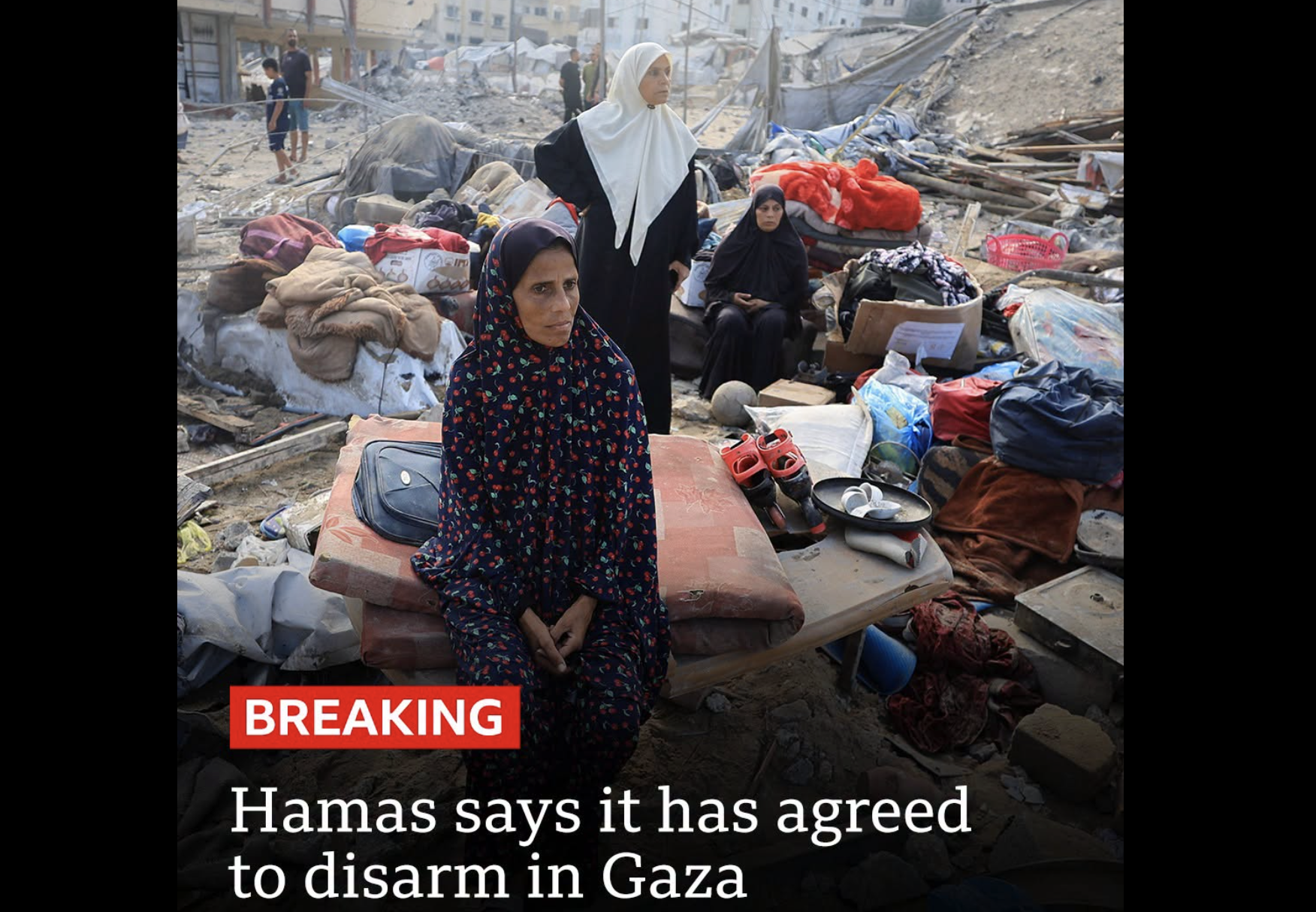
The world’s media has briefly remembered the beleaguered Gaza Strip today, after Donald Trump claimed, in a post on his inaptly-named Truth Social account, that the Board of Peace — the body set up under his administration last October to supervise the future of Gaza — has “reached a HISTORIC agreement for the COMPLETE DISARMAMENT of Hamas and all the other armed groups in Gaza”, which he described as “a monumental step towards lasting PEACE and SECURITY”, and “a critical step towards Gaza finally being governed by a new Palestinian government that will work closely with the Board of Peace to help the Palestinian people.”
“At the same time”, he added, “Israel will have the security it deserves, with Gaza no longer used as a base for terror attacks.”
To briefly summarize the situation to date, last October, after two years of genocide, in which at least 70,000 Palestinians (mostly civilians) had been killed, a ceasefire was negotiated whereby Hamas and the other armed factions in Gaza agreed to hand over the remaining Israeli hostages seized on October 7, 2023, in exchange for an end to Israeli hostilities, the withdrawal of their forces to a “Yellow Line”, behind which they retained military control of around 53% of Gaza, and the provision of adequate humanitarian aid for the surviving population, set at 600 trucks a day.
While Hamas faithfully adhered to its obligations, Israel did not. In at least 3,500 violations of the ceasefire agreement, it has killed around 1,300 Palestinians, has expanded its control of Gaza to around 70%, and has failed to allow in anything even vaguely resembling the agreed amount of humanitarian aid.
Israel’s Ghoulish Settlers Eye Up Gaza, As Netanyahu Kills Trump’s Board of Peace
Please click on either of the ‘Donate’ or ‘Buy’ buttons below (via PayPal or Stripe) to make a donation towards the $2,500 (£2,000) I’m trying to raise to support my work as a reader-funded investigative journalist, commentator and activist over the next three months. To get links to all my work in your inbox, please also consider taking out a free or paid subscription to my new Substack newsletter.
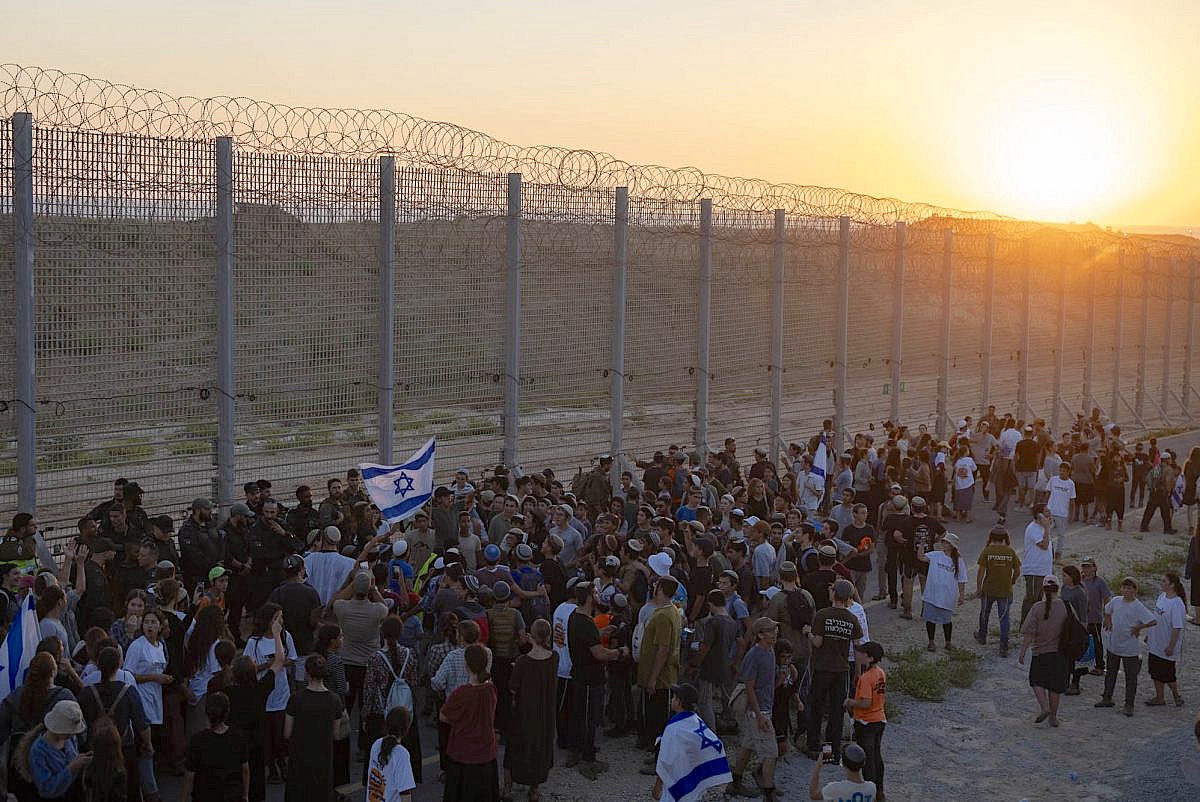
On Sunday evening (July 19), a group of some of the most repulsive, ghoulish people on the face of the earth marched towards the perimeter fence separating the Gaza Strip from the rest of the world to declare their intention to re-colonize Gaza, to re-establish three Israeli settlements that were dismantled in 2005 when, under Ariel Sharon, 21 settlements in total were abandoned, occupied, at the time, by 8,000 Israeli settlers.
These fanatical Israeli settlers, on what was billed as the “March of Thousands”, although only a few hundred people attended, were led by the two far-right ministers in Benjamin Netanyahu’s coalition government — Itamar Ben Gvir, the Minister for National Security, who is in charge of Israel’s prisons, which, for Palestinians, have become a gulag of torture facilities since October 7, 2023, and Bezalel Smotrich, the Minister of Finance, and also the minister in charge of settlement affairs within the Defense Ministry, who has played a huge role in the ever-growing, and ever more violent expansion of Israel’s illegal settlements in the West Bank.
Speaking at the rally, Ben Gvir said, “If someone had said three years ago that we would control 70% of the Gaza Strip, no one would have believed it. So today I say: there will be Jewish settlement throughout Gaza. We are returning home. Gaza is ours.”
Competing Visions for Gaza’s Future: Endless Bloodshed Or Bloodless, Sterilized Techno-Concentration Camps
Please click on either of the ‘Donate’ or ‘Buy’ buttons below (via PayPal or Stripe) to make a donation towards the $2,500 (£2,000) I’m trying to raise to support my work as a reader-funded investigative journalist, commentator and activist over the next three months. To get links to all my work in your inbox, please also consider taking out a free or paid subscription to my new Substack newsletter.
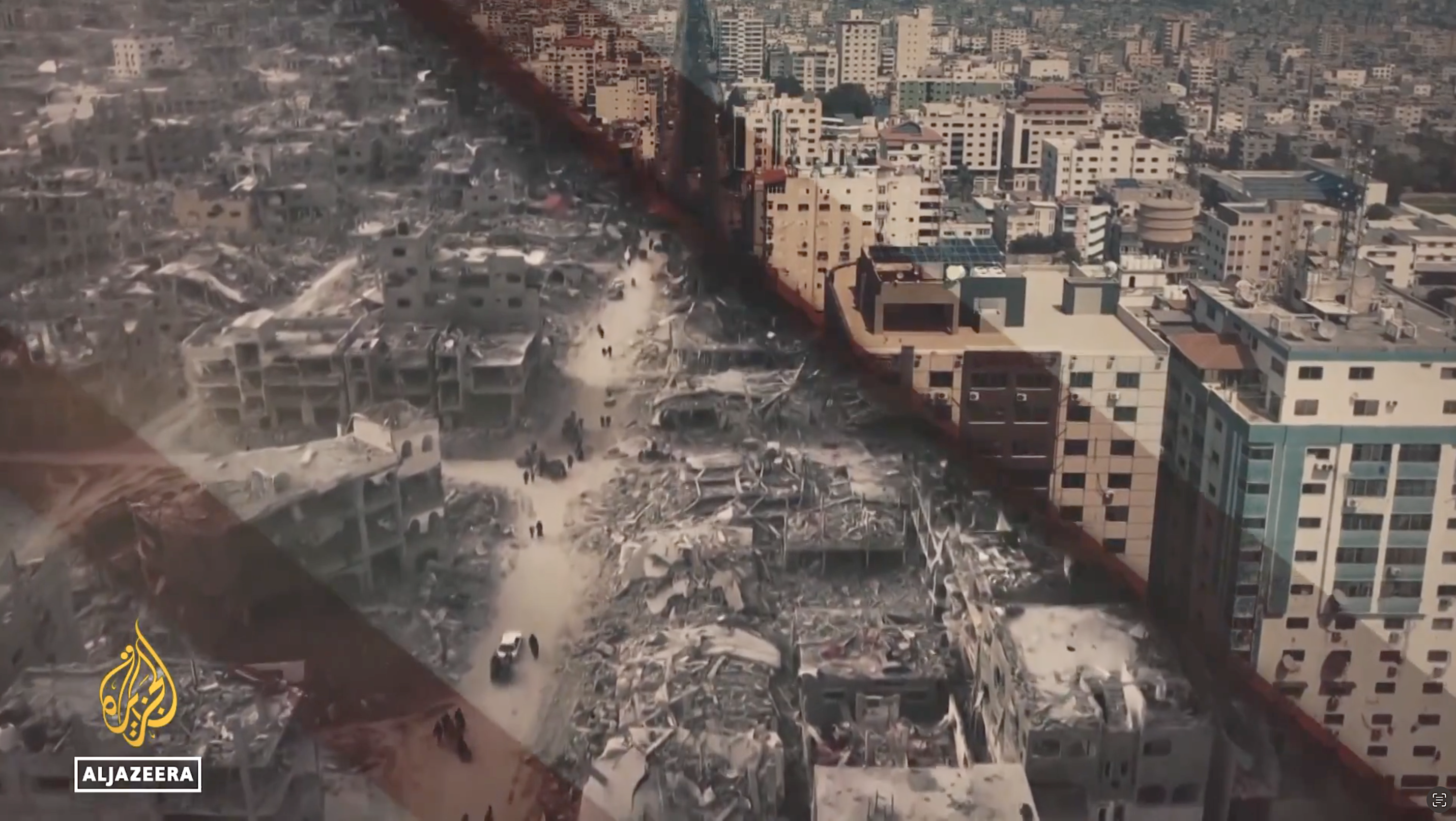
While the attention of the conscious world is, quite correctly, focused right now on Rakefet Prison, an underground detention facility inside Israel’s maximum-security Ramla Prison Complex, where the pediatrician Dr. Hussam Abu Safiya is held without charge or trial, brutalized and in fear of death, it’s important not to forget that, in the Gaza Strip, the surviving Palestinian population is still suffering from an acute and enduring humanitarian crisis.
The crisis is engineered solely by the State of Israel, which has failed to abide by the requirement, in the ceasefire deal agreed last October, to allow 600 trucks of humanitarian aid — containing, at a bare minimum, adequate supplies of food, water, fuel and medical supplies — to enter Gaza every day.
Insight into the humanitarian crisis can be found via regular updates issued by UNRWA (the UN Relief and Works Agency for Palestine Refugees in the Near East), established in 1950, which remains the largest provider of educational and health support to the Palestinians, despite persistent efforts by Israel to destroy it.
Photos and Report: Close Guantánamo Vigils Undermine the US’s 250th Anniversary of Independence from Executive Tyranny

Please click on either of the ‘Donate’ or ‘Buy’ buttons below (via PayPal or Stripe) to make a donation towards the $2,500 (£2,000) I’m trying to raise to support my work on Guantánamo and on other related topics over the next three months. To get links to all my work in your inbox, please also consider taking out a free or paid subscription to my new Substack newsletter.
Last Wednesday, July 1, campaigners across the US and around the world held the 42nd consecutive monthly “First Wednesday” global vigils calling for the closure of the “war on terror” prison at Guantánamo Bay.
Three vigils took place at key locations — outside the White House in Washington, D.C., outside the US Embassy in London, and outside the European Parliament in Brussels — and others took place in Detroit and Los Angeles. The regular New York vigil, on the steps of the central library in Manhattan, was cancelled because of an extreme heat warning, but, in Vienna, former Guantánamo prisoner marked the occasion while speaking at a supplementary meeting of the Organization for Security and Co-operation in Europe (OSCE), and, on Saturday July 4, campaigners in Cobleskill, NY marked the occasion during their weekly vigil for peace and justice, which has been ongoing since the Iraq War.
This month, in particular, all the vigils had special relevance because of their proximity to July 4, the anniversary of US Declaration of Independence, which, this year, was marking its 250th anniversary, under the sickeningly unsuitable leadership of Donald Trump. Please see the photos below, and read on for my assessment of why the continued existence of Guantánamo so fatally undermines efforts to celebrate the 250th anniversary as marking a beacon of freedom from the executive tyranny of the British government under King George III.
Gaza As a Death Camp, After 1,000 Days of Genocide
Please click on either of the ‘Donate’ or ‘Buy’ buttons below (via PayPal or Stripe) to make a donation towards the $2,500 (£2,000) I’m trying to raise to support my work as a reader-funded investigative journalist, commentator and activist over the next three months. To get links to all my work in your inbox, please also consider taking out a free or paid subscription to my new Substack newsletter.
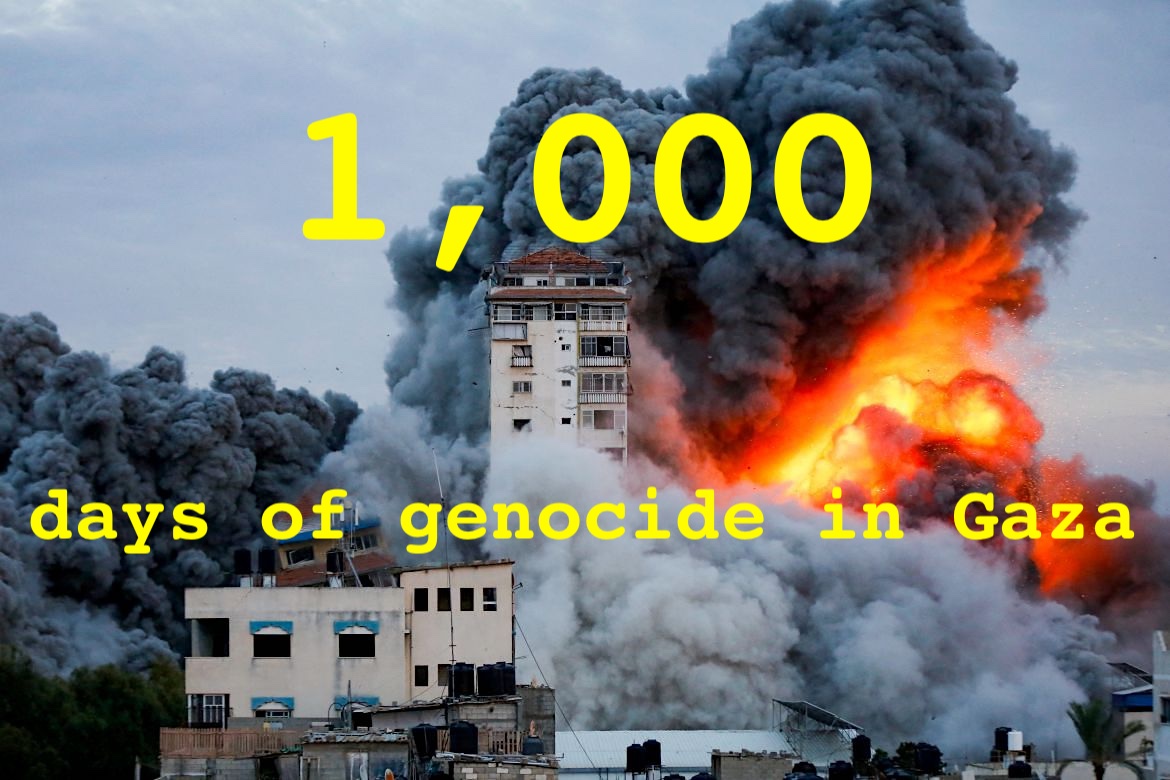
Today marks 1,000 days of Israel’s genocide in the Gaza Strip, in which, at the most conservative estimate, almost a quarter of a million people have been killed or wounded. On June 29, Gaza’s shattered Health Ministry reported that the death toll stood at 73,058, and the numbers of those injured stood at 173,488, many of them gravely so.
These figures are devastating enough, as they constitute a death toll of 73 people every single day over the last 33 months, but they are, without any doubt, a serious undercount. The real death toll is at least double that figure, and maybe more, as I establish in my notes at the end of this article.
In addition, as was revealed last August, an official Israeli military intelligence database, keeping tabs on how many suspected militants had been killed in Gaza, revealed that, according the military’s own figures, only 17% of those killed in Gaza were assessed as having been militants: in other words, 83% were civilians, a figure that, as I discussed in my analysis at the time, could actually be as high as 95%.












 Who's still at Guantánamo?
