US Military Attorney Compares Rationale for “War on Terror” to Nazi Ideology
 Last month, when I visited the US to campaign for the closure of the “war on terror” prison at Guantánamo Bay, I was so busy flying from city to city and from event to event that I did not have time to take in — and in some cases to cross-post — articles of interest that were published at the time.
In the hope of keeping alive some of that spirit of awareness about the ongoing injustice of Guantánamo that flickered briefly to life around the anniversary, I’m planning to cross-post some of these articles, and I’m beginning with an article written for the National Law Journal by the military defense attorney Todd Pierce, someone I regard as both a friend and a colleague. I have met up with Todd on my visits to Washington D.C. in November 2009, in January 2011 and last month, and we have also communicated by email, regarding his involvement in the military commissions at Guantánamo, first under George W. Bush, and now under Barack Obama.
Specifically, Todd was involved in the case of Ali Hamza al-Bahlul, who received a life sentence in November 2008 for producing a video for al-Qaeda, after a one-sided trial in which he refused to mount a defense, and he was one of the lawyers involved in appealing the ruling, arguing that it was an assault on the First Amendment, which, if left unchecked, could lead to all manner of foreigners — including, for example, investigative journalists like me — also being targeted. Read the rest of this entry »
George W. Bush’s Torture Program Began Ten Years Ago
 Last month was the 10th anniversary of the opening of the “war on terror” prison at Guantánamo, and as this year progresses it is appropriate to remember that there will be other grim 10-year anniversaries to note.
Last week, one of those 10-year anniversaries passed almost unnoticed. On February 7, 2002, as Andrew Cohen noted in the Atlantic, in the only article marking the anniversary:
President George W. Bush signed a brief memorandum [PDF] titled “Humane Treatment of Taliban and al-Qaeda Detainees.” The caption was a cruel irony, an Orwellian bit of business, because what the memo authorized and directed was the formal abandonment of America’s commitment to key provisions of the Geneva Convention. This was the day, a milestone on the road to Abu Ghraib, that marked our descent into torture — the day, many would still say, that we lost part of our soul. Read the rest of this entry »
Trial at Guantánamo: What Shall We Do With The Torture Victim?
 At Guantánamo on Wednesday, one of the most notorious torture victims of the Bush administration — Abd al-Rahim al-Nashiri — was arraigned for his trial by Military Commission, charged with masterminding the attack on the USS Cole in 2000, off the coast of Yemen, which killed 17 US sailors and wounded 39 others. Al-Nashiri is also one of three “high-value detainees” who, under the Bush administration, was subjected to waterboarding, an ancient form of torture that involves controlled drowning.
Appearing publicly for the first time in nine years, al-Nashiri, a millionaire and a merchant before his capture, who is now 46 years old, was clean-shaven, and responded politely when asked by the judge, Army Col. James Pohl, whether he understood the proceedings, and whether “he accepted the services of his Pentagon-paid defense team.” As the Miami Herald described it, he replied, “At this moment these lawyers are doing the right job.”
For those who support George W. Bush’s attempts to twist the law out of shape in an attempt to claim that torture was not torture, and then to use it on “high-value detainees” in a series of despicable torture dungeons located in other countries, the trial of al-Nashiri at Guantánamo is something of a triumph, although it is difficult to see how the torture apologists reach this conclusion. Read the rest of this entry »
Ten Years After 9/11, America Deserves Better than Dick Cheney’s Self-Serving Autobiography
 On August 30, when In My Time, former Vice President Dick Cheney’s self-serving autobiography was published, the timing was pernicious. Cheney knows by now that every time he opens his mouth to endorse torture or to defend Guantánamo, the networks welcome him, and newspapers lavish column inches on his opinions, even though astute editors and programmers must realize that, far from being an innocuous elder statesman defending the “war on terror” as a robust response to the 9/11 attacks, Cheney has an ulterior motive: to keep at bay those who are aware that he and other Bush administration officials were responsible for authorizing the use of torture by US forces, and that torture is a crime in the United States.
As a result, Cheney knew that, on the tenth anniversary of the terrorist attacks that launched the “war on terror” that he is still so concerned to defend, his voice would be echoing in the ears of millions of his countrymen and women, helping to disguise a bitter truth: that, following the 9/11 attacks, Cheney was largely responsible for the abomination that is Guantánamo, and for the torture to which prisoners were subjected from Abu Ghraib to Bagram to Guantánamo and the “black sites” that littered the world.
Alarmingly, while Cheney has been largely successful in claiming that the use of torture was helpful, despite a lack of evidence that this was the case, what strikes me as even more alarming is that many Americans are still unaware of the extent to which the torture for which Cheney was such a cheerleader did not keep them safe from terrorist attacks, but actually provided a lie that was used to justify the invasion of Iraq in March 2003. Read the rest of this entry »
Torture Whitewash: Probe of Two CIA Murders Ends Obama Administration’s Investigation of Bush’s Global Torture Program
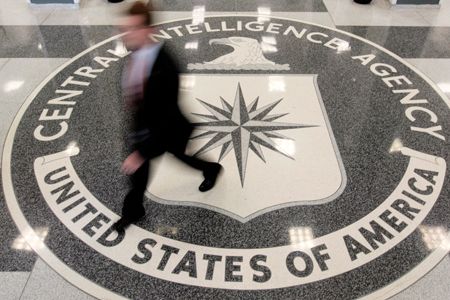 How convenient is it that a door shuts on the Bush administration’s global program of extraordinary rendition and torture, just as America’s military-industrial complex plays musical chairs — with Republican holdover Robert Gates leaving as defense secretary, to be replaced by Leon Panetta, who has spent the last two years as the director of the CIA, while Gen. David Petraeus, the military commander in Afghanistan, takes over Panetta’s role at the CIA?
The answer has to be that it would be hard to conceive of a neater example of how the military and the intelligence agencies — or the CIA, at least — are at the very heart of government.
The door that is shutting is the one that involves accountability for the many prisoners subjected to “extraordinary rendition,” torture, and, in some cases, murder, in the Bush administration’s “high-value detainee” program. This involved the creation of secret torture prisons in Thailand, Poland, Romania and Lithuania, and, for a while, in Guantánamo, as well as others in Afghanistan and Iraq, the rendition of prisoners between these facilities, and also to the dungeons of allies in Jordan, Egypt, Syria and Morocco. Read the rest of this entry »
“High-Value Detainee” Abu Zubaydah Blinded By the Bush Administration
 The story of Abu Zubaydah has fascinated me for many years — since I was writing my book The Guantánamo Files, specifically, and, in my journalism, since I first wrote extensively about him in my April 2008 article, The Insignificance and Insanity of Abu Zubaydah: Ex-Guantánamo Prisoner Confirms FBI’s Doubts. Since then, I have returned to his story repeatedly, in articles including Abu Zubaydah: The Futility Of Torture and A Trail of Broken Lives and Who Authorized The Torture of Abu Zubaydah? (in 2009) and Abu Zubaydah: Tortured for Nothing, The Torture of Abu Zubaydah: The Complaint Filed Against James Mitchell for Ethical Violations, In Abu Zubaydah’s Case, Court Relies on Propaganda and Lies and New Evidence About Prisoners Held in Secret CIA Prisons in Poland and Romania (in 2010), and Algerian in Guantánamo Loses Habeas Petition for Being in a Guest House with Abu Zubaydah and Former CIA “Ghost Prisoner” Abu Zubaydah Recognized as “Victim” in Polish Probe of Secret Prison (this year).
As the supposed “high-value detainee” for whom the CIA’s torture program was specifically developed, and who, after John Yoo and Jay S. Bybee wrote and approved the notorious torture memos of August 1, 2002, was waterboarded 83 times, Zubaydah is pivotal to any assessment of the CIA’s torture program, and what makes his story particularly poignant — while reflecting awfully on the Bush administration’s supposed intelligence — is the fact that it should have been clear from the very beginning to the CIA, and to senior Bush administration officials, up to and including the President, that Zubaydah was not , as touted, the number three in al-Qaeda, but was instead the mentally damaged gatekeeper of a military training camp — Khaldan — that was only tangentially associated with al-Qaeda, and was, in fact, closed down by the Taliban, after its emir, another notorious “ghost prisoner” named Ibn al-Shaykh al-Libi, refused to bring it under the command of Osama bin Laden.
In the wake of WikiLeaks’ recent release of classified military documents relating to the Guantánamo prisoners (the Detainee Assessment Briefs, or DABs), my friend and colleague Jason Leopold had an excellent story out yesterday on Truthout, which, in essence, analysed why, in the photo of Abu Zubaydah available in the documents, he is wearing an eye patch, when, in the few photos available from before his capture, he clearly had both his eyes. Read the rest of this entry »
New York Times Attempts to Stifle Torture Debate It Helped Spark in the Wake of Osama bin Laden’s Death
 On Thursday, the New York Times, having played a major part in creating a buzz in the United States about the role that torture and the existence of Guantánamo played in locating Osama bin Laden, with an article on Tuesday entitled, “Bin Laden Raid Revives Debate on Value of Torture,” resolutely stepped back from the result of suggesting that there were even grounds for a “debate” — given that the use of torture is illegal (as well as morally corrosive and unreliable) — by publishing an excellent editorial decisively condemning the “immoral and illegal behavior” of torture apologists after 9/11, including Berkeley law professor John Yoo, who, as a lawyer in the Justice Department’s Office of Legal Counsel in 2002, “twisted the Constitution and the Geneva Conventions into an unrecognizable mess to excuse torture” in what will forever be known as the “torture memos.”
The Times also recognized torture as “immoral and illegal and counterproductive,” and stated that, although torture may produce some useful information — amongst all the lies that, for example, plague the military assessments of Guantánamo prisoners that were recently released by WikiLeaks — “most experienced interrogators think that the same information, or better, can be obtained through legal and humane means.”
I would prefer that the last line had read “experienced interrogators have absolutely no doubt that the same information, or better, can be obtained through legal and humane means,” and I would also have preferred the Times‘ editors not to have claimed that the use of torture has led to America’s “inability to hold credible trials for very bad men” — presumably a reference to Khalid Sheikh Mohammed and his alleged co-conspirators in the preparation and execution of the 9/11 attacks — when the truth is that Attorney General Eric Holder was convinced that a federal court trial could proceed, but was prevented from doing so for nakedly political reasons. Read the rest of this entry »












 Who's still at Guantánamo?
