Competing Visions for Gaza’s Future: Endless Bloodshed Or Bloodless, Sterilized Techno-Concentration Camps
Please click on either of the ‘Donate’ or ‘Buy’ buttons below (via PayPal or Stripe) to make a donation towards the $2,500 (£2,000) I’m trying to raise to support my work as a reader-funded investigative journalist, commentator and activist over the next three months. To get links to all my work in your inbox, please also consider taking out a free or paid subscription to my new Substack newsletter.
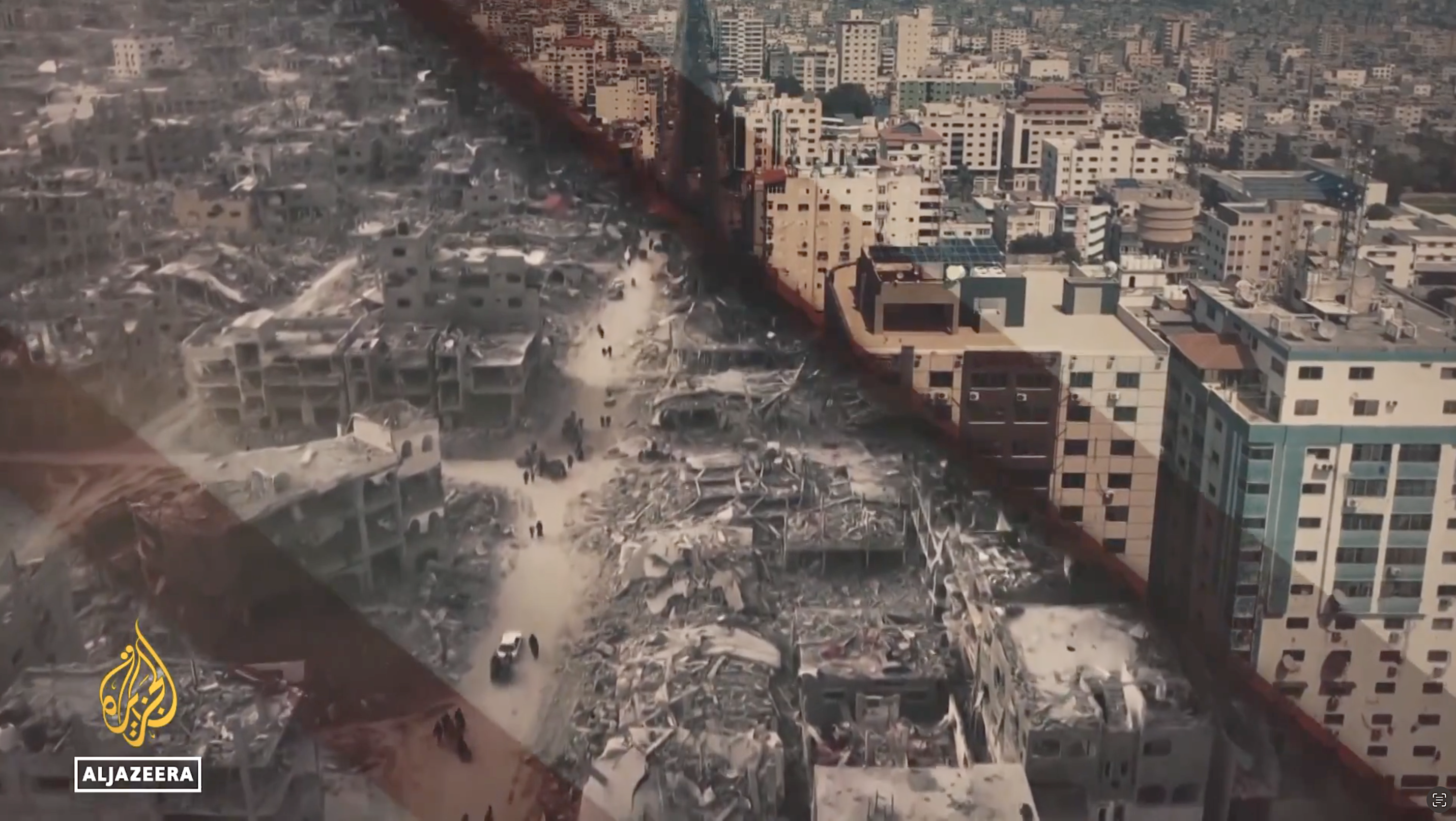
While the attention of the conscious world is, quite correctly, focused right now on Rakefet Prison, an underground detention facility inside Israel’s maximum-security Ramla Prison Complex, where the pediatrician Dr. Hussam Abu Safiya is held without charge or trial, brutalized and in fear of death, it’s important not to forget that, in the Gaza Strip, the surviving Palestinian population is still suffering from an acute and enduring humanitarian crisis.
The crisis is engineered solely by the State of Israel, which has failed to abide by the requirement, in the ceasefire deal agreed last October, to allow 600 trucks of humanitarian aid — containing, at a bare minimum, adequate supplies of food, water, fuel and medical supplies — to enter Gaza every day.
Insight into the humanitarian crisis can be found via regular updates issued by UNRWA (the UN Relief and Works Agency for Palestine Refugees in the Near East), established in 1950, which remains the largest provider of educational and health support to the Palestinians, despite persistent efforts by Israel to destroy it.
Israel Begrudgingly Re-Opens the Rafah Crossing, But With Onerous Restrictions on Palestinians’ Entry and Departure

Please click on either of the ‘Donate’ or ‘Buy’ buttons below (via PayPal or Stripe) to make a donation towards the $2,500 (£2,000) I’m trying to raise to support my work as a reader-funded investigative journalist, commentator and activist over the next three months. To get links to all my work in your inbox, please also consider taking out a free or paid subscription to my new Substack newsletter.
The re-opening, this week, of the Rafah Crossing, connecting the Gaza Strip to Egypt, and the only route in and out of Gaza that doesn’t pass through Israeli territory, was meant to provide a lifeline of hope for the estimated 20,000 medical patients in Gaza who need treatment abroad (including around 4,000 children, and about 440 critical cases in need of immediate attention) as well as for the more than 30,000 Palestinians who left Gaza in the early months of Israel’s genocide, and who, as the Council on Foreign Relations explained, “have registered their intent to return.”
Predictably, however, Israel has done all it can to to turn the re-opening into yet another example of its obsessive desire to control every aspect of the sealed death camp it has created in Gaza over the last 28 months, and its equally obsessive desire to humiliate Palestinians — when not killing them directly — at every opportunity.
According to the ceasefire agreement that Israel was reluctantly obliged to accept in October as part of Donald Trump’s “Peace Plan”, the Rafah Crossing was meant to re-open in the first phase of the deal, when Israel stopped its carpet-bombing in exchange for the return of the remaining hostages seized on October 7, 2023. It was, however, “an unmet requirement” of the first phase, as CPR described it, because Israel “delayed the reopening until it recovered the final hostage body from Gaza, which occurred last week.”












 Who's still at Guantánamo?
