Just Stop Oil Return and Block Parliament Square; Can You Blame Them?
Please click on either of the ‘Donate’ or ‘Buy’ buttons below (via PayPal or Stripe) to make a donation towards the $2,500 (£2,000) I’m trying to raise to support my work as a reader-funded investigative journalist, commentator and activist over the next three months. To get links to all my work in your inbox, please also consider taking out a free or paid subscription to my new Substack newsletter.
On Wednesday, as I cycled to Parliament Square for the 44th successive monthly vigil for the closure of the “war on terror” prison at Guantánamo Bay (part of monthly vigils that take place across the US and around the world), I suddenly felt that I had stepped back in time.
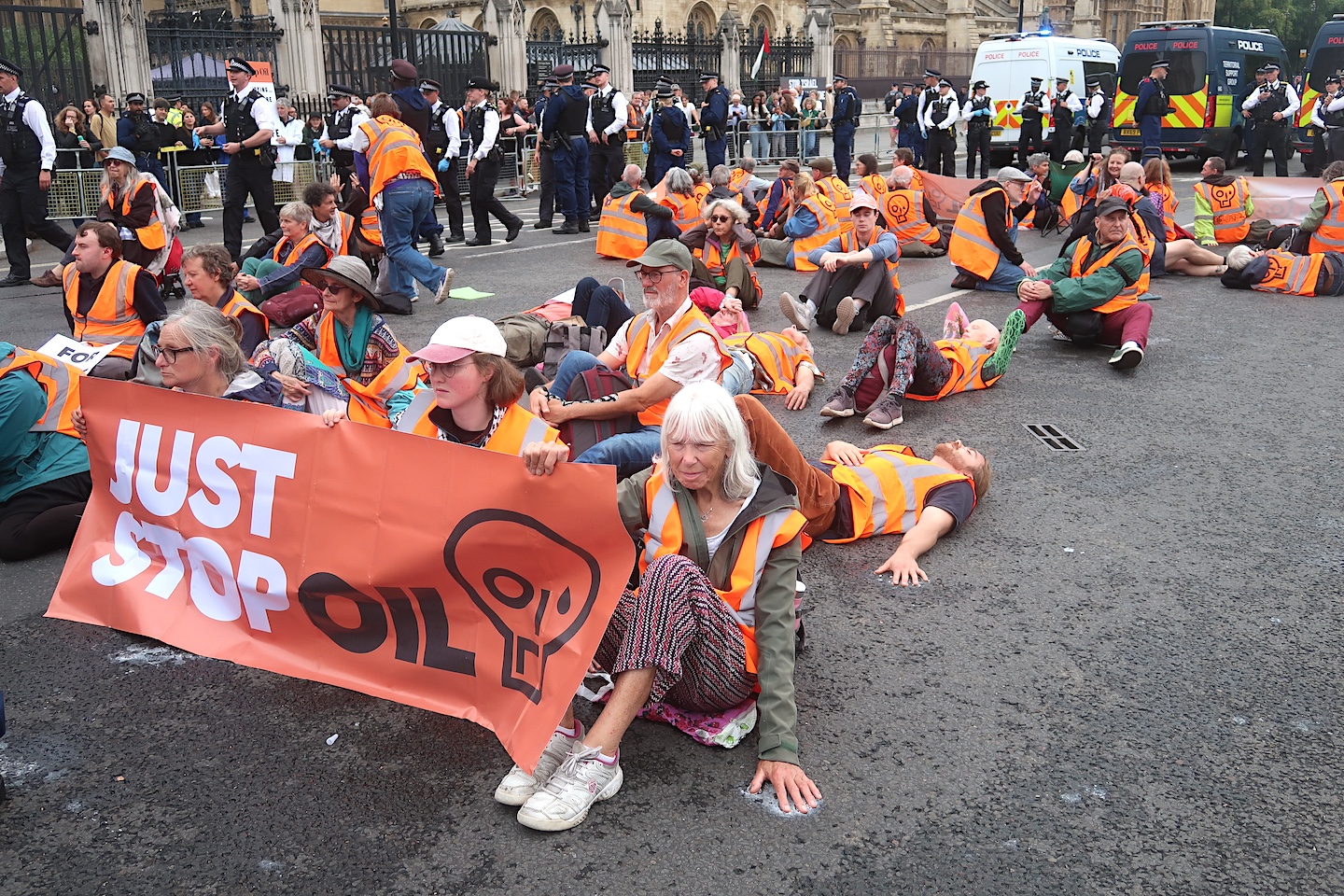
Like a phoenix reborn from the ashes of political repression, 60 Just Stop Oil activists, in hi-vis jackets bearing the climate action group’s distinctive logo, were sitting in the road outside the Houses of Parliament, having brought traffic to a halt.
The occasion for Just Stop Oil’s revival was the first PMQs (Prime Minister’s Questions) of Andy Burnham, Britain’s new and unelected Prime Minister, anointed by the Labour Party’s Zionist elite to try to undo the electoral armageddon augured by his failed predecessor, Keir Starmer, less animated and less convincing than a packet of lard, but a Zionist of such formidable enthusiasm that, despite having been a human rights lawyer, he told LBC in October 2023 that Israel had the right to cut off water and fuel to an entire civilian population.
How Were the Filton 4 Sentenced for Terrorism When They Weren’t Convicted of Terrorism?

Please click on either of the ‘Donate’ or ‘Buy’ buttons below (via PayPal or Stripe) to make a donation towards the $2,500 (£2,000) I’m trying to raise to support my work as a reader-funded investigative journalist, commentator and activist over the next three months. To get links to all my work in your inbox, please also consider taking out a free or paid subscription to my new Substack newsletter.
This is the last of three articles about the recent concerted assault on the direct action group Palestine Action in the UK courts. The first, “Punitive sentencing in the UK for Filton 4 activists on behalf of Israel”, focused on the sentencing of the Filton 4 last Friday, which I posted on Facebook here, where it has had over 330,000 views (although it also attracted an open sewer of deeply unpleasant trolls), and also on Substack, where I also sent it to my subscribers. Feel free to join me. The second, “The Renewed Ban on Palestine Action Confirms Legal Overreach in the Designation of Terrorism”, about the Court of Appeal’s unwise reinstatement of the proscription of Palestine Action as a terrorist organization, in which I examined the root problems of “serious damage to property” having been designated as terrorism in the Terrorism Act 2000, was posted here on my website, and this third article revisits the Filton 4 sentencing to provide detailed analysis about how the biased judge, Mr. Justice Johnson, was able to sentence the four activists for terrorism, when they weren’t convicted of terrorism by the jury in their retrial.
POSTSCRIPT: On June 24, I joined Chris Cook for his Gorilla Radio show in western Canada to discuss the fall of Keir Starmer (see my Substack post here), and the devious judicial efforts to secure terrorism-enhanced sentences for the Filton activists. Listen to the one-hour show on Substack here. I’m in the second half; Yves Engler in the first half.
Since the sentencing, last Friday, of the Filton 4 — activists with Palestine Action, who undertook direct action to damage drones intended for use in Gaza at a facility owned by Elbit Systems, Israel’s biggest arms company — observers of justice, in the UK and around the world, have been reeling at the imposition by the judge of punitive sentences.
As I explained in my first article, Charlotte Head and Leona Kamio were given six-year sentences, minus 45 days for time served since the conviction, Fatema Zainab Rajwani was given a sentence of five years and eight months, minus 45 days, while Samuel Corner was given a sentence of eight years and eight months.
The Renewed Ban on Palestine Action Confirms Legal Overreach in the Designation of Terrorism
Please click on either of the ‘Donate’ or ‘Buy’ buttons below (via PayPal or Stripe) to make a donation towards the $2,500 (£2,000) I’m trying to raise to support my work as a reader-funded investigative journalist, commentator and activist over the next three months. To get links to all my work in your inbox, please also consider taking out a free or paid subscription to my new Substack newsletter.
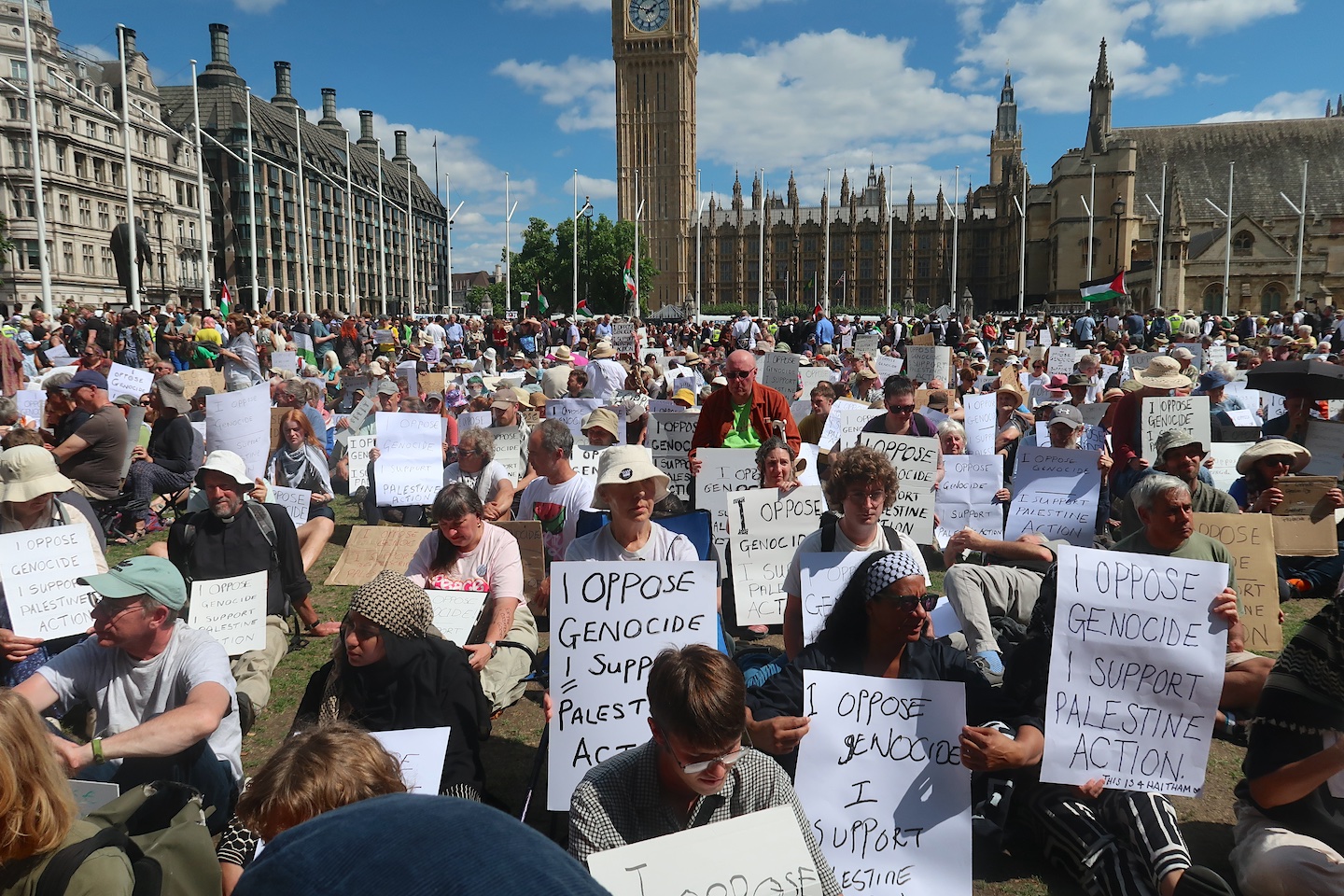
In a dispiriting ruling yesterday, the Court of Appeal in London overturned a ruling in February, by the High Court, that the government’s proscription of the direct action group Palestine Action as a terrorist organization, which was passed by Parliament last July, was unlawful.
The High Court’s ruling, in response to a judicial review submitted by Huda Ammori, one of Palestine Action’s two co-founders, repudiated the two counts on which the High Court had ruled the proscription unlawful.
Garden Court Chambers, whose barristers represented Huda Ammori at the judicial review in February, explained that these two counts were, firstly, that the Court “upheld the Claimant’s challenge that the Home Secretary failed to comply with her own policy when making the decision to proscribe Palestine Action”, and, secondly, that “proscription breached the rights of Freedom of Expression and Assembly as protected under Articles 10 and 11 of the European Convention on Human Rights.”











 Who's still at Guantánamo?
