Judge Calls for An End to Unjust Provisions Governing Guantánamo Prisoners’ Habeas Corpus Petitions
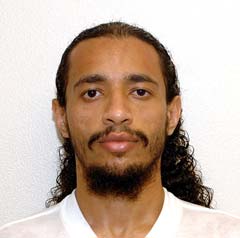 In preventing the release of prisoners from Guantánamo, all three branches of the US government are responsible. President Obama promised to close the prison within a year of taking office, but he lacked a concrete plan, and soon caved in to criticism, blocking a plan by White House counsel Greg Craig to bring some cleared prisoners who couldn’t be safely repatriated — the Uighurs, Muslims from China’s Xinjiang province — to live in the US, and imposing a ban on releasing all Yemenis after it was discovered that a failed plot to blow up a plane bound for the US on Christmas Day 2009 was hatched in Yemen.
Congress, in turn, imposed ban on bringing prisoners to the US mainland, and, in the last two versions of the National Defense Authorization Act, a ban on releasing prisoners to any country where even a single released prisoner has allegedly engaged in recidivism (returning to the battlefield), and a requirement that, if a prisoner were to be released, the Secretary of Defense would have to certify that they would not be able, in future, to engage in any terrorist activities — a requirement that appears to be impossible to fulfill.
Largely overlooked has been the responsibility of the judiciary — and specifically, the Court of Appeals in Washington D.C. (the D.C. Circuit Court), and the Supreme Court, but their role in keeping men at Guantánamo is also crucial.
Nine years ago, in June 2004, in Rasul v. Bush, the Supreme Court granted the prisoners habeas corpus rights, a momentous ruling that pierced the veil of secrecy that had allowed the Bush administration to establish a torture regime at Guantánamo, and also allowed the prisoners to be represented by lawyers, who were allowed to visit them. Read the rest of this entry »
Video: Close Guantánamo – Andy Worthington, Tom Wilner and Col. Morris Davis Lay into President Obama at the New America Foundation
 On Friday, the 11th anniversary of the opening of Guantánamo, myself and the attorney Tom Wilner, the steering committee of the “Close Guantánamo” campaign, held our annual reunion at the New America Foundation in Washington D.C. with Col. Morris Davis, the former chief prosecutor of the military commissions, who resigned in 2007, the day after he was placed in a chain of command under William J. Haynes II, the Pentagon’s senior lawyer and one of the Bush administration officials most involved in developing the administration’s notorious torture program. The event was moderated by Peter Bergen, the director of the National Security Studies Program at the New America Foundation.
For three years now, we have gathered on the anniversary of the opening of Guantánamo to call on President Obama to fulfill the promise to close the prison that he made on taking office in January 2009.
This year our call was more passionate, intense, and driven by righteous indignation than ever before. Read the rest of this entry »
Andy Worthington Discusses the Urgent Need to Close Guantánamo with Peter B. Collins
 As the 11th anniversary of the opening of the “war on terror” prison at Guantánamo Bay approaches (on January 11, 2013), I wanted to make sure that I made available an interview I undertook recently with the respected progressive radio host Peter B. Collins, in San Francisco. Peter’s site is here, and our 50-minute interview is here, as an MP3.
Peter and I have spoken many times over the years, and it is always a pleasure to talk to him, as he is such a well-informed host, and his shows allow complex issues — like Guantánamo — to be discussed in depth.
Out latest conversation followed the reelection of Barack Obama, and gave us an opportunity to catch up on where we stand nearly four years on from the President’s failed promise to close Guantánamo within a year. Read the rest of this entry »
Andy Worthington and David Remes Discuss Guantánamo on Revolution Truth
 Last week, I took part in a panel discussion organized by Revolution Truth, along with David Remes, the attorney for a number of Guantánamo prisoners, which was presented by the activist Tangerine Bolen, with her co-host Pamela Sue Taylor.
The show, entitled, “GTMO, The Rule of Law and the NDAA,” lasted a little over an hour, and is available here as an MP3. A description of the show is here, and I’ve also posted it below as a YouTube video, which has just been made available today.
This was a fascinating show, and it was great to spend an hour on a show with Tangerine, who I got to know through her work at Revolution Truth, and her role as a plaintiff in the case brought by herself, Chris Hedges and others against the US government regarding the mandatory military custody provisions for alleged terror suspects that is contained in last year’s National Defense Authorization Act (NDAA). This led to a memorable victory in a US courtroom earlier this year, which I wrote about in my article, Why Does the Government So Desperately Want Indefinite Detention for Terror Suspects? Read the rest of this entry »
An Impossible Suicide at Guantánamo
 I wrote the following article for the “Close Guantánamo” website, which I established in January with US attorney Tom Wilner. Please join us — just an email address is required to be counted amongst those opposed to the ongoing existence of Guantánamo, and to receive updates of our activities by email.
Even in death, injustice stalks former Guantánamo prisoner Adnan Farhan Abdul Latif, who died at the prison in September, six years after he was cleared for release. At “Close Guantánamo,” we covered Adnan’s story at the time of his death, and quoted his lawyers, who stated, “However he died, Adnan’s death is a reminder of the injustice of Guantánamo, and the urgency of closing the prison. May this unnecessary tragedy spur the government to release the detainees it does not intend to prosecute.”
We continue to believe that the death of Adnan Latif is the most powerful reminder of why President Obama must take the lead on releasing the 86 surviving prisoners cleared for release by his interagency Guantánamo Review Task Force, which issued its report in January 2010, and, in particular, the 55 cleared prisoners whose names were publicly made available for the first time ever by the government in a court case in September, as we explained in our exclusive report, “Who Are the 55 Cleared Guantánamo Prisoners on the List Released by the Obama Administration?” Read the rest of this entry »
The Banality of Evil: How the US Killed an Innocent Man at Guantánamo
 Now that the all-consuming, and insanely expensive Presidential election is over for another four years, President Obama’s in-tray still contains Guantánamo, where, of the 166 men still held, 86 were cleared for release by the Guantánamo Review Task Force. Consisting of officials from the relevant government departments and the intelligence agencies, the Task Force analyzed the cases of all the remaining prisoners in 2009, and recommended them for trial, continued detention, or release.
These men have now been held for at least three years since the Task Force reached its conclusions, and many were previously cleared for release by military review boards under the Bush administration — in many cases in 2006 or 2007, and in 2004 in others.
Although the public’s interest in the long-term injustices of George W. Bush’s horrendous experimental prison has dwindled, some people still remember that the President promised to close the prison within a year, when he first came to office in January 2009, but failed to do so. That is a failure that those concerned with justice will not let him forget, not least because it perpetuates the notion, introduced by the Bush administration, that certain people — those labelled as “terrorists” — can be subjected to indefinite detention. Read the rest of this entry »
Obama Releases Names of Cleared Guantánamo Prisoners; Now It’s Time to Set Them Free
 On Friday, as part of a court case, the Justice Department released the names of 55 of the 86 prisoners cleared for release from Guantánamo in 2009 by President Obama’s Guantánamo Review Task Force, which consisted of officials from key government departments and the intelligence agencies. The Task Force’s final report was issued in January 2010.
Until now, the government has always refused to release the names, hindering efforts by the prisoners’ lawyers — and other interested parties — to publicize their plight.
The rationale for this was explained by Ambassador Daniel Fried, the State Department’s Special Envoy for the Closure of the Guantánamo Bay Detention Facility, in June 2009, when he stated that “indiscriminate public disclosure of the decisions resulting from reviews by Guantánamo Review Task Force will impair the US Government’s ability effectively to repatriate and resettle Guantánamo detainees” under the executive order establishing a review of the prisoners’ cases, which was issued on President Obama’s second day in office in January 2009, at the same time that he promised to close Guantánamo within a year. Read the rest of this entry »
Video: Andy Worthington Discusses the Horrors of Guantánamo at Aafia Siddiqui Protest in London
 On Sunday, in torrential rain, I cut short a dry afternoon in the Catford Bridge Tavern — a formerly notoriously rough pub reborn after its recent takeover by the Antic group, which is spacious, friendly, well-decorated, and which also does excellent food, including Sunday roasts — to take my bike on the train to Charing Cross, and, from there, to cycle up to Piccadilly and through Mayfair to Grosvenor Square, to speak at a protest outside the US Embassy to mark the second anniversary of the sentencing, in a court in New York, of Aafia Siddiqui.
The story of Aafia Siddiqui, which I have been covering for many years, remains one of the most disturbing in the whole of the Bush administration’s brutal “war on terror.” A Pakistani neuroscientist, she is currently two years into a horrendously unjust 86 year sentence in a prison hospital in Texas for allegedly having tried and failed, in August 2008, to shoot a number of US soldiers who were holding her in Ghazni, Afghanistan. This followed her resurfacing after a mysterious five and a half year absence, in which many people believe she was held in one or more secret CIA “black sites,” where she was severely abused and lost her mind.
Although the turnout for the protest, organised by the Justice for Aafia Coalition, was only moderate, numbers were swelled by the many thousands of people who had turned up for a protest about the terrible racist and Islamophobic video, “The Innocence of Muslims,” which, to my mind, like all examples of bigotry, is best ignored, to avoid providing the oxygen of publicity to those peddling such filth. However, the organisers of the Aafia Siddiqui protest were presented with an excellent opportunity to inform numerous people about the plight of Dr. Siddiqui, which was obviously useful. Read the rest of this entry »
This Week at Guantánamo: More on Adnan Latif, Omar Khadr’s Birthday, A French Appeal, and the Release of Cleared Prisoners’ Names
I wrote the following article for the “Close Guantánamo” website, which I established in January with US attorney Tom Wilner. Please join us — just an email address is required to be counted amongst those opposed to the ongoing existence of Guantánamo, and to receive updates of our activities by email.
In a busy week for news relating to Guantánamo, the most significant development was the court-ordered release of the names of 55 of the 86 prisoners who have been cleared for release from Guantánamo but are still held.
Beginning this coming week, and in the weeks to come, we will be analyzing this list in detail, telling the stories of many of these men, but what we can note upfront is that 28 of the 55 names were featured in our groundbreaking report in June, “Guantánamo Scandal: The 40 Prisoners Still Held But Cleared for Release At Least Five Years Ago.”
Adnan Latif: Please sign the open letter
For now, however, we’d like to revisit the story of Adnan Latif, the mentally troubled Yemeni man who died at Guantánamo two weeks ago, and to call your attention to an open letter and petition to the US government issued by the Center for Constitutional Rights. Please sign and circulate it, if you can. Read the rest of this entry »
Lawyers for Adnan Latif, the Latest Prisoner to Die at Guantánamo, Issue A Statement
 This article was published simultaneously here, and on the “Close Guantánamo” website, which I established in January with US attorney Tom Wilner. Please join us — just an email address is required to be counted amongst those opposed to the ongoing existence of Guantánamo, and to receive updates of our activities by email.
Over the weekend, Adnan Farhan Abdul Latif, a Yemeni, became the ninth prisoner to die in Guantánamo. Adnan had been repeatedly cleared for release — under President Bush and President Obama, and by a US court — but had never been freed, like so many others in that disgraceful prison, which remains an insult to the rule of law ten years and eight months since it first opened.
Adnan was one of the prisoners profiled in the major report I wrote in June, Guantánamo Scandal: The 40 Prisoners Still Held But Cleared for Release At Least Five Years Ago, and the overturning of his successful habeas corpus petition by politically motivated judges in the D.C. Circuit Court in October last year — and the refusal of the Supreme Court to rebuke the court, just three months ago — was notorious amongst attorneys for the prisoners and those interested in justice and the law, even though — sadly and shockingly — it had not awakened appropriate outrage in the mainstream media.
Last May, when the eighth prisoner died at Guantánamo — a man named Hajji Nassim, known to the US authorities as Inayatullah, who had serious mental health problems — I wrote an article entitled, The Only Way Out of Guantánamo Is In a Coffin, which was horribly accurate, as the last two prisoners to leave Guantánamo had left in coffins. The other, Awal Gul, had died in February. Read the rest of this entry »












 Who's still at Guantánamo?
