Obama’s Failure to Close Guantánamo: Revisiting a Major Article in the New Yorker
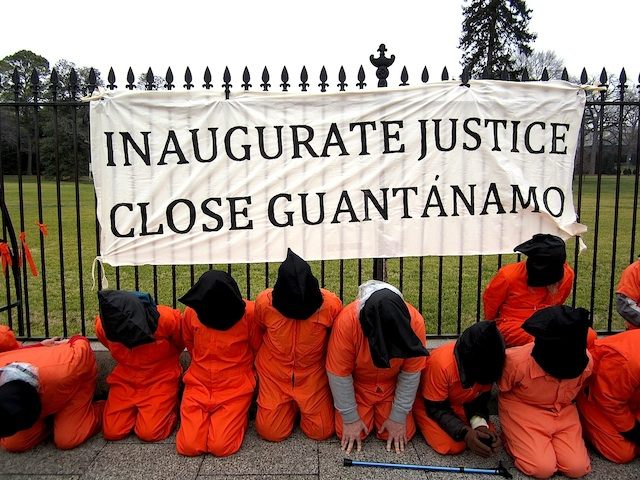 With just over 100 days remaining for President Obama to fulfill his promise to close the prison at Guantánamo Bay that he inherited from George W. Bush, where men subjected to torture and other forms of abuse are still held without charge or trial, undermining the US’s belief that it is a nation that respects the rule of law, I continue to work to close the prison, through my writing here, and through the Close Guantánamo campaign that I established with the US attorney Tom Wilner in January 2012, on the 10th anniversary of the prison’s opening.
A specific initiative of the “Close Guantánamo” campaign is the Countdown to Close Guantánamo, in which, every 50 days, those who wish to see Guantánamo closed have been submitting photos of themselves with posters reminding President Obama how many days he has left. Please print off the latest poster, marking 100 days remaining for President Obama to fulfill his promise on October 11, take a photo of yourself with it, and send it to us to add your voice to those calling for the prison’s closure.
This January, as President Obama prepares to leave office after eight years as president, it will be 15 years since Guantánamo opened, unless he somehow manages to close it — by executive order, perhaps — in the brief period between the presidential election in November and the inauguration of the next president in January 2017. That seems unlikely, however, because Congress has, for years, imposed bans on spending any money to bring any prisoners to the US mainland for any reason, and overriding lawmakers will unleash a fury. Read the rest of this entry »
The American Lawyer’s Six Guantánamo Bar Profiles: Thomas Wilner, David Remes, Jennifer Cowan, Wells Dixon, David Nevin and Lee Wolosky

The November 2015 issue of The American Lawyer featured a “Special Report: The Guantánamo Bar,” consisting of six interviews with attorneys who have worked on Guantánamo. I’m cross-posting them below, as I think they will be of interest, and I also estimate that many of you will not have come across them previously.
The six lawyers featured were: Thomas Wilner of Shearman & Sterling; David Remes, formerly of Covington & Burling; Jennifer Cowan of Debevoise & Plimpton; J. Wells Dixon of the Center for Constitutional Rights; Public Defender David Nevin; and Lee Wolosky of Boies, Schiller & Flexner. Wolosky was appointed last June as the White House’s special envoy for Guantánamo closure, while the rest have represented prisoners held at Guantánamo.
Thomas Wilner represented a number of Kuwaiti prisoners, and also represented the prisoners in their habeas corpus cases before the Supreme Court in 2004 and 2008. He is co-founder, with me, of the Close Guantánamo campaign, launched in January 2012, through which, for the last four years, we have been attempting to educate people about why Guantánamo must be closed, and who is held there, and I’m pleased to note that The American Lawyer described him as “the most vocal proponent in the Guantánamo bar for the closure of the offshore prison.” Read the rest of this entry »
Tariq Ba Odah, Hunger Strikes, and Why the Obama Administration Must Stop Challenging Guantánamo Prisoners in Court
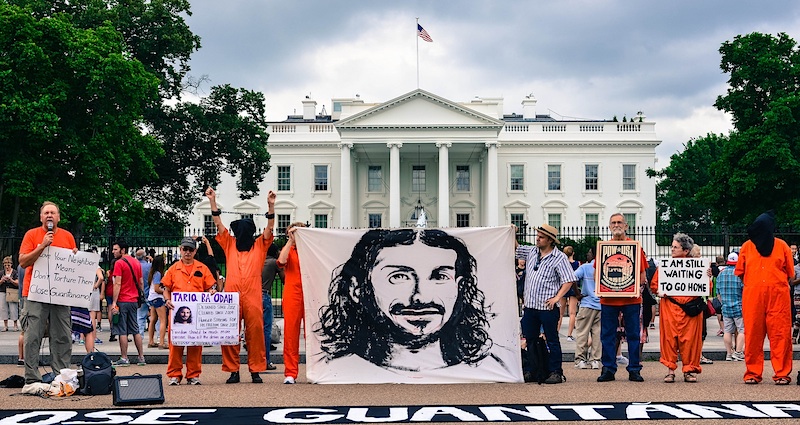 In June, I wrote an article, “Skeletal, 75-Pound Guantánamo Hunger Striker Tariq Ba Odah Seeks Release; Medical Experts Fear For His Life,” about the desperate plight of Tariq Ba Odah, a Guantánamo prisoner who has been on a hunger strike since 2007 and is at risk of death. His weight has dropped to just 74.5 pounds, and yet the government does not even claim that it wants to continue holding him. Over five and a half years ago, in January 2010, the high-level, inter-agency Guantánamo Review Task Force that President Obama established when he took office in 2009 to review the cases of all the prisoners still held at that time, concluded that he should no longer be held.
The task force approved 156 men for release, although Tariq was one of 30 placed in a category invented by the task force — “conditional detention,” made dependent on a perception that the security situation in Yemen had improved or “an appropriate rehabilitation program or third- country resettlement option becomes available,” as his lawyers described it.
Collectively, the whole of the US establishment has — with one exception — refused to repatriate any Yemenis approved for release since January 2010 (after a foiled terror plot was revealed to have been hatched in Yemen), although, since last November, the administration has been finding third countries willing to offer new homes to Yemenis approve for transfer — in part became of persistent pressure from campaigning groups. 18 Yemenis have so far been found homes in third countries — in Georgia, Slovakia, Kazakhstan, Estonia and Oman — so all that now ought to prevent Tariq Ba Odah’s release is if the US government proves unable to find a third country prepared to offer him a new home. Read the rest of this entry »
Shaker Aamer’s Universal Declaration of No Human Rights, Part of Vice’s Compelling New Feature on Guantánamo
 Congratulations to Vice, which describes itself as “an ever-expanding galaxy of immersive, investigative, uncomfortable, and occasionally uncouth journalism,” who have shown up the mainstream media by publishing a major feature on November 10, “Behind the Bars: Guantánamo Bay,” consisting of 18 articles published simultaneously, all of which are about Guantánamo — some by Guantánamo prisoners themselves, as made available by their lawyers (particularly at Reprieve, the legal action charity), others by former personnel at the prison, and others by journalists. “Behind the Bars” is a new series, with future features focusing on prisoners in the UK, Russia and beyond.
Following an introduction by Vice’s Global Editor, Alex Miller, there are five articles by three prisoners, as follows:
- “The Declaration of No Human Rights” (cross-posted below) and “Colonel John Bogdan Has No Nose” by Shaker Aamer, the last British resident in Guantánamo, long cleared for release but still held. In the second of these articles, Shaker focuses on Guantánamo’s recently retired warden, who oversaw a period of particular turmoil at the prison; in particular, the prison-wide hunger strike last year that finally awakened widespread outrage domestically and internationally about the plight of the prisoners.
- “What Happens When I Try to Give My Guantánamo Guards Presents” and “An Obituary for My Friend, Adnan Abdul Latif” by Emad Hassan, a Yemeni, cleared for release in 2009 by President Obama’s high-level, inter-agency Guantánamo Review Task Force, but still held, who as been on a hunger strike since 2007. Adnan Abdul Latif, a Yemeni who had serious mental health issues, was the last prisoner to die at Guantánamo, in September 2012, even though he too had long been cleared for release, so this tribute by Emad Hassan is particularly poignant.
- “My Road to Guantánamo” by Younous Chekkouri (aka Younus Chekhouri), a Moroccan prisoner, also cleared for release in 2009, who tells the story of his capture and explains why he cannot return to Morocco and is seeking a third country to offer him a new home. In February this year, Reprieve made available a love letter by Younus to his wife Abla.
Updated: My Definitive List of the Guantánamo Habeas Corpus Results
See the updated Guantánamo habeas list here.
Sometimes life takes us down unexpected routes, and yesterday, while looking for links for my last article, a transcript of a talk I gave in Los Angeles during my recent US tour calling for the closure of the prison at Guantánamo Bay on the 12th anniversary of its opening, I found myself visiting a page I first created in May 2010, entitled, “Guantánamo Habeas Results: The Definitive List.”
The page is a list of all the prisoners whose habeas corpus petitions were ruled on by judges in the District Court in Washington D.C. following the Supreme Court’s important ruling, in June 2008, in Boumediene v. Bush, granting the prisoners constitutionally guaranteed habeas corpus rights. At the time I created the list, there had been 47 rulings, and in 34 of those cases, after reviewing all the evidence, the judges concluded that the government had failed to demonstrate that they were connected in any meaningful manner with either al-Qaeda or the Taliban, an ordered their release.
This was humiliating for those who sought to defend Guantánamo, especially as the habeas hearings involved a low evidentiary hurdle — requiring the government to establish its case through a preponderance of the evidence rather than beyond any reasonable doubt. It was, moreover, a vindication for those like myself and some other journalists, as well as lawyers for the men, NGOs and others concerned by the existence of Guantánamo, like Lt. Col. Stephen Abraham, who had worked on the tribunals at Guantánamo, who had long maintained that the supposed evidence against the men was flimsy and untrustworthy, in large part because it was gathered using torture or other forms of coercion, or, in some cases at Guantánamo, because certain prisoners were bribed with better living conditions if they told lies about their fellow prisoners. Read the rest of this entry »
Andy Worthington: An Archive of Guantánamo Articles, Other Writing and Photos – Part 13, July to December 2012
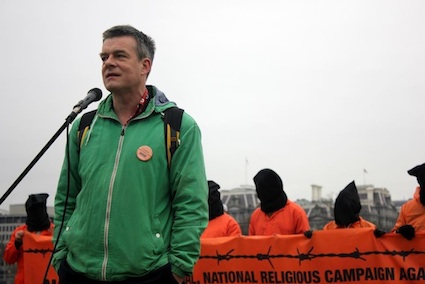
Please support my work!
Next March it will be eight years since I gave my life over to chronicling Guantánamo and the 779 men (and boys) held there, and campaigning to get the prison closed. I did this initially through my book The Guantánamo Files, and, for the last six and a half years, I have continued to seek the prison’s closure — and to educate people about the men held there and the lies told in the “war on terror” — as a full-time independent investigative journalist.
Nearly four years ago, I began to put together chronological lists of all my articles, in the hope that doing so would make it as easy as possible for readers and researchers to navigate my work — the 2100 articles and pages I have published since May 2007. Unfortunately, I have found it difficult to keep up to date with this project for the last two years, hence this belated entry covering all the articles I wrote from July to December 2012.
In this period, as well as relentlessly covering Guantánamo, I continued to be involved in campaigning to resist the age of austerity cynically introduced by the Tory-led government here in the UK, which is being used to wage a disgusting and disgraceful civil war against the poor, the unemployed and the disabled, and whose main aim is to destroy the state provision of services. In the period covered in this article, my previous efforts to save the NHS from privatisation fed into a campaign even closer to home, as the government and senior NHS managers proposed to severely cut services at Lewisham Hospital, my local hospital in south east London, to pay for the debts of a neighbouring NHS trust that had got into financial difficulties — in part because of ruinous private finance (PFI) deals, providing unjustifiable profits to private companies building hospitals for the government. Read the rest of this entry »
Remember Adnan Farhan Abdul Latif, Who Died at Guantánamo A Year Ago, Despite Being Cleared for Release
 Exactly a year ago, on September 8, 2012, Adnan Farhan Abdul Latif, a Yemeni prisoner at Guantánamo, died in circumstances that are still disputed. The US authorities claim that he committed suicide by overdosing on psychiatric medication that he had hoarded, but that has always seemed unlikely, given that the prisoners at Guantánamo are closely monitored, and it has become clear that he was moved around the prison on a number of occasions before his death, making the hoarding of medication even more unlikely.
Despite the inconsistencies in the US authorities’ account of Adnan’s death, it is undisputed that, throughout his ten years at Guantánamo, he had attempted to commit suicide on several occasions. A talented poet, and a father, Adnan also had severe mental health problems, the result of a car crash in Yemen many years before his capture. Adnan always claimed that he had traveled to Pakistan and Afghanistan in search of cheap medical treatment for his head wounds, in contrast to the US authorities’ attempts to portray him as a member of al-Qaeda.
Those claims, however, evaporated over the years of Adnan’s long and pointless imprisonment, as he was cleared for release on three occasions, only to discover that decisions to release prisoners meant very little, especially in the case of Yemeni prisoners. At the time of his death, 87 of the remaining 167 prisoners had been cleared for release, by an inter-agency Guantánamo Review Task Force that President Obama established when he took office in January 2009, but were still held, and 57 of these men were Yemenis. Read the rest of this entry »
Video: Al-Jazeera’s Powerful and Important Documentary, “Life After Guantánamo”
 After seven and a half years of researching and writing about the prisoners held in the “war on terror” prison at Guantánamo Bay, it’s always refreshing to hear from former prisoners — and, in many cases, to see their faces and hear their voices for the very first time.
The highlights of “Life After Guantánamo,” Al-Jazeera America’s newly released documentary about Guantánamo (available below, via YouTube) are interviews with two released Yemeni prisoners, Mohammed Hassan Odaini (freed in July 2010), and Farouq Ali Ahmed (freed in December 2009). I told the story of Ahmed, the victim of two notoriously false allegations made by other prisoners, in an article following his release, and I told the story of Odaini, an innocent student seized in a house raid in Pakistan in March 2002, in a series of articles between May 2010, when he had his habeas corpus petition granted, and his release 48 days later (see here, here and here).
At the time, it was clear to me that both men were palpably innocent, and seeing and hearing them now only confirms it. Both are charming and articulate, working, married, and expecting their first children, and, importantly, neither man even remotely fulfils American fears that released Yemenis will “return to the battlefield.” Read the rest of this entry »
EXCLUSIVE: The Last Days in the Life of Adnan Latif, Who Died in Guantánamo Last Year
 This article, published simultaneously here and on the “Close Guantánamo” website, contains exclusive information from the unclassified notes of a visit to Abdelhadi Faraj — a Syrian prisoner, and one of 86 men cleared for release from Guantánamo but still held — by his attorney, Ramzi Kassem, in October 2012. During that visit, Faraj spoke about the death of Adnan Latif, the Yemeni prisoner who died at Guantánamo last September, and the notes from that visit, made available to me via Ramzi and his team at CUNY (the City University of New York) are compared and contrasted with the military’s own account, as described in a report released to the journalist Jason Leopold through FOIA legislation at the start of July 2013.
Ten months ago, on September 8, 2012, Adnan Latif, a Yemeni prisoner in Guantánamo, died in his cell. While no one at the time knew the circumstances of his death, it was clear that, however he had died, it was the fault of all three branches of the US government — of President Obama and his administration, of Congress, and of the Supreme Court and the court of appeals in Washington D.C. (the D.C. Circuit Court).
Latif, who had severe mental health problems, had been cleared for release in 2006 by a military review board under George W. Bush, and again by the inter-agency Guantánamo Review Task Force, established by President Obama shortly after taking office in January 2009. He also had his habeas corpus petition granted by a District Court judge in July 2010, but the Obama administration appealed that ruling, and the D.C. Circuit Court overturned it in November 2011. In 2012, when Latif appealed to the Supreme Court, the highest court in the land refused to accept his case (or those of six other prisoners), and three months later he was dead.
Two weeks ago, in response to a FOIA request submitted by the journalist Jason Leopold, the military released its report into Latif’s death, which found that the prison guards and medical personnel responsible for him had failed to follow the prison’s rules in dealing with him, and that Latif himself had “hoarded medications and ingested them shortly before he was found unresponsive in his cell.”
However, not everyone finds this explanation convincing. Read the rest of this entry »
For Ramadan, Please Write to the Hunger Striking Prisoners at Guantánamo
 Every six months, I urge readers to send letters to the prisoners in Guantánamo, and, as this is the Muslim holy month of Ramadan, which began July 8, there is no better time to write to the 166 men still held, the majority of whom have been on a hunger strike for over five months, protesting about conditions at the prison, and the failure of all three branches of the US government to free them or put them on trial.
In the last three years, just ten prisoners have been released, even though 86 of the men still held were cleared for release by the sober and responsible inter-agency Guantánamo Review Task Force, consisting of around 60 members of the major government departments and the intelligence agencies. Established by President Obama when he took office in 2009, the task force spent a year reviewing the men’s cases before reaching their decisions about who to release, who to prosecute, and, disturbingly, who to hold indefinitely without charge or trial on the basis that they are “too dangerous to release,” even though insufficient evidence exists to put them on trial. In the real world, what this means is that the supposed evidence is no such thing, and is, instead, a collection of extremely unreliable statements made by the prisoners themselves, and, more particularly, their fellow prisoners, as well as other intelligence reports of a dubious nature.
The Guantánamo Review Task Force’s report was published in January 2010, but it was not until last month that a document explaining which prisoners had been placed into which categories was released through FOIA legislation. I analyzed that document here, and noted which prisoners had been placed in which categories in the prisoner list on the CloseGuantánamo.org website. Read the rest of this entry »











 Who's still at Guantánamo?
