Archive for September, 2009
A Fundraising Appeal – Please Support My Work!

Please support my work!
Three months ago, I held a fundraising appeal for the first time to raise money to enable me to carry on investigating and writing about Guantánamo and other issues related to the Bush administration’s “War on Terror.” At the time, I promised that I would only put out a fundraising appeal every three months, but three months have now passed and, as a result, I’m asking those who appreciate my work to help me continue. US readers — or readers anywhere else in the world — can use the “Donate” button, which leads to a PayPal page, at the top of this post. If you’re in the UK and want to help, another option is to send me a cheque (address here — scroll down to the bottom of the page).
Regular readers will know that I have now been researching and writing about Guantánamo for four years, first through my book The Guantánamo Files, and, since May 2007, in the nearly 600 blog posts I have written about Guantánamo and related issues, most of which are original, full-length articles published here, or for a variety of other publications and websites.
Regular readers will also know that I have covered the stories of the released prisoners, the Military Commissions and the habeas corpus hearings in more detail than is available elsewhere (as well as reporting on Britain’s under-reported anti-terror laws), and also that I have regularly come up with exclusive stories.
When I put out my last appeal, I had, in the previous few months, put together a definitive Guantánamo prisoner list, reported exclusively on the death of the CIA’s most notorious “ghost prisoner,” Ibn al-Shaykh al-Libi, and had also recently published a unique report on hunger strikes and weight loss in Guantánamo. In the last few months I have endeavored to match this output, reporting exclusively on the “extraordinary rendition” and torture of Ibn al-Shaykh al-Libi and plans to transfer Tunisian prisoners in Guantánamo to an Italian jail, picking up on a recent story about Spanish Judge Galtasar Garzón’s continuing intention to prosecute Bush administration lawyers for implementing torture, conducting an interview with Col. Lawrence Wilkerson, Colin Powell’s former Chief of Staff, which has been attracting significant attention in the past week, and, on Monday, reporting exclusively on a story buried in a New York Times report about the Obama administration’s plans to introduce tribunals for prisoners held at Bagram airbase in Afghanistan. In the report, officials seemed to confirm, for the first time, that prisoners seized outside Afghanistan and Iraq were currently being “rendered” to Bagram, now that the CIA has closed its secret prisons. I also wrote a follow-up article here, asking if this was why the administration was so determined to prevent US courts from having access to foreign prisoners in Bagram).
It would be deceitful of me to claim that I do not receive any compensation for the work that I do. A number of organizations I write for help to support me financially, but the majority of the work that I do is unpaid, so any contribution will be gratefully received. As anyone who has been paying attention will realize, a considerable amount of work remains to be done to call Bush administration officials to account for their crimes, to roll back the lawlessness of the last eight years, and to maintain pressure on the Obama administration, and I hope to continue uncovering and reporting on aspects of these stories that need to be brought out into the light.
Thank you again for your time and support.
Andy Worthington is the author of The Guantánamo Files: The Stories of the 774 Detainees in America’s Illegal Prison (published by Pluto Press, distributed by Macmillan in the US, and available from Amazon — click on the following for the US and the UK). To receive new articles in your inbox, please subscribe to my RSS feed, and also see my definitive Guantánamo prisoner list, published in March 2009.
First Guantánamo Prisoner To Lose Habeas Hearing Appeals Ruling
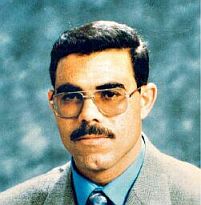 So here’s a little-noticed story, courtesy of the Blog of Legal Times. Back in November last year, Belkacem Bensayah, an Algerian who had been living in Bosnia since the 1990s, was the first prisoner to lose his habeas corpus appeal. The judge, Bush appointee Richard Leon, granted the appeals of the five men who had been kidnapped with him from Sarajevo in January 2002 and flown to Guantánamo (after being imprisoned, investigated and declared innocent by the Bosnian authorities, who had been pressed by the Bush administration to investigate them in connection with an alleged plot to blow up the US embassy).
Although Judge Leon ruled that the government (having never mentioned the bomb plot once the men arrived in Guantánamo) had failed to establish that the five men intended to travel to Afghanistan to take up arms against US forces (a claim it had conjured up during their long imprisonment, based solely on classified information from an unnamed source, which Judge Leon found “inadequate”), he ruled that Bensayah could continue to be held as an “enemy combatant,” because the government had provided “credible and reliable evidence,” from a number of sources, “linking Mr. Bensayah to al-Qaeda and, more specifically, to a senior al-Qaeda facilitator.” Leon also stated, “There can be no question that facilitating the travel of others to join the fight against the United States in Afghanistan constitutes direct support to al-Qaeda in furtherance of its objectives and that this amounts to ‘support’ within the meaning of the ‘enemy combatant’ definition governing this case.”
Last week, as BLT noted, a panel of the D.C. Circuit Court of Appeals — comprising Judges Douglas Ginsburg and Karen LeCraft Henderson, with Senior Judge Harry Edwards — began hearing an appeal in Bensayah’s case, in which his lawyers “are challenging, among other things, the admission of certain evidence and the legal definition of ‘enemy combatant.’” BLT added that, as with the original habeas case, which was held in closed hearings, “Much of the record in the D.C. Circuit is classified and under seal,” although the court “released heavily redacted versions of the briefs on Sept. 11.”
In a brief filed in June, Marc Fleming, one of Bensayah’s lawyers, claimed that Judge Leon relied on “unfinished” intelligence reports and “uncorroborated assertions from anonymous sources” in making his ruling, and added, “The court’s ruling authorizes military imprisonment for mere intention, without finding that Mr. Bensayah acted affirmatively to advance any military objectives. Whatever authority the Executive has to detain alleged ‘enemy combatants,’ it cannot extend to cases of mere ‘intention’ without proof of any action.”
Fleming also explained that Judge Leon had “refused to order the government to search for exculpatory information,” adding that it was only provided to him in April this year (although BLT noted that the Justice Department said that the information, which is classified, “supports Leon’s judgment”).
Fleming also stated that, two weeks before Judge Leon made his ruling, on the evening of November 11, 2008, he chastised the government for not being “in a zone where you are meeting the standards set by the [court],” regarding the provision of relevant information, before giving the Justice Department “a second chance,” and that, as a result, government lawyers submitted more classified information to the court, but at such a late date that Bensayah’s lawyers had only 31 hours to research the new information, which was “insufficient time,” according to Fleming, who added that a request from the judge for further time to deal with the documentation was denied.
In the run-up to Bensayah’s appeal, Justice Department lawyer Sharon Swingle sent a letter to the court, dated August 28, stating that the government was “prepared to argue the case in open court so long as no classified information is discussed,” but that the courtroom would have to be cleared “if the appellate judges wanted to ask about classified information.” “The Department of Justice has provided classified material to the Court with the understanding that the secrecy of this information will be protected,” she explained.
In response, Fleming said that “the inability to argue classified information in open court would hurt Bensayah’s effort to have Leon’s order reversed.” In a reply to the court, he wrote, “We certainly believe that there is a strong public interest in this appeal, and we would welcome an argument in open session if the government were to agree that the record below and all of the rulings under appeal could be discussed publicly. Absent such an agreement by the government, however, Mr. Bensayah’s contentions on appeal cannot be meaningfully presented or assessed in open session, because oral argument necessarily will require reference to the classified record and the classified briefs.”
Despite Fleming’s protestations, the judges sided with the Justice Department. The case continues on September 24, in a session closed to the public, when Fleming and his colleagues will be hoping that the judges will accept that “mere ‘intention’ without proof of any action” is insufficient to justify Bensayah’s continued detention as one of only seven Guantánamo prisoners to have lost their habeas appeals (out of 36 in total).
Note: A statement submitted to the court by Belkacem Bensayah in his habeas case is here, and see the following for a list of all the exhibits submitted in the case of Bensayah and the other five men (Boumediene v. Bush). In the most recent commentary on the men’s cases, in the Huffington Post on August 24, Seema Jilani wrote: “In 2001, the US reportedly tapped [Bensayah’s] mobile phone conversations with Abu Zubaydah, allegedly an al-Qaeda operative. In an interview in Bosnia, Anela Belkacem, Bensayah’s wife, states they did not have enough money to own a mobile phone. According to [one of his lawyers, Stephen] Oleskey, ‘The Bosnian police couldn’t even get this number to work.’ Anela claims her husband ‘has been sacrificed … No one wants to admit they made a big mistake in detaining these men.’”
 Andy Worthington is the author of The Guantánamo Files: The Stories of the 774 Detainees in America’s Illegal Prison (published by Pluto Press, distributed by Macmillan in the US, and available from Amazon — click on the following for the US and the UK). To receive new articles in your inbox, please subscribe to my RSS feed, and also see my definitive Guantánamo prisoner list, published in March 2009.
For a sequence of articles dealing with the Guantánamo habeas cases, see: Guantánamo and the Supreme Court: the most important habeas corpus case in modern history and Guantánamo and the Supreme Court: What Happened? (both December 2007), The Supreme Court’s Guantánamo ruling: what does it mean? (June 2008), Guantánamo as Alice in Wonderland (Uighurs’ first court victory, June 2008), What’s Happening with the Guantánamo cases? (July 2008), Government Says Six Years Is Not Long Enough To Prepare Evidence (September 2008), From Guantánamo to the United States: The Story of the Wrongly Imprisoned Uighurs (October 2008), Guantánamo Uyghurs’ resettlement prospects skewered by Justice Department lies (October 2008), Guilt By Torture: Binyam Mohamed’s Transatlantic Quest for Justice (November 2008), After 7 Years, Judge Orders Release of Guantánamo Kidnap Victims (November 2008), Is Robert Gates Guilty of Perjury in Guantánamo Torture Case? (December 2008), A New Year Message to Barack Obama: Free the Guantánamo Uighurs (January 2009), The Top Ten Judges of 2008 (January 2009), No End in Sight for the “Enemy Combatants” of Guantánamo (January 2009), Judge Orders Release of Guantánamo’s Forgotten Child (January 2009), How Cooking For The Taliban Gets You Life In Guantánamo (January 2009), Lies, Damned Lies and Statistics (February 2009), Bad News And Good News For The Guantánamo Uighurs (February 2009), The Nobodies Formerly Known As Enemy Combatants (March 2009), Farce at Guantánamo, as cleared prisoner’s habeas petition is denied (April 2009), Obama’s First 100 Days: A Start On Guantánamo, But Not Enough (May 2009), Judge Condemns “Mosaic” Of Guantánamo Intelligence, And Unreliable Witnesses (May 2009), Pain At Guantánamo And Paralysis In Government (May 2009), Guantánamo: A Prison Built On Lies (May 2009), Free The Guantánamo Uighurs! (May 2009), Guantánamo And The Courts (Part One): Exposing The Bush Administration’s Lies (July 2009), Obama’s Failure To Deliver Justice To The Last Tajik In Guantánamo (July 2009), Obama And The Deadline For Closing Guantánamo: It’s Worse Than You Think (July 2009), How Judge Huvelle Humiliated The Government In Guantánamo Case (Mohamed Jawad, July 2009), As Judge Orders Release Of Tortured Guantánamo Prisoner, Government Refuses To Concede Defeat (Mohamed Jawad, July 2009), Guantánamo As Hotel California: You Can Check Out Any Time You Like, But You Can Never Leave (August 2009), Judge Orders Release From Guantánamo Of Kuwaiti Charity Worker (August 2009), Guantánamo And The Courts (Part Two): Obama’s Shame (August 2009), Guantánamo And The Courts (Part Three): Obama’s Continuing Shame (August 2009), No Escape From Guantánamo: The Latest Habeas Rulings (September 2009).
Also see: Justice extends to Bagram, Guantánamo’s Dark Mirror (April 2009), Judge Rules That Afghan “Rendered” To Bagram In 2002 Has No Rights (July 2009), Bagram Isn’t The New Guantánamo, It’s The Old Guantánamo (August 2009), Obama Brings Guantánamo And Rendition To Bagram (And Not The Geneva Conventions) and Is Bagram Obama’s New Secret Prison? (both September 2009).
Is Bagram Obama’s New Secret Prison?
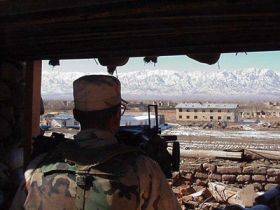 On Monday, one day after the New York Times and the Washington Post reported that the Obama administration was planning to introduce tribunals for the prisoners held in the US prison at Bagram airbase, Afghanistan, the reason for the specifically-timed leaks that led to the publication of the stories became clear.
The government was hoping that offering tribunals to evaluate the prisoners’ status would perform a useful PR function, making the administration appear to be granting important rights to the 600 or so prisoners held in Bagram, and distracting attention from the real reason for its purported generosity: a 76-page brief to the Court of Appeals for the District of Columbia (PDF), submitted yesterday, in which the government attempted to claim that “Habeas rights under the United States Constitution do not extend to enemy aliens detained in the active war zone at Bagram Airfield in Afghanistan.”
The main reason for this brazen attempt to secure a PR victory before the appeal was filed is blindingly obvious to anyone who has been studying the Bagram litigation over the last five months. In April, Judge John D. Bates ruled that three foreign prisoners seized in other countries and “rendered” to Bagram, where they have been held for up to six years, had the right to challenge the basis of their detention in US courts.
Below, I discuss the government’s position regarding these men, and explain why introducing Guantánamo-style tribunals at Bagram is no substitute for the Geneva Conventions, and at the end of the article I also ask whether the government may not have an even darker motive, related to what I perceive to be comments from administration officials revealing Bagram’s ongoing use as a secret prison for foreign suspects “rendered” from other countries.
Why bringing Guantánamo to Bagram is intended to exclude the US courts
Despite fierce opposition from Obama’s Justice Department, which clung to the line taken by the Bush administration, Judge Bates ruled in April that Boumediene v. Bush — the Supreme Court ruling last June, which granted constitutionally guaranteed habeas corpus rights to the prisoners in Guantánamo — extended to foreign prisoners “rendered” to Bagram, because “the detainees themselves as well as the rationale for detention are essentially the same.” He added that, although Bagram is “located in an active theater of war,” and that this may pose some “practical obstacles” to a court review of their cases, these obstacles “are not as great” as the government suggested, are “not insurmountable,” and are, moreover, “largely of the Executive’s choosing,” because the prisoners were specifically transported to Bagram from other locations.
Judge Bates was undoubtedly correct, for two reasons: firstly, because, as I explained at the time, “only an administrative accident — or some as yet unknown decision that involved keeping a handful of foreign prisoners in Bagram, instead of sending them all to Guantánamo — prevented them from joining the 779 men in the offshore prison in Cuba”; and secondly, because he refused to extend habeas rights to an Afghan prisoner “rendered” to Bagram from the United Arab Emirates in 2002 — and, by extension, to the rest of the Afghans in Bagram, seized in Afghanistan, who constitute all but 30 or so of the 650 men held in the prison — primarily because he agreed with the government’s claim that to do so would cause “friction” with the Afghan government regarding negotiations about the transfer of Afghan prisoners to the custody of their own government.
Reinforcing its hopes that offering tribunals to the prisoners would deflect attention from its desire to keep holding “rendered” prisoners at Bagram indefinitely, the government included an Addendum with its brief on Monday, outlining its plans for the new tribunal system. This is designed to replace an existing review system, which, in the words of Judge Bates, “falls well short of what the Supreme Court found inadequate at Guantánamo” in Boumediene, being both “inadequate” and “more error-prone” than the notoriously inadequate and error-prone system of Combatant Status Review Tribunals (CSRTs) that was established at Guantánamo to review the prisoners’ cases.
Reporters have been quick to spot that the new review system — far from providing an adequate system that would, presumably, satisfy the Supreme Court — is, in fact, little more than a carbon-copy of the CSRTs, which were severely criticized by the Supreme Court in Boumediene, and which were also savaged by Lt. Col. Stephen Abraham, a veteran of US intelligence who worked on them, who explained, in a series of explosive statements in 2007, that they were designed primarily to rubberstamp the administration’s insistence that the men were “enemy combatants,” even though they had not been adequately screened on capture.
What has happened to the Geneva Conventions?
This omission of screening on capture — which has applied at Bagram ever since — came about because, under instructions from the highest levels of government, the military was obliged to shelve its plans to hold competent tribunals under Article 5 of the Geneva Conventions, despite the fact that they had been pioneered by the US, and had been used successfully in every war from Vietnam onwards. Held close to the time and place of capture, these tribunals (as opposed to the CSRTs, which mockingly echoed them), comprise three military officers, and are designed to separate combatants from civilians seized in the fog of war, in cases where it is not obvious that prisoners are combatants (when they are not wearing a uniform, for example), by allowing the men in question to call witnesses.
During the first Gulf War, around 1,200 of these tribunals were held, and in nearly three-quarters of the case, the men were found to have been wrongly detained, and were released. The failure to implement these tribunals in the “War on Terror” contributed enormously to the filling of Guantánamo with prisoners who had no connections to any form of militancy whatsoever, and these initial errors were not redressed when a skewed version of the tribunals — the CSRT system — was introduced two and half years later.
As a result, plans to introduce Guantánamo-style tribunals to Bagram — in which prisoners are assigned military representatives instead of lawyers, and may call witnesses and present evidence if “reasonably available” — may be an improvement on the existing system of Unlawful Enemy Combatant Review Boards at Bagram — in which the prisoners have no representation whatsoever, and are only allowed to make a statement before they hear the evidence against them — but it fails to take into account the fact that non-uniformed prisoners seized in wartime, like those at Bagram, should, under the terms of the Geneva Conventions, be given competent tribunals on capture, and then, if found to be combatants, held unmolested until the end of hostilities.
Despite being addressed in the DoD’s new proposals, these concerns are not mitigated by the fact that, according to these plans, new prisoners will be subjected, on capture, to cursory reviews by “the capturing unit commander” and by the commander of Bagram to ascertain that they “meet the criteria for detention,” and the problem is underlined by the DoD’s insistence that it is not merely holding prisoners “consistent with the laws and customs of war,” but also holding those who fulfill the criteria laid down in the Authorization for Use of Military Force (the founding document of the “War on Terror,” approved by Congress within days of the 9/11 attacks), which authorized the President to detain those who “planned, authorized, committed or aided the terrorist attacks that occurred on September 11, 2001,” or those who supported them.
So is Bagram Obama’s new secret prison?
However, while this is a genuinely disturbing development, because it suggests that the Obama administration is essentially following President Bush’s lead by unilaterally rewriting the Conventions, presumably to allow it to continue exploiting prisoners of war for their supposed intelligence value (even though the DoD explained, in its proposal, that “intelligence value, by itself, is not a basis for internment”), only one major media outlet — the New Yorker — has picked up on a disturbing disclosure in the Times’ coverage of the story on Sunday. I reported this in an article yesterday, when I explained that there was something deeply suspicious about the officials’ statement that:
the importance of Bagram as a holding site for terrorism suspects captured outside Afghanistan and Iraq has risen under the Obama administration, which barred the Central Intelligence Agency from using its secret prisons for long-term detention.
As I explained yesterday, this “seems to confirm, in one short sentence, that, although the CIA’s secret prisons have been closed down, as ordered by President Obama, a shadowy ‘rendition’ project is still taking place, with an unknown number of prisoners being transferred to Bagram instead.”
In a blog post for the New Yorker, Amy Davidson also picked up on the statement, calling it a sentence “that doesn’t make much sense,” and then asked:
So closing Guantánamo increases the need for a new Guantánamo, and barring the use of secret prisons just means that you need to find a new place to stash secret prisoners? Have we had it with Guantánamo because it’s unfashionable — like a played-out spring-break destination, now overrun with journalists and human-rights lawyers hopping on planes in Florida — or because we actually don’t like extrajudicial, indefinite detention?
While I await further developments, I recall that, back in April, CIA director Leon Panetta explained that, although the CIA “no longer operates detention facilities or black sites and has proposed a plan to decommission the remaining sites,” the agency “retains the authority to detain individuals on a short-term transitory basis.” Panetta added that, although no detentions had occurred since he became director, “We anticipate that we would quickly turn over any person in our custody to US military authorities or to their country of jurisdiction, depending on the situation.”
Is this what is happening now at Bagram? Shortly after Panetta made his comments, I noted that “the only logical conclusion” I could draw was that, “essentially, the Obama administration’s only real problem with ‘extraordinary rendition’ is one of scale. The Bush administration’s industrial-scale rendition policies have been banished, but the prospect of limited rendition — to third countries rather than to the US court system, as would surely be more acceptable — is being kept as a possible option.”
Whether hidden transfers to third countries are taking place is unknown, but from my reading of the officials’ comments to the Times, I infer that the CIA is now handing suspects over to the US military, including those captured outside Afghanistan, and that this is the reason, above all, that the government is anxious to prevent the US courts from having access to foreign prisoners in Bagram.
Moreover, as with the Bush administration, the indications are that this process focuses solely on the gathering of “actionable intelligence” — or with “decommissioning” suspects — and that those responsible for implementing it have, yet again, chosen to ignore the fact that terrorism is a crime, prosecutable in the US courts, and not an act of war requiring secret prisons and extra-legal detention, however much it may be dressed up in review procedures that include only the following “[p]ossible recommendations” for what will happen to those prisoners who “meet the criteria for internment”: “continued internment” in Bagram, transfer to the Afghan authorities for prosecution, transfer to the Afghan authorities “for participation in a reconciliation program,” and, in the cases of “non Afghan and non-US third-country national[s],” options “that may also include transfer to a third country for criminal prosecution, participation in a reconciliation program, or release.” What, I wonder, are the options that were not included?
Andy Worthington is the author of The Guantánamo Files: The Stories of the 774 Detainees in America’s Illegal Prison (published by Pluto Press, distributed by Macmillan in the US, and available from Amazon — click on the following for the US and the UK). To receive new articles in your inbox, please subscribe to my RSS feed, and also see my definitive Guantánamo prisoner list, published in March 2009.
As published on the Huffington Post, Antiwar.com, CounterPunch and ZNet. Cross-posted on The Public Record and Common Dreams. Also mentioned by Glenn Greenwald in Salon (here and here), and on the Atlantic Wire.
Obama Brings Guantánamo And Rendition To Bagram (And Not The Geneva Conventions)
 Following briefings by Obama administration officials (who declined to be identified), both the New York Times and the Washington Post reported yesterday that the government is planning to introduce a new review system for the 600 or so prisoners held at Bagram airbase in Afghanistan, which will, for the first time, allow them to call witnesses in their defense.
On paper, this appears to be an improvement on existing conditions at the prison, but a close inspection of the officials’ statement reveals that the proposed plans actually do very little to tackle the Bush administration’s wayward innovations regarding the detention of prisoners in wartime, and, moreover, the officials also provided the shocking news that prisoners are currently being rendered to Bagram from other countries.
Reform at Bagram is certainly needed. Until 2007, there was, as the Post explained, “no formal process to review prisoner status,” and, as District Court Judge John D. Bates noted in April, the system that was then put in place — consisting of Unlawful Enemy Combatant Review Boards — “falls well short of what the Supreme Court found inadequate at Guantánamo” (in Boumediene v. Bush, the June 2008 ruling granting the prisoners constitutionally guaranteed habeas corpus rights), being both “inadequate” and “more error-prone” than the notoriously inadequate and error-prone system of Combatant Status Review Tribunals that was established at Guantánamo to review the prisoners’ cases.
Revealing the chronic deficiencies of the review system at Bagram, Judge Bates quoted from a government declaration which stated that the UECRBs at Bagram do not even allow the prisoners to have a “personal representative” from the military in place of a lawyer (as at Guantánamo), and that “Bagram detainees represent themselves,” and added, with a palpable sense of incredulity:
Detainees cannot even speak for themselves; they are only permitted to submit a written statement. But in submitting that statement, detainees do not know what evidence the United States relies upon to justify an “enemy combatant” designation — so they lack a meaningful opportunity to rebut that evidence. [The government’s] far-reaching and ever-changing definition of enemy combatant, coupled with the uncertain evidentiary standards, further undercut the reliability of the UECRB review. And, unlike the CSRT process [which was followed by annual review boards], Bagram detainees receive no review beyond the UECRB itself.
In what appears to be a direct response to Judge Bates’ damning criticisms, government officials explained, as the Post described it, that:
Under the new rules, each detainee will be assigned a US military official, not a lawyer, to represent his interests and examine evidence against him. In proceedings before a board composed of military officers, detainees will have the right to call witnesses and present evidence when it is “reasonably available,” the official said. The boards will determine whether detainees should be held by the United States, turned over to Afghan authorities or released.
While this checks all the boxes regarding the deficiencies identified by Judge Bates, and includes the additional promise that, “For those ordered held longer, the process will be repeated at six-month intervals,” it hardly constitutes progress, as these plans essentially replicate the CSRTs at Guantánamo, which, lest we forget, were condemned as a sham process by Lt. Col. Stephen Abraham, a veteran of US intelligence who worked on the tribunals. In a series of explosive statements in 2007, Lt. Col. Abraham explained that they relied on an evidentiary process that was nothing short of “garbage,” and were designed merely to rubberstamp the Bush administration’s feeble or non-existent justification for holding the majority of the men.
Hoping to fend off such criticisms, the government officials told the Post that “the review proceedings at Bagram will mark an improvement in part because they will be held in detainees’ home countries — where witnesses and evidence are close at hand.”
This may be the case, but at no point in the officials’ statements was any mention made of the government’s obligations to hold prisoners seized in wartime as prisoners of war in accordance with the Geneva Conventions. In practical terms, this would not necessarily help the prisoners secure their release, because the Conventions assert that prisoners of war can be held until the end of hostilities, and at present, from the best estimates made available, prisoners are held for an average of 14 months before being transferred to Afghan custody (or, in some cases, released outright), and around 500 prisoners have left Bagram to date.
However, under Article 5 of the Geneva Conventions, if there is any doubt about the status of prisoners seized in wartime, competent tribunals must be held, close to the time and place of capture, in which prisoners are allowed to call witnesses. As I have explained at length before, these tribunals were held during every US war from Vietnam onwards, but they were deliberately suppressed by the Bush administration (contributing decisively to the filling of Guantánamo with men who had no connection to any form of militancy whatsoever), and what President Obama must do, if he is intending to ensure that the United States once more embraces the Geneva Conventions, is to pledge that all prisoners seized in future will be subjected to these tribunals on capture, rather than holding versions of the CSRTs at some unspecified time afterwards.
By refusing to do so, I can only infer that he and his administration have, essentially, accepted the Bush administration’s aberrant changes regarding the detention of prisoners in wartime as a permanent shift in policy, with profound implications for the Conventions in general.
If Obama’s plan stands, any country anywhere in the world will be able to seize irregular soldiers during wartime (including US forces working undercover, presumably), and, instead of holding competent tribunals, feel justified in holding them for an unspecified amount of time before subjecting them to innovative tribunals, which bear a resemblance to the competent tribunals, but which are, instead, clearly designed to shred Article 5 and to allow prisoners to be held until their circumstances can be explored further — and, again by inference, until they can be milked for their supposed intelligence value, with all the ominous undercurrents that phrase involves.
In the case of Bagram, a further complication is that, according to the Post, the Conventions have been shredded still further, because about 200 of the 500 prisoners who have left Bagram “have been convicted in Afghan courts, all based on evidence the United States provided.”
These fundamental assaults on the Geneva Conventions, combined with the evidence regarding the dubious relationship between the US and the Afghan courts, are disturbing enough, as they, demonstrate, in defiance of the claims made by government officials, that the Obama administration is only tinkering with its predecessor’s fundamental disregard for international laws and treaties.
However, the timing of the government’s announcement is also enormously suspicious because, as the Times explained, it comes “as the administration is preparing to appeal a federal judge’s ruling in April that some Bagram prisoners brought in from outside Afghanistan have a right to challenge their imprisonment.”
That ruling, which I quoted from above, was made by Judge Bates, in the cases of three foreign prisoners seized in other countries and “rendered “ to Bagram, where they have languished without rights for up to six years. In April, when Judge Bates ruled on their habeas corpus appeals, he had no hesitation in granting them the right to challenge the basis of their detention through the courts because, as he explained unambiguously, “the detainees themselves as well as the rationale for detention are essentially the same.” He added that, although Bagram is “located in an active theater of war,” and that this may pose some “practical obstacles” to a court review of their cases, these obstacles “are not as great” as the government suggested, are “not insurmountable,” and are, moreover, “largely of the Executive’s choosing,” because the prisoners were specifically transported to Bagram from other locations.
As I explained at the time, it was inconceivable that the government could come up with an argument against Judge Bates’ ruling, or, indeed, that there was any justification whatsoever for doing so, because “only an administrative accident — or some as yet unknown decision that involved keeping a handful of foreign prisoners in Bagram, instead of sending them all to Guantánamo — prevented them from joining the 779 men in the offshore prison in Cuba.”
However, although Judge Bates, in a later ruling, sided with the government by refusing to grant habeas rights to an Afghan prisoner seized in the United Arab Emirates in 2002 and also rendered to Bagram, primarily because he agreed with the government’s claim that to do so would cause “friction” with the Afghan government regarding negotiations about the transfer of Afghan prisoners to the custody of their own government, the Obama administration refused to accept his ruling about the foreign prisoners and launched an immediate appeal. As a result, it is, I believe, completely justifiable to conclude that the entire rationale for introducing a new review process for all the prisoners at Bagram is to prevent the courts from having access to the foreign prisoners held there.
Reinforcing this conclusion is another admission, hidden away towards the end of the Times report, in which it was noted that the officials also explained that “the importance of Bagram as a holding site for terrorism suspects captured outside Afghanistan and Iraq has risen under the Obama administration, which barred the Central Intelligence Agency from using its secret prisons for long-term detention.”
This, to put it bluntly, is terrifying, as it seems to confirm, in one short sentence, that, although the CIA’s secret prisons have been closed down, as ordered by President Obama, a shadowy “rendition” project is still taking place, with an unknown number of prisoners being transferred to Bagram instead.
The upshot of all this is disastrous for those who hoped that President Obama would not only accept, but would positively embrace the opportunity to return to the laws that existed regarding the capture and detention of prisoners, before they were so comprehensively dismissed by the Bush administration. Far from reassuring the world that there are only two acceptable methods for holding people in detention — either as criminal suspects, to be put forward for trials in federal court, or as prisoners of war, protected by the Geneva Conventions — Obama has chosen instead to continue to operate outside the law, implementing Guantánamo-style tribunals at Bagram, and acknowledging that he wants the US courts to remain excluded because he is using Bagram as a prison for terror suspects “rendered” from around the world.
To gauge quite how disastrous this news is, imagine how former Vice President Dick Cheney is responding to it. Yes, that is indeed a smile playing over the lips of the architect of America’s wholesale flight from the law in the wake of the 9/11 attacks. “I told you so,” he mutters contentedly …
Andy Worthington is the author of The Guantánamo Files: The Stories of the 774 Detainees in America’s Illegal Prison (published by Pluto Press, distributed by Macmillan in the US, and available from Amazon — click on the following for the US and the UK). To receive new articles in your inbox, please subscribe to my RSS feed, and also see my definitive Guantánamo prisoner list, published in March 2009.
As published exclusively on the website of the Future of Freedom Foundation (as “Obama Brings Guantánamo To Bagram”). Cross-posted on AlterNet.
In the Guardian: Remember 9/11 and remember Guantánamo
 For the Guardian’s Comment is free, “Remember 9/11, remember Guantánamo” is an article I wrote to provide a reminder that, as we remember the nearly 3,000 people from over 40 nations who died in the terrorist attacks of September 11, 2001, “much work still needs to be done to address the fallout from the Bush administration’s extraordinary response to the attacks.”
My particular concern is with Guantánamo, for two reasons: firstly, because, on this sad anniversary, we are still waiting for justice to be delivered in the cases of the few dozen men apparently involved in the attacks, or in other acts of international terrorism; and secondly, because the majority of the 225 men still held in Guantánamo had nothing to do with the above, and it is time that their long imprisonment came to an end.
In the cases of the few dozen genuine terror suspects in Guantánamo, I urge President Obama to put them forward for trial in federal courts, and not to revive the Military Commissions that, as former prosecutor Lt. Col. Darrel Vandeveld recently explained, are “beyond repair.”
In the cases of the other men, I explain how, despite considerable success in their habeas corpus hearings (in which 29 out of 36 appeals have been granted), the prisoners’ quest for justice is still limited by an outmoded review process in which the courts are obliged merely to consider whether the government has proved that they were connected to al-Qaeda and/or the Taliban.
With each passing year, I believe that the rationale for holding genuine terror suspects alongside Taliban foot soldiers, seized in connection with the overthrow of the Taliban government, as though they were one and the same, becomes increasingly intolerable, and I call for swift action to acknowledge that this is the case, and to facilitate the promised closure of the prison by January 2010.
I also discuss Bagram and the fate of those held in secret prisons or rendered to other countries, but my focus is predominantly on Guantánamo, because, on the eighth anniversary of 9/11, it remains the most visible and bleakly iconic symbol of the Bush administration’s hideous response to the terrible events of that day.
As I explain in the conclusion to my article, “Guantánamo remains the most obvious challenge to President Obama’s stated ambition to ‘regain America’s moral stature in the world,’” but as it now stands, “justice is being delivered neither to those regarded as genuinely dangerous, nor to those whose significance has been exaggerated.”
Andy Worthington is the author of The Guantánamo Files: The Stories of the 774 Detainees in America’s Illegal Prison (published by Pluto Press, distributed by Macmillan in the US, and available from Amazon — click on the following for the US and the UK). To receive new articles in your inbox, please subscribe to my RSS feed, and also see my definitive Guantánamo prisoner list, published in March 2009.
The Guardian article was cross-posted on Common Dreams and AlterNet.
No Escape From Guantánamo: The Latest Habeas Rulings
 A month ago, rulings made by District Court judges in the habeas corpus appeals of prisoners held at Guantánamo seemed, for the most part, to confirm that the courts were uniquely placed to deliver justice to the prisoners after their long years of imprisonment, largely without charge or trial. Even more crucially, the judges’ rulings were allowing justice to be seen to be done, unlike the secretive interagency Task Force established by Barack Obama on his second day in office, whose deliberations are, sadly, as inscrutable as those of Obama’s predecessor, even though the Task Force has at least taken the time to consult with lawyers and other experts.
As I recently reported in a series of three articles (here, here and here), despite persistent obstruction from the Justice Department, where Bush-era officials have been behaving as though Dick Cheney is still breathing down their necks, judges had, by the end of July, reviewed 33 cases, and in 28 of those had ruled that the government had failed to establish, “by a preponderance of the evidence,” that it was justified in holding the men. The judges concluded that, amongst other failings, the government was relying on information provided by dubious informers, on multiple levels of hearsay that failed to stand up to outside scrutiny, and on a supposed “mosaic” of evidence from various sources that was also unconvincing.
Nevertheless, although these rulings confirmed what those, like myself, who have been studying Guantánamo in depth for many years, have always maintained — that the majority of the prisoners are either innocent men seized for bounty payments (or through the incompetence of US forces and other government agencies) or low-level Taliban foot soldiers recruited to help the Taliban defeat Afghanistan’s Northern Alliance in an inter-Muslim civil war that had nothing to do with al-Qaeda or the 9/11 attacks — the courts still face a number of peculiar problems.
These problems have arisen not only because almost all of the government’s supposed evidence consists of the inherently dubious statements of informers, of multiple levels of hearsay and of feeble “mosaics” of intelligence (as mentioned above), but also because when the Supreme Court granted the prisoners constitutionally guaranteed habeas corpus rights in June 2008, the justices failed to provide a clear definition of the extent to which prisoners were required to be involved in al-Qaeda and/or the Taliban to have their habeas appeals refused.
The “gossamer thin” case against Adham Mohammed Ali Awad
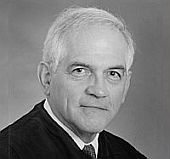 The resultant confusion was on full display in August, when three rulings were made. In the first, on August 12 (PDF), Judge James Robertson denied the habeas appeal of Adham Mohammed Ali Awad, a Yemeni prisoner, even though he conceded that “The case against Awad is gossamer thin,” and added, “The evidence is of a kind fit only for these unique proceedings and has very little weight.”
This was Robertson’s first habeas ruling, and in the hands of another judge, the ruling may well have tipped the other way. Certainly, the case was as “gossamer thin” as Robertson declared. Awad, who was just 19 years old at the time, was seized in Mirwais Hospital in Kandahar, Afghanistan in late 2001. According to his own account, he had “traveled to Afghanistan in mid-September 2001 in order to visit another Muslim country for a few months,” but in early November 2001 “was injured and knocked unconscious during an air raid while walking through a market in Kandahar.” When he woke up in the hospital, he said, he discovered that he had lost his right foot, “that he was heavily medicated, floated in an out of consciousness, slept constantly, and could barely sit up.” He added that he “remained in this condition until his capture.”
Over the long years of his detention, as I explained in a profile of Awad last year, the US authorities have claimed that he “stated he went to Afghanistan to become a fighter,” have suggested that he received injuries “in a two-car collision, involving ten individuals, while trying to avoid coalition air strikes,” and have also claimed that he, “along with seven other Arabs suspected of being al-Qaeda, were reportedly armed with weapons and used a hospital as a safe haven to elude coalition forces.” These allegations, which surfaced in the Unclassified Summary of Evidence during Awad’s Combatant Status Review Tribunal at Guantánamo in 2004, formed the basis of the government’s case in court, even though, by 2006, in a review board at Guantánamo, the authorities had dropped all mention of the car crash, Awad’s supposed al-Qaeda associates, and his involvement in the siege, and, instead, suggested only that he was “captured on 2 November 2001 when he was injured near the airport in Kandahar.”
Judge Robertson perceived that Awad’s case “relie[d] mostly on weaknesses and holes in the government’s evidence,” which, as noted above, he was swift to condemn for its “gossamer thin” nature, but although he noted that the government “relie[d] mostly on newspaper articles” for background information about the hospital siege, which took place from early December to late January and ended with the deaths of the seven al-Qaeda fighters, and although he gave “no weight” to the “only first hand evidence offered by the government” — an interview with a man (whose name was redacted), who “claimed that he led the group that had taken Awad into custody”, whose report he dismissed as “internally inconsistent” and “completely unreliable” — he nevertheless concluded that “it appears more likely than not that Awad was, for some period of time, ‘part of’ al-Qaeda.”
To reach this conclusion, Judge Robertson was required to accept the government’s supposed evidence that Awad had attended Osama bin Laden’s Tarnak Farms training camp, an allegation that was based on a variation of his name, ”Waqas” (he was sometimes listed by the Pentagon as Waqas Mohammed Ali Awad), being found on a list associated with the camp. Although Judge Robertson refused to accept the government’s claim that Awad trained at the camp, finding it to be “unsupported,” noting, “we do not know the purpose of the list or when it was written,” and adding that the translator “claimed only that it was ‘possibly’ a list of trainees,” he returned to the allegations of Awad’s presence at Tarnak Farms to substantiate his conclusion that “it appears more likely than not that Awad was, for some period of time, ‘part of’ al-Qaeda.” He noted that the names of the other men killed in the siege and Awad’s purported alias, “Waqas,” were closely grouped together on the list, and inferred from statements provided by another man who was present in the hospital and was also taken to Guantánamo (a Saudi released in 2007) that Awad and “Waqas” were one and the same.
Missing throughout all this analysis was any reflection on whether it was true that Awad only arrived in Afghanistan in mid-September 2001, and if, therefore, it was likely that he would have been immediately recruited for training at an advanced facility in the few weeks before the US-led invasion began, which strikes me as close to impossible. Also missing was any recognition that, as the government claimed in 2006, Awad was seized before the siege began, or, if that was a typographical error (as was indicated in court), that he was injured on December 2, when the siege began, and that he was booted out of the hospital by the al-Qaeda fighters inside (or, as the government put it, “Awad’s comrades gave him up because they could not care for his severely injured [redacted]”).
Even with the government’s spin, there is something suspicious about would-be al-Qaeda martyrs sending one of their own to be captured, rather than staying and being martyred instead, but rather than examining these questions, Judge Robertson ruled that “At the very least Awad’s confessed reasons for traveling to Afghanistan and the correlation of names on the list [redacted] clearly tied to al-Qaeda make it more likely than not that he knew the al-Qaeda fighters at the hospital and joined them in the barricade.”
Quite where this leaves Awad is unknown, as the government does not seem to have enough evidence for a trial, and may, therefore, consider him a suitable candidate for its proposal to legislate for new powers of “indefinite detention,” to be reviewed by Congress and judges, which are supposed to provide an acceptable veneer to what is nothing more than a continuation of the Bush administration’s despised policies. To this end, what may disappoint Awad the most is that, although Judge Robertson described him as a “marginally literate” young man, who “has spent more than seven of his twenty-six years — since he was a teenager — in American custody,” and, moreover, stated, “It seems ludicrous to believe that he poses a security threat now,” he added, limply, “but that is not for me to decide.”
In doing so, he ignored an earlier ruling (PDF), in which Judge Ellen Segal Huvelle noted that the Authorization for Use of Military Force (the legislation passed in the week after 9/11 which authorized the President “to use all necessary and appropriate force” against those “he determines” to have been involved in any way in the 9/11 attacks) “does not authorize the detention of individuals beyond that which is necessary to prevent those individuals from rejoining battle,” and ignored another ruling, in the case of a Syrian prisoner, Abdul Rahim al-Ginco, in which Judge Richard Leon ruled that whatever relationship al-Ginco may have had with al-Qaeda was “utterly destroyed.” In al-Ginco’s case, this was because he had been tortured by al-Qaeda as a spy, but it was also noteworthy that Judge Leon stated that al-Ginco’s prior experience of al-Qaeda — “five days at a guest house in Kabul combined with eighteen days at a training camp — does not add up to a longstanding bond of brotherhood.”
Instead, however, Judge Robertson raised and dismissed a little-voiced question — whether it is appropriate to continue holding men who were seized in connection with a specific conflict (the overthrow of the Taliban and the installation of a new government, which came to an end years ago) — by stating, “Combat operations in Afghanistan continue to this day and — in my view — the President’s ‘authority to detain for the duration of the relevant conflict’ which is ‘based on long-standing law-of-war principles’ has yet to ‘unravel.’”
Mohammed al-Adahi and the al-Qaeda mirage
 One judge who may have dealt more robustly with the “gossamer thin” evidence in the case of Adham Mohammed Ali Aawad is Judge Gladys Kessler, who, on August 21, granted the habeas appeal of Mohammed al-Adahi, a Yemeni who was 39 years old when he was seized on a bus in Pakistan (PDF). I described the broad outline of al-Adahi’s story in my book The Guantánamo Files as follows:
Married with two children, al-Adahi had never left the Yemen until August 2001, when he took a vacation from the oil company where he had worked for 21 years to accompany his sister to meet her husband … As he told his tribunal, “In Muslim society, a woman does not travel by herself.” After flying to Karachi, they traveled to Kandahar, where his brother-in-law was living. Al-Adahi stayed in Afghanistan for a month, “to ease his sister’s transition to life in Afghanistan,” and then made his way back to Pakistan, where he was arrested by soldiers while traveling on a bus. “They were capturing everybody with Arabic features,” he said. “I gave them my passport and that shows that I’m an Arab. They said, ‘why don’t you follow us, we need you at the Center.’ From that point on they brought us over here.”
However, while this was a fair précis, the government believed that it could establish a case that al-Adahi was actually a member of al-Qaeda, for a number of reasons that appeared, on the surface at least, to be plausible. As Judge Kessler explained, “There is no question that the record fully supports the Government’s allegation that Petitioner had close familial ties to prominent members of the jihad community in Afghanistan.” The brother-in-law, it appears, was “a prominent man in Kandahar,” who had fought the Russians in Afghanistan, and Judge Kessler also noted that it was “undisputed” that Osama bin Laden “hosted and attended [the] wedding reception in Kandahar,” that al-Adahi “was briefly introduced to bin Laden,” and that “A few days later, al-Adahi met bin Laden again and the two chatted briefly about religious matters in Yemen.”
However, Judge Kessler refused to accept the government’s contention that these familial ties and the two brief meetings with bin Laden proved that al-Adahi “was part of the inner circle of the enemy organization al-Qaeda,” and accepted instead that there was no reason to doubt that al-Adahi’s visit was, as he stated, to accompany his sister to her wedding (and also to receive medical treatment for a back problem). She noted also that he had not tried to hide the fact that he had met bin Laden, and that he had, in addition, stated that it was “common for visitors to Kandahar” to do so.
As in May, when she granted the habeas appeal of another Yemeni, Alla Ali Bin Ali Ahmed, Judge Kessler had serious doubts about the manner in which the government established its case, which focused primarily on its claim that its various allegations should be considered as part of a “mosaic” of intelligence, to be viewed as a whole, rather than being examined in isolation. Dismissing this approach, she stated that, although she understood that “use of this approach is a common and well-established mode of analysis in the intelligence community … at this point in this long, drawn-out litigation the Court’s obligation is to make findings of fact and conclusions of law which satisfy appropriate and relevant legal standards as to whether the Government has proven by a preponderance of the evidence that the Petitioner is justifiably detained.”
She proceeded to stress that “the mosaic theory is only as persuasive as the tiles which compose it and the glue which binds it together,” and that, “if the individual pieces of a mosaic are inherently flawed or do not fit together, then the mosaic will split apart.” Having dealt with the government’s first “tile,” she methodically dismantled the others, refuting a claim that al-Adahi had “stayed at al-Qaeda and/or Taliban guesthouses during his stay in Afghanistan,” and demolishing the government’s “central accusation”: that al-Adahi’s brief attendance at al-Farouq (the main training camp for Arabs, associated with Osama bin Laden in the years before 9/11) helped to confirm that he occupied “some sort of ‘structured’ role in the ‘hierarchy’ of the enemy force.”
Noting his claim that he “pursued training at al-Farouq to satisfy ‘curiosity’ about jihad, and because he found himself in Afghanistan with idle time,” she took particular exception to the government’s claim because, “After seven to ten days at al-Farouq, the camp leaders expelled al-Adahi for failing to comply with the rules.” Referring, incredibly, to the case of Abdul Rahim al-Ginco, the Syrian who was tortured by al-Qaeda (and whose case the Justice Department had pursued in the habeas courts until it was thoroughly humiliated by Judge Richard Leon in June), the government’s lawyers attempted to claim that, because al-Adahi was not imprisoned and tortured as a spy after he was expelled (like al-Ginco), this proved that he was being given preferential treatment because of his ties to al-Qaeda. However, Judge Kessler concluded instead that it was more likely that he “was being protected by a concerned family member” with considerable influence, and that “it most certainly is not affirmative evidence that al-Adahi embraced al-Qaeda, accepted its philosophy, and endorsed its terrorist activities.”
She was also dismissive of an allied claim — that al-Adahi was an instructor at al-Farouq in February 2000 — noting that the only source for this allegation was another prisoner at Guantánamo, for whom “the record contains evidence that [he] suffered from ‘serious psychological issues,’” and dismissed another claim — that al-Adahi was a bodyguard for bin Laden — by pointing out that this claim had been made by another prisoner who “suffers from serious credibility problems that undermine the reliability of his statements.” It seems probable, from references to a “report of torture by the Taliban” in the case of this witness, that he was Abdul Rahim al-Ginco, who, as Judge Kessler noted, admitted in August 2005 that he had “lied in the past.” She also noted that “interrogators had expressed concern that he was being manipulated by another detainee,” and quoted from a report stating that “before being placed next to that detainee [he] had never made any of the claims that he made to interrogators, including the accusation against al-Adahi.”
With the bulk of the government’s claims dismissed, it remained only for Judge Kessler to destroy the rest of the “mosaic” by noting that, with reference to the rest of al-Adahi’s time in Afghanistan after being expelled from al-Farouq, it was “only speculation” on the part of the government that injuries he received to his arm and leg in Kandahar were the result of combat, and not, as he stated, because of a motorcycle accident. She also pointed out that, although the government attempted to pin “associational evidence” of militancy on a claim that al-Adahi “was captured while traveling in the company of Taliban fighters” on a bus in Pakistan, the only source for this was something al-Adahi himself had been told after his capture, when he “heard that there were members of the Taliban on the bus.” Noting, in addition, that he was “unarmed” at the time of his capture, she concluded that “He appeared to be attempting to escape the chaos of that time by any means he could,” and granted his habeas appeal (although, as with all the cases of prisoners whose habeas appeals have been granted, the ruling provides no guarantee that he will actually be released).
Fawzi al-Odah: the Kuwaiti who trained for one day
 On August 24, the government secured another shallow victory when Judge Colleen Kollar-Kotelly denied the habeas petition of Fawzi al-Odah, a Kuwaiti prisoner, agreeing with the government that it was “more likely than not” that he “became part of Taliban and al-Qaeda forces in Afghanistan” (PDF). Judge Kollar-Kotelly’s ruling was based on a dubious assemblage of information that relied more on inconsistencies in al-Odah’s account of his activities than it did on anything resembling concrete evidence, as she herself admitted, when she wrote that there were “significant reasons why the Government’s proffered evidence may not be accurate or authentic.” She explained that some of it was produced “in circumstances that have not allowed the Government to ascertain its chain of custody, nor in many instances even to produce information about the origins of the evidence,” that other evidence was “based on so-called ‘unfinished intelligence,’ information that has not been subject to each of the five steps in the intelligence cycle (planning, collection, processing, analysis and production, and dissemination),” and that other evidence was “based on multiple layers of hearsay (which inherently raised questions about reliability), or is based on reports of interrogations (often conducted through a translator) where translation or transcription mistakes may occur.”
The basic facts of the case, as I explained in an article for the BBC’s website in December 2007, are as follows. Al-Odah, a 24-year old primary school teacher, whose father, a retired air force pilot, fought with US forces during the Gulf War in 1991,
took a short holiday from work and traveled to Afghanistan in August 2001 to teach the Koran and provide humanitarian aid. This was something he had done before, in other countries, and his family had had a history of providing humanitarian aid, establishing libraries and wells in various countries in Africa.
After establishing contact with the Taliban, which he said “was necessary because that was the government in Afghanistan at that time,” Mr. Odah said he had been “touring the schools and visiting families,” teaching the Koran and handing out money, until his activities had been curtailed following 9/11.
He said that in Kandahar the Taliban representative “told me that was a dangerous place because it was the capital for the Taliban,” and had advised him to go to Logar, in the east of the country, where he had stayed with a family for a month, and left his passport and belongings for safekeeping. “If the Afghans saw I had a passport indicating I was an Arab, and they saw the money and the camera I had, I would have been killed,” he added.
He had then moved to Jalalabad, where he had stayed with another family, who had given him an AK-47 assault rifle to protect himself, Mr. Odah said. He had then joined other people crossing the mountains to Pakistan, where he had handed himself in to the border guards, he added. Mr. Odah said he expected to be escorted to the Kuwaiti embassy, but had instead been handed over to US forces.
In dissecting al-Odah’s story, Judge Kollar-Kotelly took exception to apparent inconsistencies in his account of his journey to Afghanistan, suggestions that he had lied about his plans to teach, and about the length of time he intended to stay. She concluded, by comparing his route — to Dubai, and then to Karachi, Quetta, Spin Boldak and Kandahar — with the same route taken by jihadists that the record “supports a reasonable inference that al-Odah may have also been traveling to Afghanistan to engage in jihad, and not to teach the poor and needy for two weeks.”
She followed up by casting doubts on his claim that he innocently “sought to contact a Taliban official upon reaching Afghanistan and that he subsequently moved around the country at the direction of this official,” and on his explanation that he visited a training camp “supervised by the Taliban, where “he took one day of training on an AK-47 rifle.” Following the government’s lead, she suggested that it was “more likely than not” that the camp was in fact al-Farouq, and that al-Odah arrived there on September 10, 2001, the day before the 9/11 attacks, when the camp was closed down.
She also took exception to al-Odah’s apparent inability to explain why he had not left Afghanistan after the 9/11 attacks, why there was at least a month’s gap in his account of what happened afterwards, and why, three months after the attacks, he was captured, armed with an AK-47, having crossed the border into Pakistan from the Tora Bora region (where al-Qaeda and the Taliban had been engaged in combat with Afghan and US forces), in the company of a group of armed men who, according to “credible evidence” provided by the government, included one man “who had substantial ties to al-Qaeda.”
To be fair, it was understandable that Judge Kollar-Kotelly drew the inferences she did from the information provided, as her summing up made clear, when she explained that al-Odah “has admitted that he sought to meet with a Taliban official upon his arrival in Afghanistan; that he was subsequently brought by a Taliban official to a Taliban-operated training camp near Kandahar, Afghanistan; that he took one day of training with an AK-47 at this camp: that the Taliban official sent him to stay with an associate in Logar, Afghanistan, after September 11, 2001; that he surrendered his passport and other possessions to this individual; that he met with individuals who were armed and appeared to be fighters; that he accepted an AK-47 from these individuals; and that he traveled with his AK-47 into the Tora Bora mountains, remained there during the battle of Tora Bora, and was captured shortly thereafter by border guards while still carrying his AK-47.”
 From this outline of events, the government certainly had a stronger case than it did with Adham Mohammed Ali Awad, but even if this analysis is correct, the end result is that, nearly eight years after the 9/11 attacks, the United States is still asserting that it has the right to hold a young man who spent just one day at a training camp, who did not flee Afghanistan after the 9/11 attacks (perhaps because he feared reprisals if he was found escaping), who traveled with other men to Kabul, and then to Logar and then to Tora Bora and his eventual capture, with no evidence that he ever used the weapon he was given, and no evidence that his training involved anything more than firing a few rounds from an AK-47 in a practice session.
The long shadow of Salim Hamdan’s freedom
Back in January, when Judge Leon refused the habeas appeal of Ghaleb al-Bihani, a Yemeni who had worked as a cook for Arab forces supporting the Taliban, I made a comparison with the case of another prisoner, Salim Hamdan, which demonstrated to me that, although justice was finally within reach for some of the prisoners at Guantánamo, seven years after the prison opened, it was both farcical and unjust that Hamdan, a man who had worked as a driver for Osama bin Laden, had been tried in a Military Commission in which he was convicted of material support for terrorism, had served a five-month sentence delivered by a US military jury, and was now a free man in Yemen, while al-Bihani, who had never even met bin Laden, and who had, instead, worked as a cook before the 9/11 attacks and had subsequently failed to teleport himself out of the country after the US-led invasion began, continued to languish in Guantánamo, with no end to his detention in sight.
As the eighth anniversary of the 9/11 attacks approaches, I, like all those who oppose Guantánamo and everything it stands for, still hope that the small number of prisoners involved in the attacks, or in other terrorist attacks against the US, can be brought to justice, but I fail to see how rulings like those delivered last month in the cases of Adham Mohammed Ali Awad and Fawzi al-Odah contribute to that end. I believe that, with just four months to go until President Obama’s deadline for closing Guantánamo expires, all concerned would do well to direct their attention towards the few dozen prisoners at Guantánamo who are alleged to have been directly involved in terrorism, and to stop trying to defend the detentions of all the other men still held; men who, at best, were foot soldiers in a specific conflict that, in contrast to Judge Robertson’s words, came to an end no later than November 3, 2004, when Hamid Karzai was elected as the President of post-Taliban Afghanistan.
When Salim Hamdan was freed from Guantánamo, I wrote that his release spelled the end of the Bush administration’s justification for holding prisoners who had no meaningful connection to al-Qaeda or international terrorism. Ten months on, I stand by those words, and note that, although judges have now granted the habeas appeals of 29 of the 36 prisoners whose cases they have considered, nothing about the cases of the other seven men prevents Hamdan’s freedom from casting a longer and longer shadow over their continued detention.
Andy Worthington is the author of The Guantánamo Files: The Stories of the 774 Detainees in America’s Illegal Prison (published by Pluto Press, distributed by Macmillan in the US, and available from Amazon — click on the following for the US and the UK). To receive new articles in your inbox, please subscribe to my RSS feed, and also see my definitive Guantánamo prisoner list, published in March 2009.
As published on Antiwar.com, the Huffington Post, CounterPunch and ZNet. Cross-posted on The Public Record.
For a sequence of articles dealing with the Guantánamo habeas cases, see: Guantánamo and the Supreme Court: the most important habeas corpus case in modern history and Guantánamo and the Supreme Court: What Happened? (both December 2007), The Supreme Court’s Guantánamo ruling: what does it mean? (June 2008), Guantánamo as Alice in Wonderland (Uighurs’ first court victory, June 2008), What’s Happening with the Guantánamo cases? (July 2008), Government Says Six Years Is Not Long Enough To Prepare Evidence (September 2008), From Guantánamo to the United States: The Story of the Wrongly Imprisoned Uighurs (October 2008), Guantánamo Uyghurs’ resettlement prospects skewered by Justice Department lies (October 2008), Guilt By Torture: Binyam Mohamed’s Transatlantic Quest for Justice (November 2008), After 7 Years, Judge Orders Release of Guantánamo Kidnap Victims (November 2008), Is Robert Gates Guilty of Perjury in Guantánamo Torture Case? (December 2008), A New Year Message to Barack Obama: Free the Guantánamo Uighurs (January 2009), The Top Ten Judges of 2008 (January 2009), No End in Sight for the “Enemy Combatants” of Guantánamo (January 2009), Judge Orders Release of Guantánamo’s Forgotten Child (January 2009), How Cooking For The Taliban Gets You Life In Guantánamo (January 2009), Lies, Damned Lies and Statistics (February 2009), Bad News And Good News For The Guantánamo Uighurs (February 2009), The Nobodies Formerly Known As Enemy Combatants (March 2009), Farce at Guantánamo, as cleared prisoner’s habeas petition is denied (April 2009), Obama’s First 100 Days: A Start On Guantánamo, But Not Enough (May 2009), Judge Condemns “Mosaic” Of Guantánamo Intelligence, And Unreliable Witnesses (May 2009), Pain At Guantánamo And Paralysis In Government (May 2009), Guantánamo: A Prison Built On Lies (May 2009), Free The Guantánamo Uighurs! (May 2009), Guantánamo And The Courts (Part One): Exposing The Bush Administration’s Lies (July 2009), Obama’s Failure To Deliver Justice To The Last Tajik In Guantánamo (July 2009), Obama And The Deadline For Closing Guantánamo: It’s Worse Than You Think (July 2009), How Judge Huvelle Humiliated The Government In Guantánamo Case (Mohamed Jawad, July 2009), As Judge Orders Release Of Tortured Guantánamo Prisoner, Government Refuses To Concede Defeat (Mohamed Jawad, July 2009), Guantánamo As Hotel California: You Can Check Out Any Time You Like, But You Can Never Leave (August 2009), Judge Orders Release From Guantánamo Of Kuwaiti Charity Worker (August 2009). Also see: Justice extends to Bagram, Guantánamo’s Dark Mirror (April 2009), Judge Rules That Afghan “Rendered” To Bagram In 2002 Has No Rights (July 2009), Bagram Isn’t The New Guantánamo, It’s The Old Guantánamo (August 2009).
First photo of Khalid Sheikh Mohammed in Guantánamo
The photo below, of alleged 9/11 mastermind Khalid Sheikh Mohammed, has just been published on the website of al-Qaeda specialist Jarret Brachman, who obtained it from an Arabic-speaking website. Other photos — one of KSM, and two of his nephew, Ali Abdul Aziz Ali (aka Ammar al-Baluchi) — were published earlier today, picked up from other Arabic-speaking websites.
Bernard Barrett, a spokesman for the International Committee of the Red Cross, told the Miami Herald, which published two of the photos today, that they were taken in July, “under an agreement with prison camp staff that lets Red Cross delegates photograph detainees and send photos to family members.” He added, “We take a number of pictures of each one of them and they are allowed to chose the two they like the best. We make five color prints of each of the two shots and they can send them to their families. They’re prints, they’re not electronically transmitted. They are sent with Red Cross messages.”
It is not known how the photos ended up on the Internet — apparently on sites sympathetic to al-Qaeda — although it is presumed that, after being sent to the men’s family members, they were then “passed to someone with a membership on one of these sites,” as Brachman explained, who uploaded them as propaganda in the run-up to the eighth anniversary of the 9/11 attacks on Friday.

Alleged 9/11 mastermind Khalid Sheikh Mohammed, photographed at Guantánamo in July 2009, in a photograph taken by representatives of the International Committee of the Red Cross, sent to Mohammed’s family members, and leaked to an Arabic-language website last week.
Andy Worthington is the author of The Guantánamo Files: The Stories of the 774 Detainees in America’s Illegal Prison (published by Pluto Press, distributed by Macmillan in the US, and available from Amazon — click on the following for the US and the UK). To receive new articles in your inbox, please subscribe to my RSS feed, and also see my definitive Guantánamo prisoner list, published in March 2009.
See the following for a sequence of articles dealing with the stumbling progress of the Military Commissions: The reviled Military Commissions collapse (June 2007), A bad week at Guantánamo (Commissions revived, September 2007), The curse of the Military Commissions strikes the prosecutors (September 2007), A good week at Guantánamo (chief prosecutor resigns, October 2007), The story of Mohamed Jawad (October 2007), The story of Omar Khadr (November 2007), Guantánamo trials: where are the terrorists? (February 2008), Six in Guantánamo charged with 9/11 attacks: why now, and what about the torture? (February 2008), Guantánamo’s shambolic trials (ex-prosecutor turns, February 2008), Torture allegations dog Guantánamo trials (March 2008), African embassy bombing suspect charged (March 2008), The US military’s shameless propaganda over 9/11 trials (April 2008), Betrayals, backsliding and boycotts (May 2008), Fact Sheet: The 16 prisoners charged (May 2008), Afghan fantasist to face trial (June 2008), 9/11 trial defendants cry torture (June 2008), USS Cole bombing suspect charged (July 2008), Folly and injustice (Salim Hamdan’s trial approved, July 2008), A critical overview of Salim Hamdan’s Guantánamo trial and the dubious verdict (August 2008), Salim Hamdan’s sentence signals the end of Guantánamo (August 2008), Controversy still plagues Guantánamo’s Military Commissions (September 2008), Another Insignificant Afghan Charged (September 2008), Seized at 15, Omar Khadr Turns 22 in Guantánamo (September 2008), Is Khalid Sheikh Mohammed Running the 9/11 Trials? (September 2008), two articles exploring the Commissions’ corrupt command structure (The Dark Heart of the Guantánamo Trials, and New Evidence of Systemic Bias in Guantánamo Trials, October 2008), The collapse of Omar Khadr’s Guantánamo trial (October 2008), Corruption at Guantánamo (legal adviser faces military investigations, October 2008), An empty trial at Guantánamo (Ali Hamza al-Bahlul, October 2008), Life sentence for al-Qaeda propagandist fails to justify Guantánamo trials (al-Bahlul, November 2008), 20 Reasons To Shut Down The Guantánamo Trials (profiles of all the prisoners charged, November 2008), How Guantánamo Can Be Closed: Advice for Barack Obama (November 2008), More Dubious Charges in the Guantánamo Trials (two Kuwaitis, November 2008), The End of Guantánamo (Salim Hamdan repatriated, November 2008), Torture, Preventive Detention and the Terror Trials at Guantánamo (December 2008), Is the 9/11 trial confession an al-Qaeda coup? (December 2008), The Dying Days of the Guantánamo Trials (January 2009), Former Guantánamo Prosecutor Condemns Chaotic Trials (Lt. Col. Vandeveld on Mohamed Jawad, January 2009), Torture taints the case of Mohamed Jawad (January 2009), Bush Era Ends with Guantánamo Trial Chief’s Torture Confession (Susan Crawford on Mohammed al-Qahtani, January 2009), Chaos and Lies: Why Obama Was Right to Halt The Guantánamo Trials (January 2009), Binyam Mohamed’s Plea Bargain: Trading Torture For Freedom (March 2009).
And for a sequence of articles dealing with the Obama administration’s response to the Military Commissions, see: Don’t Forget Guantánamo (February 2009), Who’s Running Guantánamo? (February 2009), The Talking Dog interviews Darrel Vandeveld, former Guantánamo prosecutor (February 2009), Obama’s First 100 Days: A Start On Guantánamo, But Not Enough (May 2009), Obama Returns To Bush Era On Guantánamo (May 2009), New Chief Prosecutor Appointed For Military Commissions At Guantánamo (May 2009), Pain At Guantánamo And Paralysis In Government (May 2009), My Message To Obama: Great Speech, But No Military Commissions and No “Preventive Detention” (May 2009), Guantánamo And The Many Failures Of US Politicians (May 2009), A Child At Guantánamo: The Unending Torment of Mohamed Jawad (June 2009), A Broken Circus: Guantánamo Trials Convene For One Day Of Chaos (June 2009), Obama Proposes Swift Execution of Alleged 9/11 Conspirators (June 2009), Predictable Chaos As Guantánamo Trials Resume (July 2009).
An Interview With Col. Lawrence Wilkerson (Part Two)
 Col. Lawrence Wilkerson served in the US military for 31 years and was Chief of Staff to Secretary of State Colin Powell from August 2002 until January 2005, two months after Powell’s resignation, when he left the State Department. He is now the chairman of the New America Foundation’s US-Cuba 21st Century Policy Initiative.
In the first part of this interview, Col. Wilkerson discussed fears within the State Department that war crimes were taking place in Afghanistan, how he suspected that the British Overseas Territory of Diego Garcia (leased to the US) was used to hold prisoners in the “War on Terror,” and, perhaps most significantly, how he had recently become convinced that the administration’s fear of another terrorist attack (which was, essentially, used to justify the implementation of “extraordinary rendition” and torture) subsided more rapidly than has been previously acknowledged, as the drive for war in Iraq took over.
The second part of the interview begins with further discussion of the significance of Col. Wilkerson’s statement that no more than a couple of dozen of the prisoners at Guantánamo had any serious intelligence value, and also includes reflections on how former Vice President Dick Cheney is “crazy,” how the Democrats have no spine and the mainstream media has no principles, and how the US had no Arabic experts at the time of the 9/11 attacks except a handful in the FBI who were promptly sidelined.
Col. Wilkerson also spoke about how the investigation into the CIA’s destruction of 92 videotapes recording the interrogations of “high-value detainees”, which is being conducted by federal prosecutor John Durham (who was recently appointed by Attorney General Eric Holder to investigate the abuse of prisoners held by the CIA) could be explosive, described the crucial role played by Cheney’s closest advisors, his legal counsel David Addington and I. Lewis “Scooter” Libby (who resigned as Chief of Staff in October 2005 after being indicted in the Valerie Plame scandal, was convicted but had his sentence dismissed by President Bush in July 2007), and concluded by admitting that, until January 2004, he had no idea of the extent to which the State Department had been excluded from the machinations of Cheney’s “war cabinet.”
Andy Worthington: I’ve watched these figures over the years — suggesting that only somewhere between two dozen and 40 of the prisoners had any connection with terrorism — so it was great for me when you raised that issue in March, in your article for The Washington Note, and I wondered what you thought about what’s happening with the Obama administration. They seem to be listening to a certain amount of scaremongering — as when Robert Gates suddenly popped up in April and started talking about legislating for a new preventive detention policy for 50 to 100 of the prisoners. Now to me, even the notion of introducing preventive detention legally, if you like — the Bush administration having done it illegally, as I regard it — is a terrifying prospect, having to think that they should even be contemplating doing that, but it also suggests that they’re reading too much into the significance of the prisoners, and I wondered what your thoughts were on that.
Lawrence Wilkerson: Well, to keep it brief, I think the problem is that this is a national security issue, and there are so many more challenging issues — as one official put it to me the other day — on which the President has already shown some ankle, whether it’s about talking to Iran or whether it’s his rather pronounced silence vis-à-vis North Korea, or whether it’s something as minuscule as lifting some travel restrictions on Cuban Americans for Cuba. They don’t believe they can show another square centimeter of ankle on national security, because the Republicans will eat their lunch, and every time I’m told this I die laughing. I say, your guys are captured by the Sith Lord, Dick Cheney, you’re captured by Rush Limbaugh, whose real radio audience is about 2.2 million, and whose employer, Clear Channel, lost $3.7 billion in the second quarter of this year. I said, when are you gonna wake up? These are kooks. And Cheney is the kook leader. But [Nancy] Pelosi and [Harry] Reid are such feckless leaders they haven’t got any spine. We have no leadership in the legislative branch on either side of the aisle.
Andy Worthington: I agree with you absolutely there …
Lawrence Wilkerson: I become exasperated. There’s just no courage, there’s no moral courage whatsoever in the Democratic Party.
Andy Worthington: Unfortunately, when it comes to getting rid of Guantánamo after all these long years, somebody’s going to have to come up with some courage at some point, because this question of the prisoners’ significance is the crucial issue to me. The hardest thing should be coming up with countries to take some of the men, not still sitting around discussing whether it’s still worth holding them. We should be focusing on the — whatever it is, two dozen, three dozen, four dozen at most — and doing everything in our power to get the rest of those guys out of there, to close the place down.
Lawrence Wilkerson: I agree, and from what my diplomatic colleagues tell me now, it’s difficult to get countries to accept them because we’ve taken such a hard stance with the Congress not approving the money and not wanting anyone even imprisoned in our maximum-security prisons in this country, which is preposterous.
Andy Worthington: Yes, exactly. I mean, how safe do you think your prisons have to be?
Lawrence Wilkerson: Another part of this that I discovered — it shouldn’t have shocked me, but it did surprise me — was that when 9/11 went down there was no interrogation capability in the United States, other than in the Federal Bureau of Investigation. There was none. Everything the military had was geared still to the Cold War, everything the CIA had had been dismantled, and the FBI had maybe — the best figures I’ve been able to get my hands on of people who were fluent in Arabic or Farsi or maybe both, and they also were culturally sensitive, knew something about the region from which the detainee might come, knew something about his tribal affiliations and so forth — there were maybe two dozen. Here we have this attack, and then we captured people, and we had no interrogation capability other than a small contingent in the Bureau.
Andy Worthington: And they were sidelined …
Lawrence Wilkerson: Yes, after they proved their worth, they were sidelined.
Andy Worthington: To me that’s still the biggest shock about the whole story, and it’s the clearest example of why disregarding that experience in the FBI was such a disaster.
Lawrence Wilkerson: But it was something this administration almost made a cult of doing — not just on interrogation, but on almost everything, whether it was Iraq, whether it was the Middle East in general, whether it was North Korea. The attitude was: Don’t talk to me from a position of expertise, talk to me from a position of fixed religious adamancy, you know.
Andy Worthington: Exactly. And again, that was the story that impressed me in Jane Mayer’s book, The Dark Side, when, after understanding that there were so many “Mickey Mouse prisoners,” as General Dunlavey called them, John Bellinger, who, at the time, was the National Security Council’s Legal Advisor, went to try and have a meeting with Alberto Gonzales, when he was still Bush’s Counsel, and found David Addington there, and Addington said, we’re not bothered about what you’ve got to say about innocence and guilt. The President has said they’re all guilty on capture, that’s the end of the story, nobody’s reviewing it. You know, it’s an example of justifying actions on the basis of executive power, and as you said as well, if you’re going to get into the details of why on earth are you doing it, it’s because they thought they could very slowly build this “mosaic” of intelligence that would take forever, of every terrorist movement, every insurgent movement ever, and who knows how many people that would involve? I think the number of people in US custody throughout the Bush years is over 80,000, isn’t it?
Lawrence Wilkerson: The figures I came across for Iraq, Afghanistan, secret prisons, Guantánamo, people who were being held in prisons in other countries on our behalf — the highest figure I ever came to was about 65,000, but it could have well been more than that.
Andy Worthington: And I get the feeling that they would just have gone on forever if they could …
Lawrence Wilkerson: Well, I mean, that was it, it’s a hard slog, it’s war, and therefore, if we say it’s never over then they’re always detained. I remember [Colin] Powell and Taft — Taft was his legal advisor, Will Taft — asking a question, something to the effect of, “What’s final disposition?” and [Donald] Rumsfeld’s response was something like, “We’ll cross that bridge when we get to it.”
Andy Worthington: That’s another thing, really, is that at no point did they ever seem to have any concept of how something might end. They started things and had no idea what their ultimate plan was. What, you really intend to hold people forever without charging them with anything? You really want to kidnap people on an industrial scale and have secret prisons and — you don’t know what you’re going to do at the end of this, do you? Everything was started with no thought for how it might possibly be concluded.
 Lawrence Wilkerson: I think the principal figure in this — Vice President Cheney — would say, in response to what you’ve just said, “So what?” I mean, I really do. I wouldn’t have said that a couple of years ago, but now I’ve come to the conclusion that the man truly is — whether he was that way when I knew him before, when he was Secretary of Defense, I don’t know, that’s not at issue with me any more — the man now is just crazy.
Andy Worthington: Yes, well, I’m glad you said that. In March you called him evil. Crazy is — you know, he just seems to be a deranged man, I’m surprised he’s been getting so much air time.
Lawrence Wilkerson: It’s our media. Our media loves to keep it going. They love to throw him out there and, you know, stoke the fires. I asked a couple of people fairly high up in our media world, “Why in the world do you continue to give him and Limbaugh an audience? Why? Why do you even put them on the same plane as the President of the United States? Why do you have these dueling speeches? You guys made them dueling speeches, not the two principals.” Well, you know, they’re running out of business. People are canceling their newspaper subscriptions every day. They want news.
Andy Worthington: And they’re more interested in hearing this than they are in hearing that this madman was the driver of manufacturing false intelligence through torture to justify the invasion of Iraq.
Lawrence Wilkerson: Well, they helped in that.
Andy Worthington: Of course, that’s why they don’t want to talk about it.
Lawrence Wilkerson: With the exception of Knight Ridder, now McClatchy, they just about all helped.
Andy Worthington: Yes, it’s true, but I’m still shocked at how that’s underreported in the Cheney story, because he’s just been allowed too much time to carry on trying to sell his own version of it: that torture saved us from some attack that we’re not allowed to find out about, that nobody can seem to find any evidence for, but maybe the more it goes on — I mean, he really does seem like a crazy man. He had the chance to relax and he doesn’t know how to do it.
Lawrence Wilkerson: Yep. He even got his family out there.
Andy Worthington: Well, how else would you deal with him, I suppose, if you were related to him?
Lawrence Wilkerson: I do think there’s some fear in it too. I think there’s some folks realizing that there may be, at a minimum, some problems with traveling, and at a maximum, there may even be — I just don’t think there’s a political will in this country to do anything truly dramatic to bring some accountability to this, but I do think that these people, much the way that military people do still, count their reputation and their legacy and how the history books are going to look at them as something significant, and as they grow older it grows in importance, so that, you know, they don’t want to be tarnished, and I think Cheney’s seriously concerned about where he’s going to go in the history books.
Andy Worthington: Well, I understand that. I think it ought to be more serious than that, but I’ve felt all along that, although prosecutions ought to happen because, you know, torture statutes have been broken, but apparently nobody is going to be held ultimately responsible, that’s really not an acceptable position. The position taken by Obama, it seems, is to say, well, OK, we’re going to clean up our act but we’re not going to hold these people to account, but whichever way you look at it, it certainly doesn’t leave Cheney in the clear …
Lawrence Wilkerson: No. My wife thinks that ultimately there’s going to be something. I’m a little more cynical than she, but she’s convinced that this investigation that’s been going on [by John Durham] — very low-key, the guy’s very persistent, he’s very determined, he reminds me of [Patrick] Fitzgerald on the Valerie Plame case, and his starting point is the destruction of the videotapes, and I’m told he’s got a plan, and he’s following that plan, and I’m told that plan is bigger than I think.
Andy Worthington: Well, I’m quite encouraged by that, because I’ve not heard too much about that investigation. I’ve heard more about the long-awaited Justice Department investigation into the lawyers at the Office of Legal Counsel who wrote the torture memos, and from what I’ve heard about that investigation, it seemed to involve establishing concrete, irrefutable connections between Dick Cheney’s office and the Office of Legal Counsel, because the torture memos have come out, and somehow still it’s as if the lawyers did it themselves …
Lawrence Wilkerson: Yep.
Andy Worthington: And what’s needed is: no, the lawyers were told what to do, they agreed that they would not think independently, and they would make the advice what was required, and if a chain leads infallibly up to that particular office, then how can they wriggle out of it? I understand that Dick Cheney was, I think, driven mad after 9/11 by his fear and his paranoia, and a lot of his unsavory impulses took over what may have been left of his humanity, and he became consumed by it, and I don’t think anybody doubts that in some ways they were motivated by the fear of another attack, but when you break the law, which is what they did, is it enough to be able to leave office and your crimes go with you? Is that enough?
Lawrence Wilkerson: Well, you know, I’ve read some of the language in the International Convention Against Torture, and in the document that President Clinton had to submit finally to the Senate, and I’ve read the Senate’s qualification of that document too, but, you know, this is in order to become a signatory to the treaty, to promise to the treaty holder that you will do as necessary, to make your domestic law conform to the law encased in the treaty, and it’s pretty clear that there is no national emergency “out,” there’s no exit.
Andy Worthington: No, there isn’t. It’s Article 2.2 of the Convention, which says, “No exceptional circumstances whatsoever, whether a state of war or a threat or war, internal political instability or any other public emergency, may be invoked as a justification of torture.”
Lawrence Wilkerson: And that’s not something we qualified, that’s not something where we said, “Oh, that’s a little part of it we don’t agree with, but we’ll still be a signatory.”
Andy Worthington: And that, of course, explains why it was crucial in the OLC memos to redefine torture so that torture wasn’t happening.
Lawrence Wilkerson: Right.
Andy Worthington: I mean, why would you do that unless you know that it was illegal?
 Lawrence Wilkerson: Yes, and to me that’s why so many people kept saying, “We don’t torture.” They had to get that on the record that this is what they believed, because that was the legal opinion that they had. Now the man who, to me, brings all of this together more than Cheney himself, because he has one foot in the legal camp — and I must admit it’s a fairly brilliant foot — and he has one foot in the operator camp, that’s David Addington. That is to say, Addington was very influential, maybe to the point of maximally influential with that idiot Gonzales, and everything that flowed from Gonzales, both when he was Bush’s Counsel and when he was Attorney General, and was also influential through his connection with Libby, and Libby’s ability to coordinate the interagency group that essentially worked for the Vice President — not for the President but for the Vice President. Addington was both the Zawahiri and the bin Laden.
Andy Worthington: What a fabulous analogy that is.
Lawrence Wilkerson: David’s a strange person. When he was working for Cheney, when Cheney was Secretary of Defense, we in the uniformed military used to refer to him as “Weird David.”
Andy Worthington: Yes, well he was just in the right place to push everything where it shouldn’t have gone after 9/11,wasn’t he?
Lawrence Wilkerson: He was perfectly placed. He and Libby both. They were perfectly placed.
Andy Worthington: But it is extraordinary the lack of public accountability and the absolute significance of Addington’s role in all those years. I mean, I can’t think of another period in American history when somebody who was working for the Vice President so often actually seemed to be running the show.
Lawrence Wilkerson: It is extraordinary with regard to the Office of the Vice President. I mean, it’s hard to go back and find anybody ever in that position who gathered to himself as much power as Dick Cheney did.
Andy Worthington: Sure.
Lawrence Wilkerson: I mean, I can find places where Alexander Hamilton as aide-de-camp to George Washington was as influential as George Washington was during a specific instance at a specific time or a specific date, but it wasn’t something that pertained throughout Washington’s command of the continental armies or his Presidency.
Andy Worthington: And I think earlier, when you were saying about Colin Powell telling the President in January 2005 —
Lawrence Wilkerson: January 13, 2005.
Andy Worthington: — that he had no idea of the scale of what was going on, that was an insight for me into how the President really didn’t know who was actually running the show.
Lawrence Wilkerson: The sad thing is that, until early January 2004, I’m not sure we did either. I understood that there was a team, I understood it was highly placed and probably under the Vice President, I understood that it was membered in almost every aspect of the interagency group that dealt with national security, I understood they had a strategy, I understood they were ruthless in carrying out that strategy, and I understood that I was a day late and a dollar short, because they’d beaten me to the marketplace. But it took me a while to figure that out. I even figured out that they were reading my emails, but I wasn’t reading theirs.
Andy Worthington: Well, I’m sure, but I suppose why wouldn’t it when they were so obsessively secretive? And on that note, I guess I’ll let you get on. It’s been a real pleasure meeting you here on the phone and talking to you, and I’m sure those who read this interview will be grateful that you took the time to do so.
Andy Worthington is the author of The Guantánamo Files: The Stories of the 774 Detainees in America’s Illegal Prison (published by Pluto Press, distributed by Macmillan in the US, and available from Amazon — click on the following for the US and the UK). To receive new articles in your inbox, please subscribe to my RSS feed, and also see my definitive Guantánamo prisoner list, published in March 2009.
As published exclusively on the website of the Future of Freedom Foundation. Cross-posted on Foreign Policy Journal. Both parts of the interview were cross-posted as a single article on The Public Record. The interview was also picked up on by Scott Horton at Harper’s, by The Raw Story, and by Chattahbox, and for a couple of interesting follow-up articles on Firedoglake, see the following on Empty Wheel and The Seminal.
Breaking news: Two Yemenis To Be Sent To Spain From Guantánamo
 From Spain, via my journalist friend Carlos Sardiña Galache (who provided invaluable help with my recent article about Judge Baltasar Garzón) comes the breaking news that Cadena SER, the main Spanish radio station, has just announced that the Spanish government has agreed to accept two Guantánamo prisoners, who, it is stated, will arrive in the country in October or November. According to Cadena SER, both men are Yemenis, seized in Afghanistan following the US-led invasion of October 2001, although no other information is available at present, beyond an explanation that, according to the government, they didn’t have ties with al-Qaeda, but “had ties with the Taliban.”
It was also announced that neither man will enjoy the benefits of resettlement that were recently extended to two former Guantánamo prisoners in Portugal. Cadena SER stated that they will not be considered as political refugees but as immigrants, and that they will be kept under surveillance by the police and will not be granted freedom of movement, even within Spain’s borders — although it is difficult to see how such an expensive and futile policy can be maintained, and it is to be hoped, instead, that this statement is designed to reassure critics, within both the United States and Spain, that men held without charge or trial for nearly eight years, and permanently stamped with the taint of Guantánamo, will continue to be dealt with in a robust manner.
This sounds like a better deal than remaining in Guantánamo, of course, but if confirmed it suggests that the Obama administration is beginning to give up on hopes of concluding a satisfactory repatriation and rehabilitation plan with Yemen for the nearly 100 Yemeni prisoners still in Guantánamo (who make up nearly half of the remaining population), and if this is the case, then Obama has a colossal logistical problem on his hands, with just four months to go until his deadline for closing Guantánamo, for which the Spanish government’s acceptance of just two prisoners is little more than a drop in the ocean.
Andy Worthington is the author of The Guantánamo Files: The Stories of the 774 Detainees in America’s Illegal Prison (published by Pluto Press, distributed by Macmillan in the US, and available from Amazon — click on the following for the US and the UK). To receive new articles in your inbox, please subscribe to my RSS feed, and also see my definitive Guantánamo prisoner list, published in March 2009.
Spanish judge resumes torture case against six senior Bush lawyers
 The Spanish newspaper Público reported exclusively on Saturday that Judge Baltasar Garzón is pressing ahead with a case against six senior Bush administration lawyers for implementing torture at Guantánamo.
Back in March, Judge Garzón announced that he was planning to investigate the six prime architects of the Bush administration’s torture policies — former Attorney General Alberto Gonzales; John Yoo, a former lawyer in the Justice Department’s Office of Legal Counsel, who played a major role in the preparation of the OLC’s notorious “torture memos”; Douglas Feith, the former undersecretary of defense for policy; William J. Haynes II, the Defense Department’s former general counsel; Jay S. Bybee, Yoo’s superior in the OLC, who signed off on the August 2002 “torture memos”; and David Addington, former Vice President Dick Cheney‘s Chief of Staff.
In April, on the advice of the Spanish Attorney General Cándido Conde-Pumpido, who believes that an American tribunal should judge the case (or dismiss it) before a Spanish court even thinks about becoming involved, prosecutors recommended that Judge Garzón should drop his investigation. As CNN reported, Mr. Conde-Pumpido told reporters that Judge Garzón’s plans threatened to turn the court “into a toy in the hands of people who are trying to do a political action.”
On Saturday, however, Público reported that Judge Garzón had accepted a lawsuit presented by a number of Spanish organizations — the Asociación Pro Dignidad de los Presos y Presas de España (Organization for the Dignity of Spanish Prisoners), Asociación Libre de Abogados (Free Lawyers Association), the Asociación Pro Derechos Humanos de España (Association for Human Rights in Spain) and Izquierda Unida (a left-wing political party) — and three former Guantánamo prisoners (the British residents Jamil El-Banna and Omar Deghayes, and Sami El-Laithi, an Egyptian freed in 2005, who was paralyzed during an incident involving guards at Guantánamo).
The newspaper reported that all these groups and individuals would take part in any trial, which is somewhat ironic, as, although Judge Garzón has been involved in high-profile cases that have delighted human rights advocates — his pursuit of General Pinochet, for example — he has been severely criticized for his heavy-handed approach to terrorism-related cases in Spain (as in the cases of Mohammed Farsi and Farid Hilali, amongst others), and, in fact, aggressively pursued an extradition request for both Jamil El-Banna and Omar Deghayes on their return from Guantánamo to the UK in December 2007, in connection with spurious and long-refuted claims about activities related to terrorism, which he was only persuaded to drop in March 2008.
It is, at present, uncertain whether another attempt to stifle Judge Garzón will derail him from his pursuit of the Bush administration’s lawyers, as he is not known for letting adversaries stand in his way. At the end of June, the Spanish Parliament pointedly passed legislation aimed at “ending the practice of letting its magistrates seek war-crime indictments against officials from any foreign country, including the United States,” on the basis that no Spanish Court should be able to judge officials of foreign countries except when the victims are Spanish or the crimes were committed in Spain.
However, on Sunday, when Público spoke to Philippe Sands, the British lawyer, and author of Torture Team, which provided much of the first-hand evidence for Garzón’s case, Sands explicitly stated that there was “no legal barrier” to prevent Judge Garzón’s prosecution from proceeding. He explained that he believed the recent decision by US Attorney General Eric Holder to appoint a special investigator to investigate cases of torture by the CIA is related to the Spanish lawsuit and the importance it has acquired because of its instigation by Judge Garzón. Sands told Público, “The recent decision by Eric Holder emphasizes how appropriate the Spanish investigation is. Many commentators believe that this decision has had a significant and direct impact in the United States, reminding people that there is an obligation to investigate torture.”
He added, “Judge Garzón’s actions have acted like a catalyst, and are supported by many people in the United States, including some members of Congress. He has reminded everybody that a blind eye cannot be turned to these actions and that there are people who are not going to let that happen.” He also explained that Eric Holder’s gesture is only a first step, “limited to cases in which interrogators may have exceeded the limits formally approved by lawyers in the Justice Department’s Office of Legal Counsel,” that the architects of the “legal decisions that purported to justify the use of torture are not in immediate danger in the United States,” and that there is, therefore, “no legal barrier to the continuation of the Spanish investigation.”
He concluded by stating that it was “important” that Judge Garzón proceeds with the case in Spain, because, although Eric Holder “has confirmed the importance of the Convention Against Torture, he has taken only a first step that “does not really address the actions of those who were truly responsible for its violation.”
Note: I wish to extend my thanks to Carlos Sardiña Galache for alerting me to the latest developments in this important story, which was not mentioned in the English-speaking press, and for translating crucial passages.
Andy Worthington is the author of The Guantánamo Files: The Stories of the 774 Detainees in America’s Illegal Prison (published by Pluto Press, distributed by Macmillan in the US, and available from Amazon — click on the following for the US and the UK). To receive new articles in your inbox, please subscribe to my RSS feed, and also see my definitive Guantánamo prisoner list, published in March 2009.
As published on the Huffington Post and AlterNet. Cross-posted on The Public Record and After Downing Street. Also mentioned in the Washington Independent and Raw Story.
For a sequence of articles dealing with the use of torture by the CIA, on “high-value detainees,” and in the secret prisons, see: Guantánamo’s tangled web: Khalid Sheikh Mohammed, Majid Khan, dubious US convictions, and a dying man (July 2007), Jane Mayer on the CIA’s “black sites,” condemnation by the Red Cross, and Guantánamo’s “high-value” detainees (including Khalid Sheikh Mohammed) (August 2007), Waterboarding: two questions for Michael Hayden about three “high-value” detainees now in Guantánamo (February 2008), Six in Guantánamo Charged with 9/11 Murders: Why Now? And What About the Torture? (February 2008), The Insignificance and Insanity of Abu Zubaydah: Ex-Guantánamo Prisoner Confirms FBI’s Doubts (April 2008), Guantánamo Trials: Another Torture Victim Charged (Abdul Rahim al-Nashiri, July 2008), Secret Prison on Diego Garcia Confirmed: Six “High-Value” Guantánamo Prisoners Held, Plus “Ghost Prisoner” Mustafa Setmariam Nasar (August 2008), Will the Bush administration be held accountable for war crimes? (December 2008), The Ten Lies of Dick Cheney (Part One) and The Ten Lies of Dick Cheney (Part Two) (December 2008), Prosecuting the Bush Administration’s Torturers (March 2009), Abu Zubaydah: The Futility Of Torture and A Trail of Broken Lives (March 2009), Ten Terrible Truths About The CIA Torture Memos (Part One), Ten Terrible Truths About The CIA Torture Memos (Part Two), 9/11 Commission Director Philip Zelikow Condemns Bush Torture Program, Who Authorized The Torture of Abu Zubaydah?, CIA Torture Began In Afghanistan 8 Months before DoJ Approval, Even In Cheney’s Bleak World, The Al-Qaeda-Iraq Torture Story Is A New Low (all April 2009), Ibn al-Shaykh al-Libi Has Died In A Libyan Prison , Dick Cheney And The Death Of Ibn al-Shaykh al-Libi, The “Suicide” Of Ibn al-Shaykh al-Libi: Why The Media Silence?, Two Experts Cast Doubt On Ibn al-Shaykh al-Libi’s “Suicide”, Lawrence Wilkerson Nails Cheney On Use Of Torture To Invade Iraq, In the Guardian: Death in Libya, betrayal by the West (in the Guardian here), Lawrence Wilkerson Nails Cheney’s Iraq Lies Again (And Rumsfeld And The CIA) (all May 2009) and WORLD EXCLUSIVE: New Revelations About The Torture Of Ibn al-Shaykh al-Libi (June 2009). Also see the extensive archive of articles about the Military Commissions.
For other stories discussing the use of torture in secret prisons, see: An unreported story from Guantánamo: the tale of Sanad al-Kazimi (August 2007), Rendered to Egypt for torture, Mohammed Saad Iqbal Madni is released from Guantánamo (September 2008), A History of Music Torture in the “War on Terror” (December 2008), Seven Years of Torture: Binyam Mohamed Tells His Story (March 2009), and also see the extensive Binyam Mohamed archive. And for other stories discussing torture at Guantánamo and/or in “conventional” US prisons in Afghanistan, see: The testimony of Guantánamo detainee Omar Deghayes: includes allegations of previously unreported murders in the US prison at Bagram airbase (August 2007), Guantánamo Transcripts: “Ghost” Prisoners Speak After Five And A Half Years, And “9/11 hijacker” Recants His Tortured Confession (September 2007), The Trials of Omar Khadr, Guantánamo’s “child soldier” (November 2007), Former US interrogator Damien Corsetti recalls the torture of prisoners in Bagram and Abu Ghraib (December 2007), Guantánamo’s shambolic trials (February 2008), Torture allegations dog Guantánamo trials (March 2008), Sami al-Haj: the banned torture pictures of a journalist in Guantánamo (April 2008), Former Guantánamo Prosecutor Condemns “Chaotic” Trials in Case of Teenage Torture Victim (Lt. Col. Darrel Vandeveld on Mohamed Jawad, January 2009), Judge Orders Release of Guantánamo’s Forgotten Child (Mohammed El-Gharani, January 2009), Bush Era Ends With Guantánamo Trial Chief’s Torture Confession (Susan Crawford on Mohammed al-Qahtani, January 2009), Forgotten in Guantánamo: British Resident Shaker Aamer (March 2009), A Child At Guantánamo: The Unending Torment of Mohamed Jawad (June 2009) and the extensive archive of articles about the Military Commissions.












 Who's still at Guantánamo?
