Guantánamo’s forgotten child: the sad story of Mohammed El-Gharani
24.4.08
Since last June, when Omar Khadr, a Canadian prisoner at Guantánamo, was first hauled up before a Military Commission — the novel system of “terror trials” conceived in the wake of the 9/11 attacks — he has rarely been out of the news. Just 15 years old at the time of his capture, Khadr’s treatment has been widely condemned, not just because the trial system is weighted in favor of the prosecution, and is empowered to accept secret evidence obtained through torture or coercion, but also because of his age. As his lawyers have pointed out, “No international criminal tribunal established under the laws of war, from Nuremberg forward, has ever prosecuted former child soldiers as war criminals.”
Omar Khadr is not, however, the only prisoner at Guantánamo who was just a child when he was captured. Almost entirely overlooked is Guantánamo’s youngest prisoner, Mohammed El-Gharani, who was just 14 when he was captured in October 2001. Unlike Omar, Mohammed is one of at least 120 prisoners who will almost certainly never face charges, and who are left, instead, in severe isolation in Guantanamo, with no opportunity whatsoever to bring their cases to the attention of the wider public.
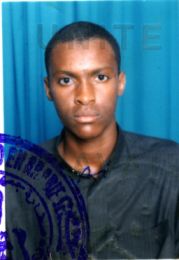 And yet Mohammed’s story is one of the saddest in the prison’s long and unjust history. Although he was born in Saudi Arabia, his parents are from Chad, so he was never granted citizenship, and was prevented from having the same opportunities as Saudi nationals. He dreamed of becoming a doctor, but was not allowed to finish secondary school, and was selling religious paraphernalia to pilgrims attending the Hajj, when a Pakistani friend advised him to travel to Pakistan to learn how to repair computers so that he could establish a business in Saudi Arabia.
In order to pursue his dream, Mohammed visited the Chadian embassy, and exaggerated his age to obtain a passport. Only those aged 18 or over are allowed to travel without their parents, so he boldly declared that he was 20. With a valid three-month visa for Pakistan, he took his savings and bought an airline ticket to Karachi.
Soon after arriving, in October 2001, he was praying in a mosque, when it was suddenly surrounded by police, who arrested everyone inside. Most were released, but he was taken to a prison where, for 20 days, he was hung by his wrists, suspended so that only the tips of his toes touched the ground, and was beaten if he moved.
He was then sold to the Americans, who were offering bounty payments of $5,000 a head for “al-Qaeda and Taliban suspects,” and was transferred to the US prison at Kandahar airport in Afghanistan, where, like every other prisoner sent to the makeshift prison, he was subjected to systematic brutality.
Imprisoned in a barbed wire pen with five other prisoners, he was beaten during interrogations, and on several occasions had freezing cold water thrown over him during the night. He reported that one particular soldier “would hold my penis, with scissors, and say he’d cut it off.”
He was then flown to Guantánamo, but unlike three Afghan boys (released in January 2004), who were held separately from the adult population, and treated with something approaching the appropriate care of juvenile prisoners, he has never received any preferential treatment as a juvenile, and has, instead, been subjected to torture and abuse as severe as almost any other prisoner.
He has been hung from his wrists on 30 occasions (an experience he described as worse than in Pakistan, because his feet did not even touch the ground), and has also been subjected to a regime of “enhanced” techniques to prepare him for interrogation — including prolonged sleep deprivation, prolonged isolation and the use of painful stress positions — that clearly constitute torture.
On one occasion, a heavily-armoured riot squad — the Initial Reaction Force (IRF), used to quell even the most minor infringements of the rules — slammed his head into the floor of his cell, breaking one of his teeth, and on another occasion an interrogator stubbed out a cigarette on his arm.
As a result of this violence he has become deeply depressed, and has attempted to commit suicide on several occasions, by slashing his wrists, trying to hang himself, and, on one occasion, by running head-first into the wall of his cell as hard as he could.
Despite all his suffering, and the lack of evidence against him, no attempt has been made to address the clear deterioration of his mental health, and he has been held in some of the prison’s harshest cell blocks, where prisoners are held, for 22 or 23 hours a day, in solid metal cells with no windows and no opportunity to socialize with their companions.
Although the violence against him continues unabated (he is regularly set upon by the IRF teams, because of his frustrations with the regime), he will almost certainly be released if the government of Chad engages in serious negotiations with the US government. In August 2007, lawyers from Reprieve, the legal action charity that represents Mohammed and 30 other Guantánamo prisoners, visited Chad to meet members of his family, and to present his case to the government. They received assurances from President Deby and the Foreign Ministry that they would act on his behalf, but the negotiations appear to have stalled, in part because the government has been caught up in a well-publicized struggle against rebel forces.
This week, a representative of Reprieve is visiting Chad in an attempt to resurrect the struggle for Mohammed’s freedom. He takes with him evidence that, when it comes to securing the release of prisoners, the most significant factors are public pressure and diplomatic negotiations. Last December, after two years of stonewalling on the part of the Americans, the Sudanese government secured the release of two of its innocent citizens, simply by refusing to give up. If it wishes, the government of Chad can do the same for Guantánamo’s forgotten child.
 Andy Worthington is the author of The Guantánamo Files: The Stories of the 774 Detainees in America’s Illegal Prison (published by Pluto Press, distributed by Macmillan in the US, and available from Amazon — click on the following for the US and the UK). To receive new articles in your inbox, please subscribe to my RSS feed, and see here for my definitive Guantánamo prisoner list, published in March 2009.
As published exclusively in the Daily Star, Lebanon.
For an article dealing with Mohammed El-Gharani’s habeas corpus case, see Judge Orders Release Of Guantánamo’s Forgotten Child (January 2009), and for an article on El-Gharani’s release, see Guantánamo’s Youngest Prisoner Released To Chad (June 2009).












 Who's still at Guantánamo?

22 Responses
Cross Party Lines » Blog Archive » Andy Worthington: Two Afghans released from Guantanamo: a farmer and a teenager says...
[…] including Omar Khadr and Mohamed Jawad, who are both facing a trial by Military Commission, and Mohammed El-Gharani, a Saudi resident and citizen of Chad, who was just 14 when he was […]
...on September 7th, 2008 at 11:19 pm
Judith says...
Dear Mr Worthington,
What can concretely be done, at an international level, to get this (now) young man out of Guantanamo? I first read of his plight, perhaps 18 months ago, in Le Monde 2, a Sunday magazine with the regular Le Monde daily paper (I no longer have it and cannot find the date on Internet). I am very concerned about what this person has gone through. Can no one intercede for him? To whom can I write? Something must be done… it may already be too late. What a shocking thing to have done to a young boy’s life.
Thank you for your excellent work on Guantanamo, and may I wish you all the encouragement possible in the face of what are difficult obstacles. However, perhaps with the change of government now in the US, things will move in favor of the innocent men who have been locked away, seemingly forever.
Surely through Facebook, or perhaps other networking Internet groups, public awareness and action could be initiated. Or am I too optimistic?
With very best regards,
Judith Crews
...on November 17th, 2008 at 6:55 pm
Psyche, Science, and Society » Guantanamo: How many children were held? says...
[…] (also known as Muhammed Al-Qarani), who was only 14 when first captured and has reportedly attempted suicide several times while in custody at Guantánamo. U.N. officials of the Committee on the Rights of the Child demanded that U.S. officials explain […]
...on November 18th, 2008 at 2:49 am
Guantanamo: How many children were held? says...
[…] (also known as Muhammed Al-Qarani), who was only 14 when first captured and has reportedly attempted suicide several times while in custody at Guantánamo. U.N. officials of the Committee on the Rights of the Child demanded that U.S. officials explain […]
...on November 18th, 2008 at 9:33 am
Guantanamo: How many children were held? « Dr Nasir Khan says...
[…] (also known as Muhammed Al-Qarani), who was only 14 when first captured and has reportedly attempted suicide several times while in custody at Guantánamo. U.N. officials of the Committee on the Rights of the Child demanded that U.S. officials explain […]
...on November 19th, 2008 at 10:22 am
Alex Jones' Prison Planet: The truth will set you free! says...
[…] of their capture. The report correctly stated that, in addition to Omar Khadr and Mohamed Jawad, Mohamed El-Gharani, a Saudi resident born to parents from Chad, was still imprisoned. Just 14 years old when he was […]
...on November 21st, 2008 at 7:29 pm
Psyche, Science, and Society » The ever rising number of child soldiers at Guantanamo says...
[…] of their capture. The report correctly stated that, in addition to Omar Khadr and Mohamed Jawad, Mohamed El-Gharani, a Saudi resident born to parents from Chad, was still imprisoned. Just 14 years old when he was […]
...on November 22nd, 2008 at 1:56 pm
freedetainees.org » Judge Orders Release of Guantanamo’s Forgotten Child says...
[…] yesterday by ruling that the government had failed to establish a case against another prisoner, Mohammed El-Gharani, and ordering his release […]
...on January 15th, 2009 at 7:49 pm
freedetainees.org » How Cooking For The Taliban Gets You Life In Guantanamo says...
[…] in Guantánamo, as the Bosnian government wrangles over their status. The last case is that of Mohammed El-Gharani, a Chadian national and Saudi resident who was just 14 years old when he was seized in a raid on a […]
...on January 30th, 2009 at 12:41 am
Sharon Timberlake says...
I am interested in providing assistance to this young man in some way. Is it possible to channel funds to him, perhaps through his attorney? I feel tremendous grief but also a sense of responsibility that this travesty was ever allowed to happen.
...on February 7th, 2009 at 7:49 pm
Andy Worthington says...
Hi Sharon,
Please visit the website of his lawyers at Reprieve. You can find a phone number there to call:
http://www.reprieve.org.uk/
I think funds for released prisoners are a great idea, actually, as few ever receive any financial support in their home countries when they leave (the Saudis and a few other countries are exceptions).
Best,
Andy
...on February 8th, 2009 at 12:02 am
I just got a viral email . . . and my head blew off. - PoliticalGroove Forums says...
[…] WAS AN 11 YEAR OLD SCHOOL BOY IN ENGLAND!!!! And he’s not the only innocent child we did this to! Guantánamo?s forgotten child: the sad story of Mohammed El-Gharani | Andy Worthington SO PLEASE DON’T USE OUR TROOPS TO DEFEND THESE ATROCITY. I served in the military, along with all […]
...on February 19th, 2009 at 4:05 pm
The BRAD BLOG : 'Worst of the Worst'?: Gitmo's Youngest Prisoner, the 'Forgotten Child', Released Without Charges says...
[…] I provided a detailed explanation of the abuse to which he was subjected in an article last year, “Guantánamo’s Forgotten Child,” which I condensed for an article in January, when I explained: As with all but three of the 22 […]
...on June 12th, 2009 at 12:20 am
Leon Rogson says...
You are an anti American propagandist who presents no facts concerning the behaviour of Americans.
I can believe he was tortured by Pakistani’s, but you don’t present much evidence of that either. Why would Americans pay $5,000 for a 14 year old non combatant? Youd did not mention in your presentation that Americans were stupid as well as brutal.
Shame on you!
Leon Rogson
A proud citizen of America who grew up under a brutal Latin American Dictatorship and knows the difference!
...on June 12th, 2009 at 12:27 am
Leon Rogson says...
Here are the actual facts of his case as documented in Wikipedia.
Commitment
On approximately June 13, 2001, the detainee departed Medina, Saudi Arabia, where his family lived and traveled to Jeddah, Saudi Arabia and then on to Karachi, Pakistan.
The detainee paid 500 Saudi Riyals for a fraudulent passport with a false date of birth. The name on the passport is Youself Abkir Saleh. This passport was supposed to allow the detainee to stay in Pakistan for five to six months.
The detainee was seen in the al Ansar guesthouse, in Kandahar, Afghanistan.
The detainee traveled with a large group of people from al Farouq to Kandahar, Afghanistan.
The detainee was given a forged document that indicated that he had finished training at al Farouq. This document enabled the detainee to accompany a group to Towr Khom.
The detainee was in Tora Bora for two and a half months. Prior to his capture there, the detainee created a cover story that he was a humanitarian relief worker.
The detainee was arrested with a specific model casio watch that is given to graduates of al Farouq.
b. Training
The detainee received only very basic training, mostly learning how to use the AK-47.
c. Connections/Associations
After arriving in Pakistan, the detainee took a taxi to the nearest hotel and met two men who introduced themselves to the detainee after they heard him speaking Arabic in the lobby. The men’s names were Mu’ath, from Pakistan, and al Habre, from Saudi Arabia. The detainee shared a room with these two men.
The detainee’s name was found on an Arabic-language computer file that listed contact points and telephone numbers for al Qaida Mujahadeen in Pakistan. According to the file, these Mujahadeen were among a group who had come to Afghanistan in December 2001 but who had not completed their training and therefore were not ready to fight in the war.
the detainee’s name and phone number were found on a computer file named “asra.doc.” The information on this file was associated with a senior al Qaida member.
On 20 July 2002, the detainee’s name was identified on the Alneda Internet site as aprt of a group of Taliban and al Qaida fighters who were captured by Pakistani forces.
The detainee’s name was on an e-mailed copy of a list of Arabs incarcerated in Pakistan.
The detainee’s name and phone number were found on material in the pockets of two Saudi citizens detained by a foreign government service on 26 June 2001 at the Bahrain International Airport. The two Saudis admitted they were al Qaida trained and traveling on behalf of Usama bin Laden to carry out suicide missions in Saudi Arabia.
The detainee was identifed as belonging to a London, United Kingdom cell led by Abu Qatada al Masri, circa 1998.
d. Other Relevant Data
Approximately five months after arriving in Pakistan, the detainee lost his passport. The detainee said the passport and some money fell out of his pants pocket.
The detainee accused a foreign government service of electrically shocking him and he accused U.S. troops of beating him. The detainee was then shown a photograph of himself taken by American troops in Kandahar and asked to identify any bruises or evidence of beating. The detainee then admitted to lying about the beatings.
Leon Rogson
...on June 12th, 2009 at 12:35 am
Andy Worthington says...
Mr. Rogson,
Those are not facts that you quoted above. Those are the allegations made by the US government while El-Gharani was in Guantanamo.
Mohammed El-Gharani was cleared for release in January this year by a US judge, appointed by George W. Bush:
http://www.andyworthington.co.uk/2009/01/15/judge-orders-release-of-guantanamos-forgotten-child/
From the article, demonstrating how Judge Leon demolished the government’s allegations, which you mentioned as being “facts”:
“Unlike most of the other cases reviewed to date by this Court,” Leon wrote, the government’s supposed evidence against El-Gharani consisted “principally” of statements made by two other prisoners at Guantánamo. “Indeed,” he added, these statements are either exclusively, or jointly, the only evidence offered by the Government to substantiate the majority of their allegations,” and, in addition, “the credibility and reliability of the detainees being relied upon by the Government has either been directly called into question by Government personnel or has been characterized by Government personnel as undermined.”
[…]
Judge Leon then granted El-Gharani’s habeas claim, with another statement that soundly trounced the government’s basis for holding him, and that ought to have struck fear into those parts of the Pentagon and the Justice Department that are responsible for presenting the government’s evidence in the Guantánamo habeas cases. “Simply stated,” he wrote, “a mosaic of tiles bearing images this murky reveals nothing about the petitioner with sufficient clarity, either individually or collectively, that can be relied upon by this Court.”
...on June 12th, 2009 at 7:04 am
The Long Ordeal of Guantánamo’s Youngest Prisoner says...
[…] provided a detailed explanation of the abuse to which he was subjected in an article last year, “Guantánamo’s Forgotten Child,” which I condensed for an article in January, when I explained: As with all but three of the 22 […]
...on June 14th, 2009 at 12:59 am
ling says...
Don’t know if this guy was guilty or not, but every single guy sentenced to anything related to terrorism in the middle east have these great sad stories. Maybe the bombs are just misunderstood too, and people are cutting their own heads. I even remember the guy that openly was trying to use his show as a bomb in that plane going to the US, the English fellow, later claiming that he was also innocent, so go figure, there are simply no guilty people any more
...on July 2nd, 2009 at 4:44 am
Terrorizing Children Is a Crime Against Humanity « Therearenosunglasses’s Weblog says...
[…] “Guantánamo’s forgotten child: the sad story of Mohammed El-Gharani,” […]
...on February 2nd, 2010 at 1:13 pm
The Black Hole of Guantanamo : STATESMAN SENTINEL says...
[…] Bosnians, that a supposed informer was unreliable, and in the case of the former child prisoner, Mohammed El-Gharani, that unreliable witnesses in Guantánamo (whose unreliability was known to the authorities) had […]
...on March 10th, 2010 at 1:17 am
WikiLeaks and the 22 Children of Guantánamo by Andy Worthington « Dandelion Salad says...
[…] October 2001 (aged 14/15), released June 2009. Seized in a raid on mosque in Karachi, he was treated brutally at Guantánamo, but was finally freed after winning his habeas corpus petition in January […]
...on June 11th, 2011 at 8:05 pm
Mohammed El-Gharani, Guantánamo’s youngest prisoner, speaks to al-Jazeera by Andy Worthington « Dandelion Salad says...
[…] nothing.” Recounting the torture he experienced, which I reported last April in my article, “Guantánamo’s forgotten child: the sad story of Mohammed El-Gharani,” Mohammed also revealed, for the first time, that the interrogators in Guantánamo tried to […]
...on June 12th, 2011 at 12:40 am