3,000 Days of My Photo-Journalism Project ‘The State of London’

Check out all ‘The State of London’ photos here!
Please feel free to support my work on ‘The State of London’, for which I have no institutional funding. If you can help, please click on the button below to donate via PayPal.
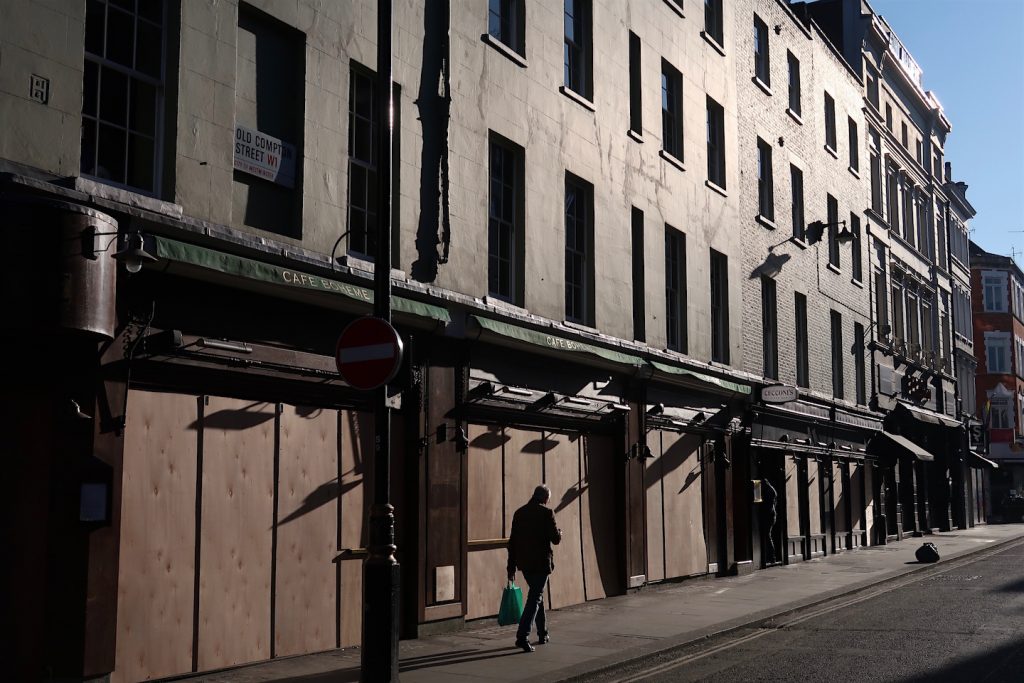
My photo-journalism project ’The State of London’ has just reached a noteworthy milestone — 3,000 days since I first consciously went out on my bike, on May 11, 2012, to cycle around London taking photos to chronicle the fabric of London and the many changes wrought upon it, beginning with the upheaval that attended the capital’s role as the host city of the 2012 Olympic Games. I began posting a photo a day on Facebook on the fifth anniversary of that first trip, on May 11, 2017, and have been posting a photo a day for the 1,176 days since.
In the eight years since, I have taken many tens of thousands of photos, covering all 120 of London’s postcodes in the 241 square miles of the London postal district (those beginning EC, WC, W, NW, N, E, SE and SW), with a particular focus on central London — the City (EC1 to EC4) and the West End (WC1, WC2 and W1), and the immediate surrounding postcodes (SE1, SW1, NW1, N1 and E1) — and with other clusters of repeated activity in the whole of south east London, where I live, in east London, most readily accessed via the Greenwich Foot Tunnel, and in parts of south west London — particularly, it seems, Brixton, Vauxhall and Battersea and Chelsea — and west London; especially Paddington, Notting Hill and Ladbroke Grove.
These 3,000 days have not only been a way of keeping physically fit; they have also played a major role in ensuring some sort of mental equilibrium amidst the general chaos of the state of the world — even if some aspects of ‘The State of London’ have added to my sense of rage rather than placating it; in particular, the colossal and colossally expensive construction projects that have transformed the city to an alarming degree over the last eight years.
The State of London: Marking 120 Days of My London Lockdown Photos with Some Previously Unpublished Images
Please feel free to support ‘The State of London’ with a donation, as I have no institutional backing for it, and it is, instead, a reader-funded project. If you can help, please click on the button below to donate via PayPal.
Check out all ‘The State of London’ photos here.
Yesterday marked 120 days straight that I’ve been cycling around London, taking photos of the coronavirus lockdown — and, in recent weeks, its partial easing — and posting a photo a day on ‘The State of London’ Facebook and Twitter pages.
I first began cycling around London on a daily basis, taking photos for a photo-journalism project that I soon named ‘The State of London’, over eight years ago, in May 2012, and on the fifth anniversary I began posting a photo a day on Facebook. Until the coronavirus hit, the photos I posted were drawn from the various years since I began the project — on that particular day, but from any of the years since the project began in 2012.
When the coronavirus hit, however — and particularly after the lockdown officially began on March 23 — the archive suddenly seemed, if not irrelevant, then relating to another, lost time, as the streets of the capital emptied, and economic activity ground almost to a halt.
Lockdown Fundraiser: Seeking $2500 (£2000) to Support My Guantánamo Work and My Photo-Journalism Project, ‘The State of London’

Please click on the ‘Donate’ button below to make a donation towards the $2,500 (£2,000) I’m trying to raise to support my work on Guantánamo over the next three months of the Trump administration, and/or for my London photo-journalism project ‘The State of London’.
Dear friends and supporters,
Every three months I ask you, if you can, to support my ongoing journalism and activism — mostly on Guantánamo — and my photo-journalism, via my project ‘The State of London’, for which I have no institutional backing. As a very modern version of a freelance journalist, I’m reliant on you, my supporters, to support my work via donations if you like what I do and are able to help.
This is a long-standing arrangement, and it largely arose because there was no room for someone like me in the mainstream media, which didn’t want an expert on Guantánamo writing relentlessly about the prison, the men held there, and why it needs to be closed, and who, in general, dismiss people who are relentlessly dedicated to important causes as “activists” rather than journalists. This is a distinction that I don’t find valid, which serves to largely sideline writers who burn with indignation at injustices in favour of those who embrace “objectivity” — and sadly it tends only to end up supporting the status quo.
On Guantanamo, I have doggedly sought its closure for 14 years now, and have no intention of giving up while it remains open, because its very existence is such a legal, ethical and moral abomination. Your support for my relentless persistence regarding this hugely important but almost entirely forgotten topic is very greatly appreciated.
Celebrating Eight Years of My Photo-Journalism Project, ‘The State of London’

Please feel free to support ‘The State of London’ with a donation. If you can help, please click on the button below to donate via PayPal.
Check out all the photos here!
Exactly eight years ago, on May 11, 2012, I set out on my bike, from my home in Brockley, in the London Borough of Lewisham, in south east London, to begin a project of photographing the whole of London — the 120 postcodes that make up what is known as the London postal district or the London postal area (those beginning WC, EC, E, SE, SW, W, NW and W). These postcodes cover 241 square miles, although I’ve also made some forays into the outlying areas that make up Greater London’s larger total of 607 square miles.
I’ve been a cyclist since about the age of four, and I’d started taking photographs when I was teenager, but my cycling had become sporadic, and I hadn’t had a camera for several years until my wife bought me a little Canon — an Ixus 115 HS — for Christmas 2011. That had renewed my interest in photography, and tying that in with cycling seemed like a good idea because I’d been hospitalised in March 2011 after I developed a rare blood disease that manifested itself in two of my toes turning black, and after I’d had my toes saved by wonderful NHS doctors, I’d started piling on the pounds sitting at a computer all day long, continuing the relentless Guantánamo work I’d been undertaking for the previous five years, which, perhaps, had contributed to me getting ill in the first place.
As I started the project, I had no idea really what I was letting myself in for — how massive London is, for example, so that even visiting all 120 of its postcodes would take me over two years, or how completely I would become enthralled by the capital that has been my home since 1985, but that was unknown to me beyond familiar haunts (the West End, obviously, parts of the City, and areas like Notting Hill and Ladbroke Grove, which I’ve always been drawn to), and places I’d lived (primarily, Brixton, Hammersmith, briefly, Forest Hill, Peckham and, for the last 20 years, Brockley).
In the Midst of the Coronavirus Lockdown, Environmental Lessons from Extinction Rebellion, One Year On

Please support my work as a reader-funded investigative journalist, commentator and activist. If you can help, please click on the button below to donate via PayPal.
As we all continue to try to make sense of — and live with — the extraordinarily changed world in which we find ourselves, I’m reminded of what a different place we were in a year ago, and also how some of our insights from that time so desperately need to be remembered today.
One year ago, we were five days into Extinction Rebellion’s occupation of four sites in central London (Parliament Square, Waterloo Bridge, Oxford Circus and Marble Arch), which largely brought the traffic to a halt for a week, and enabled anyone paying attention to directly appreciate what a city not dominated by the choking fumes and noise of relentless traffic felt like, and what that, in turn, said about so many of capitalism’s priorities in a major capital city.
It was, to be blunt, something of revelation, as I explained in an article at the time, Extinction Rebellion’s Urgent Environmental Protest Breaks New Ground While Drawing on the Occupy, Anti-Globalisation and Road Protest Movements, in which I also related XR’s efforts to those of earlier protest movements, and noted how we had, it seemed, all become so accustomed to how loud and dirty London was, with its relentless traffic, the incessant din of its numerous building sites, and the lorries servicing those sites, which were the most unpleasant of all the vehicles incessantly filing our streets — other huge lorries, buses, taxis, white vans, and an inexplicable number of cars — that the sudden silence and clean air was astonishing.
Celebrating 1,000 Days of My Photo-Journalism Project ‘The State of London’

Check out all the photos to date here!
Please feel free to support ‘The State of London’ , for which I receive no funding other than via the support of readers. If you can help, please click on the button below to donate via PayPal.
Today marks 1,000 days since I began posting a photo a day — on a page I set up on Facebook called ‘The State of London’ — from what is now a nearly eight-year archive of photos I’ve taken on bike rides throughout London’s 120 postcodes. The project is also on Twitter here.
I began posting a photo a day on May 11, 2017, which was the fifth anniversary of when the project began, on May 11, 2012, so today, Day 1000, also marks 2,826 days since this long journey to record London in all its diversity — of weather, wealth disparity and architecture — began.
I haven’t been out on my bike every single day, of course. I’ve been away from the capital for at least a month every year, on various holidays, or work-related trips, and very occasionally, through illness or particularly dreadful weather, I haven’t left the house, but, with these exceptions, I have, on every other day, been out on my bike, in London, come rain or shine, camera in hand (or in pocket, to be accurate). Most days, it would be fair to say, I haven’t travelled beyond my immediate neighbourhood, in south east London, radiating out from my home on a hill in Brockley around the surrounding areas, with a particularly well-travelled route taking me through Deptford to Greenwich and back again.
Quarterly Fundraiser: Seeking $2500 (£2000) to Support My Ongoing Work on Guantánamo and Torture and My London Photo-Journalism Project

Please click on the ‘Donate’ button below to make a donation towards the $2,500 (£2,000) I’m trying to raise to support my work on Guantánamo over the next three months of the Trump administration, and/or for my London photo-journalism project ‘The State of London.’
Dear friends and supporters,
It’s that time of year again when I ask you, if you can, to make a donation to support my ongoing work on Guantánamo and the US torture program, and/or, if you wish, to support my ongoing photo-journalism project, ‘The State of London.’
As a completely independent journalist, activist and commentator, I have no institutional backing whatsoever, so I’m reliant on your support to help me to keep writing and campaigning about Guantánamo, and chronicling the ever-changing face of London.
If you can make a donation to support my ongoing efforts to close Guantánamo, and/or ‘The State of London’, please click on the “Donate” button above to make a payment via PayPal. Any amount will be gratefully received — whether it’s $500, $100, $25 or even $10 — or the equivalent in any other currency.
Photos of the Two-Month Occupation of the Old Tidemill Wildlife Garden Prior to its Violent Eviction

Please support my work as a reader-funded investigative journalist, commentator and activist. If you can help, please click on the button below to donate via PayPal.
One year ago yesterday, the two-month occupation of the Old Tidemill Wildlife Garden, a community garden in Deptford, in south east London, came to a violent end when bailiffs hired by Lewisham Council evicted the occupiers in a dawn raid.
It was a disturbing end to a long-running effort on the part of the local community to save the garden — and Reginald House, a block of structurally sound council flats next door — from destruction as part of a plan to re-develop the site of the old Tidemill primary school. The garden — a magical design of concentric circles — had been created by pupils, teachers and parents 20 years before, and the community had been given use of it after the school moved to a new site in 2012, while efforts to finalise the plans proceeded, with the housing association Family Mosaic (which later merged with Peabody) and the private developer Sherrygreen Homes.
The garden was not only a magical green space; it also helped to mitigate the worst effects of pollution on nearby Deptford Church Street, but the council weren’t interested in considering alternative plans that would have spared the garden and Reginald House, and terminated the lease on the garden on August 28 last year. However, instead of giving the keys back, the community occupied the garden instead, embarking on a two-month experiment in community resistance that resonated around the world.
Celebrating 900 Days of My Photo-Journalism Project, ‘The State of London’

Check out all the photos to date here!
Please feel free to support ‘The State of London’ with a donation. If you can help, please click on the button below to donate via PayPal.
Yesterday marked 900 days since I began posting a photo a day on Facebook — with accompanying essays — taken from the daily photographic journeys by bike around London’s 120 postcodes that I started five years before — on May 11, 2012, an ongoing photo-journalistic project that I call ‘The State of London.’ For anyone obsessed with stats, I think this means that I’ve been out in all weathers photographing the capital for 2,726 days; or seven years, five months and 16 days.
Before I create the inadvertent illusion that I’m the Bear Grylls of urban cycling, I should point out that, nine days out of ten, I haven’t strayed far beyond the radius of postcodes emanating from my home, in Brockley, London SE4; that is to say, Deptford (SE8), Greenwich (SE10), Lewisham (SE13), New Cross (SE14), Peckham and Nunhead (SE15), Rotherhithe and South Bermondsey (SE16), and the whole of the sprawling SE1 postcode.
However, I have been to each of the 120 postcodes that make up the ‘London postal area’ at least once (a milestone I reached in September 2014), and I have also got to know, extremely well, almost the whole of south east London, most of east London (which I generally access via the Greenwich Foot Tunnel, the Regent’s Canal and the Limehouse Cut), much of south west London, the whole of the City and the West End, and the central components of the N, NW and W postcodes, and I feel that I now “know” the city — and, intellectually, “own” it — in a way that was unimaginable to me seven years ago, and that its streets and its shape and much of its history is now embedded in me like an organic GPS system.
The Green Generation: The Furious Energy of Young People and the Global Climate Strike

Please support my work as a reader-funded investigative journalist, commentator and activist. If you can help, please click on the button below to donate via PayPal.
If you’re reading this, and, like me, were comfortably born within the long reach of the 20th century, then pause for a moment and imagine what the future looks like for those born this century, those who aren’t even able to vote yet, and who make up a large part of what has been termed ‘Generation Z’ — those born between the mid-1990s and the early 2000s — as well as those born more recently, who trend-watchers don’t even seem to have a name for yet, although they might want to think about calling them the ‘Green Generation’ if yesterday is anything to go by.
Yesterday’s Global Climate Strike — the third this year — was the biggest yet, and the biggest climate protest ever. In 185 countries, at least three million people — mostly young — took to the streets to demand urgent action to prevent the worst effects of an already unfolding environmental catastrophe.
By now, no one should have any doubts about the urgency of the crisis. In the Northern Hemisphere, where 90% of the earth’s population lives, the last five summers have been the hottest since records began in the late 19th century, with this summer being the hottest yet. Globally, the only year that was hotter was 2016.










 Who's still at Guantánamo?
