Hamas Agrees to Disarm, But Only If Israel Leaves Gaza
Please click on either of the ‘Donate’ or ‘Buy’ buttons below (via PayPal or Stripe) to make a donation towards the $2,500 (£2,000) I’m trying to raise to support my work as a reader-funded investigative journalist, commentator and activist over the next three months. To get links to all my work in your inbox, please also consider taking out a free or paid subscription to my new Substack newsletter.
UPDATE: On August 5, I spoke to Chris Cook for his Gorilla Radio show in Canada, about this article, and about the ongoing persecution of Palestine Action activists and their supporters in the UK. Listen to the whole show on Substack here. I’m in the second half-hour; Yves Engler in the first.
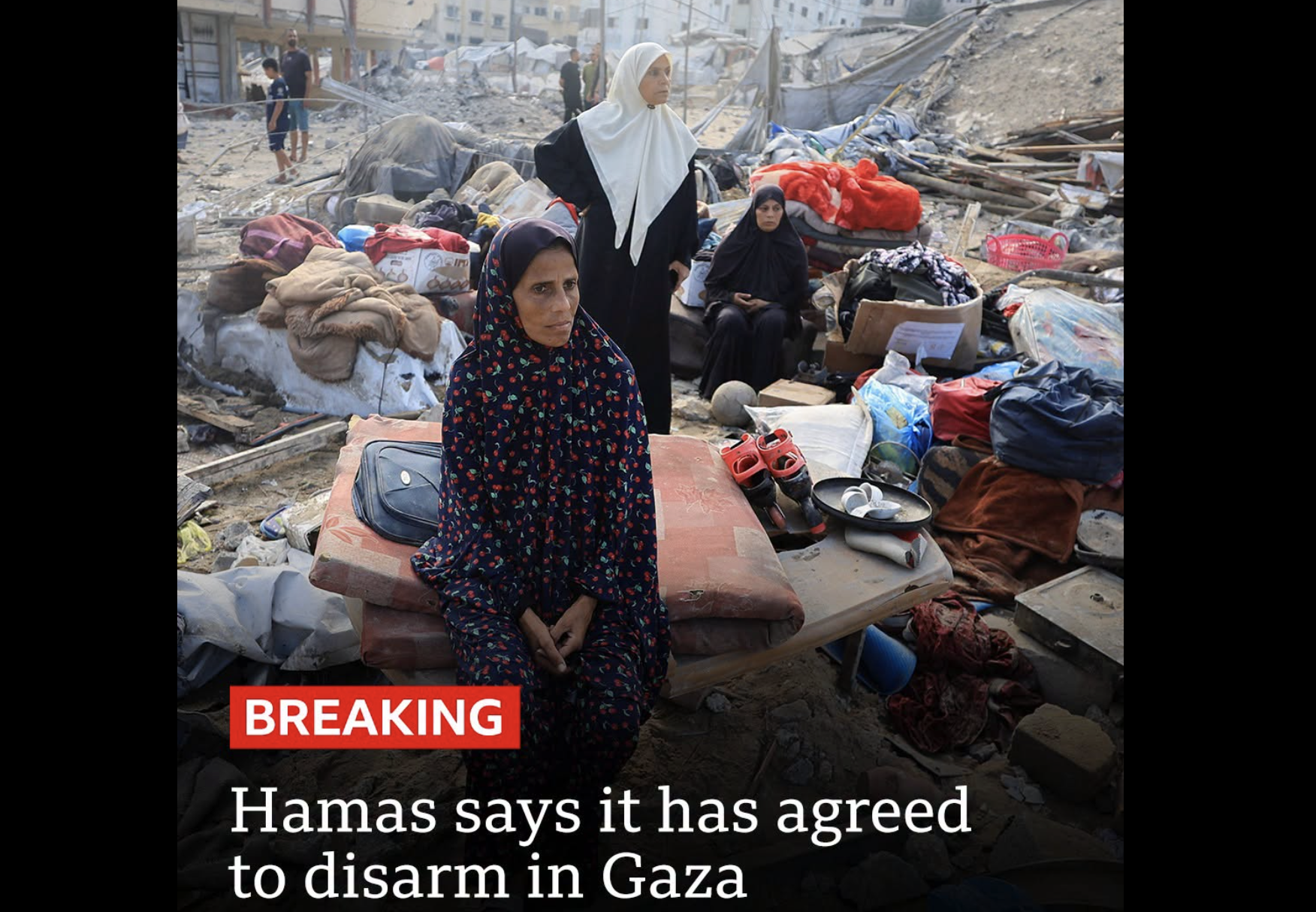
The world’s media has briefly remembered the beleaguered Gaza Strip today, after Donald Trump claimed, in a post on his inaptly-named Truth Social account, that the Board of Peace — the body set up under his administration last October to supervise the future of Gaza — has “reached a HISTORIC agreement for the COMPLETE DISARMAMENT of Hamas and all the other armed groups in Gaza”, which he described as “a monumental step towards lasting PEACE and SECURITY”, and “a critical step towards Gaza finally being governed by a new Palestinian government that will work closely with the Board of Peace to help the Palestinian people.”
“At the same time”, he added, “Israel will have the security it deserves, with Gaza no longer used as a base for terror attacks.”
To briefly summarize the situation to date, last October, after two years of genocide, in which at least 70,000 Palestinians (mostly civilians) had been killed, a ceasefire was negotiated whereby Hamas and the other armed factions in Gaza agreed to hand over the remaining Israeli hostages seized on October 7, 2023, in exchange for an end to Israeli hostilities, the withdrawal of their forces to a “Yellow Line”, behind which they retained military control of around 53% of Gaza, and the provision of adequate humanitarian aid for the surviving population, set at 600 trucks a day.
While Hamas faithfully adhered to its obligations, Israel did not. In at least 3,500 violations of the ceasefire agreement, it has killed around 1,300 Palestinians, has expanded its control of Gaza to around 70%, and has failed to allow in anything even vaguely resembling the agreed amount of humanitarian aid.
Israel’s Ghoulish Settlers Eye Up Gaza, As Netanyahu Kills Trump’s Board of Peace
Please click on either of the ‘Donate’ or ‘Buy’ buttons below (via PayPal or Stripe) to make a donation towards the $2,500 (£2,000) I’m trying to raise to support my work as a reader-funded investigative journalist, commentator and activist over the next three months. To get links to all my work in your inbox, please also consider taking out a free or paid subscription to my new Substack newsletter.
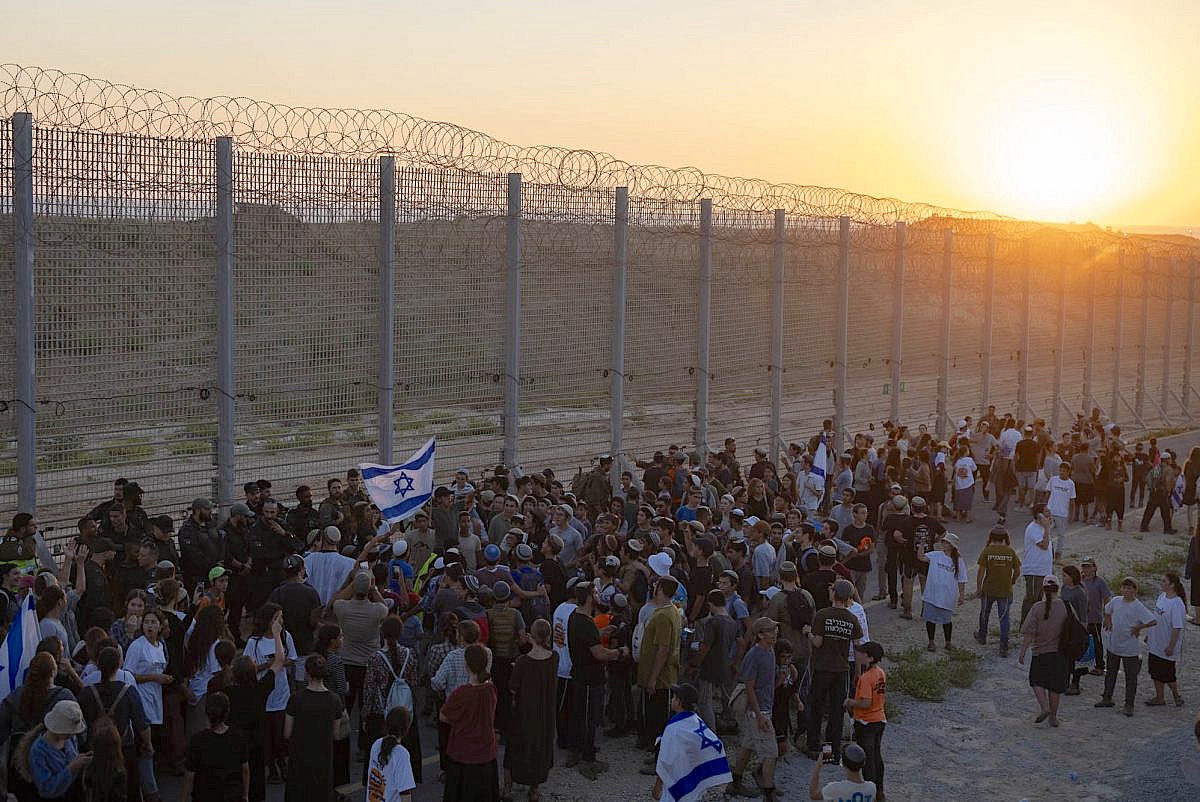
On Sunday evening (July 19), a group of some of the most repulsive, ghoulish people on the face of the earth marched towards the perimeter fence separating the Gaza Strip from the rest of the world to declare their intention to re-colonize Gaza, to re-establish three Israeli settlements that were dismantled in 2005 when, under Ariel Sharon, 21 settlements in total were abandoned, occupied, at the time, by 8,000 Israeli settlers.
These fanatical Israeli settlers, on what was billed as the “March of Thousands”, although only a few hundred people attended, were led by the two far-right ministers in Benjamin Netanyahu’s coalition government — Itamar Ben Gvir, the Minister for National Security, who is in charge of Israel’s prisons, which, for Palestinians, have become a gulag of torture facilities since October 7, 2023, and Bezalel Smotrich, the Minister of Finance, and also the minister in charge of settlement affairs within the Defense Ministry, who has played a huge role in the ever-growing, and ever more violent expansion of Israel’s illegal settlements in the West Bank.
Speaking at the rally, Ben Gvir said, “If someone had said three years ago that we would control 70% of the Gaza Strip, no one would have believed it. So today I say: there will be Jewish settlement throughout Gaza. We are returning home. Gaza is ours.”
Competing Visions for Gaza’s Future: Endless Bloodshed Or Bloodless, Sterilized Techno-Concentration Camps
Please click on either of the ‘Donate’ or ‘Buy’ buttons below (via PayPal or Stripe) to make a donation towards the $2,500 (£2,000) I’m trying to raise to support my work as a reader-funded investigative journalist, commentator and activist over the next three months. To get links to all my work in your inbox, please also consider taking out a free or paid subscription to my new Substack newsletter.
While the attention of the conscious world is, quite correctly, focused right now on Rakefet Prison, an underground detention facility inside Israel’s maximum-security Ramla Prison Complex, where the pediatrician Dr. Hussam Abu Safiya is held without charge or trial, brutalized and in fear of death, it’s important not to forget that, in the Gaza Strip, the surviving Palestinian population is still suffering from an acute and enduring humanitarian crisis.
The crisis is engineered solely by the State of Israel, which has failed to abide by the requirement, in the ceasefire deal agreed last October, to allow 600 trucks of humanitarian aid — containing, at a bare minimum, adequate supplies of food, water, fuel and medical supplies — to enter Gaza every day.
Insight into the humanitarian crisis can be found via regular updates issued by UNRWA (the UN Relief and Works Agency for Palestine Refugees in the Near East), established in 1950, which remains the largest provider of educational and health support to the Palestinians, despite persistent efforts by Israel to destroy it.
The Intractable Search for Peace in Gaza

Please click on either of the ‘Donate’ or ‘Buy’ buttons below (via PayPal or Stripe) to make a donation towards the $2,500 (£2,000) I’m trying to raise to support my work as a reader-funded investigative journalist, commentator and activist over the next three months. To get links to all my work in your inbox, please also consider taking out a free or paid subscription to my new Substack newsletter.
My detailed analysis of the current situation in the Gaza Strip, after Nickolay Mladenov, the “High Representative of Gaza” in Donald Trump’s “Board of Peace”, insisted that no reconstruction will take place in Gaza without the complete disarmament of Hamas, even though Hamas never agreed to that, and even though the humanitarian situation in Gaza, as controlled by Israel, remains dire. I draw extensively on interviews by Drop Site News with senior Hamas officials, and an article in Haaretz by the head of an Israeli NGO supporting the Palestinians, pointing out the complicity of the west in the ongoing humanitarian disaster.
962 days since Israel’s genocide in Gaza began, and 227 days since a ceasefire took effect through the implementation of the first phase of Donald Trump’s “Peace Plan”, Nickolay Mladenov, the Bulgarian former UN official who is now the “High Representative of Gaza” in Donald Trump’s “Board of Peace”, has alarmed those seeking a balance between Israel’s obligations under the ceasefire deal and an acceptable response by Hamas by telling the UN Security Council on May 21 that Hamas was the “principal obstacle” to the continued implementation of the next phase of the “Peace Plan” because “it refused to accept verified decommissioning, relinquish coercive control and allow a genuine civilian transition.”
Mladenov’s speech to the UN followed what Drop Site News, on May 22, described as a “15-point roadmap” that he delivered to Hamas in April, which “amounted to an ultimatum: If the Palestinian resistance does not surrender its weapons, no meaningful reconstruction will be permitted in Gaza and Israeli forces will not withdraw.” In his report to the UN Security Council, Mladenov described the total disarmament of Hamas and other resistance groups as “the single factor that unlocks every other element of the plan.”
As Drop Site News proceeded to explain, however, “disarmament was categorically not a part of the phase one deal signed by Hamas and Israel in Sharm El-Sheikh, Egypt in October 2025.” As they added, “Despite repeated claims by US and Israeli officials that Hamas agreed to all of Trump’s terms, [they] and other Palestinian factions did not sign an agreement beyond a ceasefire, exchange of captives, and an initial framework for the redeployment or withdrawal of Israeli forces from some parts of Gaza.” The limited deal, they added, “also included the opening of the Rafah border crossing with Egypt and the resumption of deliveries of life essentials and equipment to clear rubble and begin early reconstruction efforts.”
Trump’s “Board of Peace” Meets, Promotes Its Dystopian Vision for Gaza’s Regeneration, as Hamas’s Disarmament Still Eludes Everyone

Please click on either of the ‘Donate’ or ‘Buy’ buttons below (via PayPal or Stripe) to make a donation towards the $2,500 (£2,000) I’m trying to raise to support my work as a reader-funded investigative journalist, commentator and activist over the next three months. To get links to all my work in your inbox, please also consider taking out a free or paid subscription to my new Substack newsletter.
On February 18, in the apocalyptic wasteland of the Gaza Strip, the Palestinian survivors of Israel’s ongoing 28-month genocide celebrated the start of Ramadan with astonishing ingenuity, crafting decorations from the recycled detritus of destruction, powering and stringing up lights, and holding communal meals drawing on the increase of food deliveries since the ceasefire that began four months ago.
This is in spite of the fact that Israel has persistently refused to honor the requirements for the delivery of 600 trucks of humanitarian aid a day under the ceasefire deal, which began on October 10, and which was trumpeted by the US as Donald Trump’s “Peace Plan”, even though most of the hard work had been done by negotiators from Qatar, Egypt and Turkey, working with Trump’s special envoy Steve Witkoff.
Much of what has been begrudgingly allowed into Gaza by Israel consists of commercial goods that are unaffordable for the majority of the population, who have been made homeless, are reduced to living in tents with few of their possessions left, and have little or no money.
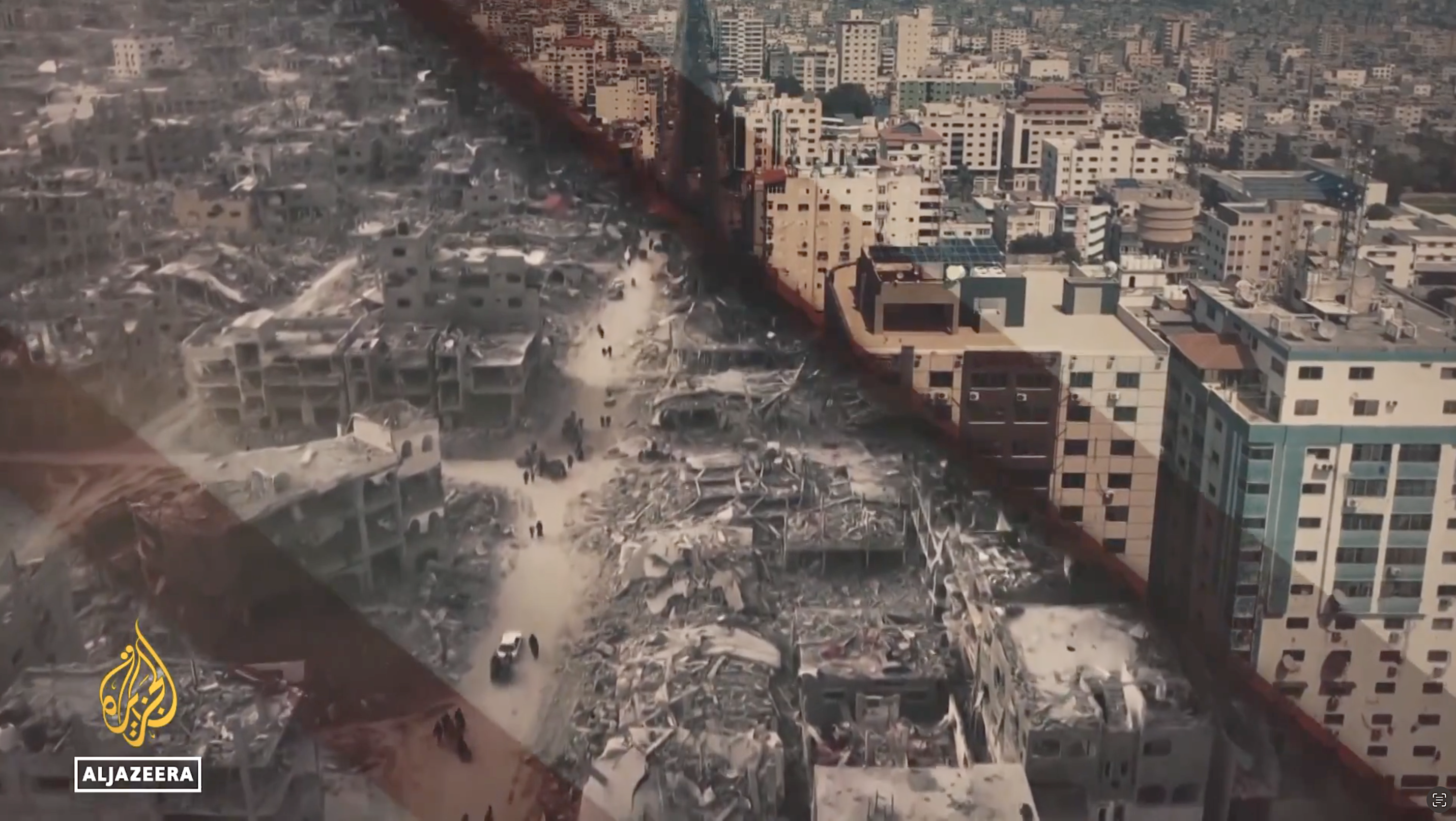
While the Palestinians’ spirit contrasts buoyantly with the grimness of their surroundings, it cannot disguise that they continue to live in a landscape that is brutally shattered, to an extent that is almost beyond comprehension, and that no salvation is on the horizon. Voices from within Gaza emphasize that the majority of the displaced population haven’t been attending these communal meals, and numerous photos show much more wretched scenes, of families struggling to put together even the most basic meals in landscapes of utter destruction.












 Who's still at Guantánamo?
