“Guantánamo Was Created to Destroy People, to Destroy Muslims”: Ex-Prisoner Djamel Ameziane’s Powerful Statement to the Inter-American Commission on Human Rights
 Please support my work as a reader-funded journalist! I’m currently trying to raise $2500 (£2000) to support my writing and campaigning on Guantánamo and related issues over the next three months of the Trump administration.
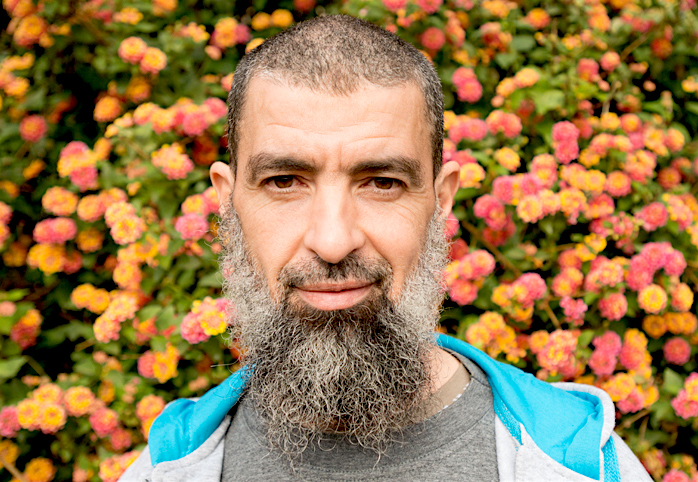
Three days ago, I published an article about former Guantánamo prisoner Djamel Ameziane, and specifically about a hearing of the Inter-American Commission on Human Rights (IACHR), in Mexico City, at which, via his lawyers, and via a statement he had written, he asked the Commission members: “Please issue a merits decision and decide my case. I ask you to order reparations and other relief so that I can get the assistance that I need and move forward with my life, and put Guantánamo behind me forever. I also want an apology. I ask the representatives of the US: Will you say on behalf of your government that you are sorry for what the US Government did to me?”
The IACHR is a key part of the Organization of American States (OAS), whose mission is “to promote and protect human rights in the American hemisphere,” and whose resolutions are supposed to be binding on the US, which is a member state, although the US, of course, has little regard for anyone trying to tell it what to do.
As CCR described it, Ameziane also “urged OAS member states to remain involved in the issue given the current context in the US, and assist in the transfer of Guantánamo detainees and supporting efforts to close the detention center, among others.”
Below, I’m taking the opportunity to cross-post the whole of Djamel Ameziane’s statement, because it provides a powerful indictment of the manner in which the US, after 9/11, abandoned all adherence to the rule of law, setting up a global network of prisons — including at Guantánamo Bay, where Muslim men and boys, largely rounded up without any sense or any application of intelligence, were horribly abused and deprived of hope. Read the rest of this entry »
At Inter-American Commission on Human Rights, Former Guantánamo Prisoner Djamel Ameziane Asks US to Apologize, and Calls for Prison’s Closure
 Please support my work as a reader-funded journalist! I’m currently trying to raise $2500 (£2000) to support my writing and campaigning on Guantánamo and related issues over the next three months of the Trump administration.
Last week, in Mexico City, a symbolically powerful blow was dealt to the United States’ notion of itself as a nation founded on the rule of law, which respects the rule of law and also respects human rights.
The occasion was a hearing of the Inter-American Commission on Human Rights (IACHR), a key part of the Organization of American States (OAS), whose mission is “to promote and protect human rights in the American hemisphere,” and whose resolutions are supposed to be binding on the US, which is a member state.
The hearing last Wednesday was for Djamel Ameziane, an Algerian citizen, and an ethnic Berber, who was held at Guantánamo for nearly 12 years.
In the hearing last week, at which Ameziane was represented by the Center for Justice and International Law (CEJIL) and the Center for Constitutional Rights (CCR), the lawyers representing him urged the IACHR to “hold the US accountable for the abuse” of Ameziane and the “discrimination” against him. CCR explained, in a press release, that it was “a landmark hearing,” and the following brief explanation of his story: Read the rest of this entry »
Sufyian Barhoumi, the Peaceful Algerian Cleared for Release But Still Trapped in Guantánamo
 Please support my work! I’m currently trying to raise $2500 (£2000) to support my writing and campaigning on Guantánamo and related issues over the next three months of the Trump administration.
In the long and sordid history of Guantánamo — open for 15 years and seven months, and still holding men indefinitely without charge or trial, in defiance of domestic and international norms regarding imprisonment — it’s sometimes easy for people to forget the role played by lawyers in resisting the injustice of the prison, and in publicizing the men’s stories.
For over 12 years now, lawyers have generally been the only people outside of the various branches of the US government — and foreign intelligence services — who have had contact with the prisoners. Lest we forget, the men held at Guantánamo have never been allowed to have family visits, unlike prisoners held on the US mainland — even those convicted of horrendous crimes — and so often the lawyers have been the only people capable of filling the gap left by relatives, and, of course, bringing messages from the men’s families, which has happened time and again as lawyers have visited their clients’ families, and have subsequently been the bearers of their relatives’ communications.
Recently, a new lawyer brought some fresh insight and indignation to a role that many of those involved in must be struggling to keep fresh, after so many years, after the exhaustion of eight years of Obama that, in the end, left the prison open, and with Trump so uninterested in doing anything to bring justice to the remaining 41 prisoners, either by releasing them or putting them on trial in a valid, internationally recognized system, or working towards shutting the prison once and for all. Read the rest of this entry »
Please Read My New Article for Al-Jazeera About the Five Men Still Held at Guantánamo Who Were Approved for Release Under Obama
 Dear friends and supporters — and any casual passers-by,
I’m delighted to announce that my latest article for Al-Jazeera, Abdul Latif Nasser: Facing life in Guantánamo, has just been published, and I encourage you to read it, and to share it as widely as possible if you find it useful.
In it, I look at the cases of the five men still held at Guantánamo who were approved for release under President Obama, but who didn’t make it out before Donald Trump took over, with a particular focus on Abdul Latif Nasser, a Moroccan whose government sought his release, but failed to get the paperwork to the US authorities in time. I also look at the cases of Sufyian Barhoumi, an Algerian, and Tawfiq al-Bihani, a Yemeni. The two other men, sadly, don’t wish to have their cases discussed.
It’s important for these men’s cases to be remembered, because, although Donald Trump has not followed up on threats he made after taking office to send new prisoners to Guantánamo and to reintroduce torture, he has effectively sealed the prison shut for the last five months, releasing no one, and showing no signs of wanting to release anyone, and those of us who care about the ongoing injustice of Guantánamo must continue to do what we can to bring this deplorable state of affairs to an end. Read the rest of this entry »
US Military Lawyer Submits Petition to Inter-American Commission on Human Rights on Behalf of Mohammad Rahim, CIA Torture Victim Held at Guantánamo
 Please support my work! I’m currently trying to raise $2500 (£2000) to support my writing and campaigning on Guantánamo and related issues over the next three months of the Trump administration.
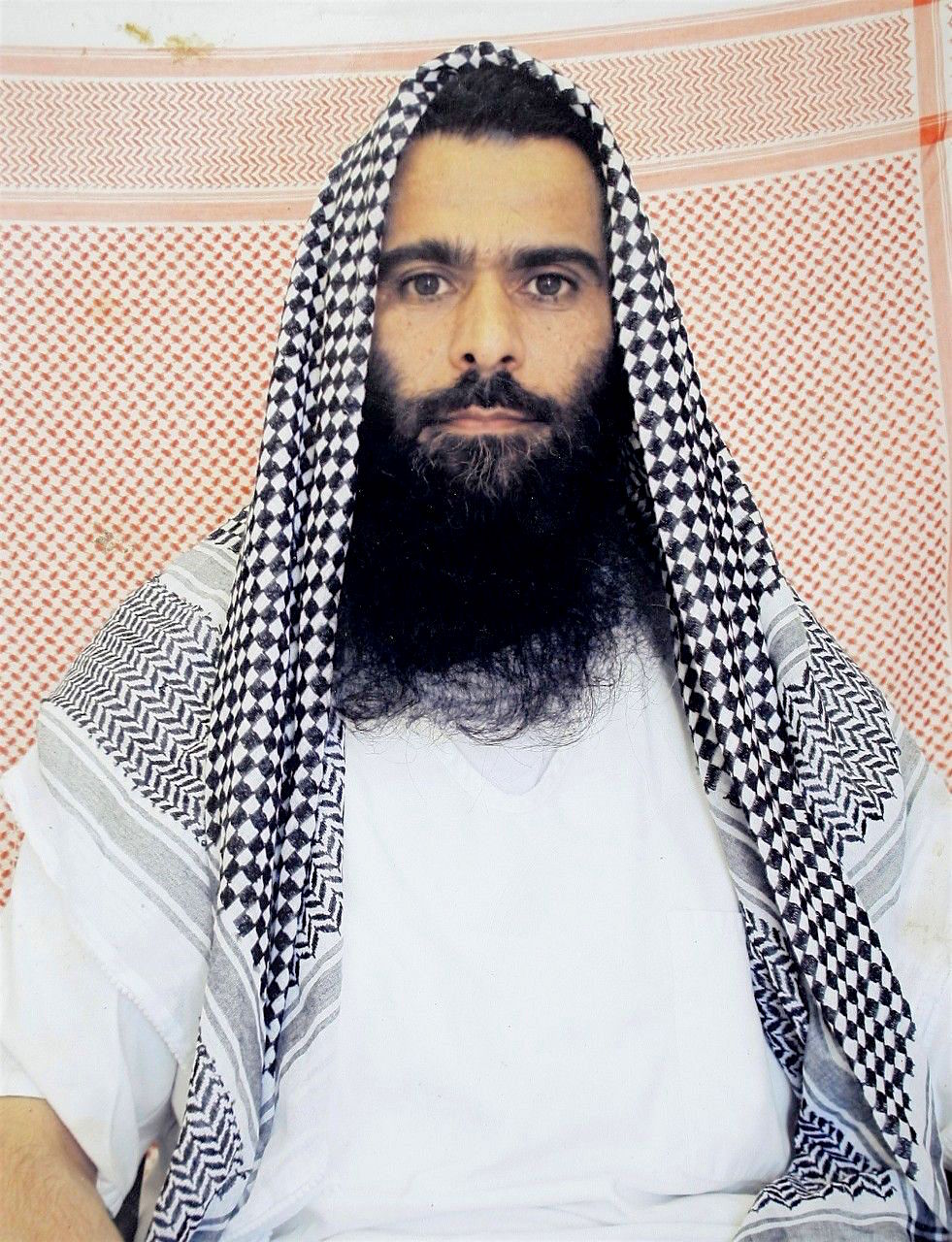
In trying to catch up on a few stories I’ve missed out on reporting about recently, I’d like to draw readers’ attention to a petition submitted to the Inter-American Commission on Human Rights on behalf of Mohammad Rahim, a CIA torture victim held at Guantánamo, who was, in fact, the last prisoner to arrive at the prison in March 2008.
The petition was submitted by Major James Valentine, Rahim’s military defence attorney, and the researcher Arnaud Mafille, and it follows previous submissions to the IACHR on behalf of Djamel Ameziane, whose release was requested in April 2012 (and who was eventually released, but not as a direct result of the IACHR ruling), and Moath al-Alwi, whose lawyers submitted a petition on his behalf in February 2015, which led to the IACHR issuing a resolution on March 31, 2015 calling for the US to undertake “the necessary precautionary measures in order to protect the life and personal integrity of Mr. al-Alwi,” on the basis that, “After analyzing the factual and legal arguments put forth by the parties, the Commission considers that the information presented shows prima facie that Mr. Moath al-Alwi faces a serious and urgent situation, as his life and personal integrity are threatened due to the alleged detention conditions.”
Al-Alwi was, at the time, a hunger striker, and in the petition his lawyers stated that, “During his detainment at Guantánamo, Mr. al-Alwi has been systematically tortured and isolated. He has been denied contact with his family, slandered and stigmatized around the globe. He has been denied an opportunity to develop a trade or skill, to meet a partner or start a family. He has been physically abused, only to have medical treatment withheld.” Read the rest of this entry »
Review Boards Approve Ongoing Imprisonment of Three More Prisoners at Guantánamo, Even As Lawmakers Urge Donald Trump to Scrap Them
 Please support my work! I’m currently trying to raise $2500 (£2000) to support my writing and campaigning on Guantánamo and related issues over the first two months of the Trump administration.
I wrote the following article for the “Close Guantánamo” website, which I established in January 2012, on the 10th anniversary of the opening of Guantánamo, with the US attorney Tom Wilner.Please join us — just an email address is required to be counted amongst those opposed to the ongoing existence of Guantánamo, and to receive updates of our activities by email.
The problem with Guantánamo has never been what right-wingers delude themselves into thinking it is — that it’s a perfect acceptable, secure facility for holding terrorists whose existence is undermined by liberals constantly trying to close it down, endangering America’s national security.
Instead, the problem is Guantánamo itself, a place of arbitrary detention, where very few of the 779 people held there by the military over the last 15 years have genuinely been accused of any involvement with terrorism, but where, because of the Bush administration’s contempt for internationally recognized laws and treaties regarding imprisonment, the majority of the men held — overwhelmingly, foot soldiers for the Taliban, and civilians, many sold for bounties — have been deprived of any rights whatsoever, and can only be freed at the whim of the executive branch.
For a brief period from 2008 to 2010, those held could appeal to the US courts, where judges were able to review their habeas corpus petitions, and, in a few dozen cases, order their release, but this loophole was soon shut down by politically motivated judges in the court of appeals in Washington, D.C., and the Supreme Court has persistently refused to revisit the positive rulings it made regarding the prisoners’ habeas corpus rights in 2004 and 2008, hurling the men back into a disgraceful legal limbo in which their only hope for release lies, yet, again, with the presidential whim. Read the rest of this entry »
Algerian Approved for Release from Guantánamo, As Three Other Men Have Their Ongoing Imprisonment Upheld
In the last three weeks, six Periodic Review Boards have taken place at Guantánamo, in which prisoners recommended for ongoing imprisonment by a high-level task force six years ago are being given a parole-like opportunity to plead for their release. I’ll be writing about those reviews soon, but before I do so I’d like to sum up four other decisions taken over this same period — one decision to approve a prisoner for release, and three others upholding prisoners’ ongoing detention. 62 reviews have now taken place, since the PRBs began in November 2013, and out of those reviews 33 men have been recommended for release, 19 have had their ongoing imprisonment upheld, and ten decisions have yet to be taken. Two final reviews are taking place in the next two weeks.
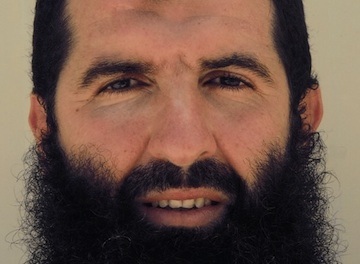
The man whose release was approved is Sufyian Barhoumi (ISN 694), an Algerian, born in July 1973, whose PRB took place on May 26. Seized in a house with the “high-value detainee’ Abu Zubaydah, whose review also took place recently, Barhoumi was alleged by the US authorities to have been a bomb-maker, and had been put forward for a trial by military commission under President Bush, although the charges were later dropped.
For his PRB, however, his attorney, Shayana Kadidal of the Center for Constitutional Rights painted a compelling portrait of a ”natural diplomat,” popular with both his fellow prisoners and the guard force. As Kadidal put it, “I personally have never seen any other detainee treated by the guards as well as Barhoumi, even at times when relations between prisoners and the authorities were at a low point.” He added, “If the language barrier is one of the greatest causes of misunderstandings and conflict at GTMO, he’s used his language skills to help both prisoners and guards quash problems before they grew too big to tame. It has not gone unappreciated by either group.” Read the rest of this entry »
Penitent Pakistani Seeks Release from Guantánamo, as Two Yemenis and a Moroccan are Approved for Release and an Algerian’s Request is Denied
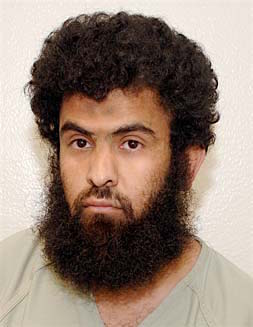 On July 7, a Periodic Review Board took place for Abdul Rahim Ghulam Rabbani (also identified for the PRB as Abdul Rabbani Abu Rahmah), a Pakistani prisoner at Guantánamo (born in Saudi Arabia) who was seized in Karachi, Pakistan on September 9, 2002 and held and tortured in CIA “black sites” for two years, before arriving at Guantánamo with nine other allegedly “medium-value detainees” in September 2004. He was seized with his younger brother, Ahmad (aka Mohammed), who is awaiting a date for his PRB, and who, last year, sought assistance from the Pakistani government in a submission to the Pakistani courts.
The PRBs were set up in 2013 to review the cases of all the men not already approved for release or facing trials. These men were described by the government task force that reviewed their cases in 2009 as “too dangerous to release,” despite a lack of evidence against them, or were recommended for prosecution, until the basis for prosecution largely collapsed. The PRBs have been functioning like parole boards, with the men in question — 64 in total — having to establish, to the satisfaction of the board members, made up of representatives of the Departments of State, Defense, Justice and Homeland Security, as well as the office of the Director of National Intelligence and the Office of the Joint Chiefs of Staff, that they show remorse for their previous actions, that they bear no ill-will towards the US, that they have no associations with anyone regarded as being involved in terrorism, and that they have plans in place for their life after Guantánamo, preferably with the support of family members.
Around the time of Abdul Rahim Ghulam Rabbani’s PRB, which is discussed at length below, four decisions were also taken relating to prisoners whose reviews had already taken place, when three men were approved for release, and one had his request to be released turned down. These decisions meant that, of the 52 prisoners whose cases had been reviewed, 27 have been approved for release, 13 have had their ongoing imprisonment recommended, and 12 decisions have yet to be made. 11 more reviews have yet to take place (and one took place last week, which I’ll be writing about soon). See here for my definitive Periodic Review Board list on the website of the Close Guantánamo campaign that I co-founded with the US attorney Tom Wilner, and that I have been running since 2012. Read the rest of this entry »
Sufyian Barhoumi, An Extremely Well-Behaved Algerian, Seeks Release from Guantánamo Via Periodic Review Board
 Last Thursday, two days after Saeed Bakhouche, an Algerian, sought release from Guantánamo via a Periodic Review Board, a high-level, inter-agency US government review process, established in 2013, another Algerian, Sufyian Barhoumi, also went before a PRB to ask for his freedom, and was the 41st prisoner to do so. Of the 30 decisions already taken, 23 have resulted in recommendations for the prisoners’ release, while just seven have resulted in recommendations for the men’s continued detention — and even those are subject to further review. This is a success rate for the prisoners of 77%, thoroughly undermining the excessive caution and misplaced zeal for prosecution that, in 2010, led the previous high-level review process, the Guantánamo Review Task Force, to describe the men who were later made eligible for PRBs as “too dangerous to release” or as candidates for prosecution.
The former were largely groundless claims, in a prison full of statements obtained through torture and other forms of coercion, while the latter was based on a mistaken understanding of what constitutes war crimes, spelled out in a number of appeals court rulings in 2012 and 2013, which humiliated the government by dismissing some of the handful of convictions secured in the military commission trial system on the embarrassing basis that the war crimes for which the men in question has been convicted had actually been invented by Congress.
Barhoumi, whose prisoner number is 694, is 41 years old, and, as his lawyers at the Center for Constitutional Rights explain, he was “born and raised in Algiers, where his mother still lives and his late father practiced law.” CCR also explain that, as a young man, he “lived in various countries in Europe – Spain, France, and England – as a farm worker and then a street merchant for about four years,” before traveling to Afghanistan, and then Pakistan, where he ended up in US custody. Read the rest of this entry »
The Man They Don’t Know: Saeed Bakhouche, an Algerian, Faces a Periodic Review Board at Guantánamo
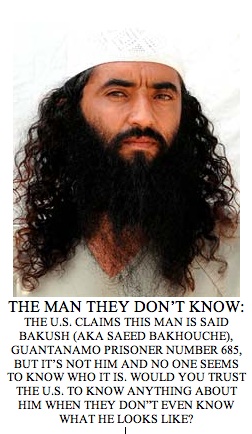 On Tuesday May 24, Saeed Bakhouche, a 45-year old Algerian who has been held in the US prison at Guantánamo Bay since June 2002, became the 40th prisoner to face a Periodic Review Board at Guantánamo.
Like many Guantánamo prisoners, Bakhouche has also been known by another name – in his case, Abdel Razak Ali, a name he gave when he was captured – but to the best of my knowledge he is the only prisoner whose classified military file, compiled in 2008 and released by WikiLeaks in 2011, has a photo that purports to be him, but is not him at all. No one seems to know who it is, but it is not Saeed Bakhouche.
Moreover, his attorney, Candace Gorman, told me that a different photo – again, not of her client – was displayed outside his cell for a year and a half, a mistake that had disturbing ramifications, because this was the same photo shown to other prisoners during interrogations, leading to a situation whereby information about someone else was added his file as though it related to him.
The fact that the US authorities have, historically, not known who Saeed Bakhouche is, does not, however, appear to have been conveyed to the members of his PRB, which involves representatives of the Departments of State, Defense, Justice and Homeland Security, as well as the office of the Director of National Intelligence and the Office of the Joint Chiefs of Staff. Set up in 2013, the boards are reviewing the cases of 41 men previously described, by the high-level, inter-agency Guantánamo Review Task Force that President Obama established shortly after taking office, as “too dangerous to release,” although that has turned out to have been outrageous hyperbole. Of the 40 men whose cases have so far been reviewed, eleven are awaiting decisions, just seven have had their ongoing imprisonment approved, while 22 have had their release recommended — and nine of those have, to date, been freed. Read the rest of this entry »












 Who's still at Guantánamo?
