Archive for October, 2019
Photos of the Two-Month Occupation of the Old Tidemill Wildlife Garden Prior to its Violent Eviction

Please support my work as a reader-funded investigative journalist, commentator and activist. If you can help, please click on the button below to donate via PayPal.
One year ago yesterday, the two-month occupation of the Old Tidemill Wildlife Garden, a community garden in Deptford, in south east London, came to a violent end when bailiffs hired by Lewisham Council evicted the occupiers in a dawn raid.
It was a disturbing end to a long-running effort on the part of the local community to save the garden — and Reginald House, a block of structurally sound council flats next door — from destruction as part of a plan to re-develop the site of the old Tidemill primary school. The garden — a magical design of concentric circles — had been created by pupils, teachers and parents 20 years before, and the community had been given use of it after the school moved to a new site in 2012, while efforts to finalise the plans proceeded, with the housing association Family Mosaic (which later merged with Peabody) and the private developer Sherrygreen Homes.
The garden was not only a magical green space; it also helped to mitigate the worst effects of pollution on nearby Deptford Church Street, but the council weren’t interested in considering alternative plans that would have spared the garden and Reginald House, and terminated the lease on the garden on August 28 last year. However, instead of giving the keys back, the community occupied the garden instead, embarking on a two-month experiment in community resistance that resonated around the world.
Celebrating 900 Days of My Photo-Journalism Project, ‘The State of London’

Check out all the photos to date here!
Please feel free to support ‘The State of London’ with a donation. If you can help, please click on the button below to donate via PayPal.
Yesterday marked 900 days since I began posting a photo a day on Facebook — with accompanying essays — taken from the daily photographic journeys by bike around London’s 120 postcodes that I started five years before — on May 11, 2012, an ongoing photo-journalistic project that I call ‘The State of London.’ For anyone obsessed with stats, I think this means that I’ve been out in all weathers photographing the capital for 2,726 days; or seven years, five months and 16 days.
Before I create the inadvertent illusion that I’m the Bear Grylls of urban cycling, I should point out that, nine days out of ten, I haven’t strayed far beyond the radius of postcodes emanating from my home, in Brockley, London SE4; that is to say, Deptford (SE8), Greenwich (SE10), Lewisham (SE13), New Cross (SE14), Peckham and Nunhead (SE15), Rotherhithe and South Bermondsey (SE16), and the whole of the sprawling SE1 postcode.
However, I have been to each of the 120 postcodes that make up the ‘London postal area’ at least once (a milestone I reached in September 2014), and I have also got to know, extremely well, almost the whole of south east London, most of east London (which I generally access via the Greenwich Foot Tunnel, the Regent’s Canal and the Limehouse Cut), much of south west London, the whole of the City and the West End, and the central components of the N, NW and W postcodes, and I feel that I now “know” the city — and, intellectually, “own” it — in a way that was unimaginable to me seven years ago, and that its streets and its shape and much of its history is now embedded in me like an organic GPS system.
As a Frail and Confused Julian Assange Appears in Court, It’s Time For the UK to Stop His Proposed Extradition to the US

Please support my work as a reader-funded journalist! I’m currently trying to raise $2500 (£2000) to support my writing and campaigning on Guantánamo and related issues over the next three months of the Trump administration. If you can help, please click on the button below to donate via PayPal.
I wrote the following article for the “Close Guantánamo” website, which I established in January 2012, on the 10th anniversary of the opening of Guantánamo, with the US attorney Tom Wilner. Please join us — just an email address is required to be counted amongst those opposed to the ongoing existence of Guantánamo, and to receive updates of our activities by email.
On Monday, at Westminster Magistrates’ Court, Julian Assange, the founder of WikiLeaks, looked frail and, at times, appeared confused as his lawyers sought a delay to a hearing regarding his proposed extradition to the US to face dubious — and potentially punitive — espionage charges relating to WikiLeaks’ work as a publisher of classified US government information; in particular, “Collateral Murder,” a “classified US military video depicting the indiscriminate slaying of over a dozen people in the Iraqi suburb of New Baghdad — including two Reuters news staff,” war logs from the Afghan and Iraq wars, a vast number of US diplomatic cables from around the world, and, in 2011, classified military files relating to Guantánamo, on which I worked as media partner, along with the Washington Post, McClatchy, the Daily Telegraph and others.
Assange has been imprisoned in the maximum-security Belmarsh prison in south east London since April, when the government of Ecuador, in whose embassy he had been living for nearly seven years, revoked the political asylum granted to him by the country’s former president, the democratic socialist Rafael Correa, who called his replacement, the right-winger Lenin Moreno, “[t]he greatest traitor in Ecuadorian and Latin American history” for his betrayal of Assange, declaring, “Moreno is a corrupt man, but what he has done is a crime that humanity will never forget.”
In May, a British court sought to justify Assange’s imprisonment with a 50-week sentence for having broken his bail conditions back in 2012, when he first sought asylum in the Ecuadorian embassy, fearing that he would be extradited to Sweden to face unsubstantiated sexual assault allegations, and would then be handed over to the US.
My New Article for Novara Media: The Achilles Street Estate in New Cross Needs Refurbishment Not A Ballot for Demolition

Please support my work as a reader-funded investigative journalist, commentator and activist. If you can help, please click on the button below to donate via PayPal.
Many thanks to Novara Media for publishing my article Refurbishment Is the Dirty Word We Should Be Using, Just Look at the Achilles Street Estate, about the contentious — and, to date, little-discussed — system of ballots for council estates facing destruction, with specific reference to the ballot that has just started on the Achilles Street estate in New Cross and that runs through to November 11.
I hope you have time to read it, and that you’ll share it if you find it informative.
Ballots preceding any proposed estate demolition were introduced by Jeremy Corbyn, as the Labour Party leader, two years ago, and were made part of GLA policy by London’s Mayor, Sadiq Khan, last summer. Corbyn’s intention was clearly to allow residents the opportunity to challenge otherwise high-handed decisions taken by councils with only the most cursory nods to ‘consultation.’
In reality, however, because the ballots take place at the very start of the process, councils are free to make all manner of grand-sounding promises that they won’t necessarily be able to keep, and are also able to fund expensive campaigns, involving consultations, door-knocking and the production of lavish booklets laying out their promises, so that the entire process is a distinctly un-level playing field, with residents opposed to the plans having little or no resources of their own, with no funding provided for them, and with no objective outside advice provided by the council.
Reprieve and MPs Dan Jarvis and David Davis Challenge Government’s Refusal to Launch Official Inquiry Into British Complicity in Torture
Please support my work as a reader-funded journalist! I’m currently trying to raise $2500 (£2000) to support my writing and campaigning on Guantánamo and related issues over the next three months of the Trump administration and the government of Boris Johnson. If you can help, please click on the button below to donate via PayPal.
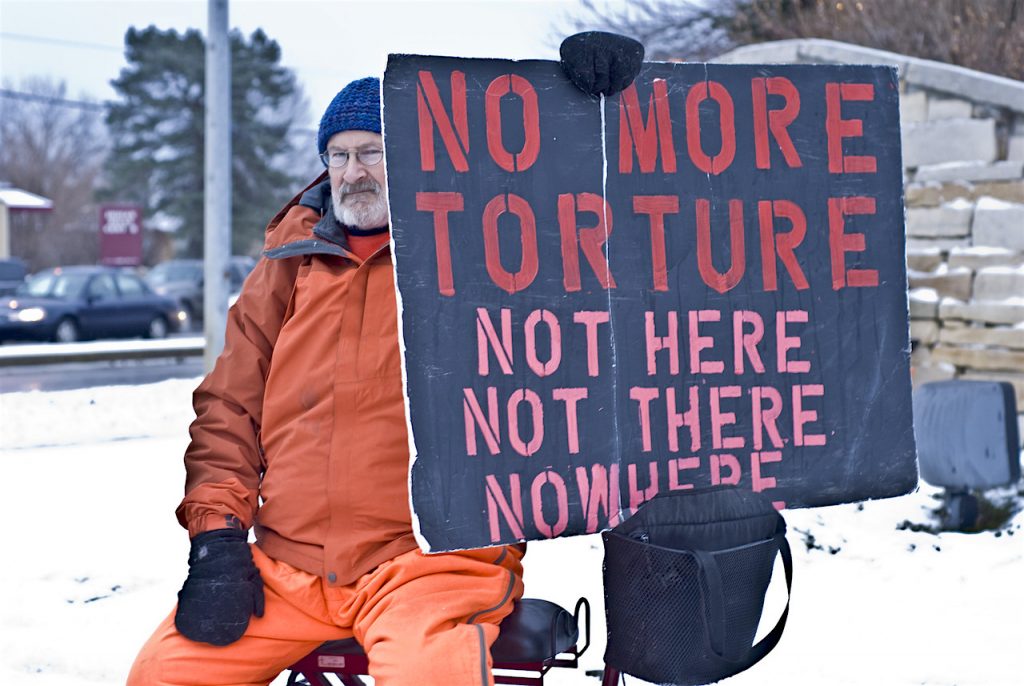
Last week, largely lost in the Brexit fog that engulfs almost all other political activity in the UK these days, the NGO Reprieve, and two principled MPs — Labour’s Dan Jarvis and the Conservative David Davis — launched a legal challenge against the government in connection with a recent ministerial decision to “abandon a promise to hold a judge-led inquiry into torture and rendition involving British intelligence agencies after 9/11,” as the Guardian described it.
Jarvis, Davis and Reprieve have submitted an application for a judicial review in the High Court as the latest step in a decade-long struggle to secure transparency about the UK’s involvement in the Bush administration’s CIA-led program of rendition and torture.
Back in July 2010, shortly after taking office in a coalition with the Liberal Democrats, David Cameron — pushed by the foreign secretary William Hague — announced a judge-led inquiry, as I reported here, telling the House of Commons that he had asked Sir Peter Gibson, a retired judge, to “look at whether Britain was implicated in the improper treatment of detainees held by other countries that may have occurred in the aftermath of 9/11,” and noting that, although there was no evidence that any British officer was “directly engaged in torture,” there were “questions over the degree to which British officers were working with foreign security services who were treating detainees in ways they should not have done.”
Radio: I Discuss Guantánamo on Portland’s KBOO FM with Linda Olson-Osterlund

Please support my work as a reader-funded journalist! I’m currently trying to raise $2500 (£2000) to support my writing and campaigning on Guantánamo and related issues over the next three months of the Trump administration. If you can help, please click on the button below to donate via PayPal.
The prison at Guantánamo Bay —- and the plight of the 40 men still held there — has, in general, fallen so far off America’s radar that it is unsurprising that many in the US think that it has closed down.
So little interest is there in Guantánamo that the days when I was regularly asked to discuss it on US radio stations are, sadly, long gone, and so I was delighted last week to be asked to discuss it with Linda Olsen-Osterlund, on KBOO FM, a community radio station in Portland, Oregon.
The one-hour show is here as an MP3, and I hope you have time to listen to it, and will share it if you find it useful.
Extinction Rebellion Challenges and Defies Outrageous London-Wide Ban on Public Assemblies

Please support my work as a reader-funded investigative journalist, commentator and activist. If you can help, please click on the button below to donate via PayPal.
On Monday evening, in response to the start of the second week of actions in London by the environmental campaigning group Extinction Rebellion, as part of their International Rebellion in at least 60 cities worldwide, the Metropolitan Police issued an unprecedented order, under Section 14 of the 1986 Public Order Act, which allows them to impose restrictions on any “public assembly” (an assembly of two or more people in a public place), if they claim that it poses “serious disruption to the life of the community.”
The order on Monday night stated that “any assembly linked to the Extinction Rebellion ‘Autumn Uprising’ … must now cease their protests within London (MPS and City of London Police Areas)” by 9pm, and even before it was issued police began clearing protestors out of their camp in Trafalgar Square.
Lawyers, civil liberties groups and some MPs immediately responded with understandable outrage. Jolyon Maugham QC tweeted, “We believe the section 14 Order is invalid — that it amounts to a huge overreach of the statutory power — and likely reflects the enormous political pressure the Met is under”, adding, “It exposes the Met to all sorts of risks — of legal challenges to validity, of civil claims for wrongful arrest with aggravated damages and so on — merely because this Government cannot tolerate peaceful protest.”
Extinction Rebellion and the Undeniable Power of Non-Violent Revolutionary Change

Please support my work as a reader-funded investigative journalist, commentator and activist. If you can help, please click on the button below to donate via PayPal.
As the environmental campaigning group Extinction Rebellion begins the second week of its International Rebellion, it is worth reflecting on how much they — and the Swedish teenager Greta Thunberg, who initiated a rolling global climate strike by schoolchildren that, last month, saw millions of schoolchildren and supportive adults take to the streets in 185 countries around the world — have shifted the terms of the debate on climate change over the last twelve months.
As the Guardian explained in an editorial last week, “Ipsos Mori reports that its latest poll found that 78% of Britons believe the planet is ‘heading for disaster’, up from 59% in 2013.” The actions of Thunberg and XR amplifyied the messages of doom put forward by scientists — in particular, the UN Intergovernmental Panel on Climate Change’s landmark report, last October, in which, as the Guardian described it, “The world’s leading climate scientists have warned there is only a dozen years [now just eleven] for global warming to be kept to a maximum of 1.5C, beyond which even half a degree will significantly worsen the risks of drought, floods, extreme heat and poverty for hundreds of millions of people”, adding added that “urgent and unprecedented changes are needed to reach the target”, which they called “affordable and feasible although it lies at the most ambitious end of the [2015] Paris agreement pledge to keep temperatures between 1.5C and 2C.” Since then, the doomsday message has been reinforced by the likes of Sir David Attenborough, via his hard-hitting BBC documentary, ‘Climate Change: The Facts’, and the combined weight of all these actions has led politicians to acknowledge the scale of the unprecedented man-made crisis faced by the whole of humanity.
Under Theresa May, the UK government declared a climate emergency and committed to a 2050 target for zero carbon emissions, and last month the Labour party conference took an important additional step, adopting 2030 as the intended zero carbon date.
No Escape from Guantánamo: Former Child Prisoner Boycotts Broken Review Process, Calls It “Hopeless”

Please support my work as a reader-funded journalist! I’m currently trying to raise $2500 (£2000) to support my writing and campaigning on Guantánamo and related issues over the next three months of the Trump administration. If you can help, please click on the button below to donate via PayPal.
I wrote the following article for the “Close Guantánamo” website, which I established in January 2012, on the 10th anniversary of the opening of Guantánamo, with the US attorney Tom Wilner. Please join us — just an email address is required to be counted amongst those opposed to the ongoing existence of Guantánamo, and to receive updates of our activities by email.
For the 40 men still held in the US prison at Guantánamo Bay, the wheels of justice have, fundamentally, ground to a halt under Donald Trump.
It’s now nearly ten years since a high-level government review process established by President Obama — the Guantánamo Review Task Force — issued its recommendations about what to do with the prisoners inherited from George W. Bush. The task force recommended that 156 men should be released, that 36 men should be prosecuted, and that 48 others should continue to be held without charge or trial — on the basis that they were regarded as “too dangerous to transfer but not feasible for prosecution” (a self-evidently dubious designation, as it accepted that there were fundamental problems with the so-called evidence used to establish these men’s guilt).
Throughout the rest of his presidency, Obama managed to release all but three of the 156 men that the task force recommended for release, but an evolving crisis in the military commission trial system (which basically involved convictions being overturned because the war crimes for which prisoners had been prosecuted were not internationally recognized war crimes, but had been invented by Congress), meant that half of those originally deemed eligible for prosecution were, instead, lumped in with the 48 men recommended for ongoing imprisonment without charge or trial.
In Abu Zubaydah Court Case, US Judges Admit That He Was Tortured

Please support my work as a reader-funded journalist! I’m currently trying to raise $2500 (£2000) to support my writing and campaigning on Guantánamo and related issues over the next three months of the Trump administration. If you can help, please click on the button below to donate via PayPal.
When it comes to the disgraceful US prison at Guantánamo Bay, where men are held — on a seemingly endlessly basis — without charge or trial, and where many of the 40 men still held were the victims of torture in CIA “black sites” before their arrival at the prison, the dominant reaction, from the mainstream US media and the American people in general, as Guantánamo nears the 18th anniversary of its opening, is one of amnesia.
With the valiant exception of Carol Rosenberg, who has been visiting the prison since it opened, and who, these days, is often the only journalist visiting and paying attention to its despairing prisoners and its broken trials, the mainstream media largely pays little or no attention to Guantánamo, as was apparent in June, when a significant court victory for the prisoners — challenging the long-standing nullification of the prisoners’ habeas corpus rights, dating back to 2011 — was completely ignored. I wrote about it here for Close Guantánamo, and also posted it here, where it secured significant interest from the small community of people who still care about the injustices of Guantánamo, but it was dispiriting that no one else noticed.
Two weeks ago, the mainstream US media once more largely failed to notice a significant court ruling relating to Guantánamo — and the US torture program — which was delivered by judges in the Ninth Circuit Court of Appeals in relation to Abu Zubaydah, held at Guantánamo since September 2006, and the prisoner for whom the CIA’s torture program was first developed back in 2002.











 Who's still at Guantánamo?
