Archive for February, 2008
Waterboarding: two questions for Michael Hayden about three “high-value” detainees now in Guantánamo
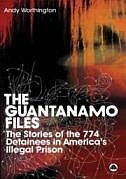
The media is buzzing with the news that Michael Hayden, the director of the CIA, admitted in an open session of Congress yesterday that waterboarding –- a long-reviled torture technique, which produces the perception of drowning –- was used on three “high-value” al-Qaeda suspects in CIA custody in 2002 and 2003. The three men –- Khalid Sheikh Mohammed, Abu Zubaydah and Abdul Rahim al-Nashiri –- are discussed in my book The Guantánamo Files: The Stories of the 774 Detainees in America’s Illegal Prison.

The three “high-value” detainees whom Michael Hayden admitted were waterboarded by the CIA. From L to R: Abu Zubaydah, Khalid Sheikh Mohammed and Abdul Rahim al-Nashiri.
My questions for Mr. Hayden are simple. Firstly, if it’s true that only three detainees were subjected to waterboarding, then why did a number of “former and current intelligence officers and supervisors” tell ABC News in November 2005 that “a dozen top al-Qaeda targets incarcerated in isolation at secret locations on military bases in regions from Asia to Eastern Europe” were subjected to six “Enhanced Interrogation Techniques,” instituted in mid-March 2002?
According to the ABC News account, the six techniques used by the CIA on the “dozen top al-Qaeda targets” were “The Attention Grab,” “Attention Slap,” “The Belly Slap” and three other techniques that are particularly worrying: “Long Time Standing,” “The Cold Cell,” and, of course, “Waterboarding.”
“Long Time Standing” was described as “among the most effective [techniques],” in which prisoners “are forced to stand, handcuffed and with their feet shackled to an eye bolt in the floor for more than 40 hours.” The ABC News report added, “Exhaustion and sleep deprivation are effective in yielding confessions.” In “The Cold Cell,” the prisoner “is left to stand naked in a cell kept near 50 degrees. Throughout the time in the cell the prisoner is doused with cold water.”
The description of “Waterboarding” was as follows: “The prisoner is bound to an inclined board, feet raised and head slightly below the feet. Cellophane is wrapped over the prisoner’s face and water is poured over him. Unavoidably, the gag reflex kicks in and a terrifying fear of drowning leads to almost instant pleas to bring the treatment to a halt.”
The article proceeded with recollections of the waterboarding of Khalid Sheikh Mohammed, who apparently “won the admiration of interrogators when he was able to last between two and two-and-a-half minutes before begging to confess” (the interrogators tried it on themselves, but “only lasted an average of 14 seconds before caving in”).
According to the ABC News report, one other detainee who was waterboarded was Ibn al-Shaykh al-Libi, the director of the Khaldan training camp in Afghanistan, who was captured in November 2001. His current whereabouts are unknown, although there are suspicions that he was finally delivered to the Libyan government. Having slipped off the radar, the government clearly does not want his case revived, not only because it may have to explain what has happened to him, but also because, as a result of the application of “Enhanced Interrogation Techniques,” al-Libi claimed that Saddam Hussein had offered to train two al-Qaeda operatives in the use of chemical and biological weapons.
Al-Libi’s “confession” led to President Bush declaring, in October 2002, “Iraq has trained al-Qaeda members in bomb making and poisons and gases,” and his claims were, notoriously, included in Colin Powell’s speech to the UN Security Council on February 5, 2003. The claims were of course, groundless, and were recanted by al-Libi in January 2004, but it took Dan Cloonan, a veteran FBI interrogator, who was resolutely opposed to the use of torture, to explain why they should never have been believed in the first place. Cloonan told Jane Mayer, “It was ridiculous for interrogators to think Libi would have known anything about Iraq … The reason they got bad information is that they beat it out of him. You never get good information from someone that way.”
My second question for Mr. Hayden concerns an allegation made by Murat Kurnaz, the German detainee who was released from Guantánamo in August 2006. In an article in the Washington Spectator last July, focusing on Kurnaz’s story, as described in his book Fünf Jahre Meines Lebens: Ein Bericht Aus Guantánamo (Five Years Of My Life: A Report From Guantánamo), the following passage came after Kurnaz’s recollections of being hung by his wrists for “hours and days,” interrupted only by a doctor who came to “check his vital signs to determine if he could withstand more enhanced interrogation,” and his recollections of seeing, in the neighboring cell, another detainee who had died as a result of this ordeal:
“Kurnaz said he was also subjected to waterboarding and electric shock. And that beatings were routine and constant. He theorizes that much of the torture was a result of the failure of the American soldiers and agents to capture any real terrorists in the initial sweeps. (He was told that he was sold to the Americans for $3,000 by Pakistani police, who identified him as a terrorist). ‘They didn’t have any big fish. And they thought that by torture they could get one of us to say something. “I know Osama” or something like that. Then they could say they had a big fish.’”
In light of the comments made by CIA sources in November 2005, and by Murat Kurnaz in his book, I can only wonder how it’s feasible for Mr. Hayden to assert that the use of waterboarding was restricted to three of the 14 “high-value” detainees who were transferred to Guantánamo in September 2006, and, by extension, to claim that waterboarding was not used elsewhere in the “War on Terror” prisons; specifically, as Murat Kurnaz alleged, in one of the US prisons in Afghanistan, which, with Guantánamo, provided the template for the well-chronicled riot of torture and abuse that later migrated to Abu Ghraib prison in Iraq.
 Andy Worthington is the author of The Guantánamo Files: The Stories of the 774 Detainees in America’s Illegal Prison (published by Pluto Press, distributed by Macmillan in the US, and available from Amazon — click on the following for the US and the UK). To receive new articles in your inbox, please subscribe to my RSS feed, and see here for my definitive Guantánamo prisoner list, published in March 2009.
As published on the Huffington Post, AlterNet, Antiwar.com and CounterPunch.
For a sequence of articles dealing with the use of torture by the CIA, on “high-value detainees,” and in the secret prisons, see: Guantánamo’s tangled web: Khalid Sheikh Mohammed, Majid Khan, dubious US convictions, and a dying man (July 2007), Jane Mayer on the CIA’s “black sites,” condemnation by the Red Cross, and Guantánamo’s “high-value” detainees (including Khalid Sheikh Mohammed) (August 2007), Six in Guantánamo Charged with 9/11 Murders: Why Now? And What About the Torture? (February 2008), The Insignificance and Insanity of Abu Zubaydah: Ex-Guantánamo Prisoner Confirms FBI’s Doubts (April 2008), Guantánamo Trials: Another Torture Victim Charged (Abdul Rahim al-Nashiri, July 2008), Secret Prison on Diego Garcia Confirmed: Six “High-Value” Guantánamo Prisoners Held, Plus “Ghost Prisoner” Mustafa Setmariam Nasar (August 2008), Will the Bush administration be held accountable for war crimes? (December 2008), The Ten Lies of Dick Cheney (Part One) and The Ten Lies of Dick Cheney (Part Two) (December 2008), Prosecuting the Bush Administration’s Torturers (March 2009), Abu Zubaydah: The Futility Of Torture and A Trail of Broken Lives (March 2009), Ten Terrible Truths About The CIA Torture Memos (Part One), Ten Terrible Truths About The CIA Torture Memos (Part Two), 9/11 Commission Director Philip Zelikow Condemns Bush Torture Program, Who Authorized The Torture of Abu Zubaydah?, CIA Torture Began In Afghanistan 8 Months before DoJ Approval, Even In Cheney’s Bleak World, The Al-Qaeda-Iraq Torture Story Is A New Low (all April 2009), Ibn al-Shaykh al-Libi Has Died In A Libyan Prison, Dick Cheney And The Death Of Ibn al-Shaykh al-Libi, The “Suicide” Of Ibn al-Shaykh al-Libi: Why The Media Silence?, Two Experts Cast Doubt On Ibn al-Shaykh al-Libi’s “Suicide”, Lawrence Wilkerson Nails Cheney On Use Of Torture To Invade Iraq, In the Guardian: Death in Libya, betrayal by the West (in the Guardian here) (all May 2009), Lawrence Wilkerson Nails Cheney’s Iraq Lies Again (And Rumsfeld And The CIA), and WORLD EXCLUSIVE: New Revelations About The Torture Of Ibn al-Shaykh al-Libi (June 2009). Also see the extensive archive of articles about the Military Commissions.
For other stories discussing the use of torture in secret prisons, see: An unreported story from Guantánamo: the tale of Sanad al-Kazimi (August 2007), Rendered to Egypt for torture, Mohammed Saad Iqbal Madni is released from Guantánamo (September 2008), A History of Music Torture in the “War on Terror” (December 2008), Seven Years of Torture: Binyam Mohamed Tells His Story (March 2009), and also see the extensive Binyam Mohamed archive. And for other stories discussing torture at Guantánamo and/or in “conventional” US prisons in Afghanistan, see: The testimony of Guantánamo detainee Omar Deghayes: includes allegations of previously unreported murders in the US prison at Bagram airbase (August 2007), Guantánamo Transcripts: “Ghost” Prisoners Speak After Five And A Half Years, And “9/11 hijacker” Recants His Tortured Confession (September 2007), The Trials of Omar Khadr, Guantánamo’s “child soldier” (November 2007), Former US interrogator Damien Corsetti recalls the torture of prisoners in Bagram and Abu Ghraib (December 2007), Guantánamo’s shambolic trials (February 2008), Torture allegations dog Guantánamo trials (March 2008), Sami al-Haj: the banned torture pictures of a journalist in Guantánamo (April 2008), Former Guantánamo Prosecutor Condemns “Chaotic” Trials in Case of Teenage Torture Victim (Lt. Col. Darrel Vandeveld on Mohamed Jawad, January 2009), Judge Orders Release of Guantánamo’s Forgotten Child (Mohammed El-Gharani, January 2009), Bush Era Ends With Guantánamo Trial Chief’s Torture Confession (Susan Crawford on Mohammed al-Qahtani, January 2009), Forgotten in Guantánamo: British Resident Shaker Aamer (March 2009), and the extensive archive of articles about the Military Commissions.
Afghan who died at Guantánamo was anti-Taliban hero
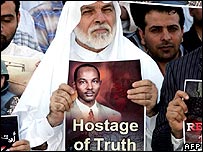
 Today the New York Times runs an exclusive front page article by Carlotta Gall and myself, Time Runs Out for an Afghan Held by the U.S., relating the story of Abdul Razzaq Hekmati, a 68-year old detainee who died of cancer at Guantánamo on December 30, after being held for five years without charge or trial.
Described on his death as “an experienced jihadist with command responsibilities,” who “was assessed to have had multiple links to anti-coalition forces,” Mr. Hekmati had persistently presented a different story in his military tribunals and review boards at Guantánamo.
I had come across Mr. Hekmati’s story during my research for The Guantánamo Files: The Stories of the 774 Detainees in America’s Illegal Prison, and was delighted to work with Carlotta on this significant story. Please visit the New York Times website for the article.
Note: For commentary on the Hekmati story, please see the following articles by Scott Horton at Harper’s, Daniel Politi at Slate, and Chris Floyd at Atlantic Free Press and CounterPunch.
Andy Worthington is the author of The Guantánamo Files: The Stories of the 774 Detainees in America’s Illegal Prison (published by Pluto Press, distributed by Macmillan in the US, and available from Amazon — click on the following for the US and the UK). To receive new articles in your inbox, please subscribe to my RSS feed, and see here for my definitive Guantánamo prisoner list, published in March 2009.
Guantánamo: Al-Jazeera’s Sami al-Haj to be released?
 In a report that I long to have confirmed by other sources, Gulf Times declares that Robert Ménard, the secretary general of Reporters Sans Frontières (Reporters Without Borders), has stated that al-Jazeera cameraman Sami al-Haj “is expected to be freed soon,” even though Ménard, who visited Guantánamo a few weeks ago, also stated, “I had gone to Guantánamo with a fellow journalist to visit Sami but I couldn’t meet him because he was classified by the Americans as dangerous.” Noticeably, however, Ménard’s remark follows a similar claim by Sami’s wife, Asma Ismailov, who said three weeks ago, “I was promised by US and Sudanese officials that he will be released by the end of March.”
I recently posted an article detailing the story of the wrongly imprisoned journalist, which included the text of his latest letter from Guantánamo, and would also like to draw your attention to another article about Sami, written by Meg Laughlin, which was published yesterday in Florida’s St. Petersberg Times.
Laughlin’s article begins: “A few days ago, I clicked on a computer photo of an “enemy combatant” at the detention center at Guantánamo, and I was shocked. It was someone I knew, a journalist named Sami al-Haj. I’d met Sami at the Marriott in Islamabad in early December 2001. Like most of us there, he was a journalist going in and out of Afghanistan to cover the U.S. invasion after 9/11. A tall African man in a white shalwar kameez –- the traditional billowy knee-length shirt and pants of Afghanistan –- he stood out as he floated across the beige marble lobby of the hotel. His US pals would see him coming, and yell, “It’s the al-Qaeda reporter!” At the time, everyone, including him, laughed at the silliness of the comment. But it ceased to be funny when he fell off the planet.”
She continues: “When I read the letter and saw the photo, I had a dawning realization. I thought I knew him. To be sure, I immediately called my colleagues who were in Afghanistan with me. One in particular remembered Sami going in and out of Afghanistan when we were there. I then tried to find Sami’s colleagues from al-Jazeera –- the Arabic-language TV news network –- to nail down when we met. I found two of his al-Jazeera colleagues in Doha, Qatar, who were with him in Afghanistan and Pakistan. ‘We were in Islamabad at the Marriott when you were there,’ said al-Jazeera program editor Yousif al-Sholiy.”
Laughlin proceeded to investigate Sami’s story, and explains what she discovered: “Sami al-Haj was born in Khartoum, Sudan, in 1969. His father had a small neighborhood store. His mother took care of him and his four brothers and sisters. As the oldest son, Sami was charged with the welfare of the family. He was the one sent abroad to university. He was the one expected to get a good job and send money home. And he delivered.” Via a translator, she spoke to his brother in Khartoum, 24-year old Yasser al-Haj, who explained, “My oldest brother was our strength and our pride until Guantánamo.”
Piecing together more of the story, Laughlin reports, “After finishing college in the mid 1990s, Sami got a job as an office manager for Union Beverage Co. in Doha, Qatar. In early 1999, he married a woman from Azerbaijan. They had a son in 2001. While in Doha, he went to school to become a cameraman and got a job at al-Jazeera TV. The Afghan tour in October 2001 was his second assignment. “We used to kid him that he was too much in love with his wife and child to leave home and cover a war,” said al-Sholiy. “He wouldn’t shut up about them.”
The article continues: “Because al-Jazeera was the first TV network allowed in Afghanistan after 9/11, CNN hooked up with it for footage. Most of what al-Haj shot, which was US bombings on the road to Kandahar and Taliban ministers giving swan song speeches, was aired on both al-Jazeera and CNN.
“In December 2001, al-Haj and al-Jazeera reporter Abdelhaq Sadah were in Pakistan to extend their visas. Al-Sholiy, part of the team, had been sick in Islamabad and remembered staying a few days at the Marriott with Sami around that time. Sadah and al-Haj then returned to the Afghan border at Chaman, Pakistan, to cross into Afghanistan in their Toyota and continue coverage. Pakistani border guards told al-Haj he had a ‘passport problem’ and was not allowed to cross. ‘We were astonished,’ Sadah, now an assignment editor for al-Jazeera, told me. ‘Sami had a current visa. We had gone back and forth with no problem. We couldn’t understand why Sami was suddenly singled out.’
“The border guards said it was probably a mistake and would be cleared up, but al-Haj had to remain at the crossing overnight. Meanwhile, Sadah went into Chaman and returned with hot grilled chicken and oranges for the guards, Sami and himself. ‘It was very pleasant with the border patrol, and we weren’t worried,’ Sadah recalled. When Sadah returned the next day to cross the border with Sami al-Haj, a new intelligence officer showed up and said he had to take al-Haj with him as a formality and would return in an hour. ‘I waited and waited and never saw him again,’ said Sadah. It would be seven months before the Pentagon allowed the International Committee of the Red Cross to send a letter out from Sami to his al-Jazeera colleagues and his family. It began, ‘I am in Guantánamo. I don’t know why.’”
Laughlin proceeds to run though Sami’s horrendous experiences in the US prisons at Bagram and Kandahar, and the charges filed –- and then dropped –- against him in Guantánamo, as discussed in my previous article, and in my book The Guantánamo Files: The Stories of the 774 Detainees in America’s Illegal Prison. She concludes the article with another comment from his brother, and some poignant descriptions of his family.
Speaking of his ongoing hunger strike, his brother declares, “It’s all he has. Everything else has been taken away from him but the right to protest his life,” and Laughlin also reports, “Al-Haj’s wife, Asma, and six-year old son, Mohammed, live in Doha [in Qatar], but have been visiting Sami’s family in Khartoum for some weeks. Yasser, Sami’s brother, told me Tuesday that being together helps –- it makes them ‘feel Sami’s presence more.’ Yasser said he had just taken Mohammed to visit a two-year old cousin named after Sami. When Sami’s son saw the toddler, he hugged him and called him ‘father.’ Surprised, Yasser asked his nephew why he thought this infant was his father. ‘Guantánamo makes people smaller and smaller,’ said Mohammed.”
At the end of the article, she writes, “Al-Haj is no longer charged with doing anything illegal. But neither is he being freed. Jeffrey Gordon, spokesman for the defense secretary, said that detention at Guantánamo is not about what’s legal or illegal. ‘It’s based on the law of war construct,’ he said. Translation: Authorities are keeping him in custody because they can. On Tuesday, when I was talking to Yasser al-Haj, he asked me to relay this message ‘to the American people’: ‘Even though there has been great injustice, we have faith in you. Please act quickly.’”
While Sami’s many supporters wait to hear if there is any truth to the rumors of his imminent release, it’s worth pointing out that two other Sudanese detainees, Adel Hamad and Salim Adem, were released from Guantánamo in December, and that their example may set a precedent. Both men had been cleared for release from Guantánamo in November 2005, but it took over two years to free them because of an inexplicable refusal on the part of the US authorities to deal with repeated requests for their release by the Sudanese government. As I wrote at the time, the deadlock has obviously now been broken, and it is to be hoped that Sami –- and at least some of the six other Sudanese detainees held at Guantánamo –- will soon be released.
Andy Worthington is the author of The Guantánamo Files: The Stories of the 774 Detainees in America’s Illegal Prison (published by Pluto Press, distributed by Macmillan in the US, and available from Amazon — click on the following for the US and the UK). To receive new articles in your inbox, please subscribe to my RSS feed, and see here for my definitive Guantánamo prisoner list, published in March 2009.











 Who's still at Guantánamo?
