The reviled Military Commissions collapse and the pressure to close Guantánamo increases, but a new prisoner arrives from Africa
13.6.07
It’s been another busy week at Guantánamo. On 4 June, the US administration attempted to hold the first of the reconvened Military Commissions since the farcical ‘trial’ of David Hicks in March, when the Australian Taliban volunteer –- persistently regarded by the administration as one of ‘the worst of the worst’, and one of only twelve men put forward for trial by Military Commission between 2003 and 2006 (two of whom, the Britons Moazzam Begg and Feroz Abbasi, were released in 2005, and have never been charged with anything) –- accepted a plea bargain, admitting that he provided ‘material support for terrorism’ in exchange for a nine-month sentence to be served in Australia.
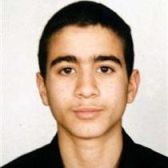 After Hicks’ Houdini-like escape from Guantánamo –- which not only freed him from the administration’s offshore gulag, but also conveniently prevented him from pointing out that he was tortured in Afghanistan and Guantánamo –- defense lawyers were anticipating a protracted struggle over the fate of the next two prisoners to face the Commissions: Omar Khadr, a Canadian accused of killing a US soldier in Afghanistan, who was only 15 years old at the time of his capture in July 2002, and Salim Hamdan, a 37-year old from the Sudan, who was one of Osama bin Laden’s drivers in Afghanistan.
Countless articles have been written about Khadr, but a good place to start is The Good Son, published in Canada’s National Post in December 2002. Although his father was a militant (and a friend of bin Laden), it’s worth pointing out, I think, that only the US administration would choose, in the full glare of the world’s media, to brazenly pursue a legally dubious ‘war crimes’ charge against someone who was only a child when the alleged incident took place.
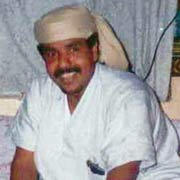 In Hamdan’s case, the main source of information is his military lawyer, Lieutenant Commander Charles Swift, of the US navy’s Judge Advocate General’s Corp (JAG), who has been opposed to the Military Commissions almost from the moment that he was assigned the case in 2003. In a letter to Marie Brenner of Vanity Fair in January 2007 (for an excellent article, Taking on Guantánamo, that was published in March), he wrote, ‘The whole purpose of setting up Guantánamo Bay is for torture. Why do this? Because you want to escape the rule of law. There is only one thing that you want to escape the rule of law to do, and that is to question people coercively — what some people call torture. Guantánamo and the military commissions are implements for breaking the law. Why build a prison here when there are plenty of prisons in Nebraska? Why is it, when we see photos of Abu Ghraib, we think that it is “exporting Guantánamo”? That it is the “Guantánamo method”?’
Working with Neil Katyal, a civilian lawyer, Swift’s arguments helped to persuade the Supreme Court, in June 2006, that the Military Commissions were illegal under US law and the Geneva Conventions. His victory was short-lived, however. Within four months, President Bush convinced a supine Congress to reinstate them in the vile Military Commissions Act, but Swift, who, as a result of his actions, had already been passed over for promotion, remained implacably opposed to them, telling a meeting of law students in April 2007 that the government’s insistence that Military Commissions which accepted coerced testimony ‘were “full and fair trials” reminded him of an old Western in which a character is told, “You’re going to have a fair trial, and then we’re going to hang you.” “They weren’t doing what military commissions historically were set up to do,” he said. “Rather than bring law to a lawless place, it was to create a lawless place”.’
With this build-up to the Military Commissions of Omar Khadr and Salim Hamdan, no one foresaw that, of all people, the military judges appointed by President Bush to preside over the Commissions would, in separate decisions, throw out both cases on a technicality. Yet this is what happened. Both Navy Captain Keith Allred, presiding over Hamdan’s case, and Army Colonel Peter Brownback, in Khadr’s case, dismantled, in the space of a few short hours, what the administration had spent five and half years trying to construct.
The technicality that derailed the Commissions centered on a legal distinction overlooked by the lawyers who cobbled together the Military Commissions Act during the summer of 2006. For the Commissions to proceed, those brought before them had to have been designated as ‘unlawful enemy combatants’ (a post-9/11 term that seems to be recognized only by the White House and the Pentagon) in a Combatant Status Review Tribunal (CSRT). These tribunals, set up to review the prisoners’ status as ‘enemy combatants’ in response to the Supreme Court decision in June 2004 that they had a right to challenge their detention, were memorably described on 5 June, in a New York Times editorial, Gitmo: A National Disgrace, as ‘kangaroo courts that give the inmates no chance to defend themselves, allow evidence that was obtained through torture and can be repeated until one produces the answer the Pentagon wants’.
What both Brownback and Ellred pointed out, however, was that Khadr and Hamdan had not been designated as ‘unlawful enemy combatants’ in their CSRT, and had, instead, been judged as ‘enemy combatants’ only, without the crucial designation ‘unlawful’. Far from being a minor quibble, the distinction is of enormous importance, as Allred pointed out, ruling that Hamdan had never received ‘an individuated determination’ that he was an unlawful combatant, as required by the Geneva Conventions, and that without this determination he and other detainees were entitled to be treated as prisoners of war (in other words, as ‘lawful enemy combatants’). Moreover, as both judges clearly realized, none of the 383 other prisoners at Guantánamo had been designated as ‘unlawful enemy combatants’ either.
One can only imagine the responses of President Bush and Vice President Dick Cheney when they heard the news about the Military Commissions. As approved in October 2006, the Commissions were intended, once and for all, to provide the means whereby high-profile prisoners like Khalid Sheikh Mohammed (KSM), Ramzi bin al-Shibh and Abu Zubaydah could be tried and convicted without the interference of uncooperative lawyers and without the possibility that torture could ever be mentioned (just as Charles Swift and others had realized in 2003). Attempting to gloss over the collapse of the Commissions, a Pentagon spokesman declared it a mere question of semantics (which, as explained above, it was not) and threatened to appeal, but it took virtually no time, as a Washington Post editorial, Stuck in Guantánamo, explained on 7 June, for commentators to realize that ‘the appeals court that is to hear military commission cases hasn’t yet been established’.
With the administration apparently on the ropes, the media revolt against its policies grew noticeably larger. In addition to the coruscating New York Times editorial and criticism in the Washington Post, dozens of smaller papers in the US ran ‘Close Guantánamo’ editorials, and even the Financial Times weighed in with a pointedly unambiguous editorial, Time to abandon the absurd charade at Guantánamo Bay. On 10 June, former Secretary of State Colin Powell joined in, telling NBC’s Meet the Press, ‘Guantánamo has become a major, major problem [in] the way the world perceives America. And if it was up to me, I would close Guantánamo, not tomorrow but this afternoon. I’d close it. And I would not let any of those people go. I would simply move them to the United States and put them into our federal legal system … essentially, we have shaken the belief that the world had in America’s justice system by keeping a place like Guantánamo open and creating things like the military commission. We don’t need it, and it’s causing us far damage than any good we get for it’.
In Slate, meanwhile, in an article entitled Line in the Sand, Dahlia Lithwick speculated about the judges’ reasons for dismissing the cases. Noting that they could have ‘simply deferred to President Bush’s 2002 determination that all associates and agents of al-Qaeda are automatically “unlawful” enemy combatants’, she wondered whether, like ‘many highly conservative legal and career military professionals once willing to follow this president wherever he led them’, they had ‘simply become disillusioned with a process that is so clearly ends-driven as to have been described as “rigged” by one of the three prosecutors who eventually quit, rather than proceed with the trials’.
Lithwick also pointed out that the judges may have wished to make a point about being presented with ‘small fry’ rather than the high-profile prisoners held at Guantánamo –- including KSM, bin al-Shibh and Zubaydah. If the judges were more in sympathy with the State Department than with Bush and Cheney, they would no doubt have read Legal Policy in a Twilight War, a lecture delivered in April 2007 by Philip Zelikow, the executive director of the 9/11 Commission and a former advisor to the State Department, who described a ‘new paradigm’ in the State Department’s approach to the ‘War on Terror’, which called for the closing of Guantánamo, and, crucially, as Marty Lederman described it in an article for Balkinization, ‘to reserve military commission trials for the big fish directly involved in terrorist activities, against whom such trials have historically been used –- “for major war criminals and al-Qaeda’s leaders, not Osama’s driver.”’
Lithwick added, ‘And who did Brownbeck and Allred see in their courtrooms [on 4 June]? Osama’s driver. And a Canadian kid who allegedly threw a grenade that killed a U.S. soldier. What must it feel like to be handpicked to pass judgment over the “worst of the worst” and instead find yourself confronted with the worst of the tweens? If these military commissions are intended to be taken seriously, Khalid Sheikh Mohammed should be facing one’.
Whether the State Department’s ‘new paradigm’ can actually influence the policies of Bush and Cheney remains to be seen. Noticeably, Robert Gates, the new defense secretary, was overruled by Cheney when he called for the closure of Guantánamo shortly after taking office. As is always the case with this administration, it’s far too early to applaud a return to decent human values and the triumph of due process. Deprived of a trial –- however ‘rigged’ –- Omar Khadr and Salim Hamdan will, like the other 383 prisoners in Guantánamo, simply be returned to their cells to be held indefinitely without charge or trial. This, remember, is an administration that has bragged of its willingness to hold prisoners indefinitely, ‘even if they are found not guilty by a military tribunal’.
And in the meantime, as if to demonstrate that the President and the Vice President will not be swayed from the remorseless pursuit of their lawless global vendetta, on 7 June, just three days after the debacle of the Commissions, another prospective victim of the show trials –- a Somalian identified by defense officials as Abdullahi Sudi Arale –- arrived at Guantánamo from the Horn of Africa. Accused of being a courier between al-Qaeda operatives in East Africa and Pakistan, who ‘assisted extremists in acquiring weapons and explosives’, as well as facilitating travel by providing false documents for al-Qaeda operatives and foreign fighters, Arale is the third prisoner to arrive at Guantánamo in the last ten weeks, following Mohammed Abdul Malik, a Kenyan, and Abdul Hadi al-Iraqi, a long sought-after al-Qaeda operative, who had apparently been held for several months in one of the secret prisons run by the CIA that no longer exist, according to a speech made by President Bush on 6 September 2006, shortly after the 14 ‘high-value’ prisoners –- including KSM, Ramzi bin al-Shibh and Abu Zubaydah –- were transferred to Guantánamo from CIA custody.
With the administration once more demonstrating its undiluted commitment to unfettered executive power, the brightest light in the last week’s events may not be the collapse of the Military Commissions per se, but what comes out of it: a renewed vigor to topple the architects of this ‘rogue system’ (as the New York Times described it), and unflinching support for the legislation, proposed by the Republican Arlen Specter and the Democrat Patrick Leahy and passed by the Senate Judiciary Committee on 8 June, to restore the right of habeas corpus to the Guantánamo prisoners (which was stripped by the Military Commissions Act), allowing them once more to appeal their detention in the US federal courts.
 For more on Guantánamo and the Military Commissions, see my book The Guantánamo Files: The Stories of the 774 Detainees in America’s Illegal Prison (published by Pluto Press, distributed by Macmillan in the US, and available from Amazon — click on the following for the US and the UK). To receive new articles in your inbox, please subscribe to my RSS feed.
See the following for a sequence of articles dealing with the stumbling progress of the Military Commissions: A bad week at Guantánamo (Commissions revived, September 2007), The curse of the Military Commissions strikes the prosecutors (September 2007), A good week at Guantánamo (chief prosecutor resigns, October 2007), The story of Mohamed Jawad (October 2007), The story of Omar Khadr (November 2007), Guantánamo trials: where are the terrorists? (February 2008), Six in Guantánamo charged with 9/11 attacks: why now, and what about the torture? (February 2008), Guantánamo’s shambolic trials (ex-prosecutor turns, February 2008), Torture allegations dog Guantánamo trials (March 2008), African embassy bombing suspect charged (March 2008), The US military’s shameless propaganda over 9/11 trials (April 2008), Betrayals, backsliding and boycotts (May 2008), Fact Sheet: The 16 prisoners charged (May 2008), Four more charged, including Binyam Mohamed (June 2008), Afghan fantasist to face trial (June 2008), 9/11 trial defendants cry torture (June 2008), USS Cole bombing suspect charged (July 2008), Folly and injustice (Salim Hamdan’s trial approved, July 2008), A critical overview of Salim Hamdan’s Guantánamo trial and the dubious verdict (August 2008), Salim Hamdan’s sentence signals the end of Guantánamo (August 2008), High Court rules against UK and US in case of Binyam Mohamed (August 2008), Controversy still plagues Guantánamo’s Military Commissions (September 2008), Another Insignificant Afghan Charged (September 2008), Seized at 15, Omar Khadr Turns 22 in Guantánamo (September 2008), Is Khalid Sheikh Mohammed Running the 9/11 Trials? (September 2008), two articles exploring the Commissions’ corrupt command structure (The Dark Heart of the Guantánamo Trials, and New Evidence of Systemic Bias in Guantánamo Trials, October 2008), Meltdown at the Guantánamo Trials (five trials dropped, October 2008), The collapse of Omar Khadr’s Guantánamo trial (October 2008), Corruption at Guantánamo (legal adviser faces military investigations, October 2008), An empty trial at Guantánamo (Ali Hamza al-Bahlul, October 2008), Life sentence for al-Qaeda propagandist fails to justify Guantánamo trials (al-Bahlul, November 2008), Guilt by Torture: Binyam Mohamed’s Transatlantic Quest for Justice (November 2008), 20 Reasons To Shut Down The Guantánamo Trials (profiles of all the prisoners charged, November 2008), How Guantánamo Can Be Closed: Advice for Barack Obama (November 2008), More Dubious Charges in the Guantánamo Trials (two Kuwaitis, November 2008), The End of Guantánamo (Salim Hamdan repatriated, November 2008), Torture, Preventive Detention and the Terror Trials at Guantánamo (December 2008), Is the 9/11 trial confession an al-Qaeda coup? (December 2008), The Dying Days of the Guantánamo Trials (January 2009), Former Guantánamo Prosecutor Condemns Chaotic Trials (Lt. Col. Vandeveld on Mohamed Jawad, January 2009), Torture taints the case of Mohamed Jawad (January 2009), Bush Era Ends with Guantánamo Trial Chief’s Torture Confession (Susan Crawford on Mohammed al-Qahtani, January 2009), Chaos and Lies: Why Obama Was Right to Halt The Guantánamo Trials (January 2009), Binyam Mohamed’s Plea Bargain: Trading Torture For Freedom (March 2009).
And for a sequence of articles dealing with the Obama administration’s response to the Military Commissions, see: Don’t Forget Guantánamo (February 2009), Who’s Running Guantánamo? (February 2009), The Talking Dog interviews Darrel Vandeveld, former Guantánamo prosecutor (February 2009), Obama’s First 100 Days: A Start On Guantánamo, But Not Enough (May 2009), Obama Returns To Bush Era On Guantánamo (May 2009), New Chief Prosecutor Appointed For Military Commissions At Guantánamo (May 2009), Pain At Guantánamo And Paralysis In Government (May 2009), My Message To Obama: Great Speech, But No Military Commissions and No “Preventive Detention” (May 2009), Guantánamo And The Many Failures Of US Politicians (May 2009), A Child At Guantánamo: The Unending Torment of Mohamed Jawad (June 2009), A Broken Circus: Guantánamo Trials Convene For One Day Of Chaos (June 2009), Obama Proposes Swift Execution of Alleged 9/11 Conspirators (June 2009), Obama’s Confusion Over Guantánamo Terror Trials (June 2009).












 Who's still at Guantánamo?

10 Responses
Secret Evidence in Military Tribunal of Child Soldier « The Chawed Rosin says...
[…] in the case not to reveal the identities of the witnesses for the prosecution to their client. Lt. Cmdr. Charles Swift, who lost his job earlier this year as a result of vigorously defending the rights of Salim Hamdan, […]
...on December 6th, 2007 at 12:56 am
Betrayals, Backsliding and Boycotts | freedetainees.org says...
[…] Allred for the first time, in the first pre-trial hearing for his new Military Commission, Allred dismissed the case, pointing out that the Military Commissions Act, which had revived the Commissions, […]
...on May 19th, 2008 at 12:08 am
Betrayals, Backsliding and Boycotts: The Continuing Collapse of Guantánamo’s Military Commissions | freedetainees.org says...
[…] Allred for the first time, in the first pre-trial hearing for his new Military Commission, Allred dismissed the case, pointing out that the Military Commissions Act, which had revived the Commissions, […]
...on May 22nd, 2008 at 11:03 pm
Gitmo in Disarray, But Pentagon Moves Full Speed Ahead with Military Commissions | freedetainees.org says...
[…] that of David Hicks — of the Canadian Omar Khadr and the Yemeni Salim Hamdan — shut down the whole process after they realized that the Military Commissions Act (the legislation that had […]
...on June 3rd, 2008 at 10:29 pm
exotraxx division says...
[…] were held, the case against Omar has stumbled from one setback to another. Initially, his case was dismissed by the government-appointed military judge, Col. Peter Brownback, because of discrepancies in the […]
...on October 8th, 2008 at 3:42 pm
Guantanamo: Obstructing Justice, When Justice Is Nowhere to be Found « The Agonist says...
[…] had caused a stir in legal proceedings twice, when he tried to call out procedural abuses by the prosecution in order to be fair to the defendants. Seeing as how a top DoD official was quoted as having said, […]
...on September 24th, 2012 at 3:45 am
Military Commissions: Government Flounders, As Admiral Hutson Nails Problems by Andy Worthington | Dandelion Salad says...
[…] realization was the basis for their unanimous opposition to the Commissions’ very existence. As Lt. Cmdr. Charles Swift, who represented Salim Hamdan, one of Osama bin Laden’s drivers, explained in 2007, “The whole […]
...on November 16th, 2013 at 9:06 am
The Full List of Prisoners Charged in the Military Commissions at Guantánamo | MasterAdrian's Weblog says...
[…] Pre-trial hearings took place from June 2007 until President Bush left office. See my articles here, here, here and […]
...on April 2nd, 2014 at 12:11 am
The Full List of Prisoners Charged in the Military Commissions at Guantánamo | Patriot News II says...
[…] Pre-trial hearings took place from June 2007 until President Bush left office. See my articles here, here, here and […]
...on July 22nd, 2015 at 12:13 pm
The Guantánamo 16 says...
[…] David Hicks. An Australian, who was captured in Afghanistan in December 2001, Hicks accepted a plea bargain in March 2007, admitting to providing “material support for terrorism,” and dropping […]
...on March 10th, 2016 at 5:23 pm