Saifullah Paracha, Pakistani Businessman and “Very Compliant” Prisoner, Faces Guantánamo Review Board
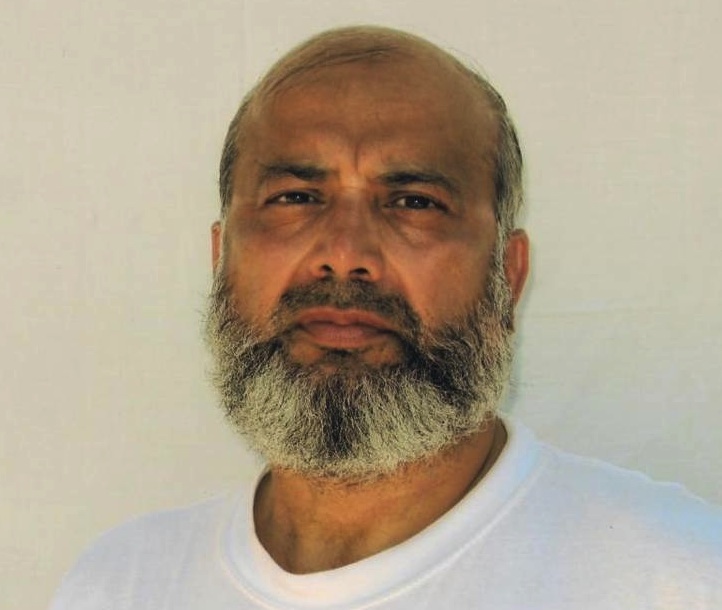 I wrote the following article — as “Guantánamo Review Board for Saifullah Paracha, Pakistani Businessman and ‘Very Compliant’ Prisoner, Kidnapped in Thailand in 2003” — for the “Close Guantánamo” website, which I established in January 2012, on the 10th anniversary of the opening of Guantánamo, with the US attorney Tom Wilner. Please join us — just an email address is required to be counted amongst those opposed to the ongoing existence of Guantánamo, and to receive updates of our activities by email.
Last week Saifullah Paracha, a Pakistani businessman, and, at 68 years of age, Guantánamo’s oldest current prisoner, became the 28th Guantánamo prisoner to have his potential release considered by a Periodic Review Board (see our full list here). This review process was set up in 2013 to review the cases of all the prisoners not facing trials (just ten men) or already approved for release by President Obama’s high-level, inter-agency Guantánamo Review Task Force in 2010, when almost two-thirds of the remaining prisoners — 156 out of 240 — were recommended for release, or, to use the task force’s careful wording, were “approved for transfer subject to appropriate security measures.”
Of the 28, five decisions have yet to be made, but of the 23 others the success rate for these men securing approval for their release is extremely high — 83% — with 19 men having their release recommended. What makes these decisions particularly important is that they puncture the rhetoric that has surrounded these men — both under George W. Bush, with the glib dismissal of everyone at Guantánamo as “the worst of the worst,” and under Barack Obama, with his task force’s conclusion (more worrying because of its veneer of authority) that 48 of those eligible for PRBs were “too dangerous to release,” even though it was also acknowledged that insufficient evidence existed to put them on trial; in other words, that it was not reliable evidence at all.
In attempting to justify its decisions, the task force noted that its members had relied on “the totality of available information — including credible information that might not be admissible in a criminal prosecution — [which] indicated that the detainee poses a high level of threat that cannot be mitigated sufficiently except through continued detention.” Read the rest of this entry »
Andy Worthington: An Archive of Guantánamo Articles and Other Writing – Part 17, July to December 2014
 Please support my work!
Friends,
This article is the 17th in an ongoing series of articles listing all my work in chronological order. It’s a project I began in January 2010, when I put together the first chronological lists of all my articles, in the hope that doing so would make it as easy as possible for readers and researchers to navigate my work — the 2,525 articles I have published since I began publishing articles here in May 2007, which, otherwise, are not available in chronological order in any readily accessible form.
I first began researching the Bush administration’s “war on terror” prison at Guantánamo and the 779 men (and boys) held there over ten years ago, in September 2005, and I began researching and writing about it on a full-time basis in March 2006. Initially, I spent 14 months researching and writing my book The Guantánamo Files, based, largely, on 8,000 pages of documents publicly released by the Pentagon in the spring of 2006, and, since May 2007, I have continued to write about the men held there, on an almost daily basis, as an independent investigative journalist — for two and a half years under President Bush, and, shockingly, for what is now nearly seven years under President Obama.
My mission, as it has been since my research first revealed the scale of the injustice at Guantánamo, continues to revolve around four main aims — to humanize the prisoners by telling their stories; to expose the many lies told about them to supposedly justify their detention; to push for the prison’s closure and the absolute repudiation of indefinite detention without charge or trial as US policy; and to call for those who initiated, implemented and supported indefinite detention and torture to be held accountable for their actions. Read the rest of this entry »
28 Veterans of US Intelligence Fight Back Against CIA Claims That the Bush Torture Program Was Useful and Necessary
 Remember back in December, when the executive summary of the Senate Intelligence Committee’s report about the CIA’s post-9/11 torture program was published, with its devastating revelations that the use of torture “was not an effective means of acquiring intelligence or gaining cooperation from detainees,” that the CIA’s justification for its use of torture techniques “rested on inaccurate claims of their effectiveness,” that its interrogations “were brutal and far worse than the CIA represented to policymakers and others”? (See my articles here and here).
We all do, of course, and to anyone who has not been fooled by the black propaganda of the torture apologists, it is depressing — if not unpredictable — that, in response, a book has just been published, entitled, Rebuttal: The CIA Responds to the Senate Intelligence Committee’s Study of Its Detention and Interrogation Program, published by the US Naval Institute Press, which attempts to claim that the Senate report is biased.
The book contains contributions from, amongst others, former CIA Directors George Tenet, Porter Goss and Michael Hayden, former chief legal officer John Rizzo and Jose Rodriguez, the former Chief of CIA’s Counterterrorism Center — all of whom have good reasons to hope that a conjuring trick like this will prevent them from being regarded as they should be, as war criminals evading justice, along with other senior Bush administration officials, up to and including George W. Bush, Dick Cheney and Donald Rumsfeld and others, and a number of senior lawyers and advisers. Read the rest of this entry »
Report Damns American Psychological Association for Collusion in US Torture Program
 On July 11, a damning new report concluded that US psychologists, via their largest professional organization, the American Psychological Association (APA), betrayed their core principles by working far too closely with the CIA and the Pentagon on interrogations in the post-9/11 “war on terror,” and, in the process, provided what appeared to be justification for the Bush administration’s torture program.
The 542-page report, entitled, “Independent Review Relating to APA Ethics Guidelines, National Security Interrogations, and Torture,” is “the result of a seven-month investigation by a team led by David Hoffman, a Chicago lawyer with the firm Sidley Austin at the request of the psychology association’s board,” as the New York Times explained in the article that broke the story. That article was by James Risen, and the APA had commissioned the report last year after the publication of Risen’s book Pay Any Price: Greed, Power and Endless War, which, as the magazine Science described it, “accused the organization of providing cover for torture.”
In his article, Risen began by pointing out how crucial the support of psychologists was for the Bush administration’s abusive treatment of prisoners during interrogations after the 9/11 attacks. He stated that the Hoffman report concluded that, although the CIA’s health professionals “repeatedly criticized the agency’s post-Sept. 11 interrogation program,” their protests “were rebuffed by prominent outside psychologists who lent credibility to the program.” Read the rest of this entry »
Six Months After the CIA Torture Report, We’re Still Waiting for Accountability
 I’m sure many of us remember where we were on December 9, 2014, when, two years after it was completed, the 500-page executive summary of the Senate Intelligence Committee’s five-year, 6,700-page, $40m report into the CIA’s post-9/11 torture report was released, which I wrote about here and here.
It was a momentous occasion, for which Sen. Dianne Feinstein, and everyone who worked with her to compile the report and and to publish it (or its executive summary, at least), deserve profound thanks. In dark times, in which the US system of checks and balances has gone awry, this was a bright light in the darkness. It also caused British commentators like myself to reflect on the fact that it was something that would never happen in the UK.
That said, however, the widespread sense of horror that greeted the publication of the executive summary, with its profoundly disturbing details that were unknown before — like the “rectal feeding” of prisoners for example — has not, in the six months since, led to firm action to hold accountable those who authorized and implemented the program, which is, of course, unacceptable. As I wrote at the time in my article for Al-Jazeera: Read the rest of this entry »
90-Pound Guantánamo Hunger Striker Appeals in Court for Assistance from Pakistani Government
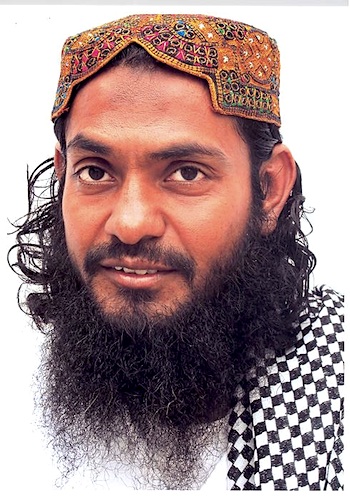 On April 14, lawyers for Ahmad Rabbani (aka Mohammed Ahmad Ghulam Rabbani), one of the last few Pakistani prisoners in Guantánamo, “filed an emergency application with the Islamabad High Court, demanding that the Pakistani government intervene immediately in his case,” as the legal action charity Reprieve (which represents Mr. Rabbani) explained in a press release.
The filing notes that Mr. Rabbani “has been unlawfully captured and later on illegally detained, without a charge or notification of any pending or contemplated charges against him since 2001,” and that he “has been repeatedly tortured and subjected to cruel, inhumane and degrading treatment as a result of gross and flagrant violation of national and international law.” The lawyers added that his “unfortunate torture … still continues.”
In addition, the lawyers stated that Mr. Rabbani’s case “involves a matter of urgency, as the fundamental rights, life, health, liberty and dignity of a man, who has been unlawfully detained, admittedly on mistaken identity, without a due process of law or fair trial guarantees, is at stake.” They added, “The ongoing torture, humiliation and deterioration of health of a Pakistani citizen, who has a right over the state institutions to protection of his life, dignity and liberty requires this case to be heard on an urgent basis.” Read the rest of this entry »
European Court of Human Rights Orders Poland to Pay $262,000 to CIA “Black Site” Prisoners
 I’m just catching up on a story from two weeks ago that I was unable to post at the time because I was busy with another couple of stories — the dismissal of David Hicks’ Guantánamo conviction, and the ongoing campaign to free Shaker Aamer.
The story I didn’t have time to report involved the European Court of Human Rights and the CIA “black site” that existed on Polish soil from December 2002 to September 2003. In July last year, the court delivered an unprecedented ruling — that, as the Guardian described it, Poland “had violated international law by allowing the CIA to inflict what ‘amounted to torture’ in 2002 at a secret facility in the forests of north-east Poland. The court found that Poland ‘enabled the US authorities to subject [the detainees] to torture and ill‑treatment on its territory’ and was complicit in that ‘inhuman and degrading treatment.'”
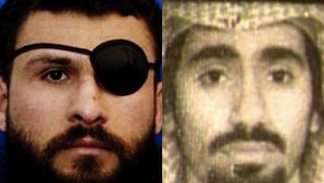
The ruling dealt with two of the “high-value detainees” held in the site — Abu Zubaydah, a Palestinian born in Saudi Arabia, for whom the torture program was specifically developed, even though it was subsequently discovered that he was not involved with Al-Qaeda, and Abd al-Rahim al-Nashiri, a Saudi accused of involvement in the attack on the USS Cole in 2000. Both men were subjected to the ancient torture technique known as waterboarding, as well as a variety of other torture techniques, and, while Abu Zubaydah is still held without charge or trial, al-Nashiri is facing a war crimes trial in the military commissions at Guantánamo, a process that has been stuck on the pre-trial phase for years, as his defense team tries to raise the question of his torture and prosecutors do all they can to keep it hidden. Read the rest of this entry »
Andy Worthington Speaks at Two London Events on the CIA Torture Report and the Banned Books of Guantánamo, February 2015
 I’m delighted to report that I’ve been asked to take part in two panel discussions over the next two weeks, and I hope that, if you’re in London, you’ll be able to come along.
The first is at the University of Westminster on Wednesday February 11, when I’ll be discussing the Senate Intelligence Committee’s report on the CIA torture programme with Philippe Sands QC, a law professor at UCL and a barrister at Matrix Chambers (and the author of Torture Team), and Carla Ferstman, the director of REDRESS, a human rights organisation that “helps torture survivors obtain justice and reparation,” and “works with survivors to help restore their dignity and to make torturers accountable.” The discussion will be chaired by Dr. Emma McClean, Senior Lecturer in Law at the University of Westminster.
This is how the event is described on the university website: Read the rest of this entry »
Video: At New America, Andy Worthington, Tom Wilner and Col. Morris Davis Discuss the Closure of Guantánamo and the CIA Torture Report
 At lunchtime on Monday January 12, the day after the 13th anniversary of the opening of the “war on terror” prison at Guantánamo Bay, Cuba (when I was speaking outside the White House), I took part in “Leaving the Dark Side? Emptying Guantánamo and the CIA Torture Report,” a panel discussion at New America.
With me at New America (formerly the New America Foundation) was Tom Wilner, who represented the Guantánamo prisoners before the Supreme Court in their habeas corpus cases in 2004 and 2008, and with whom I co-founded the Close Guantánamo campaign in January 2012, on the 10th anniversary of the opening of Guantánamo, and Col. Morris Davis, the former chief prosecutor of the military commissions at Guantánamo, who resigned in 2007, in protest at the use of torture, and has since become an outspoken critic of the prison and the “war on terror.”
The moderator was journalist and author Peter Bergen, the Director of the International Security, Future of War, and Fellows Programs at New America, who I have known since the early 1890s, when we were both at Oxford together. Read the rest of this entry »
New Life in Uruguay for Six Former Guantánamo Prisoners
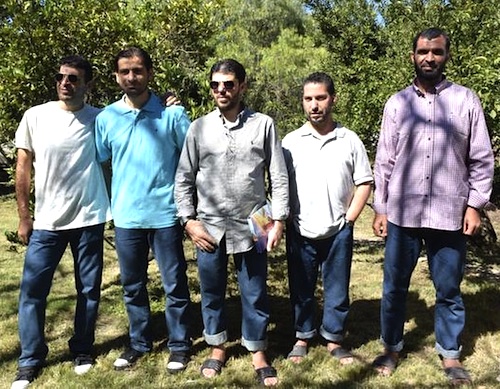 Good news from Uruguay, where five of the six men released from Guantánamo on December 7 and given new lives in Montevideo have been photographed out and about in the city. From left to right, in the photo, they are: Ali Hussein al-Shaaban, Ahmed Adnan Ahjam and Abdelhadi Omar Faraj (all Syrians), Tunisian Abdul Bin Muhammad Abbas Ouerghi (aka Ourgy) and Palestinian Mohammed Abdullah Taha Mattan, photographed by Pablo Porciuncula, after eating lunch at a house in Canelones department, near Montevideo on December 14. See more photos here.
The sixth man, Abu Wa’el Dhiab, the Syrian who became confined to a wheelchair whilst at Guantánamo, had been on a hunger strike and had challenged the US authorities in the courts, has not yet been seen publicly, but is apparently recovering from his long ordeal. His lawyer, Cori Crider of Reprieve, commented that he “had difficulty believing he would ever be released until he boarded the plane out of the US military base,” as the Guardian put it. Crider said, “You inhale the air for the first time as a free man and only then it’s real. It’s going to take some time for him to come down from his hunger strike, he’s six foot five and only weighs about 148 pounds, he’s extremely thin, in pain, emaciated and still confined to a wheelchair.”
Immediately after their arrival, the Associated Press reported that Michael Mone, Ali al-Shaaban’s Boston-based lawyer, said that, with the exception of Abu Wa’el Dhiab, “The other men are all up on their feet. They have big smiles on their faces and they are very happy to be in Uruguay after 12 plus years of incarceration.” As the AP described it, Mone was “accustomed to his client being shackled and strictly monitored during meetings in Guantánamo,” and said it was “an emotional experience to see al-Shaaban experiencing freedom for the first time in years.” The AP also reported that al-Shaaban “spoke by phone with his parents, who are in a refugee camp in a country Mone declined to identify, fleeing the turmoil of their homeland.” Read the rest of this entry »












 Who's still at Guantánamo?
