Another Yemeni Approved for Release from Guantánamo: Did He Make the List of Prisoners Being Freed in the New Year?
 Please support my work! I’m currently trying to raise $3000 (£2400) to support my writing and campaigning on Guantánamo into 2017.
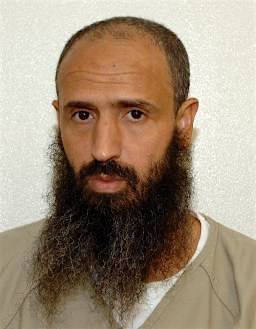
Just before Christmas, it was announced that Mohammed al-Ansi aka Muhammad al-Ansi (ISN 029), a Yemeni prisoner at Guantánamo, had been approved for release by a Periodic Review Board. The decision made al-Ansi the 38th prisoner to be approved for release by a PRB, and the seventh to be approved for release not after a first review, but after a second review. The decision also means that, of the 59 men still held, 23 have been approved for release.
The PRBs — consisting of representatives of the Departments of State, Defense, Justice and Homeland Security, as well as the office of the Director of National Intelligence and the Office of the Joint Chiefs of Staff — were set up in 2013 to review the cases of all the prisoners not already approved for release or facing trials, and 64 men have had their cases reviewed, with just 26, to date, having their ongoing imprisonment upheld. That’s a success rate of 59% for the prisoners, which rather undermines the alleged basis of their ongoing imprisonment when the PRBs were set up.
41 of the 64 men had been described as “too dangerous to release” by the previous review process, the Guantánamo Review Task Force that President Obama established shortly after taking office in 2009, even though the task force acknowledged that there was insufficient evidence to put them on trial, while the 23 other men had been recommended for prosecution until the basis for prosecutions largely collapsed under judicial scrutiny. For further information, see my definitive Periodic Review Board list on the Close Guantánamo website. Read the rest of this entry »
Periodic Review Boards Approve Another Two Yemenis for Release from Guantánamo
 Please support my work! I’m currently trying to raise $3000 (£2400) to support my writing and campaigning on Guantánamo into the new year.
Attentive Guantánamo-watchers will recall that, in September, the first round of Periodic Review Boards was completed at Guantánamo, for prisoners assessed as being “too dangerous to release,” or as eligible for prosecution by the high-level, inter-agency Guantánamo Review Task Force that President Obama set up shortly after taking office for the first time in January 2009. For full details, see my definitive Periodic Review Board list on the Close Guantánamo website.
On both fronts, the decisions taken about these men back in 2009 were dubious. For those deemed “too dangerous to release,” the task force acknowledged that insufficient evidence existed to put them on trial, rather undermining the credibility of their assessment, because, if information cannot be produced at a trial, it is fundamentally unreliable and does not rise to the level of evidence — and with Guantánamo, of course, torture and abuse run through everything, distorting all manner of claims regarding the credibility of the US authorities’ information about the prisoners.
41 men put forward for the PRBs were regarded as “too dangerous to release,” while 23 others had been recommended for prosecution, until the basis for prosecutions at Guantánamo — in the much-criticized military commission system, dragged unwisely from the history books after 9/11 — largely collapsed as a result of a number of appeals court rulings, which overturned some of the few convictions secured in the commissions, on the basis that the war crimes for which the men in question had been convicted were not internationally recognized, and had, in fact, been invented by Congress. Read the rest of this entry »
Ask Your MP to Tell Boris Johnson to Demand the Release of UK Citizen Andy Tsege, Kidnapped and on Death Row in Ethiopia
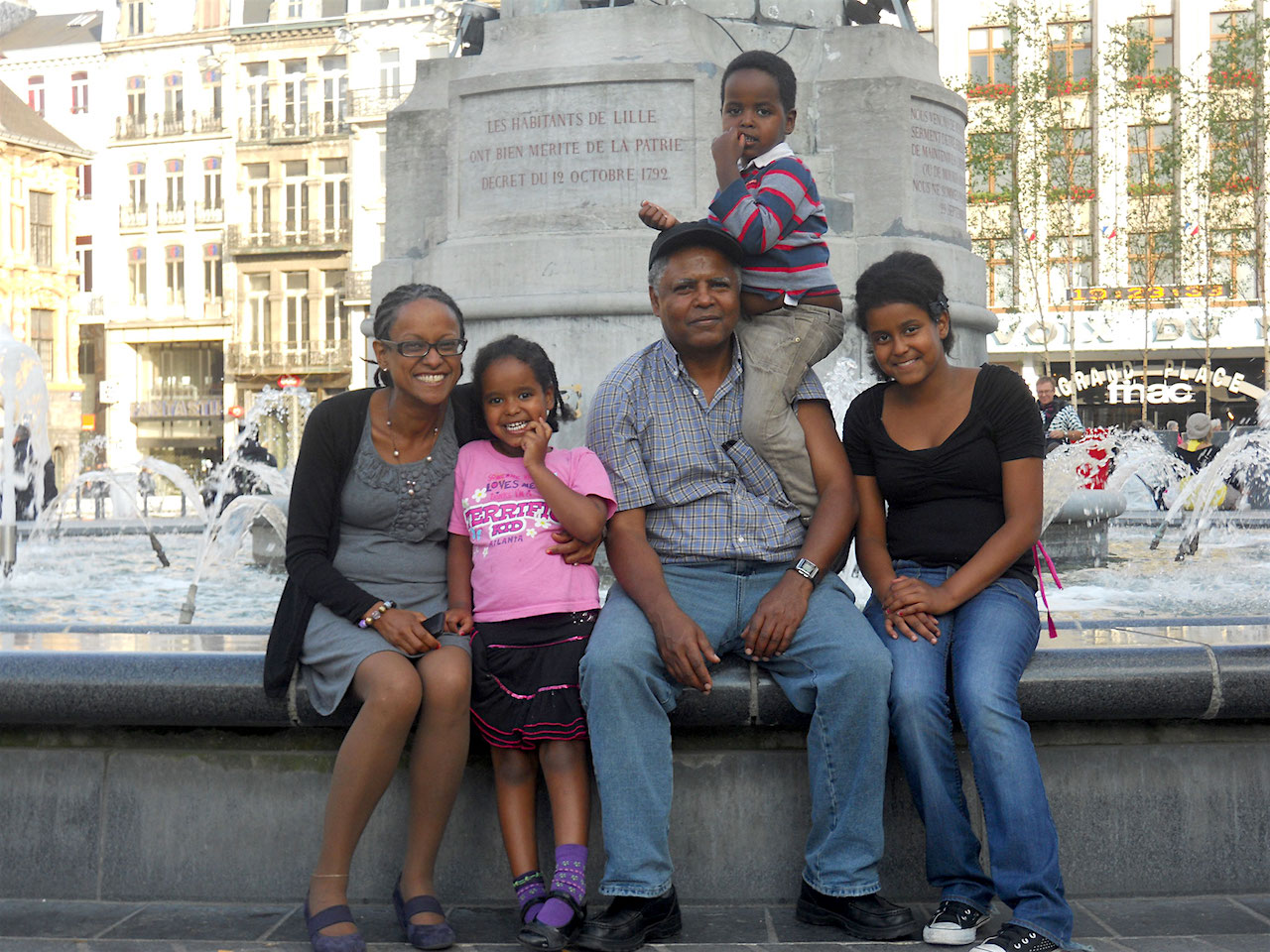 Please ask your MP to demand action from Boris Johnson in demanding Andy Tsege’s release.
Earlier this year, I had the pleasure of meeting Yemi Hailemariam, the partner of Andy Tsege (Andargachew Tsege), a prominent opponent of the Ethiopian government, who, as I explained when Yemi subsequently stood for a photo for the Countdown to Close Guantánamo, “was kidnapped” in Yemen “and rendered to Ethiopia on the command of the Ethiopian government” in June 2014, as his lawyers at Reprieve explained, adding that he was “held in secret detention and in solitary confinement for over a year, without access to any form of due process. He has been paraded on Ethiopian TV looking ill and gaunt. He was given an in absentia death sentence in 2009. He could be executed at any time.” Andy is pictured above, with Yemi and their three children.
I noted the above when I posted Yemi’s photo, back in May, at a time when the British government, with Phillip Hammond as foreign secretary, had refused to act decisively on Andy’s behalf. Since then, of course, David Cameron has resigned following the EU referendum debacle, Theresa May has become our new and unelected Prime Minister, and Hammond has become home secretary, with May surprising everyone by appointing Boris Johnson as foreign secretary, a man with a history of racist comments about countries and people he is now supposed to be presenting himself to as a responsible and statesman-like figure.
No one who has seen the footage of John Kerry wincing as Johnson was grilled by journalists at one of his first outings as foreign secretary (a joint US-UK press conference) can be in any doubt that Johnson is ill-suited to the role, but he is now responsible for Britain’s position with regard to Andy Tsege, and answerable to the more than 130,000 people who have signed a 38 Degrees petition calling for Andy to be freed. Read the rest of this entry »
Afghan Money Exchanger Approved for Release from Guantánamo; Former Child Prisoner and Pakistani Have Ongoing Imprisonment Upheld

Please support my work! I’m currently trying to raise $2500 (£2000) to support my writing and campaigning on Guantánamo for the next three months.
From November 2013 until last month, reviews — Periodic Review Boards — took place for 64 Guantánamo prisoners who had been assessed as “too dangerous to release” or eligible for prosecution by the previous review process, conducted by the high-level, inter-agency Guantánamo Review Task Force that President Obama established shortly after first taking office in January 2009.
The PRBs — consisting of representatives of the Departments of State, Defense, Justice and Homeland Security, as well as the office of the Director of National Intelligence and the Office of the Joint Chiefs of Staff — have so far delivered 57 decisions, approving 34 men for release, while upholding the ongoing imprisonment of 25 others. Five decisions have yet to be taken in the process, which is similar to parole, although with one obvious difference— none of the men at Guantánamo have been tried or convicted. Like parole, however, the PRBs require them to show remorse, and to demonstrate that they would establish peaceful and constructive lives if released.
The success rate in the PRBs to date — 58% — confirms that the decisions in 2009 demonstrated unnecessary caution on the part of the officials who made up the Guantánamo Review Task Force. For further details, see the definitive Periodic Review Board list that I wrote for the Close Guantánamo website that I established in January 2012 with the US attorney Tom Wilner. Read the rest of this entry »
Long-Term Hunger Striking Pakistani Seeks Release from Guantánamo Via Periodic Review Board
Please support my work! I’m currently trying to raise $3000 (£2250) to support my writing and campaigning on Guantánamo for the next three months.
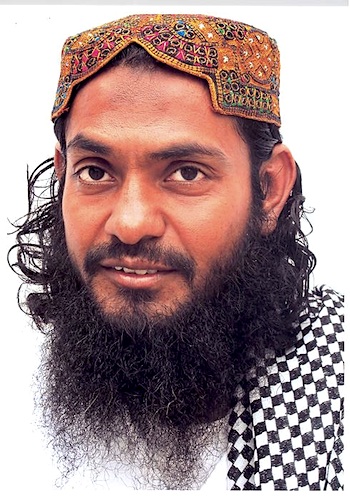
On September 1, Ahmed Rabbani (ISN 1461), a Pakistani prisoner at Guantánamo (also identified as Ahmad Rabbani, and known to the the US authorities as Mohammed Ahmed Ghulam Rabbani), became the 63rd — and penultimate — prisoner to face a Periodic Review Board. A long-term hunger striker, he was described as looking “frail” by Courthouse News, which also noted that he “has a long, thick black beard and wore a white covering on his head,”, and that, “Leaning forward with his arms folded on the table in front of him during the hearing, [he] seemed slight, especially when he raised his arm and the sleeve of the loose, white shirt he wore slid down his thin bicep.”
Seized in Karachi, Pakistan on September 9, 2002, with his brother Abdul Rahim, whose PRB took place on July 7, he was regarded as an al-Qaeda facilitator, and was held and tortured in CIA “black sites” for two years, before arriving at Guantánamo with nine other allegedly “medium-value detainees” in September 2004. The US still regards him as an al-Qaeda supporter, although his lawyers argue that he is a case of mistaken identity, and that he wishes only to be reunited with his family and live in peace.
The Periodic Review Boards, as I explained at the time of Abdul Rahim’s review, “were set up in 2013 to review the cases of all the men not already approved for release or facing trials. These men were described by the government task force that reviewed their cases in 2009 as ‘too dangerous to release,’ despite a lack of evidence against them, or were recommended for prosecution, until the basis for prosecution largely collapsed. The PRBs have been functioning like parole boards, with the men in question — 64 in total — having to establish, to the satisfaction of the board members, made up of representatives of the Departments of State, Defense, Justice and Homeland Security, as well as the office of the Director of National Intelligence and the Office of the Joint Chiefs of Staff, that they show remorse for their previous actions, that they bear no ill-will towards the US, that they have no associations with anyone regarded as being involved in terrorism, and that they have plans in place for their life after Guantánamo, preferably with the support of family members.” Read the rest of this entry »
Algerian Approved for Release from Guantánamo, As Three Other Men Have Their Ongoing Imprisonment Upheld
 In the last three weeks, six Periodic Review Boards have taken place at Guantánamo, in which prisoners recommended for ongoing imprisonment by a high-level task force six years ago are being given a parole-like opportunity to plead for their release. I’ll be writing about those reviews soon, but before I do so I’d like to sum up four other decisions taken over this same period — one decision to approve a prisoner for release, and three others upholding prisoners’ ongoing detention. 62 reviews have now taken place, since the PRBs began in November 2013, and out of those reviews 33 men have been recommended for release, 19 have had their ongoing imprisonment upheld, and ten decisions have yet to be taken. Two final reviews are taking place in the next two weeks.
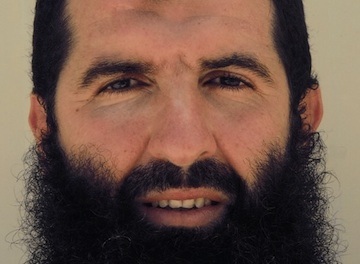
The man whose release was approved is Sufyian Barhoumi (ISN 694), an Algerian, born in July 1973, whose PRB took place on May 26. Seized in a house with the “high-value detainee’ Abu Zubaydah, whose review also took place recently, Barhoumi was alleged by the US authorities to have been a bomb-maker, and had been put forward for a trial by military commission under President Bush, although the charges were later dropped.
For his PRB, however, his attorney, Shayana Kadidal of the Center for Constitutional Rights painted a compelling portrait of a ”natural diplomat,” popular with both his fellow prisoners and the guard force. As Kadidal put it, “I personally have never seen any other detainee treated by the guards as well as Barhoumi, even at times when relations between prisoners and the authorities were at a low point.” He added, “If the language barrier is one of the greatest causes of misunderstandings and conflict at GTMO, he’s used his language skills to help both prisoners and guards quash problems before they grew too big to tame. It has not gone unappreciated by either group.” Read the rest of this entry »
Obama Releases 15 Prisoners from Guantánamo to UAE; Just 61 Men Now Left (Part 1 of 2)
 There was good news from Guantánamo last week, as 15 men were released, to begin new lives in the United Arab Emirates. The release was the largest single release of prisoners under President Obama, and takes the total number of men held at Guantánamo down to 61, the lowest level it has been since the prison’s first few weeks of its operations, in January 2002.
12 of the 15 men released are Yemenis, while the remaining three are Afghans. All had to have third countries found that would offer them new homes, because the entire US establishment refuses to repatriate any Yemenis, on the basis that the security situation in Yemen means they cannot be adequately monitored, and Afghans cannot be repatriated because of legislation passed by Congress. The UAE previously accepted five Yemenis prisoners from Guantánamo last November.
Of the 15 men, six — all Yemenis — were approved for release back in 2009 by the high-level, inter-agency Guantánamo Review Task Force that President Obama established shortly after taking office for the first time. This article tells the stories of those six men, while another article to follow will tell the stories of the other nine. Read the rest of this entry »
Penitent Pakistani Seeks Release from Guantánamo, as Two Yemenis and a Moroccan are Approved for Release and an Algerian’s Request is Denied
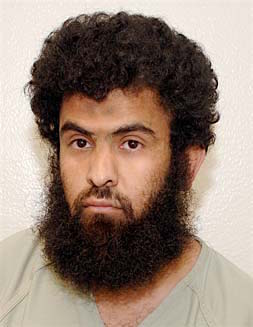 On July 7, a Periodic Review Board took place for Abdul Rahim Ghulam Rabbani (also identified for the PRB as Abdul Rabbani Abu Rahmah), a Pakistani prisoner at Guantánamo (born in Saudi Arabia) who was seized in Karachi, Pakistan on September 9, 2002 and held and tortured in CIA “black sites” for two years, before arriving at Guantánamo with nine other allegedly “medium-value detainees” in September 2004. He was seized with his younger brother, Ahmad (aka Mohammed), who is awaiting a date for his PRB, and who, last year, sought assistance from the Pakistani government in a submission to the Pakistani courts.
The PRBs were set up in 2013 to review the cases of all the men not already approved for release or facing trials. These men were described by the government task force that reviewed their cases in 2009 as “too dangerous to release,” despite a lack of evidence against them, or were recommended for prosecution, until the basis for prosecution largely collapsed. The PRBs have been functioning like parole boards, with the men in question — 64 in total — having to establish, to the satisfaction of the board members, made up of representatives of the Departments of State, Defense, Justice and Homeland Security, as well as the office of the Director of National Intelligence and the Office of the Joint Chiefs of Staff, that they show remorse for their previous actions, that they bear no ill-will towards the US, that they have no associations with anyone regarded as being involved in terrorism, and that they have plans in place for their life after Guantánamo, preferably with the support of family members.
Around the time of Abdul Rahim Ghulam Rabbani’s PRB, which is discussed at length below, four decisions were also taken relating to prisoners whose reviews had already taken place, when three men were approved for release, and one had his request to be released turned down. These decisions meant that, of the 52 prisoners whose cases had been reviewed, 27 have been approved for release, 13 have had their ongoing imprisonment recommended, and 12 decisions have yet to be made. 11 more reviews have yet to take place (and one took place last week, which I’ll be writing about soon). See here for my definitive Periodic Review Board list on the website of the Close Guantánamo campaign that I co-founded with the US attorney Tom Wilner, and that I have been running since 2012. Read the rest of this entry »
Afghan Held at Guantánamo Since 2007, But Never Heard From Before, Seeks Release Via Periodic Review Board
 Last week, Haroon al-Afghani, who is around 35 years old and was one of the last prisoners to arrive at Guantánamo, in June 2007, became the 46th prisoner to face a Periodic Review Board. This latest of many review processes at Guantánamo began in November 2013 to provide reviews akin to parole boards for 71 men — 46 described as “too dangerous to release” by the previous review process, the high-level, inter-agency Guantánamo Review Task Force that President Obama established shortly after taking office in January 2009, and 25 others recommended for prosecution by the task force, until the basis for prosecutions largely collapsed in 2012-13, after appeals court judges threw out a number of convictions on the basis that the war crimes for which the men had been sentenced were not legitimate war crimes, and had been invented by Congress.
By the time the PRBs began, seven men had been removed from consideration — five “forever prisoners” were freed in a prisoner exchange, and two men initially recommended for prosecutions agreed to plea deals in the military commissions. Of the 64 remaining prisoners eligible for PRBs, 35 decisions have so far been taken — and 24 of those decisions have been recommendations for release, demonstrating, if any proof were needed, that the task force’s assessments of the men back in 2010 were unacceptably exaggerated.
Al-Afghani was one of the men recommended for prosecution by the task force in 2010, but in truth there never seemed to have been a viable war crimes case against him. Although the Pentagon described him, when he arrived at Guantánamo, as a “dangerous terror suspect,” who was “known to be associated with high-level militants in Afghanistan,” and had apparently “admitted to serving as a courier for al-Qaeda Senior Leadership (AQSL),” it seemed more probable that he had been part of a militia that, although opposed to the US, was not something to genuinely consider in anything other than a military context. Read the rest of this entry »
Two More Prisoners – A Moroccan and an Afghan – Seek Release from Guantánamo Via Periodic Review Boards, as Two More Men Have Their Detention Upheld
 Last week, the Obama administration’s efforts to reduce the number of men held at Guantánamo, via Periodic Review Boards, continued with two more reviews. The PRBs were established in 2013 to review the cases of 41 men regarded as “too dangerous to release,” and 23 others recommended for prosecution, and were moving with glacial slowness until this year, when, realizing that time was running out, President Obama and his officials took steps to speed up the process.
35 cases have, to date, been decided by the PRBs, and in 24 of those cases, the board members have recommended the men for release, while upholding the detention of 11 others. This is a success rate for the prisoners of 69%, rather undermining the claims, made in 2010 by President Obama’s high-level, inter-agency Guantánamo Review Task Force, that the men described as “too dangerous to release” deserved that designation, even though the task force had conceded that insufficient evidence existed to put the men on trial.
In fact that description — “too dangerous to release” — has severely unravelled under the scrutiny of the PRBs, as 22 of those recommended for release had been placed in that category by the task force. The task force was rather more successful with its decisions regarding the alleged threat posed by those it thought should be prosecuted, as five of the eleven recommended of ongoing imprisonment had initially been recommended for prosecution by the task force. Read the rest of this entry »












 Who's still at Guantánamo?
