Fears for Guantánamo Prisoner Resettled in Serbia, Where the Government Wants to Get Rid of Him
 Please support my work as a reader-funded journalist! I’m currently trying to raise $2500 (£2000) to support my writing and campaigning on Guantánamo and related issues over the next three months of the Trump administration.
I wrote the following article for the “Close Guantánamo” website, which I established in January 2012, on the 10th anniversary of the opening of Guantánamo, with the US attorney Tom Wilner. Please join us — just an email address is required to be counted amongst those opposed to the ongoing existence of Guantánamo, and to receive updates of our activities by email.
Here at “Close Guantánamo,” we have long taken an interest not just in getting the prison closed, and telling the stories of the men still held, to dispel the enduring myth that they are “the worst of the worst,”, but also in following up on prisoners after their release, and to that end we are delighted that Jessica Schulberg of the Huffington Post has recently highlighted the story of Mansoor Adayfi.
A Yemeni, Adayfi (identified in Guantánamo as Abdul Rahman Ahmed or Mansoor al-Zahari) was resettled in Serbia in July 2016, nine months after he was approved for release by a Periodic Review Board, a parole-type process introduced by Barack Obama in his last three years in office, which led to 36 prisoners being approved for release, men who had previously been categorized — often with extraordinarily undue caution — as being too dangerous to release.
Adayfi’s story is fascinating. An insignificant prisoner on capture — with the US authorities eventually conceding that he “probably was a low-level fighter who was aligned with al-Qa’ida, although it is unclear whether he actually joined that group” — he only ended up being regarded as threat to the US because of his behavior in Guantánamo. Read the rest of this entry »
A Beautiful Article About Love by Former Guantánamo Prisoner Mansoor Adayfi: Please Read It and Then Donate to Support Him
 Please support my work as a reader-funded journalist! I’m currently trying to raise $2500 (£2000) to support my writing and campaigning on Guantánamo and related issues over the next three months of the Trump administration.
While I was away on my recent family trip to the West Country (WOMAD in Wiltshire, Cornwall, Chesil Beach in Dorset and Bristol), I missed a powerful article that was published in the New York Times, written by former Guantánamo prisoner Mansoor Adayfi.
A Yemeni (known by the Guantánamo authorities as Mansoor al-Dayfi or Mansoor al-Zahari), Adayfi was freed from the prison in July 2016, having had his release recommended by a Periodic Review Board, the parole-like process initiated by President Obama in his last three years in office. Because of fears about the security situation in Yemen across the US political spectrum, no prisoners approved for release were sent back to Yemen, and third countries had to be found that would take them in. Adayfi was taken in by Serbia, and as I reported last March, after a reporter from NPR visited, he was struggling to adjust to post-Guantánamo life with no other ex-prisoners for company, with no Muslim community, and with, it seemed, hostility from the authorities.
In captivity, he had become fluent in English, and had become a huge admirer of US culture, and, as I explained last March, “Had Barack Obama not backed down on plans to bring some former Guantánamo prisoners to live in the US in 2009 (one of the most important mistakes he made regarding Guantánamo), al-Dayfi would have been a perfect candidate for resettlement in the US.” Read the rest of this entry »
As Two Former Guantánamo Prisoners Disappear in Libya After Repatriation from Asylum in Senegal, There Are Fears for 150 Others Resettled in Third Countries

Please support my work as a reader-funded journalist! I’m currently trying to raise $2500 (£2000) to support my writing and campaigning on Guantánamo and related issues over the next three months of the Trump administration.
Congratulations to the New York Times for not giving up on the story of the two former Guantánamo prisoners who were recently repatriated to Libya despite having been given humanitarian asylum in Senegal two years ago, on the understanding that they would not be sent back to Libya, as it was unsafe for them. The story is particularly significant from a US perspective, because of the role played — or not played — by the State Department, which, under President Obama, facilitated the resettlement of the men, and many others, and, in general, also kept an eye on them after their release.
The story first emerged three weeks ago, when I was told about it by former prisoner Omar Deghayes, and the Intercept published an article. My article is here. A week later, the New York Times picked up on the story, reporting, as Omar Deghayes also confirmed to me, that one of the two men, Salem Ghereby (aka Gherebi) had voluntarily returned to Libya, as he desperately wanted to be united with his wife and children, and because he hoped that his connections in the country would prevent him from coming to any harm. My second article is here.
Unfortunately, on his return, Salem Ghereby was imprisoned at Tripoli’s Mitiga Airport, where human rights abuses have been widely reported, and the British NGO CAGE then reported that the other Libyan, Omar Khalifa Mohammed Abu Bakr (aka Omar Mohammed Khalifh), who didn’t want to be repatriated, had also been sent back to Libya, where he too was imprisoned at the airport. I wrote about that here, and then exclusively published Salem Gherebi’s letter explaining why he had chosen to be repatriated. Read the rest of this entry »
Ex-Guantánamo Prisoner Discusses Prison Artwork with the BBC, While Lawyers for “High-Value Detainee” Demand His Right to Continue Making Art
 Please support my work as a reader-funded journalist! I’m currently trying to raise $2500 (£2000) to support my writing and campaigning on Guantánamo and related issues over the next three months of the Trump administration.
I wrote the following article for the “Close Guantánamo” website, which I established in January 2012, on the 10th anniversary of the opening of Guantánamo, with the US attorney Tom Wilner. Please join us — just an email address is required to be counted amongst those opposed to the ongoing existence of Guantánamo, and to receive updates of our activities by email.
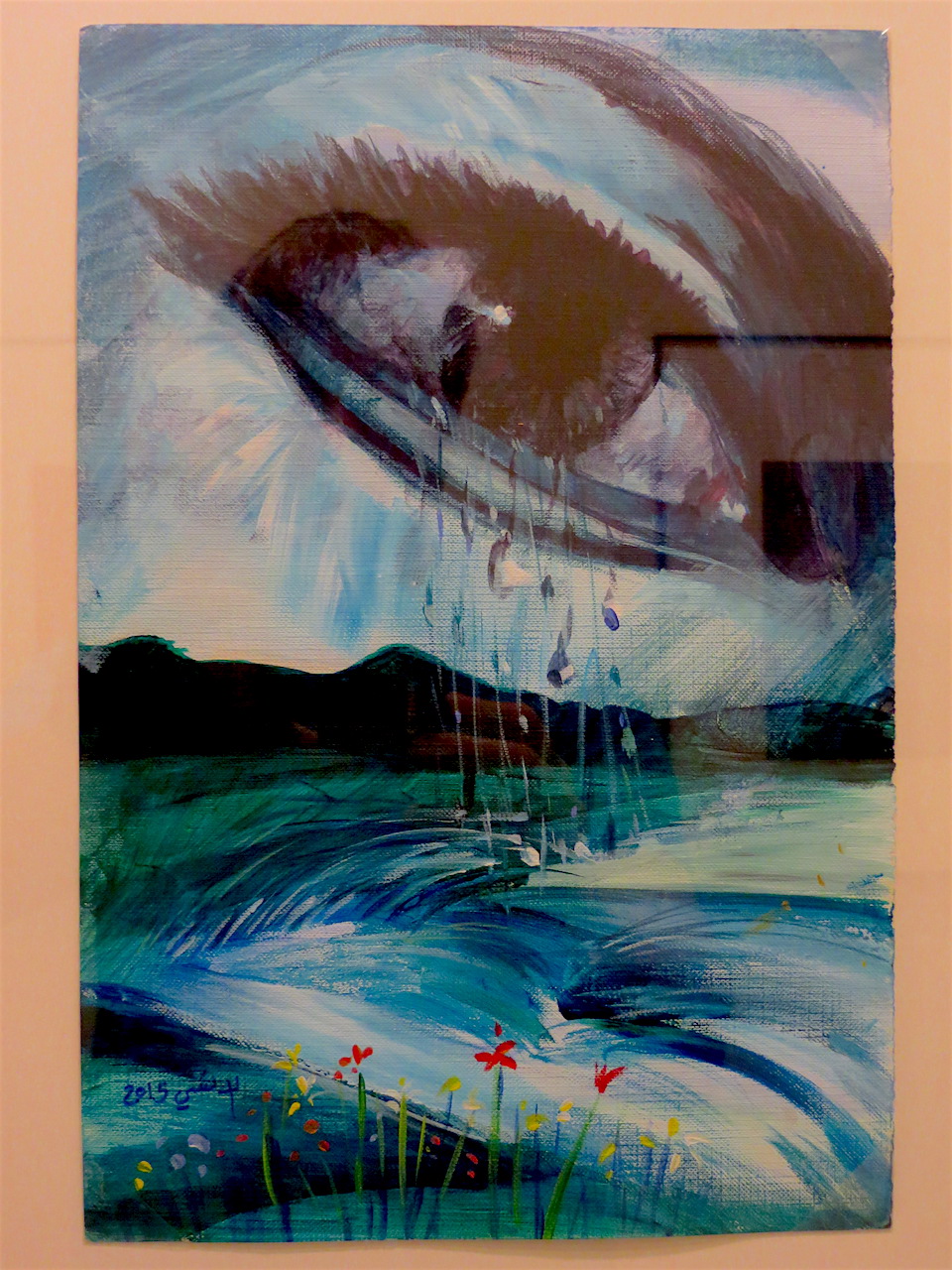
Last October, an exhibition opened in the President’s Gallery, in John Jay College of Criminal Justice in New York, that might have attracted little attention had the Pentagon not decided to make a big song and dance about it.
The exhibition, ‘Ode to the Sea: Art from Guantánamo Bay,’ featured artwork by eight former and current Guantánamo prisoners — four freed, and four still held — which was given by the prisoners to their lawyers and their families, and it was not until November that the Pentagon got upset, apparently because the promotional material for the exhibition provided an email address for anyone “interested in purchasing art from these artists.” The obvious conclusion should have been that “these artists” meant the released prisoners, who should be free to do what they want with their own artwork, but the Pentagon didn’t see it that way.
On November 15, as I explained in my first article about the controversy, a spokesman, Air Force Maj. Ben Sakrisson, said that “all Guantánamo detainee art is ‘property of the US government’ and ‘questions remain on where the money for the sales was going,’” while, at the prison itself, Navy Cmdr. Anne Leanos said in a statement that “transfers of detainee made artwork have been suspended pending a policy review.” Read the rest of this entry »
The Guantánamo Art Scandal That Refuses to Go Away
 Please support my work as a reader-funded journalist! I’m currently trying to raise $2500 (£2000) to support my writing and campaigning on Guantánamo and related issues over the next three months of the Trump administration.
I wrote the following article for the “Close Guantánamo” website, which I established in January 2012, on the 10th anniversary of the opening of Guantánamo, with the US attorney Tom Wilner. Please join us — just an email address is required to be counted amongst those opposed to the ongoing existence of Guantánamo, and to receive updates of our activities by email.
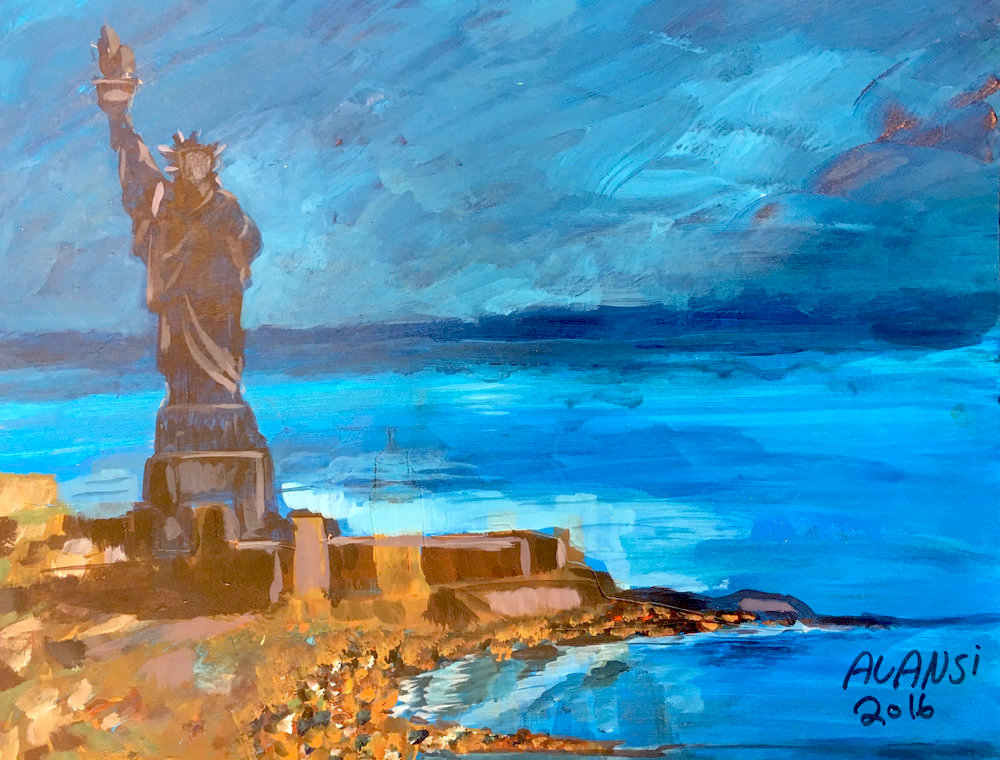
Two weeks ago, in my most recent article, for Close Guantánamo, I covered the latest scandal to involve the prison — the US military’s decision, prompted by an art exhibition of prisoners’ work being shown in New York, to threaten to destroy their art, and to insist that it does not belong to the men who made it, but, instead, belongs permanently to the US military.
As I mentioned in the article, the most troubling aspect of the authorities’ position was articulated by Andrea Prasow of Human Rights Watch, who stated in a powerful tweet that the development was “no surprise” because the “Pentagon has long claimed it owns detainees’ own memories of torture.” When prisoners are not even allowed to own their own thoughts by the US government, it is no surprise that the government also claims that it also owns their artwork.
Nevertheless, since the article was published, criticism of the US authorities’ position has not diminished. At the weekend, the New York Times published an editorial, “Art, Freed From Guantánamo,” which began by stating, powerfully, “The American prison at Guantánamo Bay, Cuba — where men suspected of terrorism are for the most part being held indefinitely without trial — has long been a stain on this country’s human rights record. Now the military has stumbled needlessly into a controversy over, of all things, art.” Read the rest of this entry »
An Extraordinarily Powerful, Poetic Article about Guantánamo and the Sea by Former Prisoner Mansoor Adayfi
 Please support my work as a reader-funded journalist! I’m currently trying to raise $2500 (£2000) to support my writing and campaigning on Guantánamo and related issues over the next three months of the Trump administration.
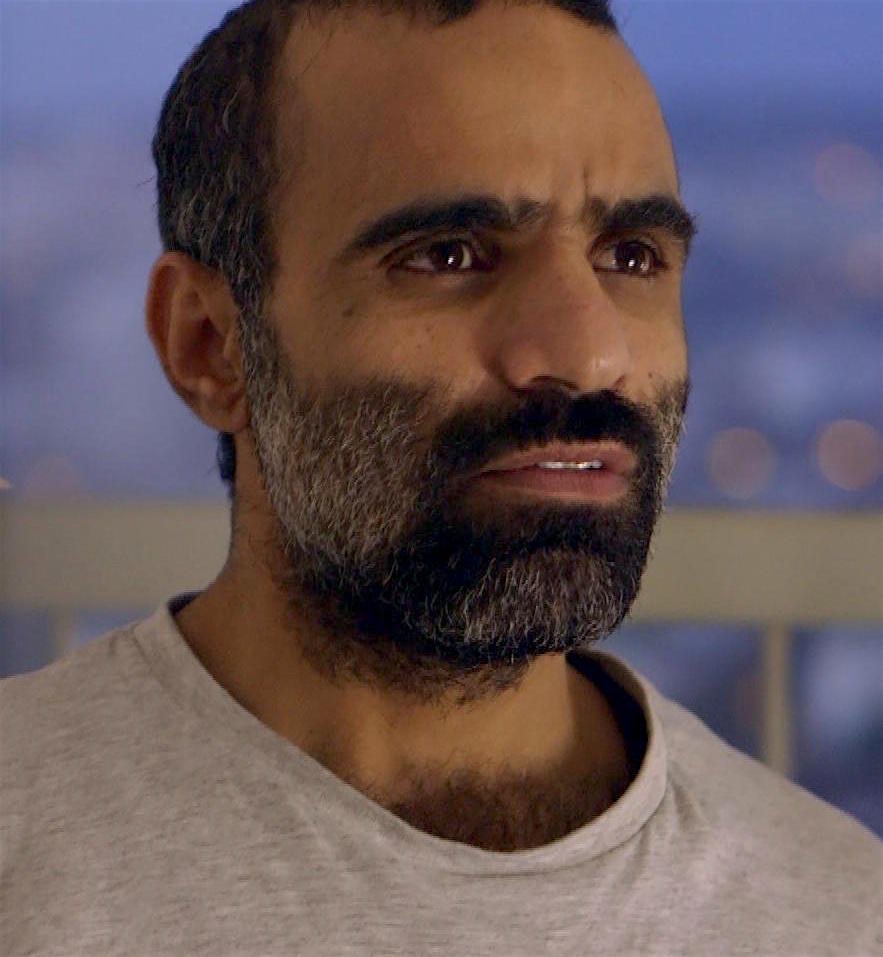
Back in March, following up on an NPR feature, I profiled former Guantánamo prisoner Mansoor al-Dayfi (aka Mansoor al-Zahari), a Yemeni citizen who was released from the prison in July 2016, but was not repatriated because the US refuses to send any Yemenis home, citing security concerns. Instead, like dozens of other men (including stateless Palestinians, and some other men in whose cases it was regarded as unsafe for them to be repatriated), he was sent to a third country after intense US negotiations.
In al-Dayfi’s case, he was sent to Serbia, where, it is clear, he has struggled to adapt, telling Arun Rath of NPR, “When they brought me to Serbia they make my life worse. They totally kill my dreams. It’s making my life worse. … Not because I like Guantánamo, but my life become worse here. I feel I am in another jail.”
He told Rath that, as I described it, “he wanted to be sent to an Arab country, and to protest his conditions he embarked on a hunger strike, just as he had at Guantánamo.”
It is impossible not to sympathise with al-Dayfi, an evidently bright man, and an insignificant prisoner of the “war on terror,” whose long imprisonment was a result of him being a victim of mistaken identity, and who, in Guantánamo, also developed a fascination for US culture, which, as I described it, involved him “becoming a fan of Taylor Swift, Shakira, Game of Thrones (although he felt there was too much bloodshed), US sitcoms, Christopher Nolan movies and Little House on the Prairie, which ‘remind[ed] him of his very rural home with few modern conveniences.’” Read the rest of this entry »
Life After Guantánamo: Yemeni Released in Serbia Struggles to Cope with Loneliness and Harassment
 Please support my work! I’m currently trying to raise $2500 (£2000) to support my writing and campaigning on Guantánamo and related issues over the first two months of the Trump administration.
Last week, I posted an article about Hedi Hammami, a Tunisian national held in Guantánamo for eight years, who was released in 2010, but is suffering in his homeland, where he is subjected to persecution by the authorities.
I drew on an article in the New York Times by Carlotta Gall, and I’m pleased to note that, two weeks ago, NPR also focused on the story of a former Guantánamo prisoner as part of a two-hour special on Guantánamo, and Frontline broadcast a 50-minute documentary.
I’m glad to see these reports, because Guantánamo has, in general, slipped off the radar right now, as Donald Trump weighs up whether or not to issue an executive order scrapping President Obama’s unfulfilled promise to close the prison, and ordering new prisoners to be sent there, but the stories of the former prisoners provide a powerful reminder of how wrong Guantánamo has always been, and how much damage it has caused to so many of the men held there. Read the rest of this entry »












 Who's still at Guantánamo?
