Libyan “Forever Prisoner” Ismael Ali Bakush Approved for Release from Guantánamo, Joining 21 Others Out Of the Remaining 36 Prisoners

Please support my work as a reader-funded journalist! I’m currently trying to raise $2500 (£2000) to support my writing and campaigning on Guantánamo and related issues over the next three months. If you can help, please click on the button below to donate via PayPal.
On September 23, a Periodic Review Board at Guantánamo — a parole-type process introduced under President Obama — approved the release of Ismael Ali Bakush, a 54-year old Libyan who has been held at the prison without charge or trial since August 2002.
Bakush was one of 22 ”forever prisoners” that President Biden inherited from Donald Trump — men held indefinitely without charge or trial because Obama’s first review process, the Guantánamo Review Task Force, had concluded after reviewing their cases in 2009 that they either still constituted a threat to the US, whilst also conceding that insufficient evidence existed to put them on trial (as was the case with Bakush), or, in other cases, because they had been recommended for prosecution by the task force, but that option had been dropped when the viability of Guantánamo’s unique trial system — the military commissions — had been rocked by a number of successful appeals.
64 men were initially put forward for the PRBs, when the process was established in 2013, and, between 2014 and 2016, 38 of them had their release recommended (and all but two were freed before Obama left office), but Bakush, whose first review took place in July 2016, was one of the 26 others who had failed to persuade the board members that it was safe to recommend him for release, even though the only alleged evidence that connected him with Al-Qaeda was his membership of the Libyan Islamic Fighting Group (LIFG), an organization of Libyan exiles committed, primarily, to the overthrow of the Libyan dictator Moammar Gaddafi, but which, the US authorities claimed, “had merged with al-Qaida.”
Libyan Who Abandoned Habeas Corpus Petition, Citing Its “Futility,” Asks Review Board to Approve His Release from Guantánamo
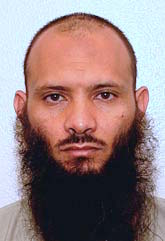 Last week, a Libyan prisoner at Guantánamo, Ismail Ali Faraj al-Bakush (aka Ismael al-Bakush), who is 48 years old, became the 53rd prisoner to face a Periodic Review Board. The PRBs were set up in 2003 to review the cases of prisoners who had not already been approved for release, or were not facing trials, and to date 29 men have been approved for release, while 13 have had their ongoing imprisonment upheld.
This is a 69% success rate for the prisoners, which is remarkable — and remarkably damaging for the credibility of the Obama administration — because the majority of these men were described, by the high-level, inter-agency Guantánamo Review Task Force that President Obama set up shortly after taking office in January 2009, as “too dangerous to release,” when the reality has not borne out that caution. Others were recommended for prosecution, until the basis for prosecutions in Guantánamo’s military commission trial system largely collapsed after a series of devastating appeals court rulings, confirming that the war crimes being tried were illegitimate, having been invented by Congress.
Ismail al-Bakush is one of 41 men eligible for the PRBs who was initially regarded as “too dangerous to release,” even though the task force acknowledged that insufficient evidence existed against any of these men to put them on trial. 23 others were initially recommended for prosecution, and just eleven men are still awaiting reviews, while 12 others (including al-Bakush) are awaiting the results of their reviews. See my definitive Periodic Review Board list on the Close Guantánamo website for further information. Read the rest of this entry »












 Who's still at Guantánamo?
