Torture Victim Abu Zubaydah, Seen For the First Time in 14 Years, Seeks Release from Guantánamo
 On August 23, 2016, the most notorious torture victim in Guantánamo, Zayn al-Abidin Muhammad Husayn, better known as Abu Zubaydah, became the 61st prisoner to face a Periodic Review Board, and was seen for the first time by anyone outside of the US military and intelligence agencies, apart from representatives of the International Committee of the Red Cross, his attorneys and translators, since his capture 14 years and five months ago.
For the Guardian, David Smith wrote, “His dark hair was neat, his moustache and beard impeccably trimmed. His shirt was high-collared and spotlessly white. He sat at the head of the table with a calm, composed mien. It was the first time that the world has seen Zayn al-Abidin Muhammed Husayn, also known as Abu Zubaydah, since his capture in Pakistan 14 years ago.” He added that, “[a]fter a brief technical hitch, a TV screen showed a room with a plain white wall and black shiny table. Anyone walking in cold might have assumed that Abu Zubaydah, with the appearance of a doctor or lawyer, was chairing the meeting. To his left sat an interpreter, dressed casually in shirtsleeves, and to his right were two personal representatives in military uniform with papers before them. A counsel was unable to attend due to a family medical emergency.”
Smith also noted that he “sat impassive, expressionless and silent throughout, sometimes resting his head on his hand or putting a finger to his mouth or chin, and studying his detainee profile intently as it was read aloud by an unseen woman.” Read the rest of this entry »
“High-Value Detainee” Hambali Seeks Release from Guantánamo Via Periodic Review Board
 On August 18, Hambali, a “high-value detainee” held at Guantánamo since September 2006, became the 60th Guantánamo prisoner to face a Periodic Review Board. The PRBs were set up in 2013 to review the cases of all the prisoners not already approved for release or facing trials, and the last of 64 reviews will be taking place next week. To date, 33 men have been approved for release, while just 19 men have had their ongoing imprisonment upheld. Eleven further decisions have yet to be taken. For further details, see my definitive Periodic Review Board list on the Close Guantánamo website.
Hambali, an Indonesian born in April 1964, was born Encep Nurjaman, but is also known as Riduan Isamuddin. In the US government’s unclassified summary for his PRB, he was described as “an operational mastermind in the Southeast Asia-based Islamic extremist group Jemaah Islamiyah (JI),” who “served as the main interface between JI and al-Qa’ida from 2000 until his capture in mid-2003.”
Hambali was seized in Bangkok, Thailand in August 2003, with another “high-value detainee,” Mohammed Bashir bin Lap aka Lillie (ISN 10022), whose review took place three weeks ago, in the same week as another of Hambali’s associates, Mohd Farik bin Amin aka Zubair (ISN 10021). Read the rest of this entry »
Guantánamo “High-Value Detainee” Abu Faraj Al-Libi Seeks Release Via Periodic Review Board
 On August 16, Mustafa Faraj Muhammad Muhammad Mas’ud al-Jadid al-Uzaybi (ISN 10017), a Libyan prisoner in Guantánamo who is better known as Abu Faraj al-Libi, became the 59th prisoner to have his case reviewed by a Periodic Review Board.
The PRBs — which include representatives of the Departments of State, Defense, Justice and Homeland Security, as well as the office of the Director of National Intelligence and the Office of the Joint Chiefs of Staff — were set up in 2013 to review the cases of all the prisoners who had not already been approved for release or were facing trials as a result of the recommendations made in reviews conducted in 2009 by another high-level government review process, the Guantánamo Review Task Force.
41 of the men judged to be eligible for PRBs were described by the task force as “too dangerous to release,” although the task force conceded that insufficient evidence existed to put them on trial, meaning that it was not evidence at all, but — and on this the task force was silent — generally untrustworthy information extracted from prisoners subjected to torture or other forms of abuse, or from prisoners bribed with the promise of better living conditions. Read the rest of this entry »
Two Malaysian “High-Value Detainees” Seek Release from Guantánamo Via Periodic Review Boards
 In the last three weeks, six Periodic Review Boards have taken place at Guantánamo, and I’ll be writing about them in a number of articles this week and next, beginning with two reviews that took place, on August 9 and 11, for two Malaysian “high-value detainees,” Mohd Farik bin Amin aka Zubair (ISN 10021), seized in Bangkok, Thailand in June 2003, and Mohammed Bashir bin Lap aka Lillie (ISN 10022). Bin Amin was seized in Bangkok in June 2003, followed in August 2003 by bin Lap and Hambali, another “high-value detainee” whose PRB took place on August 18 (which I’ll be writing about soon).
The PRBs, which include representatives of the Departments of State, Defense, Justice and Homeland Security, as well as the office of the Director of National Intelligence and the Office of the Joint Chiefs of Staff, were set up in 2013 to review the cases of all the prisoners not already approved for release and not facing trials, and, since November 2013, have been reviewing the cases of 64 men, with, to date, recommendations that 33 should be released, while 19 should continue to be held. See my definitive Periodic Review Board list for details.
41 of these 64 men were recommended for ongoing imprisonment without charge or trial by a previous review process (2009’s Guantánamo Review Task Force), on the basis that they were allegedly “too dangerous to release,” although the authorities conceded that insufficient evidence existed to put them on trial, while the 23 others were recommended for trials, until the basis for prosecutions largely collapsed after judges in Washington, D.C. struck down some of the few convictions achieved in the much-criticized military commission trial system, on the basis that the war crimes in question had actually been invented by Congress and had no legitimacy. Read the rest of this entry »
The Last Prisoner to Arrive at Guantánamo, an Afghan Fascinated with US Culture, Asks Review Board to Approve His Release
 On August 4, Muhammad Rahim, an Afghan, became the 56th Guantánamo prisoner to face a Periodic Review Board. The PRBs were set up in 2013, and are reviewing the cases of all the prisoners still held who are not facing trials (just ten of the remaining 76 prisoners) or who were not already approved for release by the high-level, inter-agency Guantánamo Review Task Force that President Obama established shortly after taking office in January 2009.
33 men have so far been approved for release via the PRBs (and eleven have been released), while 17 have had their ongoing imprisonment held. This is a 67% success rate for the prisoners, and it ought to be embarrassing for the Obama administration, whose task force had concluded that they were “too dangerous to release” or that they should be prosecuted. See my definitive Periodic Review Board list on the Close Guantánamo website for further information.
Muhammad Rahim, who was born in November or December 1965, was the last prisoner to arrive at Guantánamo, in March 2008, when he was described as “a close associate” of Osama bin Laden. He has been described as a “high-value detainee” — one of only 16 held at the prison — but if this was the case he would surely have been put forward for prosecution, suggesting that, as with so many of the prisoners held at Guantánamo, his significance has been exaggerated. Read the rest of this entry »
Somali “High-Value Detainee,” Held in CIA Torture Prisons, Seeks Release from Guantánamo via Review Board
 This week, Guleed Hassan Ahmed aka Gouled Hassan Dourad (ISN 10023), a Somali prisoner at Guantánamo — who arrived at the prison in September 2006, after being held in CIA “black sites” for two and a half years — became the 55th prisoner to face a Periodic Review Board. Set up in 2013, the PRBs are reviewing the cases of all the prisoners held at Guantánamo who are not facing trials (just ten of the remaining 76 prisoners) or who were not already approved for release by the high-level, inter-agency Guantánamo Review Task Force that President Obama established shortly after taking office in January 2009.
32 men have so far been approved for release via the PRBs (and eleven have been released), while 16 have had their ongoing imprisonment held, a 67% success rate for the prisoners, which rather demolishes the claims made by Obama’s task force that they were “too dangerous to release” or that they should be prosecuted.
Guleed Hassan Ahmed was born in April 1974, and is one of 16 “high-value detainees” who, as noted above, arrived at Guantánamo from CIA “black sites” in September 2006. He was seized in Djibouti in March 2004, by Somalis working with the CIA, but little is known of his whereabouts for the next two and a half years until his arrival at Guantánamo, or, indeed, why he ended up at Guantánamo at all. I always wondered if someone in the Bush administration wanted to have someone connected to events in Somalia at Guantánamo, simply to see if new connections could be made. Read the rest of this entry »
Yemeni Seized in Georgia, Who Has Not Been Able to Make Contact With His Family in 13 Years at Guantánamo, Seeks Release Via Review Board
 Last Thursday, July 21, a Yemeni prisoner at Guantánamo, Omar Muhammad Ali al-Rammah (ISN 1017), became the 54th prisoner to face a Periodic Review Board. The PRBs were set up in 2003 to review the cases of prisoners who had not already been approved for release, or were not facing trials, and to date 30 men have been approved for release, while 14 have had their ongoing imprisonment upheld. For further information, see my definitive Periodic Review Board list on the Close Guantánamo website.
This is a 68% success rate for the prisoners, and, as I explained in an article last week, these results are “remarkable — and remarkably damaging for the credibility of the Obama administration — because the majority of these men were described, by the high-level, inter-agency Guantánamo Review Task Force that President Obama set up shortly after taking office in January 2009, as ‘too dangerous to release,’ when the reality has not borne out that caution.” I added, “Others were recommended for prosecution, until the basis for prosecutions in Guantánamo’s military commission trial system largely collapsed after a series of devastating appeals court rulings, confirming that the war crimes being tried were illegitimate, having been invented by Congress.”
Al-Rammah (also identified as Zakaria al-Baidany), who is 40 years old, was, as I explained in my book The Guantánamo Files, captured far from the battlefields of Afghanistan — in Georgia, formerly part of the Soviet Union, with an Algerian, Soufian al-Hawari (ISN 1016), who was freed in November 2008. Al-Hawari explained in Guantánamo that he was formerly a drug user and petty thief in various European countries, but that he then became a devout Muslim, and traveled in 2001 to meet an old friend from Algeria called Abdul Haq in Georgia, where, as I described it, he said he “was captured on a bridge 50 miles from his friend’s house under the most extraordinary circumstances.” Read the rest of this entry »
Penitent Pakistani Seeks Release from Guantánamo, as Two Yemenis and a Moroccan are Approved for Release and an Algerian’s Request is Denied
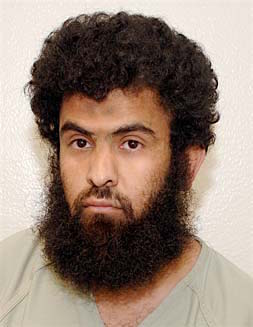 On July 7, a Periodic Review Board took place for Abdul Rahim Ghulam Rabbani (also identified for the PRB as Abdul Rabbani Abu Rahmah), a Pakistani prisoner at Guantánamo (born in Saudi Arabia) who was seized in Karachi, Pakistan on September 9, 2002 and held and tortured in CIA “black sites” for two years, before arriving at Guantánamo with nine other allegedly “medium-value detainees” in September 2004. He was seized with his younger brother, Ahmad (aka Mohammed), who is awaiting a date for his PRB, and who, last year, sought assistance from the Pakistani government in a submission to the Pakistani courts.
The PRBs were set up in 2013 to review the cases of all the men not already approved for release or facing trials. These men were described by the government task force that reviewed their cases in 2009 as “too dangerous to release,” despite a lack of evidence against them, or were recommended for prosecution, until the basis for prosecution largely collapsed. The PRBs have been functioning like parole boards, with the men in question — 64 in total — having to establish, to the satisfaction of the board members, made up of representatives of the Departments of State, Defense, Justice and Homeland Security, as well as the office of the Director of National Intelligence and the Office of the Joint Chiefs of Staff, that they show remorse for their previous actions, that they bear no ill-will towards the US, that they have no associations with anyone regarded as being involved in terrorism, and that they have plans in place for their life after Guantánamo, preferably with the support of family members.
Around the time of Abdul Rahim Ghulam Rabbani’s PRB, which is discussed at length below, four decisions were also taken relating to prisoners whose reviews had already taken place, when three men were approved for release, and one had his request to be released turned down. These decisions meant that, of the 52 prisoners whose cases had been reviewed, 27 have been approved for release, 13 have had their ongoing imprisonment recommended, and 12 decisions have yet to be made. 11 more reviews have yet to take place (and one took place last week, which I’ll be writing about soon). See here for my definitive Periodic Review Board list on the website of the Close Guantánamo campaign that I co-founded with the US attorney Tom Wilner, and that I have been running since 2012. Read the rest of this entry »
Yemeni Tribal Chief, Businessman, Intelligence Officer and Torture Victim Seeks Release from Guantánamo Via Periodic Review Board
 Last week, a 48-year old Yemeni citizen held at Guantánamo, Abd al-Salam al-Hela (aka Abd al-Salam al-Hilah or Abdul al-Salam al-Hilal), became the 37th prisoner to have his case considered by a Periodic Review Board. This high-level, US review process, which involves representatives of the Departments of State, Defense, Justice and Homeland Security, as well as the office of the Director of National Intelligence and the Office of the Joint Chiefs of Staff, began in November 2013.
In the two and half years since, the PRBs have been reviewing the cases of two groups of men: 41 men originally described by a previous review process, the Guantánamo Review Task Force (which President Obama set up when he first took office in 2009), as “too dangerous to release,” and 23 others initially put forward for trials until the basis for prosecutions largely collapsed, in 2012 and 2013, after appeals court judges ruled that the war crimes being prosecuted had been invented by Congress.
For the 41 men described as “too dangerous to release,” the task force also acknowledged that insufficient evidence existed to put them on trial, which set alarm bells ringing for anyone paying close attention, because, if insufficient evidence exists to put someone on trial, then it is not evidence at all. At Guantánamo — and elsewhere in the “war on terror” — the reasons for this emerged under minimal scrutiny from anyone paying attention. Instead of being evidence, information was extracted from prisoners through the use of torture or other forms of abuse, or through being bribed with the promise of better living conditions, which, as a result, is demonstrably unreliable. Read the rest of this entry »
An Afghan and a Yemeni “Black Site” Prisoner Face Guantánamo Periodic Review Boards, as 21st Man Approved for Release
 In President Obama’s last year in office, efforts are clearly being made to fulfill the promise he made to close the prison at Guantánamo Bay on his second day in office, back in January 2009. 27 men have been freed this year, leaving just 80 still held, the lowest number since the early months of the prison’s existence back in 2002.
27 of those 80 men have been approved for release — 15 since 2010, when the high-level, inter-agency Guantánamo Review Task Force appointed by President Obama to review the cases of all the prisoners he inherited from George W. Bush delivered its final report, and 12 since January 2014, when another review process, the Periodic Review Boards, began delivering decisions about the majority of the men not already approved for release. Just ten of the 80 men still held are facing — or have faced — trials, and the rest are eligible for PRBs.
21 men have so far been approved for release by the PRBs, and nine of those men have been freed. Just seven men have had their ongoing imprisonment recommended — a success rate for the prisoners of 75%, which thoroughly undermines the task force’s claims, made back in 2010, that they were “too dangerous to release.” The task force also claimed that insufficient evidence existed to put them on trial, but the truth is that the “too dangerous to release” tag was overstated, relying on unreliable information extracted from the prisoners themselves, and produced as a result of torture, other forms of abuse, or bribery (with better living conditions), or on an unnecessarily cautious notion of the threat they posed, based on their attitudes while imprisoned at Guantánamo in defiance of all civilized norms. Read the rest of this entry »












 Who's still at Guantánamo?
