‘Enshrined Injustice: Guantánamo, Torture and the Military Commissions’ – Nov. 2 London Event with Alka Pradhan, Andy Worthington, Carla Ferstmann
Please support my work! I’m currently trying to raise $2500 (£2000) to support my writing and campaigning on Guantánamo for the next three months.
Here’s one for your diaries, Londoners. On Wednesday November 2, I’m part of a panel discussion — ‘Enshrined Injustice: Guantánamo, Torture, and the Military Commissions’ — taking place at the University of Westminster in central London. The event is free, but please register here on the Eventbrite page.
It’s hosted by Sam Raphael, co-director of The Rendition Project (with Ruth Blakeley at the University of Kent), and the special guest, visiting from the US, is Alka Pradhan, one of the lawyers for Ammar al-Baluchi, a “high-value detainee” at Guantánamo, and one of five men facing a trial for involvement in the 9/11 attacks. Other speakers are Carla Ferstman, the director of REDRESS, and myself, as an independent journalist who has spent over ten years researching and writing about Guantánamo and the post-9/11 torture program, and working to get the prison closed down.
I’ve recently been renewing my focus on the military commissions, via a number of articles on my site (see Not Fit for Purpose: The Ongoing Failure of Guantánamo’s Military Commissions and Guantánamo’s Military Commissions: More Chaos in the Cases of Abd Al-Rahim Al-Nashiri and Majid Khan), on the Close Guantánamo website, and in an op-ed for Al-Jazeera, Guantánamo torture victims should be allowed UN visit, which partly drew on a letter from Ammar al-Baluchi to Juan Méndez, the UN Special Rapporteur on Torture, asking for him to be allowed to visit the “high-value detainees” at Guantánamo. Read the rest of this entry »
Please Read My New Article for Al-Jazeera, About How Torture Victims in Guantánamo Should Be Allowed a Visit by UN Rapporteur Juan Méndez
 Yesterday, I was delighted that Al-Jazeera published my op-ed, “Guantánamo torture victims should be allowed UN visit,” the first op-ed I’ve written for Al-Jazeera for over a year a a half. You can check out my archive of Al-Jazeera articles here.
The op-ed came about as a result of my recently renewed focus on the military commissions at Guantánamo, a broken system that is incapable of delivering justice to the ten men still held who are facing — or have faced — military commission trials. For more, see my recent articles, Not Fit for Purpose: The Ongoing Failure of Guantánamo’s Military Commissions and Guantánamo’s Military Commissions: More Chaos in the Cases of Abd Al-Rahim Al-Nashiri and Majid Khan, and also my recent update of The Full List of Prisoners Charged in the Military Commissions at Guantánamo.
61 men are still held at Guantánamo, and while 20 have been approved for release, and will hopefully be freed soon, and 23 others continue to be held without charge or trial, those men are, at least, subject to periodic reviews of their cases, whereas those facing trials are caught in a system that is proceeding with such glacial slowness that it is uncertain if a date for their trials can be set with any kind of certainty, and this, of course, is a profound failure of justice considering that they have been in US custody for up to 14 years. Read the rest of this entry »
Guantánamo’s Military Commissions: More Chaos in the Cases of Abd Al-Rahim Al-Nashiri and Majid Khan
 Please support my work! I’m currently trying to raise $2700 (£2000) to support my writing and campaigning on Guantánamo for the next three months.
At Guantánamo, as I have been reporting recently, the military commissions, a broken trial system ill-advisedly dragged out of historical retirement for prisoners seized in the “war on terror,” have reconvened after a summer break — see my articles Not Fit for Purpose: The Ongoing Failure of Guantánamo’s Military Commissions and Chief Defense Counsel of Guantánamo’s Military Commissions Calls Them a “Poisoned Chalice,” a Betrayal of the Constitution and the Law. Also see my updated Full List of Prisoners Charged in the Military Commissions at Guantánamo.
That the commissions are a poor substitute for justice can readily be understood from the fact that only eight convictions have been secured, and four of those have subsequently been overturned by appeals court judges, and from the realization that the only ongoing cases are almost permanently deadlocked because, on the one hand, prosecutors seek to hide the fact that the men facing trials were tortured, while on the other those defending the men insist that fair trial cannot take place until the torture is openly discussed.
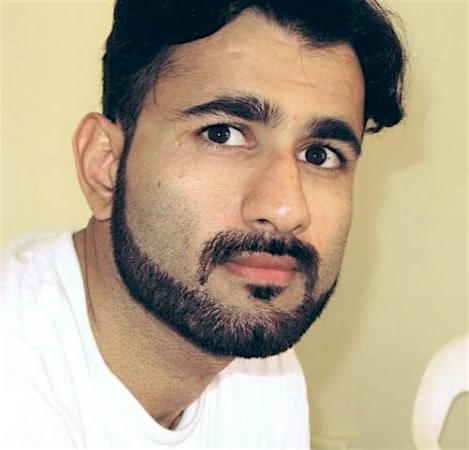
The failures of the commissions have also been made clear in a recent appeals court ruling in the case of Abd al-Rahim al-Nashiri, accused of involvement in the attack on the USS Cole in 2000, and in a hearing at Guantánamo for Majid Khan, who first agreed to a plea deal over four and a half years ago, in February 2012, but who has not yet been sentenced. Read the rest of this entry »
Chief Defense Counsel of Guantánamo’s Military Commissions Calls Them a “Poisoned Chalice,” a Betrayal of the Constitution and the Law
 I wrote the following article for the “Close Guantánamo” website, which I established in January 2012, on the 10th anniversary of the opening of Guantánamo, with the US attorney Tom Wilner. Please join us — just an email address is required to be counted amongst those opposed to the ongoing existence of Guantánamo, and to receive updates of our activities by email.
Here at “Close Guantánamo,” as we continue to monitor the situation at Guantánamo in the dying days of the Obama presidency, we remain concerned for all the categories of men held. Of the last 61 men in the prison the statistics are as follows:
- 20 men have been approved for release.
- 23 have had their ongoing imprisonment approved by Periodic Review Boards.
- Eight are awaiting decisions by Periodic Review Boards.
- Ten are facing — or have faced — trials.
Of the men approved for release, seven have been languishing at Guantánamo since the high-level, inter-agency Guantánamo Review Task Force made decisions about what should happen to the prisoners in 2009, while the other 13 have been approved for release in the last two and a half years by the latest review process, the Periodic Review Boards (for further information, see our definitive Periodic Review Board list). All of these men should be released as soon as possible. Read the rest of this entry »
Four “High-Value Detainees” Have Their Ongoing Imprisonment at Guantánamo Upheld by Periodic Review Boards

Please support my work! I’m currently trying to raise $2800 (£2100) to support my writing and campaigning on Guantánamo for the next three months.
On September 8, as I reported here, Hassan bin Attash, a former child prisoner and the younger brother of a “high-value detainee,” became the 64th and last prisoner to have his case considered by a Periodic Review Board. Set up in 2013 to review the cases of all the prisoners who are not facing trials (just ten men) or who had not already been approved for release by an earlier review process (2009’s Guantánamo Review Task Force), the PRBs began in November 2013, and function like parole boards. If prisoners can demonstrate contrition, and can also demonstrate that they bear no malice towards the US, and have coherent post-release work plans, and, preferably, supportive families, then they can be recommended for release.
Noticeably, of the 64 prisoners whose cases have been considered, 33 — over half —have had their release approved (and 20 of those have been freed), while 23 others have had their ongoing imprisonment approved. Eight decisions have yet to be taken. See my definitive Periodic Review Board list on the Close Guantánamo website for further details.
At the time of Hassan bin Attash’s PRB, just 19 men had had their ongoing imprisonment approved, but in the last three weeks four more decisions were announced — all decisions to continue holding the men whose cases had been reviewed. Fundamentally, this was not a surprise — the four men were all “high-value detainees,” men held and tortured in CIA “black sites” before their arrival at Guantánamo, and although seven HVDs have had PRBs, none have yet been approved from release (the three others are awaiting decisions). Read the rest of this entry »
Not Fit for Purpose: The Ongoing Failure of Guantánamo’s Military Commissions

Please support my work! I’m currently trying to raise $2800 (£2100) to support my writing and campaigning on Guantánamo for the next three months.
In the 15 years since the terrorist attacks of September 11, 2001, the United States has systematically undermined many of the key values it claims to uphold as a nation founded on and respecting the rule of law, having embraced torture, indefinite imprisonment without charge or trial, trials of dubious legality and efficacy, and extra-judicial execution.
The Bush administration’s torture program — so devastatingly exposed in the executive summary of the Senate Intelligence Committee’s report into the program, published in December 2014 — no longer exists, but no one has been held accountable for it. In addition, as the psychologist and journalist Jeffrey Kaye has pointed out, although ostensibly outlawed by President Obama in an executive order issued when he took office, the use of torture is permitted, in particular circumstances, in Appendix M of the Army Field Manual.
When it comes to extrajudicial execution, President Obama has led the way, disposing of perceived threats through drone attacks — and although drones were used by President Bush, it is noticeable that their use has increased enormously under Obama. If the rendition, torture and imprisonment of those seized in the “war on terror” declared after the 9/11 attacks raised difficult ethical, moral and legal questions, killing people in drone attacks — even in countries with which the US is not at war, and even if they are US citizens — apparently does not trouble the conscience of the president, or the US establishment as a whole. Read the rest of this entry »
Former Child Prisoner at Guantánamo, Tortured in Jordan, Is the Last of 64 Men to Face a Periodic Review Board
 Please support my work! I’m currently trying to raise $2800 (£2100) to support my writing and campaigning on Guantánamo for the next three months.
On September 8, Guantánamo prisoner Hassan bin Attash, born in Saudi Arabia to Yemeni parents, who appears to have been just 17 years old when he was seized in a house raid in Pakistan and sent to Jordan to be tortured, became the last of 64 prisoners to face a Periodic Review Board. Set up in 2013 to review the cases of all the prisoners who had not already been approved for release by an earlier review process (2009’s Guantánamo Review Task Force) and were not facing trials (just ten of the 61 men still held), the PRBs have played an important role in reducing the prison’s population in President Obama’s last year in office.
Consisting of representatives of the Departments of State, Defense, Justice and Homeland Security, as well as the office of the Director of National Intelligence and the Office of the Joint Chiefs of Staff, the PRBs function like parole boards, assessing prisoners’ contrition, and plans for the future that will mitigate any concerns about them engaging in terrorism or military activity against the US after their release.
To date, 33 men have been approved for release by the PRBs (and 20 of those men have been freed), while 19 others have had their ongoing imprisonment without charge or trial upheld — although all are entitled to further reviews at which they and their attorneys can submit further information in an effort to change the board’s opinion. Purely administrative file reviews take place every six months, and, every three years, prisoners are entitled to full reviews, although in reality those that have taken place — for four men, who all ended up with recommendations for their release — have occurred sooner (between ten months and two years after their initial PRBs). See my definitive Periodic Review Board list on the Close Guantánamo website for further details. Read the rest of this entry »
Long-Term Hunger Striking Pakistani Seeks Release from Guantánamo Via Periodic Review Board
Please support my work! I’m currently trying to raise $3000 (£2250) to support my writing and campaigning on Guantánamo for the next three months.
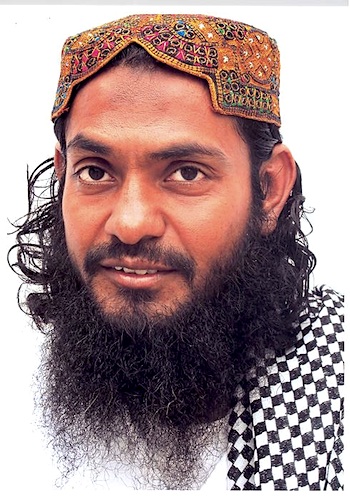
On September 1, Ahmed Rabbani (ISN 1461), a Pakistani prisoner at Guantánamo (also identified as Ahmad Rabbani, and known to the the US authorities as Mohammed Ahmed Ghulam Rabbani), became the 63rd — and penultimate — prisoner to face a Periodic Review Board. A long-term hunger striker, he was described as looking “frail” by Courthouse News, which also noted that he “has a long, thick black beard and wore a white covering on his head,”, and that, “Leaning forward with his arms folded on the table in front of him during the hearing, [he] seemed slight, especially when he raised his arm and the sleeve of the loose, white shirt he wore slid down his thin bicep.”
Seized in Karachi, Pakistan on September 9, 2002, with his brother Abdul Rahim, whose PRB took place on July 7, he was regarded as an al-Qaeda facilitator, and was held and tortured in CIA “black sites” for two years, before arriving at Guantánamo with nine other allegedly “medium-value detainees” in September 2004. The US still regards him as an al-Qaeda supporter, although his lawyers argue that he is a case of mistaken identity, and that he wishes only to be reunited with his family and live in peace.
The Periodic Review Boards, as I explained at the time of Abdul Rahim’s review, “were set up in 2013 to review the cases of all the men not already approved for release or facing trials. These men were described by the government task force that reviewed their cases in 2009 as ‘too dangerous to release,’ despite a lack of evidence against them, or were recommended for prosecution, until the basis for prosecution largely collapsed. The PRBs have been functioning like parole boards, with the men in question — 64 in total — having to establish, to the satisfaction of the board members, made up of representatives of the Departments of State, Defense, Justice and Homeland Security, as well as the office of the Director of National Intelligence and the Office of the Joint Chiefs of Staff, that they show remorse for their previous actions, that they bear no ill-will towards the US, that they have no associations with anyone regarded as being involved in terrorism, and that they have plans in place for their life after Guantánamo, preferably with the support of family members.” Read the rest of this entry »
15 Years After 9/11, Still Waiting for the Closure of Guantánamo
 Exactly 15 years ago, terrorists attacked the United States, killing 2,996 people, in the World Trade Center and on two hijacked aeroplanes, and changing the world forever.
Within a month, the US had invaded Afghanistan, aiming to destroy al-Qaeda and to topple the Taliban regime that had harbored them. That mission was largely accomplished by early 2002, but instead of leaving, the US outstayed its welcome, “snatching defeat from the jaws of victory,” as Anand Gopal, the journalist and author of No Good Men Among the Living: America, the Taliban, and the War Through Afghan Eyes, explained to me several years ago.
In addition, of course, the Bush administration — led by a president who knew little about the world, attended by two Republican veterans, Dick Cheney and Donald Rumsfeld, who believed in the president’s right to act as he saw fit in times of emergency, unfettered by any kind of checks and balances (the unitary executive theory) — also set up a secret CIA program of kidnap and torture on a global scale, and prisons in Afghanistan and Guantánamo Bay, in Cuba, where the Geneva Conventions did not apply, and where they tried to pretend that indefinite imprisonment without charge or trial was the new normal, rather than a dangerous aberration. Read the rest of this entry »
No Justice for 14 Tortured “High-Value Detainees” Who Arrived at Guantánamo Ten Years Ago
 I wrote the following article (as “Tortured “High-Value Detainees” Arrived at Guantánamo Exactly Ten Years Ago, But Still There Is No Justice”) for the “Close Guantánamo” website, which I established in January 2012, on the 10th anniversary of the opening of Guantánamo, with the US attorney Tom Wilner. Please join us — just an email address is required to be counted amongst those opposed to the ongoing existence of Guantánamo, and to receive updates of our activities by email.
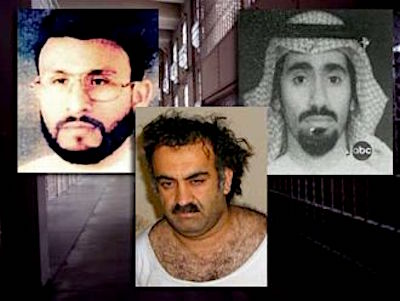
Ten years ago, on September 6, 2006, President Bush announced that secret CIA prisons, whose existence he had always denied, had in fact existed, but had now been closed down, and the prisoners held moved to Guantánamo.
14 men in total were transferred to Guantánamo. Three were named by President Bush — Abu Zubaydah, described as “a senior terrorist leader and a trusted associate of Osama bin Laden,” and Khalid Sheikh Mohammed (KSM) and Ramzi bin al-Shibh, allegedly involved in the 9/11 attacks. Biographies of the 14 were made available, and can be found here. They include three other men allegedly involved in the 9/11 attacks — Walid bin Attash, Ammar al-Baluchi (aka Ali Abd al-Aziz Ali) and Mustafa al-Hawsawi — plus Abd al-Rahim al-Nashiri, allegedly involved in the bombing of the USS Cole in 2000, Ahmed Khalfan Ghailani, a Tanzanian allegedly involved in the US Embassy bombings in Kenya and Tanzania in 1998, Majid Khan, a Pakistani alleged to be an al-Qaeda plotter in the US, the Indonesian Hambali and two Malaysians, Zubair and Lillie, the Libyan Abu Faraj al-Libi, and a Somali, Gouled Hassan Dourad.
After the men’s arrival, they were not heard from until spring 2007, when Combatant Status Review Tribunals (CSRTs) were held, which were required to make them eligible for military commission trials. As I explained in my book The Guantánamo Files in 2007, KSM and Walid bin Attash confessed to involvement with terrorism, although others were far less willing to make any kind of confession. Ammar al-Baluchi, for example, a nephew of KSM, and another of the alleged 9/11 co-conspirators, denied advance knowledge of the 9/11 attacks, or of al-Qaeda. Read the rest of this entry »












 Who's still at Guantánamo?
