Ten Yemenis Freed from Guantánamo, Given New Homes in Oman; Now 93 Men Remain
 As the disgraceful US prison at Guantánamo Bay begins its 15th year of operations, President Obama has been busy attempting to show that, with just one year left in office, he is determined to close the prison, as he promised to do on his second day in office back in January 2009, when he promised to close it within a year. Last month, we heard that 17 men would be released in January, and the releases began just days before the 14th anniversary of the opening of the prison with the release of two Yemenis in Ghana and the return to Kuwait of Fayiz al-Kandari, the last Kuwaiti in the prison. On the actual anniversary, a Saudi was returned home, and two days after the anniversary ten more Yemenis were released in Oman, Yemen’s neighbor, to add to the ten Yemenis sent to Oman last year.
David Remes, who represents three of the men sent to Oman, said it was “a particularly good fit for them,” as the New York Times described it. “I’m sure that they are ecstatic just leaving Guantánamo,” he said. “But it’s even better than that. They’ve been sent to Oman, an Arab country, whose language, culture and religion are their own. Oman is also one of Yemen’s neighbors, so their families will be able to visit them often.”
Three more releases — of unidentified prisoners to unidentified countries — are expected soon, and, after the release of the ten men to Oman, Lee Wolosky, the Special Envoy for Guantánamo Closure in the State Department, said, “We expect to be in a position to empty Guantánamo of all detainees who are currently approved for transfer by this summer.” Including the three men who are expected to be freed soon, Wolosky’s description currently applies to 34 of the 93 men still held — 25 since January 2010, who were approved for release by President Obama’s high-level, inter-agency Guantánamo Review Task Force, and nine in the last two years, by a new review process, the Periodic Review Boards. Read the rest of this entry »
Zahir Hamdoun, the 21st Guantánamo Prisoner Seeking Release Via A Periodic Review Board
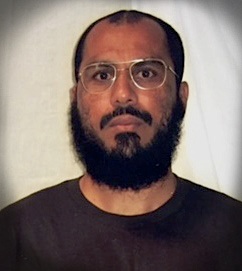 I wrote the following article for the “Close Guantánamo” website, which I established in January 2012 with US attorney Tom Wilner. Please join us — just an email address is required to be counted amongst those opposed to the ongoing existence of Guantánamo, and to receive updates of our activities by email.
Last Tuesday, the 21st prisoner to face a Periodic Review Board at Guantánamo — Zahir Hamdoun, a 36-year old Yemeni — asked the board, made up of representatives of the Departments of State, Defense, Justice and Homeland Security, as well as the office of the Director of National Intelligence and the Office of the Joint Chiefs of Staff, to approve his release from the prison. The board members communicate with Guantánamo by video feed, and hear directly from the prisoners and their representatives, although very little of what takes place is open to the media, and, by extension, the public.
The PRBs, which began in November 2013, were established to review the cases of 46 men deemed “too dangerous to release” in 2010 by the high-level, inter-agency Guantánamo Review Task Force that President Obama established shortly after taking office in January 2009, plus 25 others originally recommended for prosecution — until the basis for prosecution largely collapsed under judicial scrutiny.
The description of 46 men as “too dangerous to release” sounds dramatic, but in fact the task force conceded that insufficient evidence existed to put these men on trial, so instead of “too dangerous to release” a better description would have been “subjected to unreliable information, in many cases obtained through torture, or other forms of abuse, or bribery, or regarded as a threat because of their attitude while unjustly imprisoned for years without charge or trial.” Read the rest of this entry »
Obama’s Mixed Messages on Guantánamo, as Justice Department Tells Judge Not to Intervene in Case of 75-Pound Hunger Striker at Risk of Death
 I wrote the following article for the “Close Guantánamo” website, which I established in January 2012 with US attorney Tom Wilner. Please join us — just an email address is required to be counted amongst those opposed to the ongoing existence of Guantánamo, and to receive updates of our activities by email.
One day, when we’re looking back on Guantánamo and apportioning blame to those who contributed most powerfully to its cruelty, and to keeping it open long after the most senior officials in two governments conceded that it should be closed, a spotlight will be shone on the lawyers in the Civil Division of the Justice Department who have worked so assiduously to prevent prisoners from being released.
I have criticized these lawyers occasionally, but I have rarely heard any criticism of them in the mainstream media, and yet, from the moment that the Supreme Court granted the prisoners habeas corpus rights in Rasul v. Bush in June 2004, they have been making life difficult for lawyers representing the prisoners, micro-managing their meetings with their clients and their travel arrangements, and often, it is impossible not to conclude, in an effort to obstruct the lawyers’ ability to represent their clients.
In addition, as I noted in an article in August, the Civil Division lawyers “have fought tooth and nail against every single habeas petition submitted by the prisoners, with just one exception — the severely ill Sudanese prisoners Ibrahim Idris, whose petition was granted unopposed in 2013.” I added, “Disgracefully, the Justice Department lawyers have repeatedly challenged habeas petitions submitted by prisoners whose release has already been approved by the Guantánamo Review Task Force,” the high-level, inter-agency task force set up by President Obama shortly after taking office in January 2009, which issued its final report a year later, recommending 156 men for release, 36 for trials and 48 others for ongoing imprisonment without charge or trial, on the alarming basis that they were “too dangerous to release,” but that insufficient evidence existed to put them on trial. Read the rest of this entry »
Fan of Shakira, Taylor Swift and Game of Thrones Asks Review Board to Free Him from Guantánamo, As an Afghan is Approved for Release
 I wrote the following article for the “Close Guantánamo” website, which I established in January 2012 with US attorney Tom Wilner. Please join us — just an email address is required to be counted amongst those opposed to the ongoing existence of Guantánamo, and to receive updates of our activities by email.
Last week, Mansoor al-Zahari, a Guantánamo prisoner from Yemen, who has embraced western culture, becoming a fan of Shakira, Taylor Swift and Game of Thrones, became the 19th prisoner to have his case reviewed by a Periodic Review Board — the review process, established two years ago, to review the cases of all the prisoners not facing trials (just ten of the 114 men still held) and not already approved for release by the high-level, inter-agency Guantánamo Review Task Force that President Obama established shortly after taking office in January 2009 (43 others).
The PRBs consist of representatives of the Departments of State, Defense, Justice and Homeland Security, as well as the office of the Director of National Intelligence and the Office of the Joint Chiefs of Staff, and, since January 2014, they have approved the release of 14 men — and have only approved the ongoing detention of two others. The process is moving far too slowly — 50 others are awaiting reviews, and at the current rate the first round of reviews will not be completed until 2020 at the earliest. In addition, of the 14 approved for release, just three have been released — in part because, like 37 of those approved for release by the task force but still held, six of the 11 approved for release by the PRBs but still held are Yemenis, and the entire US establishment is unwilling to repatriate Yemenis, because of the security situation in Yemen, and third countries must be found that are prepared to offer them new homes. Read the rest of this entry »
Life After Guantánamo: Attorney Tells the Story of a Father and Son Freed, But Separated By 1,850 Miles
 Back in 2006, when I began working full-time on Guantánamo, researching the stories of the men held there for my book The Guantánamo Files, which was published in September 2007, the main research I undertook involved a detailed analysis of 8,000 pages of documents relating to the prisoners that had been released in 2006 as a result of freedom of information submissions and federal lawsuits submitted by the Associated Press.
The documents consisted primarily of unclassified allegations against the prisoners and transcripts of various review processes — the Combatant Status Review Tribunals (CSRTs) and Administrative Review Boards (ARBs) — that had been conducted from 2004 onwards, purportedly to establish the status of the prisoners, although these processes were so one-sided and what passed for evidence was generally so poor that, as the AP put it, all the transcripts generally revealed about the prisoners was “the often vague reasons the United States used for locking them up.”
Also included in the releases by the Pentagon were the first ever lists of the prisoners that had been made public, and, although all the files released required significant cross-referencing to create a coherent account of all the prisoners held at Guantánamo, past and present, I was able, over a period of 14 months, to do just that, producing the first — and still the only — comprehensive account of all the prisoners who, in such a cavalier and unsubstantiated manner, had been described by the Bush administration as “the worst of the worst.”
The overwhelming majority of the men held — I would say as many as 97 percent of the 779 men held throughout Guantánamo’s history (of whom 116 remain) — had no involvement with terrorism, and were either humble foot soldiers for the Taliban or civilians unlucky enough to be in the wrong time and the wrong place while the US was handing out substantial bounty payments to its Afghan and Pakistani allies for anyone who could be packaged up as being involved with al-Qaeda and/or the Taliban. Read the rest of this entry »
Huge Victory for Prison Reform as California Ends Indeterminate Long-Term Solitary Confinement
 On Tuesday, a significant victory took place in the long struggle by campaigners — and prisoners themselves — to improve detention conditions in US prisons, when a settlement was reached in Ashker v. Governor of California, a federal class action lawsuit on behalf of prisoners held in the Security Housing Unit (SHU) at California’s Pelican Bay State Prison who have spent a decade or more in solitary confinement.
In a press release, the Center for Constitutional Rights, whose lawyers represented the prisoners, with co-counsel from other lawyers’ firms and the organizations California Prison Focus and Legal Services for Prisoners with Children, stated that the “landmark” settlement “will effectively end indeterminate, long-term solitary confinement in all California state prisons,” resulting in “a dramatic reduction in the number of people in solitary across the state and a new program that could be a model for other states going forward.”
As CCR noted, the class action “was brought in 2012 on behalf of prisoners held in solitary confinement at the Pelican Bay prison, often without any violent conduct or serious rule infractions, often for more than a decade, and all without any meaningful process for transfer out of isolation and back to the general prison population.” The case argued that California’s use of prolonged solitary confinement “constitutes cruel and unusual punishment and denies prisoners the right to due process.” Read the rest of this entry »
Mohammed Kamin, an Insignificant Afghan Prisoner in Guantánamo, Asks Review Board to Recommend His Release
 I wrote the following article for the “Close Guantánamo” website, which I established in January 2012 with US attorney Tom Wilner. Please join us — just an email address is required to be counted amongst those opposed to the ongoing existence of Guantánamo, and to receive updates of our activities by email.
On August 18, Mohammed Kamin, an Afghan prisoner at Guantánamo who is 36 or 37 years old, became the 17th prisoner to have his case reviewed by a Periodic Review Board, consisting of representatives of the Departments of State, Defense, Justice and Homeland Security, as well as the office of the Director of National Intelligence and the Office of the Joint Chiefs of Staff.
The PRBs were established in 2013 to review the cases of 71 men who had either been recommended for ongoing imprisonment in 2010 by the high-level, inter-agency Guantánamo Review Task Force that President Obama established after taking office in 2009, or had been recommended for trials — recommendations that were taken off the table when judges ruled that the majority of the charges in those trials (the military commissions) had been invented by Congress, and were not legitimate war crimes at all.
46 men were in the former category, and 25 in the latter, and readers paying close attention will realize that 17 reviews in 21 months is slow progress, and, frankly, an insult to the men whose cases have not yet been heard. At this rate, it will take until 2021 for all the reviews to take place. Read the rest of this entry »
Yemeni Prisoner Zaher Hamdoun Says He Is “Buried in a Grave Called Guantánamo”
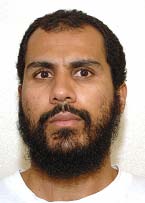 On Friday, the Guardian published words from Guantánamo written by Zaher Hamdoun (ISN 576), aka Zahir Hamdoun or Zahar Hamdoun, and also identified as Zaher bin Hamdoun or Zahir bin Hamdoun, a Yemeni who has been held at the prison since May 2002. Hamdoun’s words were interspersed with commentary by his lawyer, Pardiss Kebriaei, a Senior Staff Attorney at the New York-based Center for Constitutional Rights.
I’m cross-posting the article below, which is worth reading not only for Hamdoun’s own words about his long ordeal, but also for Pardiss Kebriaei’s frustration with the review process — the Periodic Review Boards — established by President Obama in 2013 to examine the cases of all the prisoners still held when he took office who were not subsequently approved for release in 2010 by the high-level, inter-agency Guantánamo Review Task Force he appointed (44 of the 116 men still held) or who have not been put forward for trials (just ten of the men still held).
Hamdoun is one of 47 men awaiting a chance to pitch for his release through a Periodic Review Board, a process that, as Kebriaei notes, is appallingly slow. “At the rate prisoners’ reviews are going,” she writes, “the administration will not finish by the time Obama leaves office.” Just 17 reviews have taken place since November 2013, and, as a result, ten men have been approved for release (but just two have been freed), four others have had their ongoing detention approved (but two are awaiting the results of a second review), and three others are awaiting the results of their reviews. Read the rest of this entry »
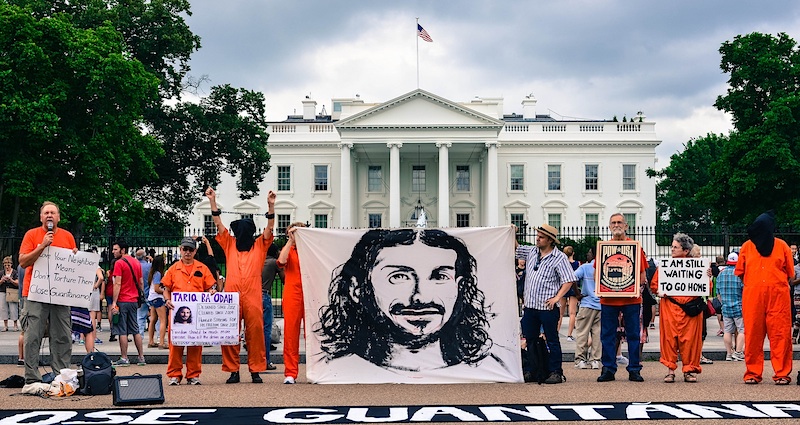
Disgraceful US Justice Department Secretly Blocks Release from Guantánamo of Gravely Ill Hunger Striker Tariq Ba Odah
 “Wonderful.” This is the only word that Guantánamo prisoner Tariq Ba Odah said, over and over, as he “looked through photos of vigils and protests, tweets and Facebook posts, and dozens of articles about efforts to free him” from Guantánamo, at a meeting last week with his lawyer, Omar Farah, of the New York-based Center for Constitutional Rights.
Tariq, as regular readers will know, is a Yemeni, and a long-term hunger striker, who has been refusing food since 2007, and is force-fed on a daily basis. He now weighs just 74.5 pounds, and is at risk of death, but the Obama administration refuses to help him. Three weeks ago, I wrote about his lawyers’ efforts to have a US judge order his release because of the very real risk he faces of imminent death.
Tariq’s plight sparked media interest — and gasps of horror from anyone still sensitized enough, after nearly 14 years of the “war on terror” declared by the Bush administration after the terrorist attacks of September 11, 2001, to realize that a man weighing just 74.5 pounds would look like a survivor of — or a corpse at — the concentration camps run by the Nazis. Read the rest of this entry »
Tariq Ba Odah, Hunger Strikes, and Why the Obama Administration Must Stop Challenging Guantánamo Prisoners in Court
In June, I wrote an article, “Skeletal, 75-Pound Guantánamo Hunger Striker Tariq Ba Odah Seeks Release; Medical Experts Fear For His Life,” about the desperate plight of Tariq Ba Odah, a Guantánamo prisoner who has been on a hunger strike since 2007 and is at risk of death. His weight has dropped to just 74.5 pounds, and yet the government does not even claim that it wants to continue holding him. Over five and a half years ago, in January 2010, the high-level, inter-agency Guantánamo Review Task Force that President Obama established when he took office in 2009 to review the cases of all the prisoners still held at that time, concluded that he should no longer be held.
The task force approved 156 men for release, although Tariq was one of 30 placed in a category invented by the task force — “conditional detention,” made dependent on a perception that the security situation in Yemen had improved or “an appropriate rehabilitation program or third- country resettlement option becomes available,” as his lawyers described it.
Collectively, the whole of the US establishment has — with one exception — refused to repatriate any Yemenis approved for release since January 2010 (after a foiled terror plot was revealed to have been hatched in Yemen), although, since last November, the administration has been finding third countries willing to offer new homes to Yemenis approve for transfer — in part became of persistent pressure from campaigning groups. 18 Yemenis have so far been found homes in third countries — in Georgia, Slovakia, Kazakhstan, Estonia and Oman — so all that now ought to prevent Tariq Ba Odah’s release is if the US government proves unable to find a third country prepared to offer him a new home. Read the rest of this entry »












 Who's still at Guantánamo?
