US in Talks to Return the 17 Afghan Prisoners in Guantánamo
 Earlier this year, there was much discussion in the US media about the possibility that, as part of negotiations aimed at securing peace in Afghanistan, the US would release five high-level Taliban prisoners in Guantánamo to Qatar, where they would be held under a form of house arrest.
Those plans came to nothing, but last week the Associated Press reported that the Obama administration was “considering a new gambit to restart peace talks with the Taliban,” which would involve some — or all — of the 17 remaining Afghan prisoners still held in Guantánamo being transferred to Afghanistan, to be held in the Parwan Detention Facility near Bagram, the huge prison established to replace the original prison at Bagram, where several prisoners were killed in the early years of the “war on terror.”
As part of the Obama administration’s 2014 deadline for withdrawing forces from Afghanistan, the Parwan Detention Facility is scheduled to be transferred to Afghan control in September this year, and the fate of the remaining Afghans in Guantánamo is clearly part of the negotiations for all parties involved — the Taliban and the Karzai government, as well as the US. Read the rest of this entry »
How US Investigators Established that Obaidullah, an Afghan Still Held in Guantánamo, Is Innocent
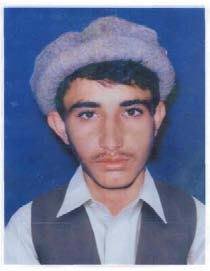 As published on the “Close Guantánamo” website. Please join us — just an email address required.
According to the US Justice Department, Obaidullah (also referred to as Obaydullah), one of 17 Afghan prisoners still held in Guantánamo, “was plainly a member of an Al-Qaeda bomb cell,” even though Obaidullah himself, and his lawyers, have always contended that, like so many of the 200 or so Afghans who have been repatriated from Guantánamo over the last ten years, he was actually seized by mistake.
In February, when discussions between the US government and the Taliban were underway, regarding the possibility that five of the 17 — all apparently significant figures in the Taliban — would be transferred to Qatar as part of the peace process in Afghanistan, the New York Times picked up on Obaidullah’s case, and reporter Charlie Savage recognized that, unlike the five senior Taliban figures, no one was pushing for his release, because he was “not an important enough figure to be a bargaining chip.”
As Charlie Savage also reported:
It is an accident of timing that Mr. Obaidullah is at Guantánamo. One American official who was formerly involved in decisions about Afghanistan detainees said that such a “run of the mill” suspect would not have been moved to Cuba had he been captured a few years later; he probably would have been turned over to the Afghan justice system, or released if village elders took responsibility for him. Read the rest of this entry »
Close Guantánamo: Abdul Ghani, An Insignificant Afghan Villager Held for Nine Years
 As published on the “Close Guantánamo” website. Please join us — just an email address required.
As we at “Close Guantánamo” continue our series profiling prisoners still held at Guantánamo — and specifically, at this time, the Afghans who are still held — our latest profile is of Abdul Ghani, an unfortunate villager from Kandahar province, who farmed pomegranates and scavenged for scrap metal, and was seized in November 2002 and arrived in Guantánamo nine years ago.
Alarmingly, Abdul Ghani was one of a number of insignificant Afghan prisoners put forward for a trial by military commission under President Bush in 2008. The authorities claimed that he had played a part in attacks and planned attacks as part of the insurgency against US forces, although Ghani himself, and his lawyers, have consistently disputed his purported involvement.
It should, however, be noted that, even if Abdul Ghani had been involved in the activities of which he is accused, it is extraordinary that, over nine years later, he remains in Guantánamo, a prison cynically described as holding “the worst of the worst” terrorists by the Bush administration, when, if he had been held in Afghanistan instead of being flown to Guantánamo, he would have been released many years ago. Read the rest of this entry »
The “Taliban Five” and the Forgotten Afghan Prisoners in Guantánamo
 In the last three months, much discussion has focused on the possibility that, as part of negotiations aimed at securing peace in Afghanistan, the US would release five high-level Taliban prisoners in Guantánamo. Almost entirely forgotten are 12 other Afghan prisoners at Guantánamo, who are mostly so insignificant that they have no one to lobby for them, and are being rather disgracefully overlooked.
The first information about discussions regarding the release of prisoners emerged in a Reuters article on December 19 last year, which explained how secret negotiations between the US government and the Taliban had begun ten months earlier. As part of “the accelerating, high-stakes diplomacy,” Reuters explained, the US was “considering the transfer of an unspecified number of Taliban prisoners from the Guantánamo Bay military prison into Afghan government custody.”
The day after, at a UN Security Council debate on Afghanistan, the Afghan deputy foreign minister Jawed Ludin “stressed the government’s determination to pursue reconciliation efforts despite Taliban attacks and assassinations,” as AFP described it. “We believe the process may benefit from the establishment of an office, within or outside Afghanistan, whereby formal talks between relevant Afghan authorities and representatives of armed opposition, including the Taliban, could be facilitated,” Ludin told the council, and AFP noted that Afghan authorities had “put forward Saudi Arabia or Turkey as the best places to set up a Taliban liaison office abroad to enable peace talks to end the devastating 10-year insurgency.” Read the rest of this entry »
The Case of Shawali Khan, an Afghan in Guantánamo, Sold to US Forces 10 Years Ago
 As published on the “Close Guantánamo” website. Please join us — just an email address required.
Here at “Close Guantánamo,” we have been watching with interest the ongoing negotiations regarding five of the 17 remaining Afghan prisoners at Guantánamo. In December, it was revealed that, for the previous ten months, the US government and the Taliban had been conducting secret negotiations, and that the US was considering releasing the five men from Guantánamo, all of whom were allegedly significant Taliban prisoners.
It was not until January that it became clear that the men were to be exchanged for a US prisoner, Bowe Bergdahl, a 25-year-old US Army sergeant from Hailey, Idaho, who was taken prisoner on June 30, 2009 in Afghanistan, and that the negotiations would involve the five Taliban prisoners being released in Qatar, where they would be held under a form of house arrest, and, at the prisoners’ request, would be reunited with their families.
These releases are now on hold, as the Taliban suspended negotiations with the US last week, following the killing of 16 civilians, including nine children, by Staff Sgt. Robert Bales. Read the rest of this entry »
Guantánamo and Recidivism: The Media’s Ongoing Failure to Question Official Statistics
 Last week, the Director of National Intelligence, in consultation with the Director of the CIA and the Director of the Defense Intelligence Agency, issued a two-page unclassified summary, entitled, “Summary of the Reengagement of Detainees Formerly Held at Guantánamo Bay, Cuba” (PDF), which provided information about the purported “recidivism” of former prisoners.
According to the summary, of the 599 prisoners released from Guantánamo, 95 (15.9%) are described as “Confirmed of Reengaging,” and 72 others (12%) are described as “Suspected of Reengaging.” However, in the mainstream media, little distinction was made between the “confirmed” and “suspected” figures. Reuters’ headline, for example, was “Recidivism rises among released Guantánamo detainees,” which was typical. In seeking to justify it, Reuters’ reporter stated, “The figures represent a 2.9 percent rise over a 25 percent aggregate recidivism rate reported by the intelligence czar’s office in December 2010.”
In terms of statistics, this was accurate, as the DNI report in December 2010 (PDF) contained an assessment that 81 former prisoners (13.5 percent) were “confirmed” and 69 (11.5 percent) “suspected” of “reengaging in terrorist or insurgent activities after transfer.” However, as has been the case since “reports” like these first began to be published, under the Bush administration (see this 2009 Seton Hall Law School report — PDF), the mainstream media has persistently refused to demand that the statistics be backed up with evidence. Read the rest of this entry »
To Mark 10 Years of Guantánamo, Stern Magazine Profiles Five Former Prisoners
 Last week, when I cross-posted an article written for the 10th anniversary of the opening of Guantánamo by my friend Todd Pierce, I also noted that when I visited the US in January to campaign for the closure of Guantánamo Bay, I was so busy that I did not have time to cross-post other articles of interest that were published at the time, and added, “In the hope of keeping alive some of that spirit of awareness about the ongoing injustice of Guantánamo that flickered briefly to life around the anniversary, I’m planning to cross-post some of these articles.”
After starting with Todd’s article, I’m now moving on to a detailed article that was published in Germany’s Stern Magazine — available here as a PDF, and helpfully translated into English for Cageprisoners, via Google Translate, in a translation that I have tidied up.
The article features interviews with five former prisoners — Sami al-Laithi (aka el-Leithi), an Egyptian; Omar Deghayes, a British resident; Mohammed el-Gharani, a Chadian and former child prisoner; Mullah Abdul Salam Zaeef, an Afghan and a former Taliban ambassador; and Abu Bakker Qassim, a Uighur (a Muslim from China’s Xinjiang province) released from Guantánamo to Albania. The stories of all of these men have been reported before, but fresh eyes and ears are also ways useful to continue to expose the horrific history of Guantánamo, and its ongoing injustices, and the Stern article also featured a collection of powerful photos, as well as quotes from other prisoners — David Hicks (from Australia), Murat Kurnaz (from Germany) and Moazzam Begg (from the UK). Read the rest of this entry »
Obama Considers Repatriating Foreign Prisoners from Bagram
 Ten years ago, foreign prisoners, seized in other countries, began to arrive in the US prison at Bagram airbase in Afghanistan. Some were held in a secretive part of the prison, and had often passed through other secret facilities in Afghanistan or elsewhere. The majority of these prisoners ended up in Guantánamo, but some were stealthily repatriated at various times. Others, however, continued to be held, beyond the rule of law.
The prison never conformed to the Geneva Conventions, which were, essentially, discarded when the Bush administration decided to hold prisoners in its “war on terror” as “illegal enemy combatants,” and have never been reinstated. Moreover, the prisoners remained beyond the law even when the Supreme Court granted habeas corpus rights to the Guantánamo prisoners in June 2004, and again in June 2008, after Congress had tried to remove these rights in the Detainee Treatment Act of 2005 and the Military Commissions Act of 2006 (PDF).
In March 2009, in Washington D.C., District Judge John D. Bates briefly brought this era of secrecy and unaccountability to an end, granting the habeas corpus petitions of three foreign prisoners — Redha al-Najar, a Tunisian seized in Karachi, Pakistan in May 2002; Amin al-Bakri, a Yemeni gemstone dealer seized in Bangkok, Thailand in late 2002; and Fadi al-Maqaleh, a Yemeni seized in 2004. Read the rest of this entry »
The Complete Guantánamo Files: WikiLeaks and the Prisoners Released in 2007 (Part Two of Ten)

Please support my work!
Freelance investigative journalist Andy Worthington continues his 70-part, million-word series telling, for the first time, the stories of 776 of the 779 prisoners held at Guantánamo since the prison opened on January 11, 2002. Adding information released by WikiLeaks in April 2011 to the existing documentation about the prisoners, much of which was already covered in Andy’s book The Guantánamo Files and in the archive of articles on his website, the project will be completed in spring 2012.
This is Part 32 of the 70-part series. 399 stories have now been told. See the entire archive here.
In late April, I worked with WikiLeaks as a media partner for the publication of thousands of pages of classified military documents — the Detainee Assessment Briefs — relating to almost all of the 779 prisoners held at Guantánamo since the prison opened on January 11, 2002. These documents drew heavily on the testimony of the prisoners themselves, and also on the testimony of their fellow inmates (either in Guantánamo, or in secret prisons run by or on behalf of the CIA), whose statements are unreliable, either because they were subjected to torture or other forms of coercion, or because they provided false statements in the hope of securing better treatment in Guantánamo.
The documents were compiled by the Joint Task Force at Guantánamo (JTF GTMO), which operates the prison, and were based on assessments and reports made by interrogators and analysts whose primary concern was to “exploit” the prisoners for their intelligence value. They also include input from the Criminal Investigative Task Force, created by the DoD in 2002 to conduct interrogations on a law enforcement basis, rather than for “actionable intelligence.”
My ongoing analysis of the documents began in May, with a five-part series, “WikiLeaks: The Unknown Prisoners of Guantánamo,” telling the stories of 84 prisoners, released between 2002 and 2004, whose stories had never been told before. This was followed by a ten-part series, “WikiLeaks and the Guantánamo Prisoners Released from 2002 to 2004,” in which I revisited the stories of 114 other prisoners released in this period, adding information from the Detainee Assessment Briefs to what was already known about these men and boys from press reports and other sources. This was followed by another five-part series, “WikiLeaks and the Guantánamo Prisoners Released After the Tribunals, 2004 to 2005,” dealing with the period from September 2004 to the end of 2005, when 62 prisoners were released. Read the rest of this entry »
The Complete Guantánamo Files: WikiLeaks and the Prisoners Released in 2007 (Part One of Ten)
Please support my work!
Freelance investigative journalist Andy Worthington continues his 70-part, million-word series telling, for the first time, the stories of 776 of the 779 prisoners held at Guantánamo since the prison opened on January 11, 2002. Adding information released by WikiLeaks in April 2011 to the existing documentation about the prisoners, much of which was already covered in Andy’s book The Guantánamo Files and in the archive of articles on his website, the project will be completed in spring 2012.
This is Part 31 of the 70-part series. 386 stories have now been told. See the entire archive here.
In late April, I worked with WikiLeaks as a media partner for the publication of thousands of pages of classified military documents — the Detainee Assessment Briefs — relating to almost all of the 779 prisoners held at Guantánamo since the prison opened on January 11, 2002. These documents drew heavily on the testimony of the prisoners themselves, and also on the testimony of their fellow inmates (either in Guantánamo, or in secret prisons run by or on behalf of the CIA), whose statements are unreliable, either because they were subjected to torture or other forms of coercion, or because they provided false statements in the hope of securing better treatment in Guantánamo.
The documents were compiled by the Joint Task Force at Guantánamo (JTF GTMO), which operates the prison, and were based on assessments and reports made by interrogators and analysts whose primary concern was to “exploit” the prisoners for their intelligence value. They also include input from the Criminal Investigative Task Force, created by the DoD in 2002 to conduct interrogations on a law enforcement basis, rather than for “actionable intelligence.”
My ongoing analysis of the documents began in May, with a five-part series, “WikiLeaks: The Unknown Prisoners of Guantánamo,” telling the stories of 84 prisoners, released between 2002 and 2004, whose stories had never been told before. This was followed by a ten-part series, “WikiLeaks and the Guantánamo Prisoners Released from 2002 to 2004,” in which I revisited the stories of 114 other prisoners released in this period, adding information from the Detainee Assessment Briefs to what was already known about these men and boys from press reports and other sources. This was followed by another five-part series, “WikiLeaks and the Guantánamo Prisoners Released After the Tribunals, 2004 to 2005,” dealing with the period from September 2004 to the end of 2005, when 62 prisoners were released. Read the rest of this entry »












 Who's still at Guantánamo?
