Archive for May, 2010
Funding my Guantánamo work: a supporter will match all donations in the next 48 hours

Please support my work!
Please forgive this interruption to my normal flow of articles about Guantánamo and the “War on Terror,” but a supporter on Facebook has just pledged to match all donations to support my work over the next 48 hours, which is a wonderful offer, and one that I thought would be appropriate to extend to my readers as a whole. Please click on the “Donate” button above to donate via PayPal.
I’m sure that many of you know that I survive as a freelance journalist primarily through the support of a number of organizations who pay me to write articles for them — the Future of Freedom Foundation, Cageprisoners and Truthout — but much of the work I do is unpaid, and any donations will be gratefully received, especially as I have just been hit with a bill for some unexpected technical support issues.
Over the last few weeks, I’ve been working harder than ever to expose the truth about Guantánamo — that it was nothing more than a brutal and misguided experiment, fuelled by incompetence and a violent disregard for the law, even though it was dressed up as a robust and appropriate response to terrorism.
To this end, I have been particularly busy recently, putting together a series of articles under the heading, “Guantánamo Habeas Week,” (even though, in the end, the project spilled over into a three week period), which provided a sustained analysis of the results of the prisoners’ habeas rulings over the last year and a half.
The introduction is here, a comprehensive list of 47 rulings is here (34 of which were won by the prisoners), and detailed articles analyzing the judges’ unclassified opinions are as follows: “With Regrets, Judge Allows Indefinite Detention at Guantánamo of a Medic,” “Mohamedou Ould Salahi: How a Judge Demolished the US Government’s Al-Qaeda Claims,” “Judge Rules Yemeni’s Detention at Guantánamo Based Solely on Torture,” “Why Judges Can’t Free Torture Victims from Guantánamo” and “How Binyam Mohammed’s Torture Was Revealed in a US Court.” A final article, “Guantánamo and Habeas Corpus: Consigning Soldiers to Oblivion,” will be published soon.
As with all my work, some of this was funded, but much of it was not, so any donations will help to support this project, and others to come — including my ongoing analysis of the trial by Military Commission of Omar Khadr, a report on the Palestinian recently released from Guantánamo in Spain, reports on the two prisoners released from Guantánamo this week, and further analysis of the ongoing habeas rulings.
Thanks for your time — and if you’re in the UK, don’t forget to vote wisely, and feel free to check out this list of 149 MPs who, in the last 12 months, have supported human rights in relation to terrorism.
Andy Worthington
London, May 6, 2010
Andy Worthington is the author of The Guantánamo Files: The Stories of the 774 Detainees in America’s Illegal Prison (published by Pluto Press, distributed by Macmillan in the US, and available from Amazon — click on the following for the US and the UK). To receive new articles in your inbox, please subscribe to my RSS feed (and I can also be found on Facebook and Twitter). Also see my definitive Guantánamo prisoner list, updated in January 2010, and details about the new documentary film, “Outside the Law: Stories from Guantánamo” (co-directed by Polly Nash and Andy Worthington, and currently on tour in the UK.
UK Election: The MPs Who Care About Human Rights
 For anyone wondering how to vote in the General Election today, who may have noticed the resounding silence on the election trail regarding Britain’s commitment to human rights since the 9/11 attacks, I’ve compiled the following list of 149 MPs (out of 650 in total), who have signed up to two important Early Day Motions in the last 12 months.
The first is Diane Abbott’s EDM 1308 (signed by 93 MPs), opposing the use of secret evidence in UK courts, which has been used, in particular, in the cases of terror suspects (both British and foreign nationals), as a pretext to hold them under control orders (a form of house arrest) or in prison pending deportation, or on deportation bail (again, a form of house arrest), without them being formally charged or tried.
The second is Martin Linton’s EDM 547 (signed by 101 MPs), calling for the release of Shaker Aamer, the last British resident in Guantánamo, who was cleared for release by the US authorities in 2007, but has still not been reunited with his British wife and four British children, despite claims by the government that it has been doing all in its power to secure his release since August 2007.
Diane Abbott’s EDM states:
That this House believes the use of secret evidence in UK courts is fundamentally wrong; notes that secret evidence is evidence held by the Home Office against an individual that neither the individual, nor their legal representation, may see; further notes that in recent cases secret evidence has been used to detain individuals in prison for up to three years without charge or trial; further notes that these individuals may also be put under a control order or severe bail conditions, greatly limiting their movements and ability to lead a healthy life; further believes that the use of secret evidence by the state against individuals runs entirely contrary to Habeas Corpus; recognises the European Court of Human Rights’ ruling that detaining individuals on the basis of secret evidence is unlawful because detainees had not been able to effectively challenge the allegations against them; and calls on the Government to begin an immediate independent review into the use of evidence that is not ever heard by the defendant or their lawyer but which is used to justify indefinite detention, severe bail conditions or control orders.
Martin Linton’s EDM states:
That this House welcomes President Obama’s commitment to close Guantánamo and his appeal to European countries to take in released detainees; supports the representations by the Government for the release and return of Shaker Aamer, the last British resident held in Guantánamo; notes that Mr Aamer has been detained for nearly eight years without trial or charge; further notes that he was a UK resident before his detention and that his wife and children have always lived in this country; and urges the Government to make renewed representations to the US to secure his release and return to this country.
To remind potential voters of the main parties’ general commitment to human rights, it should also be noted that:
- Just three Conservative MPs out of 209 in total supported one or both of these EDMs (less than 2 percent of the total number of Conservative MPs);
- 89 out of 349 Labour MPs supported one or both EDMs (just under 26 percent of the total number of MPs);
- 43 out of 62 Liberal Democrat MPs supported one or both EDMs (just under 70 percent of the total number of MPs);
- The list also includes 14 independents, or members of other parties.
Please also note that ministers and members of Parliamentary Committees are not allowed to add their names to EDMs, even though one MP in particular — the Conservative MP Andrew Tyrie — deserves recognition as the chairman of the All-Party Parliamentary Group on Extraordinary Rendition, which he established in December 2005.
In addition, this list does not even begin to address the pro-human rights credentials of numerous candidates contesting seats today, especially Green Party candidates across the country, other Liberal Democrats, some Labour and Conservative candidates, and other representatives of smaller parties, including Respect. A useful introduction to some worthy candidates has been produced by the British Muslim Initiative, and can be found here, although it seems apparent to me that it does not include enough Green or Liberal Democrat candidates.
The 149 MPs who supported human rights in the last year
Note: In the list, SA refers to the Shaker Aamer EDM, SE refers to the secret evidence EDM.
Conservatives (3)
Bottomley, Peter (SA, SE)
Davis, David (SA, SE)
Wilshire, David (SE)
Labour (89)
Abbott, Diane (SA, SE)
Anderson, David (SA)
Austin, John (SA, SE)
Barlow, Celia (SA)
Bayley, Hugh (SA)
Berry, Roger (SA)
Betts, Clive (SA)
Buck, Karen (SA)
Burgon, Colin (SA)
Campbell, Ronnie (SA)
Caton, Martin (SA, SE)
Challen, Colin (SE)
Chaytor, David (SE)
Clapham, Michael (SA, SE)
Clark, Katy (SA, SE)
Clwyd, Ann (SA)
Cohen, Harry (SA, SE)
Connarty, Michael (SA)
Cook, Frank (SA, SE)
Corbyn, Jeremy (SA, SE)
Crausby, David (SA)
Cruddas, Jon (SA)
Cryer, Ann (SA, SE)
Dean, Janet (SA)
Devine, Jim (SE)
Dismore, Andrew (SA, SE)
Dobson, Frank (SA)
Dowd, Jim (SA, SE)
Drew, David (SA, SE)
Etherington, Bill (SA, SE)
Flello, Robert (SA)
Flynn, Paul (SA, SE)
Francis, Hywel (SA)
Gerrard, Neil (SA, SE)
Gibson, Ian (SE)
Hall, Patrick (SE)
Havard, Dai (SA, SE)
Heyes, David (SE)
Hoey, Kate (SE)
Hopkins, Kelvin (SA, SE)
Hoyle, Lindsay (SE)
Iddon, Brian (SA)
Illsley, Eric (SA, SE)
Jackson, Glenda (SA, SE)
Jones, Lynne (SA, SE)
Lazarowicz, Mark (SA, SE)
Lepper, David (SA, SE)
Linton, Martin (SA)
Mackinlay, Andrew (SA, SE)
Mallaber, Judy (SA)
Marshall-Andrews, Robert (SE)
McCafferty, Chris (SE)
McDonnell, John (SA, SE)
McIsaac, Shona (SA)
Mitchell, Austin (SA)
Morgan, Julie (SE)
Mullin, Chris (SA)
Naysmith, Doug (SE)
Olner, Bill (SE)
Prosser, Gwyn (SA)
Riordan, Linda (SE)
Sarwar, Mohammad (SE)
Simpson, Alan (SA, SE)
Singh, Marsha (SA)
Skinner, Dennis (SA)
Slaughter, Andy (SA)
Stewart, Ian (SA)
Strang, Gavin (SA, SE)
Taylor, David (SE)
Thornberry, Emily (SA)
Truswell, Paul (SE)
Turner, Desmond (SA, SE)
Vaz, Keith (SA)
Vis, Rudi (SA, SE)
Wareing, Robert N (SA, SE)
Williams, Betty (SA)
Wood, Mike (SA)
Wright, Anthony D (SA)
Wyatt, Derek (SA)
Liberal Democrats (43)
Baker, Norman (SA, SE)
Brake, Tom (SA, SE)
Breed, Colin (SE)
Bruce, Malcolm (SA)
Burt, Lorely (SE)
Cable, Vincent (SA, SE)
Campbell, Menzies (SA)
Davey, Edward (SA)
Featherstone, Lynne (SA, SE)
Foster, Don (SA, SE)
George, Andrew (SA, SE)
Gidley, Sandra (SA)
Goldsworthy, Julia (SE)
Hancock, Mike (SA, SE)
Harvey, Nick (SA, SE)
Hemming, John (SA, SE)
Holmes, Paul (SA, SE)
Horwood, Martin (SA, SE)
Howarth, David (SA, SE)
Hughes, Simon (SE)
Huhne, Chris (SE)
Hunter, Mark (SA)
Keetch, Paul (SA, SE)
Kennedy, Charles (SA)
Kramer, Susan (SA, SE)
Lamb, Norman (SA, SE)
Leech, John (SA, SE)
Moore, Michael (SA)
Mulholland, Greg (SE)
Oaten, Mark (SA)
Opik, Lembit (SA)
Rennie, Willie (SA, SE)
Rogerson, Daniel (SE)
Rowen, Paul (SE)
Stunell, Andrew (SA, SE)
Swinson, Jo (SE)
Taylor, Matthew (SE)
Teather, Sarah (SA, SE)
Williams, Mark (SA)
Williams, Roger (SA)
Williams, Stephen (SE)
Willis, Phil (SA)
Willott, Jenny (SA, SE)
Independent (3)
Davies, Dai (SA, SE)
Pelling, Andrew (SA)
Taylor, Richard (SE)
Independent Labour (1)
Short, Clare (SA, SE)
Plaid Cymru (1)
Llwyd, Elfyn (SE)
Respect (1)
Galloway, George (SA, SE)
Scottish National Party (6)
Hosie, Stewart (SE)
MacNeil, Angus (SE)
Mason, John (SE)
Robertson, Angus (SE)
Weir, Mike (SE)
Wishart, Pete (SE)
Social Democratic and Labour Party (2)
Durkan, Mark (SA, SE)
McDonnell, Alasdair (SE)
 Andy Worthington is the author of The Guantánamo Files: The Stories of the 774 Detainees in America’s Illegal Prison (published by Pluto Press, distributed by Macmillan in the US, and available from Amazon — click on the following for the US and the UK). To receive new articles in your inbox, please subscribe to my RSS feed (and I can also be found on Facebook and Twitter). Also see my definitive Guantánamo prisoner list, updated in January 2010, details about the new documentary film, “Outside the Law: Stories from Guantánamo” (co-directed by Polly Nash and Andy Worthington, and launched in October 2009), and, if you appreciate my work, feel free to make a donation.
UK Appeals Court Rules Out Government’s Use of Secret Evidence in Guantánamo Damages Claim
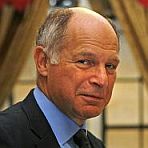 In the Court of Appeal yesterday morning, six former Guantánamo prisoners — Bisher al-Rawi, Jamil El-Banna, Richard Belmar, Omar Deghayes, Binyam Mohamed and Martin Mubanga — won a resounding victory against the government, when three senior judges, including Lord Neuberger, the Master of the Rolls, overturned a ruling that, for the first time in British history, allowed the government to use secret evidence in a civil claim for damages.
The former prisoners are suing MI5, MI6, the Foreign Office, the Home Office and the Attorney General on the basis that agents of the intelligence services were involved in unlawful acts and conspiracy, and that, essentially, they were involved in, or failed to stop, their detention and ill-treatment (and in some cases, their “extraordinary rendition” to secret prisons). However, in November, Mr. Justice Silber ruled that the government should be able to withhold evidence from defendants and their lawyers on the basis of national security.
In reversing this ruling, the judges in the Court of Appeal — Lord Neuberger, Lord Justice Maurice Kay and Lord Justice Sullivan — said they were obliged to “take a stand” against secrecy that would undermine the “most fundamental principles of common law.”
In what the BBC described as “a strongly-worded ruling,” pointing out that “no damages hearing could be heard in secret because the courts had not been empowered by Parliament to withhold evidence from the claimants,” Lord Neuberger stated:
In our view, the principle that a litigant should be able to see and hear all the evidence which is seen and heard by a court determining his case is so fundamental, so embedded in the common law, that, in the absence of parliamentary authority, no judge should override it. At least so far as the common law is concerned, we would accept the submission that this principle represents an irreducible minimum requirement of an ordinary civil trial. Unlike principles such as open justice, or the right to disclosure of relevant documents, a litigant’s right to know the case against him and to know the reasons why he has lost or won is fundamental to the notion of a fair trial.
As the BBC also explained, the ruling was “the second major blow by the Court of Appeal against the government’s attempts to keep secret material out of open courts.” Back in February, the Court overturned 18 months of obstruction, on the part of foreign secretary David Miliband, aimed at preventing the release of documents supplied to the UK by the US intelligence services, which revealed how Binyam Mohamed had been tortured while in US custody in Pakistan in 2002, before his rendition to torture in Morocco and the CIA’s “Dark Prison” near Kabul, and his eventual transfer to Guantánamo. On that occasion, Lord Neuberger was deeply critical of the role played by the intelligence services, noting — in a passage in his ruling that the government tried to suppress — that MI5 did not respect human rights, had not renounced participation in “coercive interrogation” techniques, deliberately misled MPs and peers on the intelligence and security committee, which is supposed to be able to scrutinize its activities, and had a “culture of suppression” in its dealings with Miliband and the court.
As the BBC explained, “British courts deal with secret evidence in two different ways. Ministers can sign special orders called Public Interest Immunity certificates, which leads to material being withdrawn entirely from a case so it cannot be used by either party,” as happened for 18 months in Binyam Mohamed’s case. In other cases — “[c]ontrol order hearings and national-security related deportations” — some evidence, “such as MI5 assessments,” is discussed in secret. As the BBC added, “The suspect is not allowed into these hearings — but a special advocate argues on their behalf behind closed doors.”
The problems with this latter system were exposed by the Law Lords last June, when they dealt a major blow to the government’s system of detaining terror suspects — both British and foreign nationals — on control orders (a form of house arrest) on the basis of secret evidence, following a ruling in the European Court of Human Rights. As I explained at the time, the unfair use of secret evidence primarily “centres on an absurd situation whereby, in the Special Immigration Appeals Court (SIAC), which deals with these cases, special advocates are responsible for representing the accused in closed sessions involving the use of secret evidence, but are prevented from revealing anything about those sessions to the men they represent. This impenetrable barrier to transparency also works in the other direction, as suspects cannot brief the advocates effectively when they are kept in the dark regarding the details of the case against them.”
Recognizing this, the Law Lords “unanimously declared that they had had enough of the system as it currently stands. By nine votes to nil, they ruled that imposing control orders breaches Article 6 of the European Convention on Human Rights, which guarantees the right to a fair trial, because a suspect held under a control order is not given ‘sufficient information about the allegations against him to enable him to give effective instructions to the special advocate assigned to him.’”
Nevertheless, when it came to the damages claim filed by the six former Guantánamo prisoners, the government proposed exactly the same sort of procedure that the Law Lords found to be unlawful when it came to control orders, arguing that closed sessions should be held because of national security concerns, but with the supposed concession that the men would be represented by special advocates.
In their judgment, however, the judges in the Court of Appeal refused to accept this argument, and Lord Neuberger stated:
Quite apart from the fact that the issue is one of principle, it is a melancholy truth that a procedure or approach which is sanctioned by a court expressly on the basis that it is applicable only in exceptional circumstances nonetheless often becomes common practice.
Responding to the ruling, Corinna Ferguson, a lawyer with Liberty, told the BBC, “Yet again, the Court of Appeal has sent the strongest signal to the security establishment that it cannot play fast and loose with the rule of law. Fair and open justice belongs to people not governments.” She added, pointedly, “Whoever governs us from Friday would be wise to bear this in mind.”
Andy Worthington is the author of The Guantánamo Files: The Stories of the 774 Detainees in America’s Illegal Prison (published by Pluto Press, distributed by Macmillan in the US, and available from Amazon — click on the following for the US and the UK). To receive new articles in your inbox, please subscribe to my RSS feed (and I can also be found on Facebook and Twitter). Also see my definitive Guantánamo prisoner list, updated in January 2010, details about the new documentary film, “Outside the Law: Stories from Guantánamo” (co-directed by Polly Nash and Andy Worthington, and launched in October 2009), and, if you appreciate my work, feel free to make a donation.
How Binyam Mohamed’s Torture Was Revealed in a US Court
 Note: This article is one of the last two articles published as part of “Guantánamo Habeas Week” (introduced here, and also see the articles here, here, here and here), which I extended to become “Guantánamo Habeas Fortnight.” This project also includes an interactive list of all 47 rulings to date (with links to my articles, the judges’ unclassified opinions, and more).
Last November, US District Court Judge Gladys Kessler granted the habeas corpus petition of Farhi Saeed bin Mohammed, a 48-year old Algerian, held in Guantánamo, who was seized in Pakistan in December 2001 after fleeing the chaos in Afghanistan following the US-led invasion, and has been in US custody ever since.
As I explained in an article at the time, bin Mohammed is one of many essentially stateless refugees in Guantánamo, a drifter, who, after serving as a conscript in the Algerian army from 1981 to 1983, “fled his homeland and lived between Britain, France and Italy as an itinerant laborer in the 1990s before going to Afghanistan months before the 9/11 attacks.”
The government clearly struggled to link bin Mohammed to any kind of militant activity. He persistently claimed that he had traveled to Afghanistan to find a wife (apparently a Swedish woman recommended by a Moroccan friend in England), and in its first unclassified summary of evidence at Guantánamo, compiled in 2004, the Pentagon had so little information about him that the authorities resorted to claiming that he visited two “known extremist mosques” in London in an attempt to portray him as a danger.
In the years that followed, new allegations, culled from the interrogations of other prisoners, led the government to claim, in 2005, that he “received weapons training at the Bagram Front,” and that “Another detainee identified [him] as an individual who trained at the Algerian camp and they eventually traveled to Kandahar,” and, in 2007, to claim that he “reportedly attended training at al-Qaeda’s Durunta and al-Farouq Training Camps,” and was, therefore, “a suspected member of al-Qaeda.”
Despite this, these claims were obviously so weak that, in September 2007, a military review board at Guantánamo approved bin Mohammed’s release, although he remained in the prison because, as his lawyer Jerry Cohen explained, he “fears return to his homeland,” and “seek[s] resettlement in a third country, where he would like to work in construction and marry.”
Two years and two months after this decision was reached — and with no third country willing to offer bin Mohammed a new home — Judge Kessler finally ruled on his long-standing habeas corpus petition, which, like hundreds of other petitions, had been frozen while the Supreme Court and Congress fought over the prisoners’ rights. The Supreme Court had given the prisoners habeas corpus rights in June 2004, but Congress had attempted to strip them of these rights in the Detainee Treatment Act of 2005 and the Military Commissions Act of 2006, and it was not until June 2008 that the Supreme Court ruled again on their status, deciding that Congress had acted unconstitutionally, and this time making sure that their habeas rights were constitutionally guaranteed.
The ensuing habeas rulings have, in general, been a triumph for the prisoners, who have won 34 of the 47 cases so far decided, thereby clearing them, in an objective and authoritative forum, of the “taint” of terrorism associated with Guantánamo, although it should also be noted that they have not always led to the prisoners’ release. At the time of writing, eleven of those who won their habeas petitions are still held (including Farhi Saeed bin Mohammed).
In an attempt to raise awareness of his plight, this article analyzes Judge Kessler’s unclassified opinion in bin Mohammed’s case (PDF), which is particularly noteworthy because most of the information relied upon by the government to justify his detention came from Binyam Mohamed, the British resident, seized in Pakistan in April 2002, and rendered by the CIA to Morocco, where he was tortured for 18 months.
In February this year, Judge Kessler’s ruling regarding the use of Binyam Mohamed’s testimony played a crucial role in the High Court in the UK, where the publication of the unclassified opinion was used to demolish a claim by the British government, maintained for 18 months, that a summary by two High Court judges of information passed to the British intelligence services by their US counterparts, describing the treatment that Binyam Mohamed endured in US custody in Pakistan, could not be released because it would threaten the intelligence-sharing relationship between the US and the UK. Conceding defeat, foreign secretary David Miliband noted that the court only ordered the release of the intelligence summary “because in its view their substance had been put into the public domain by a decision of a US court in another case” (that of Farhi Saeed bin Mohammed), and added that “Without that disclosure, it is clear that the court of appeal would have overturned the divisional court’s decision to publish the material.”
As a result, this article should also be helpful because it presents the first detailed public analysis of Judge Kessler’s ruling on the false confessions extracted from Binyam Mohamed that was central to the disclosure of British complicity in his torture by US agents, which has ensured that, when it comes to accountability for crimes committed in the “War on Terror,” the UK is some way ahead of the US in holding senior officials responsible for their actions.
Farhi Saeed bin Mohammed’s story
As described by Judge Kessler in her unclassified opinion, the government’s case against bin Mohammed rested on seven claims: that there was some significance to his use, prior to his detention, of a false name and a false passport; that his visits to two mosques in London were significant; that his travel to Afghanistan was facilitated by a recruiter at one of these mosques, as part of a “terrorist network”; that his stay at an Algerian guesthouse in Jalalabad was significant; plus “whether or not [he] trained at a terrorist camp,” and “whether or not [he] participated in battle.”
In addressing most of these claims, Judge Kessler maintained a healthy degree of skepticism about bin Mohammed’s counter-claims, in particular, dismissing his account of traveling to Afghanistan to find a Swedish woman to marry so that he could legally stay in Europe. This, she explained at one point, was “patently fantastic.”
However, although she recognized that his use of false names and his use of a false passport in his travels between France, Italy and the UK was, as he claimed, “essential for him to survive as an undocumented alien trying to find work and a home in Europe,” and was not, as the government contended, proof that he was “a deceitful person” per se, she conceded that it “demonstrate[d] his willingness and ability to lie to the authorities and evade compliance with the law when it suited his purposes.”
This alone, however, was not enough to justify his detention, and nor, it transpired, was the weight that the government tried to give to his visits to the Finsbury Park mosque, and his more regular visits to the Baker Street mosque. Again, she seemed inclined to accept his claim that they were “simply centers of worship and community for him,” as they would be for any Muslim visitor to London, and not to follow the “guilt by mosque” scenario put forward by the government, which considered both mosques as “critical posts within an al-Qaeda recruiting network” — and, by inference, all who attended them as al-Qaeda supporters or sympathizers. As bin Mohammed explained in one of his interrogations, “[T]here was no sign on the mosque that said extremist mosque.”
However, she did accept that bin Mohammed was recruited — by a man named Abdul Rahim, who “allegedly was a recruiter for al-Qaeda” — who “conceived, planned and funded [his trip] to Afghanistan” in June 2001, and provided contacts who took him from Islamabad to Peshawar, and then across the border to Jalalabad. It is here, at the “Algerian house” run by Abu Jaffar al-Jazeeri, and his assistant Abdul Hafiz, that bin Mohammed’s story started to look particularly shaky. The government contended that the guesthouse was run “to facilitate the transfer of recruits to training camps in the region,” and presented evidence, drawn from the cases of other prisoners (some still held; others released as long ago as 2004), to demonstrate that, by their reckoning, everyone who stayed at the house did indeed travel to training camps.
If confirmed in bin Mohammed’s case, this would undoubtedly have led to Judge Kessler denying his habeas petition, because it would have demonstrated an unmistakeable involvement with the command structure of al-Qaeda or the Taliban that would have justified his ongoing detention. However, it was not entirely certain that everyone who attended the house was required to attend a training camp. As one former prisoner explained, in a passage of enormous significance for bin Mohammed, “occupants of the guesthouse were ‘encouraged to attend training in one of the camps,’ but not ‘pressured’ to do so.”
At this point in the unclassified opinion, Judge Kessler “fully credit[ed] the Government’s argument that [bin Mohammed] was recruited and traveled via a terrorist pipeline,” and also fund that the government had “provided credible evidence that Mohammed arrived at the Jalalabad guesthouse as part of a recruiting network, and stayed with other individuals who went on to train with al-Qaeda.”
However, when it came to the most important allegations –- that bin Mohammed himself attended a training camp, and that he engaged in battle –- she was not persuaded. Denying the government’s allegation that he engaged in battle, she noted that the allegation “rests only on highly speculative evidence,” drawn from a solitary mention of it during the interrogation of a Moroccan prisoner, and that “There is no eye-witness account of [him] engaging in battle.”
As for the claim that bin Mohammed attended a training camp, this came from the interrogations of Binyam Mohamed, and what Judge Kessler discovered clearly shocked her so much that she not only devoted 30 pages of her 80-page opinion to his case, but also laid out the information in a forum and a format that was to prove invaluable to the British courts — and so damaging to David Miliband and the British government — in February this year.
In some ways, this is rather surprising, as an account of Binyam’s torture, which he delivered to his attorney, Clive Stafford Smith, over three long days in Guantánamo in the summer of 2005, was first published in the Guardian on August 2, 2005, having miraculously passed the Pentagon’s censors. However, the importance of the respectability accorded to information cited by a judge in a US court should be borne in mind, as, indeed, should the additional details about Binyam Mohamed’s interrogations that Judge Kessler made available through her access to materials that have never before been publicly disclosed.
The torture of Binyam Mohamed
 Judge Kessler’s extraordinary tour through Binyam Mohamed’s long ordeal began because she was asked to accept an allegation put forward by the government, relating to a statement he had made after arriving at Guantánamo in September 2004, after two and a half years’ imprisonment — first in Pakistan (for three months), then in Morocco (for eighteen months), then in the CIA’s “Dark Prison” in Afghanistan (for four months) and then in the US prison at Bagram airbase in Afghanistan (for another four months).
Drawing on the long statement he made to Clive Stafford Smith, and other material including the account he gave to the Mail on Sunday after his release, Judge Kessler related how, after he was seized as he attempted to fly out of Karachi on April 10, 2002, he was held in Pakistani custody, but FBI agents were given access to him. In a passage that reflected the contents of the documents that the British government tried to suppress for 18 months in the UK, Judge Kessler noted that, between April 20 and April 27, 2002, “[j]ust weeks after his capture, his torture began.” As she explained:
The FBI questioned him about his activities, and, unsatisfied with his answers, threatened to transfer him to other countries where he would experience harsh treatment. Then, the FBI agents would leave the room and Pakistanis entered. They beat him with a leather strap, and staged a mock execution where a guard pointed a semi-automatic weapon at Binyam Mohamed’s chest for several minutes, and stood over him motionless. The guard relented, left the room, and FBI personnel re-entered the room for further questioning.
She then proceeded to relate the story of his rendition to Morocco and his torture there, running through the familiar details of the Moroccan interrogators’ particular brutality, including regular and savage beatings, during which he was “fed information about himself and told to verify it,” the regular sessions in which his penis was cut with a scalpel, and the sustained sleep deprivation and the use of drugs that led to him experiencing “emotional breakdowns.”
Judge Kessler also made a point of stating that he was “told that the British government knew of his situation and sanctioned his detention,” and that he “was told that the United States wanted a story from him, and that he had been linked to important figures in al-Qaeda, including Khalid Sheikh Mohammed, Abu Zubaydah, Ibn Sheikh al-Libi [aka Ibn al-Shaykh al-Libi], and Jose Padilla.”
Although these purported connections were, for the most part, absurd, it is no coincidence that these men were mentioned to him, as they tie in with the torture of Abu Zubaydah, seized just two weeks before him, on March 28, 2002, who was the first subject of an experimental torture program that only gained official approval on August 1, 2002, when John Yoo and Jay S. Bybee of the Justice Department’s Office of Legal Counsel, which is responsible for interpreting the law as it applies to the executive branch, issued two memos that purported to redefine torture and to approve its use by the CIA.
In Judge Kessler’s account, Binyam “was told to say, among other things, that he met [Osama] bin Laden five or six times, that he advised him on places to attack, and that he conferred with bin Laden’s deputies.” She also noted, “He was given names of people he allegedly knew, and told to confess to being ‘an al-Qaeda operations man.’”
She proceeded to describe how, on January 21 or 22, 2004, he was flown to Afghanistan, and repeated the story about how, after he was stripped, “one female soldier was assigned to take pictures of him,” who “expressed horror at the scars on his penis.” She then described his time in the “Dark Prison” near Kabul, where guards “bombarded his cell with loud music,” and where he was hung from the walls, starved, and beaten. As she also explained, “While undergoing this treatment, it appeared that Binyam Mohamed attempted to be forthright with CIA interrogators and renounce the story he had been coached to adopt.” However, “This resulted in his ‘being chained to the rails for a fortnight.’ He stated that he tried to tell the truth because ‘the CIA interrogators looked understanding.’”
Judge Kessler also noted that Binyam “maintains that he was fed information about individuals in pictures.” This has been a familiar ploy in the “War on Terror,” as I noted most recently with reference to the December 2009 habeas ruling in the case of Saeed Hatim, a Yemeni, which contained false allegations made by Sharqwi Abdu Ali al-Hajj, better known as Riyadh the Facilitator, an allegedly significant prisoner who, like Binyam Mohamed, was subjected to rendition and torture, and who has stated that he made false allegations based on photographs.
In Binyam’s case, when presented with these photographs, Judge Kessler noted, “When he tried to be compliant and provide made-up information about the pictured men, his interrogator was initially happy, but then ‘did [his] homework’ and threatened to torture him further if he lied again. They simply wanted him to repeat what they told him to say. This included an admission of his involvement in a dirty bomb plot [a spectral plot, as admitted by deputy defense secretary Paul Wolfowitz in June 2002, which, nonetheless, haunted Binyam until his release from Guantánamo in February 2009].”
For the reasons outlined above, Judge Kessler refused to accept the government’s contention that, when moved to Bagram in May 2004, Binyam “implicated [Farhi Saeed bin Mohamed] in training activities.” All of the above was specifically cited to prove why this statement could not be trusted, with Judge Kessler repeatedly noting that Binyam was “tortured and forced to admit to a host of allegations, most of which he has since denied,” and that he was “‘fed a large amount of information’ while in detention, and that he resorted to making up some stories.”
With reference to bin Mohammed, Judge Kessler noted that, “after being released from Guantánamo Bay, he [Binyam] signed a sworn declaration claiming that he never met [bin Mohammed] until they were both detained at Guantánamo Bay, thereby disavowing the statements he made at Guantánamo Bay about training with [him]” — a reference, it transpired, to the claim aired in the allegations against bin Mohammed in 2005, in which it was Binyam who had stated that “Another detainee identified [him] as an individual who trained at the Algerian camp and they eventually traveled to Kandahar.”
Even without this disavowal, Judge Kessler was in no mood to accept the government’s claims that Binyam’s statements regarding bin Mohammed, made at Bagram in July 2004 and at Guantánamo in October and November 2004, were reliable because the Special Agent who interviewed him “built a rapport that allowed the detainee to voluntarily provide accurate information.” As she explained, in an understated manner, before launching into the excerpts from his diary, “The Government’s claims of reliability are undermined by the sworn declaration of Binyam Mohamed that he was brutalized for years while in United States custody overseas at foreign facilities.”
In a section of the opinion entitled, “Legal Analysis,” Judge Kessler not only spent some time analyzing scientific research into the effects of prolonged torture, concluding that “Binyam Mohamed’s will was overborne by his lengthy prior torture, and therefore his confessions … do not represent reliable evidence,” but also reminded the government that the UN Convention Against Torture (to which the US is a signatory) “requires that governments which are party to it ‘ensure that any statement which is established to have been made as a result of torture shall not be invoked as evidence in any proceedings, except against a person accused of torture as evidence that the statement was made.’”
She added, in a passage that ought to have significance if Binyam’s story is ever subjected to scrutiny in a US court examining the crimes committed by those who authorized his torture, “The government does not challenge or deny the accuracy of Binyam Mohamed’s story of brutal treatment.” It is, of course, to be hoped that this will one day be the case, because, as I explained in an article in March, following the whitewash of a scathing internal report into the conduct of the lawyers who wrote the “torture memos”:
As the UN Convention Against Torture stipulates (Article 2.2), “No exceptional circumstances whatsoever, whether a state of war or a threat or war, internal political instability or any other public emergency, may be invoked as a justification of torture.”
The UN Convention also stipulates (Article 4. 1) that signatories to the Convention “shall ensure that all acts of torture are offences under its criminal law” and requires each State, when torture has been exposed, to “submit the case to its competent authorities for the purpose of prosecution” (Article 7.1). As with Article 2.2, there are no excuses for not taking action, and that includes political expediency, or, as Barack Obama described it, “a belief that we need to look forward as opposed to looking backwards.”
Will Farhi Saeed bin Mohammed be released?
Compared to the significance of Binyam Mohamed’s story, as exposed in a US court opinion by Judge Kessler, Farhi Saeed bin Mohammed’s story tends to pale into relative insignificance. This should not be the case, however. Although Judge Kessler was, to some extent, cautious in granting his habeas petition, noting that the government had proved its case in relation to his use of a false name and a false passport, his attendance at mosques which were “well-known to have radical, fundamentalist clerics advocating jihad,” his recruitment and travel to Afghanistan “along routes well-traveled by those wishing to fight with al-Qaeda and/or the Taliban against the United States and its allies,” and his stay in a guesthouse “with direct ties to al-Qaeda and its training camps,” she was unable to conclude that he had “function[ed] or participat[ed] within or under the command structure” of al-Qaeda, which would have been required to authorize his ongoing detention. Bin Mohammed, she wrote, “had simply not yet reached that point in his journey to become a part of al-Qaeda,” however much the government wished that he had. “The Government,” she added, “ha[d] failed to provide reliable evidence that [he] received any training in weaponry or fighting, or that he engaged in actual fighting of any kind on behalf of al-Qaeda and/or the Taliban.” In her concluding comments, she stressed:
Whether or not one believes that [bin Mohammed] was a potential danger to the security of this country, or whether or not one speculates that [he] would have attended a training camp and then fought with al-Qaeda and/or the Taliban if the opportunity presented itself, is not relevant.
On that basis, while the bigger questions regarding Binyam Mohamed’s torture, and accountability for those who authorized it, remain unanswered, but must be pursued, the questions in Farhi Saeed bin Mohammed’s case, over four months after he won his habeas petition, are rather more simple, even if no answers have been forthcoming either: when will he be released, will a third country be found that will accept him, or will the Obama administration try to send him back to Algeria, despite his fears for his safety?
Andy Worthington is the author of The Guantánamo Files: The Stories of the 774 Detainees in America’s Illegal Prison (published by Pluto Press, distributed by Macmillan in the US, and available from Amazon — click on the following for the US and the UK). To receive new articles in your inbox, please subscribe to my RSS feed (and I can also be found on Facebook and Twitter). Also see my definitive Guantánamo prisoner list, updated in January 2010, details about the new documentary film, “Outside the Law: Stories from Guantánamo” (co-directed by Polly Nash and Andy Worthington, and currently on tour in the UK), and, if you appreciate my work, feel free to make a donation.
As published exclusively on Cageprisoners. Cross-posted on Eurasia Review, Uruknet, CounterCurrents, Islam Daily and Blog from Middle East.
For a sequence of articles dealing with the Guantánamo habeas cases, see: Guantánamo and the Supreme Court: the most important habeas corpus case in modern history and Guantánamo and the Supreme Court: What Happened? (both December 2007), The Supreme Court’s Guantánamo ruling: what does it mean? (June 2008), Guantánamo as Alice in Wonderland (Uighurs’ first court victory, June 2008), What’s Happening with the Guantánamo cases? (July 2008), Government Says Six Years Is Not Long Enough To Prepare Evidence (September 2008), From Guantánamo to the United States: The Story of the Wrongly Imprisoned Uighurs (October 2008), Guantánamo Uyghurs’ resettlement prospects skewered by Justice Department lies (October 2008), Guilt By Torture: Binyam Mohamed’s Transatlantic Quest for Justice (November 2008), After 7 Years, Judge Orders Release of Guantánamo Kidnap Victims (November 2008), Is Robert Gates Guilty of Perjury in Guantánamo Torture Case? (December 2008), A New Year Message to Barack Obama: Free the Guantánamo Uighurs (January 2009), The Top Ten Judges of 2008 (January 2009), No End in Sight for the “Enemy Combatants” of Guantánamo (January 2009), Judge Orders Release of Guantánamo’s Forgotten Child (January 2009), How Cooking For The Taliban Gets You Life In Guantánamo (January 2009), Lies, Damned Lies and Statistics (February 2009), Bad News And Good News For The Guantánamo Uighurs (February 2009), The Nobodies Formerly Known As Enemy Combatants (March 2009), Farce at Guantánamo, as cleared prisoner’s habeas petition is denied (April 2009), Obama’s First 100 Days: A Start On Guantánamo, But Not Enough (May 2009), Judge Condemns “Mosaic” Of Guantánamo Intelligence, And Unreliable Witnesses (May 2009), Pain At Guantánamo And Paralysis In Government (May 2009), Guantánamo: A Prison Built On Lies (May 2009), Free The Guantánamo Uighurs! (May 2009), Guantánamo And The Courts (Part One): Exposing The Bush Administration’s Lies (July 2009), Obama’s Failure To Deliver Justice To The Last Tajik In Guantánamo (July 2009), Obama And The Deadline For Closing Guantánamo: It’s Worse Than You Think (July 2009), How Judge Huvelle Humiliated The Government In Guantánamo Case (Mohamed Jawad, July 2009), As Judge Orders Release Of Tortured Guantánamo Prisoner, Government Refuses To Concede Defeat (Mohamed Jawad, July 2009), Guantánamo As Hotel California: You Can Check Out Any Time You Like, But You Can Never Leave (August 2009), Judge Orders Release From Guantánamo Of Kuwaiti Charity Worker (August 2009), Guantánamo And The Courts (Part Two): Obama’s Shame (August 2009), Guantánamo And The Courts (Part Three): Obama’s Continuing Shame (August 2009), No Escape From Guantánamo: The Latest Habeas Rulings (September 2009), First Guantánamo Prisoner To Lose Habeas Hearing Appeals Ruling (September 2009), A Truly Shocking Guantánamo Story: Judge Confirms That An Innocent Man Was Tortured To Make False Confessions (September 2009), 75 Guantánamo Prisoners Cleared For Release; 31 Could Leave Today (September 2009), Resisting Injustice In Guantánamo: The Story Of Fayiz Al-Kandari (October 2009), Justice Department Pointlessly Gags Guantánamo Lawyer (November 2009), Judge Orders Release Of Algerian From Guantánamo (But He’s Not Going Anywhere) (November 2009), Innocent Guantánamo Torture Victim Fouad al-Rabiah Is Released In Kuwait (December 2009), What Does It Take To Get Out Of Obama’s Guantánamo? (December 2009), “Model Prisoner” at Guantánamo, Tortured in the “Dark Prison,” Loses Habeas Corpus Petition (December 2009), Judge Orders Release From Guantánamo Of Unwilling Yemeni Recruit (December 2009), Serious Problems With Obama’s Plan To Move Guantánamo To Illinois (December 2009), Appeals Court Extends President’s Wartime Powers, Limits Guantánamo Prisoners’ Rights (January 2010), Fear and Paranoia as Guantánamo Marks its Eighth Anniversary (January 2010), Rubbing Salt in Guantánamo’s Wounds: Task Force Announces Indefinite Detention (January 2010), The Black Hole of Guantánamo (March 2010), Guantánamo Uighurs Back in Legal Limbo (March 2010), Guantánamo and Habeas Corpus: The Torture Victim and the Taliban Recruit (April 2010), An Insignificant Yemeni at Guantánamo Loses His Habeas Petition (April 2010).
Also see: Justice extends to Bagram, Guantánamo’s Dark Mirror (April 2009), Judge Rules That Afghan “Rendered” To Bagram In 2002 Has No Rights (July 2009), Bagram Isn’t The New Guantánamo, It’s The Old Guantánamo (August 2009), Obama Brings Guantánamo And Rendition To Bagram (And Not The Geneva Conventions) and Is Bagram Obama’s New Secret Prison? (both September 2009), Dark Revelations in the Bagram Prisoner List (January 2010), Bagram: Graveyard of the Geneva Conventions (February 2010).
Prosecuting a Tortured Child: Obama’s Guantánamo Legacy
 Since coming to power 15 months ago, promising to close Guantánamo within a year, and suspending the much-criticized Military Commission trial system for terror suspects, President Obama’s zeal for repudiating the Bush administration’s “War on Terror” detention policies has ground to a halt.
The rot set in almost immediately, when the new administration invoked the “state secrets doctrine” last February, to combat a lawsuit brought by several men subjected to “extraordinary rendition” and torture, and was sealed last May, when Obama delivered a major national security speech in which he announced that the Military Commissions were back on the table, and also announced his intention to continue holding some prisoners at Guantánamo without charge or trial.
In November, Attorney General Eric Holder set the seal on the administration’s two-tier justice system for terror suspects at Guantánamo by announcing that five men would face federal court trials for their alleged involvement in the 9/11 attacks, but that five others would face trial by Military Commission, in a revamped version of the “terror courts,” approved by Congress over the summer.
This year, Obama disappointed critics in the US, and those scrutinizing his activities around the world, by failing to close Guantánamo within a year as promised, and by failing to set a new deadline for the prison’s closure, but last week his administration pressed ahead with what may well be viewed as the single most disappointing failure to repudiate the cruel, chaotic and unjust policies of the Bush administration’s “War on Terror”: the trial, by Military Commission, of Omar Khadr.
 A Canadian citizen, Khadr was just 15 years old when he was seized by US forces after a firefight in Afghanistan in July 2002, in which he allegedly threw a grenade that killed a US soldier, Sgt. Christopher Speer, and was taken first to the US prison at Bagram airbase, and then to Guantánamo, where he remains to this day. I have been covering his case since June 2007, when his first pre-trial hearing took place in the Commissions’ first reincarnation, after the Supreme Court ruled in June 2006 that the original version, the brainchild of Dick Cheney and his legal counsel David Addington, was illegal.
For nearly three years, therefore, I have watched as a disturbingly shambolic and misconceived excuse for a judicial system has attempted, without success, to prosecute Omar Khadr, and the many failures of this endeavor have not been resolved through Congress tweaking the system last summer.
The shame and disgrace of prosecuting a child
Firstly, and most importantly, Khadr was a child when seized. This meant nothing to the Bush administration, but it is clear that it also means nothing to the Obama administration either. Back in May 2003, when the story first broke that juvenile prisoners were being held at Guantánamo (and research indicates that at least 22 juveniles were held in total), defense secretary Donald Rumsfeld impatiently told a press conference, “This constant refrain of ‘the juveniles,’ as though there’s a hundred children in there — these are not children,” and General Richard Myers, the chairman of the Joint Chiefs of Staff, added that they “may be juveniles, but they’re not on the Little League team anywhere. They’re on a major league team, and it’s a terrorist team, and they’re in Guantánamo for a very good reason — for our safety, for your safety.”
This rhetoric played well with those who hold that everyone is accountable for their actions, whatever their age, but in a more enlightened world, of which the US is technically a part, juveniles — defined as those under the age of 18 when the crime they are accused of committing took place — “require special protection” according to the Optional Protocol to the UN Convention on the Rights of the Child, on the involvement of children in armed conflict, to which the US is a signatory. The Optional Protocol specifically recognizes “the special needs of those children who are particularly vulnerable to recruitment or use in hostilities,” and requires its signatories to promote “the physical and psychosocial rehabilitation and social reintegration of children who are victims of armed conflict.”
It would be difficult to find a more appropriate case of a child who was “particularly vulnerable to recruitment or use in hostilities” than Omar Khadr, who spent much of his childhood in Afghanistan, taken there by his father, an alleged fundraiser for Osama bin Laden, and yet, as I demonstrated in an article in October 2008, entitled, “Omar Khadr: The Guantánamo Files,” Khadr has never received “physical and psychosocial rehabilitation and social reintegration,” because a detailed plan submitted by four doctors to the Defense Department in January 2003, entitled, “Recommended Course of Action for Reception and Detention of Individuals Under 18 Years of Age,” was completely ignored.
The problem of invented war crimes charges
Beyond this most glaringly obvious problem with Omar Khadr’s trial (and his nearly eight years in detention), another fundamental problem with Obama’s decision to proceed with prosecuting a former juvenile prisoner in a war crimes trial concerns the basis of the charges against Khadr. On an intuitive level, critics of Khadr’s trial have, from the beginning, recognized that there is something horribly skewed about redefining the internationally accepted laws of war so that one side in an armed conflict — the US — can kill whoever it wants with impunity, whereas its opponents are viewed as terrorists, or, when brought to trial, as those who have committed “Murder in Violation of the Law of War.”
Lt. Col. David Frakt, who knows more about the laws of war than Congress or officials in either the Bush or Obama administrations, has long pointed out that the Military Commissions are fundamentally flawed because they contain “law of war offenses” invented by Congress, including “Providing Material Support to Terrorism” and “Murder in Violation of the Law of War.” As he explained last week, as Khadr’s pre-trial hearings got underway, the latter was introduced by the DoD in 2003, when it was defining the crimes eligible for trial by Military Commission, as “Murder by an Unprivileged Belligerent.” He added:
This status-based definition conflated two different concepts — unprivileged belligerents and war criminals. Under Article 4 of the Geneva Prisoner of War Convention it is clear that while a member of an organized resistance movement or militia may be an unprivileged belligerent (because of not wearing a uniform or failing to carry arms openly, for example) he may still comply with the laws and customs of war, so not all hostile acts committed by unprivileged belligerents are war crimes. Attacks by unprivileged belligerents which comply with the law of war (in that they attack lawful military targets with lawful weapons) may only be tried in domestic courts. In Iraq, for example, insurgents who try to kill Americans by implanting roadside bombs are properly arrested and tried before the Central Criminal Court of Iraq as common criminals. Attacks by unprivileged belligerents which violate the law of war, such as attacks on civilians or soldiers attempting to surrender, or using prohibited weapons like poison gas, can be tried in a war crimes tribunal.
When Congress revived the Commissions in 2006 (after Congress ruled them illegal), “Murder by an Unprivileged Belligerent” became “Murder in Violation of the Law of War.” However, as Lt. Col. Frakt explained, the distinction appeared to be cosmetic, and, crucially, judges in the only two full trials that ever took place (those of Salim Hamdan and Ali Hamza al-Bahlul), as well as the judge in the case of Mohamed Jawad (released in August 2009), rejected the supposed crime, “each ruling that the mere status of unprivileged belligerency was insufficient to prove a violation of the law of war.”
Despite Lt. Col. Frakt alerting Congress to these problems last summer, lawmakers left the definition of “Murder in Violation of the Law of War” unchanged in the new version of the Commissions, but, astonishingly, DoD officials added an “official comment,” explaining that “an accused may be convicted in a military commission … if the commission finds that the accused engaged in conduct traditionally triable by military commission (e.g., spying; murder committed while the accused did not meet the requirements of privileged belligerency) even if such conduct does not violate the international law of war.” In other words, as Lt. Col. Frakt explained, “a detainee may be convicted of murder in violation of the law of war even if they did not actually violate the law of war.”
The first flawed week of Omar Khadr’s pre-trial hearings
 This new twist in the absurdly ill-conceived Commissions did not permeate the first week of pre-trial proceedings in Omar Khadr’s case, although it will undoubtedly surface should the trial actually go ahead in July, and his defense team has not yet flagged up Khadr’s age on capture as a campaigning issue. Even so, there was more than enough incompetence and manipulation at work to indicate that President Obama’s decision to revive the Commissions will, in all probability, lead not only to protracted legal challenges, but also to international indignation at the failure of both the administration and Congress to deliver justice to the prisoners at Guantánamo.
As dozens of journalists geared up for the pre-trial hearings at Guantánamo last Tuesday, having experienced the logistical nightmare that makes trials at the naval base such a poor idea on the basis of expense and practicability alone, they received their first notification of the chaos that, without fail, marks the proceedings as little more than a dark farce. The first day’s hearing was delayed so that everyone could review the new Military Commissions Manual (PDF), which was not signed by defense secretary Robert Gates until the evening of April 27, and now had to be downloaded and printed out in a part of the world where technology is often stranded in, at best, the late 20th century.
Although Khadr turned up for the delayed start of the first day’s hearings, which commenced on Wednesday afternoon, he essentially boycotted the rest of the week’s proceedings, when, whether deliberately or not, he highlighted the kind of excessive security measures that pass for normal at Guantánamo. On Day Two, after complaining of eye pain, apparently brought on by conjunctivitis, he refused to don blackout goggles for his trip from his cell to the courtroom in a windowless vehicle, telling his escort, Marine Capt. Laura Bruzzese, “You’re trying to humiliate me.” Although he was persuaded to attend later that day, he again refused to attend on Day Three, complaining that a waistband search for contraband “comes too close to his genitalia in the way it’s being done,” as Barry Coburn, one of his military defense lawyers, explained. On Saturday, he refused again, telling Capt. Bruzzese, “I’m not going, nothing is starting at 0730.”
In the courtroom, meanwhile, discussions focused on the reliability of the evidence gathered by the government during Khadr’s interrogations. Khadr’s defense team has long maintained that Khadr, who was badly wounded at the time of his capture, having been shot twice in the back, was subjected to brutal treatment in the US prison at Bagram, and later at Guantánamo, which rule out any self-incriminating statements he may have made as the “fruits of torture.” As I explained in a major review of Khadr’s case in November 2007:
According to his own account, reported by Amnesty International, he “asked for pain medication for his wounds but was refused,” said that “during interrogations a bag was placed over his head and US personnel brought military dogs into the room to frighten him,” and added that he was “not allowed to use the bathroom and was forced to urinate on himself.” Like many other prisoners, he was also hung from his wrists, and explained that “his hands were tied above a door frame and he was forced to stand in this position for hours.” An article in Rolling Stone, in August 2006, added further details, noting that he was “brought into interrogation rooms on stretchers, in great pain,” and was “ordered to clean floors on his hands and knees while his wounds were still wet.”
Most of the above seems to have taken place in Bagram, where brutality was so commonplace at the time of Khadr’s stay there that at least two prisoners died of wounds inflicted by their guards just months after his departure. However, the abuse continued in Guantánamo, where, it should be noted, he arrived around the time that a regime of humiliation, isolation and abuse, including extreme temperature manipulation, forced nudity and sexual humiliation, had just been introduced, by reverse-engineering torture techniques used in a military program designed to train US personnel to resist interrogation if captured, in an attempt to increase the meager flow of “actionable intelligence” from the prison. As I explained in 2007:
He told his lawyers that he was “short-shackled by his hands and feet to a bolt in the floor and left for five to six hours,” and that “occasionally a US officer would enter the room to laugh at him.” He also said that he was “kept in extremely cold rooms,” “lifted up by the neck while shackled, and then dropped to the floor,” and “beaten by guards.” In one particularly notorious incident, the guards left him short-shackled until he urinated on himself, and then “poured a pine-scented cleaning fluid over him and used him as a ‘human mop’ to clean up the mess.” As if further humiliation was required, he added that he was “not provided with clean clothes for several days after this degradation.”
In contrast to Khadr’s claims, the government has proposed that he was treated humanely, and that he offered up self-incriminating information voluntarily. Robert Fuller, an FBI agent who interviewed Khadr at Bagram in October 2002, testified on Wednesday that his interrogations of Khadr were “conversational” and “non-confrontational,” adding, “We never put our hands on Mr. Khadr,” and stating that Khadr spoke “openly, confidently and comfortably about al-Qaeda” and admitted to throwing the grenade that killed Sgt. Speer. Fuller’s testimony continued on Thursday, and on Friday, a young female Navy Reservist (identified only as “Agent Number 11”) also spoke about non-coercive interrogations, this time at Guantánamo.
As Michelle Shephard explained in the Toronto Star, the former interrogator told the court that, “over the course of 12 interviews, which began in the prison hospital when Khadr arrived [at Guantánamo] on Oct. 28, 2002, he agreed to talk while they shared M&Ms and fig newtons.” Claiming that she was chosen to interrogate Khadr in the hope that he would relate to her as a “mother figure,” she also stated that their rapport was so good that Khadr told her, “I’d rather be in the booth with you than bored in my cell.”
Whether this is true or not, “Agent Number 11” inadvertently revealed the general futility of cooperating with the interrogators in Guantánamo, when she explained that “He knew if he was cooperative it would expedite his repatriation back to Canada” — a claim that was clearly groundless. She also said that he confessed to throwing the grenade that killed Sgt. Speer “like it was done in the movies,” adding that he said “he checked his watch just before throwing the grenade to note the time.” Military defense lawyer Lt. Col. Jon Jackson challenged this as “odd,” according to Shephard, “especially since … Khadr was bleeding from his head and blinded in one eye by shrapnel by that time” — or, in another possible scenario, was unconscious and face-down beneath a pile of rubble.
Did Omar Khadr throw the grenade?
The question of whether or not Khadr even threw the grenade that killed Sgt. Speer is crucial to his case, of course, and on Day Three of the hearings (on Saturday), these claims and counter-claims were addressed. Back in March 2008, it was revealed that there were two versions of a report describing the firefight, both written by the commander of the Special Forces unit responsible for capturing Khadr, who is identified only as “Lt. Col. W.”
In the first version, “Lt.-Col. W” stated that the person who had thrown the grenade had been killed. This, of course, would rule out Khadr as the suspect, but in the revised version, “Lt. Col. W” changed a single line to note that the person who threw the grenade was “engaged,” thereby implicating Khadr, who was the only non-US survivor of the firefight. On Saturday, “Lt. Col. W.” testified by video link from the US Army War College in Pennsylvania, claiming that he had changed his report for “history’s sake,” but only because he had initially believed that Khadr had died. He said that he changed it, several years after the event, after being visited by military investigators.
This sounds plausible, but, as Michelle Shephard noted, his revised report “appears to conflict with a March 2004 statement written by a commando identified only as OC-1, which states that after the grenade was thrown he shot two fighters — one fatally,” demonstrating that two men were alive at the time the grenade was thrown (Khadr and another insurgent), and that, as a result, either of them could have thrown the grenade.
How this will all pan out is unknown at present, as the defense team has not yet had the opportunity to present its evidence, including the alarming claim, mentioned above and made last October when Khadr’s defense team released previously classified photos, that Khadr could not have thrown the grenade because, at the time, he was buried face-down under a pile of rubble.
Will a plea deal save Omar Khadr (and Obama) from the perils of a trial?
Pre-trial hearings are continuing this week at Guantánamo, and, to be honest, anything could happen. According to some of the first reports last week, prosecutors offered Khadr a plea bargain before the hearings even began — proposing that he would serve five years in a US prison in exchange for pleading guilty to the war crimes charges against him — but the defense team turned down the offer. However, on Saturday the Washington Post claimed that the Obama administration was actively seeking a plea agreement. A senior official, speaking of the proposed trial in July, which would be the first trial under Obama to go ahead, told the Post, “This is not what you would choose to open with. Khadr has become a cause, and this is not a case that will demonstrate the strength and validity of military commissions.”
This seems rather disingenuous, as the administration clearly knew what it was doing when Khadr’s name was put forward last November, but maybe Obama has finally found his conscience, and is getting cold feet. After all, as Lt. Col. David Frakt declared authoritatively last week:
The Administration’s decision to press forward with the first war crimes trial of a child soldier in modern history is unfathomable. That the Administration would then try to ensure a conviction by attempting to rewrite the law to create a new war crime is reprehensible.
If an administration that promised “hope and change” is not definitely to become one tarred as an advocate of the “unfathomable and reprehensible,” Obama needs to move fast. Changing the plea bargain to one that frees Khadr after a much shorter period of time than five years would be a good start; and scrapping the Commissions immediately afterwards would be a sensible way to follow up.
Andy Worthington is the author of The Guantánamo Files: The Stories of the 774 Detainees in America’s Illegal Prison (published by Pluto Press, distributed by Macmillan in the US, and available from Amazon — click on the following for the US and the UK). To receive new articles in your inbox, please subscribe to my RSS feed (and I can also be found on Facebook and Twitter). Also see my definitive Guantánamo prisoner list, updated in January 2010, details about the new documentary film, “Outside the Law: Stories from Guantánamo” (co-directed by Polly Nash and Andy Worthington, and currently on tour in the UK), and, if you appreciate my work, feel free to make a donation.
As published exclusively on the website of the Future of Freedom Foundation. Cross-posted on AlterNet, Campaign for Liberty, The Public Record, Infowars, The World Can’t Wait, Uruknet, Eurasia Review, Pacific Free Press, BreaktheChains, Stranger than Fiction, Kanan 48 and NWO.eu.
See the following for a sequence of articles dealing with the stumbling progress of the Military Commissions: The reviled Military Commissions collapse (June 2007), A bad week at Guantánamo (Commissions revived, September 2007), The curse of the Military Commissions strikes the prosecutors (September 2007), A good week at Guantánamo (chief prosecutor resigns, October 2007), The story of Mohamed Jawad (October 2007), The story of Omar Khadr (November 2007), Guantánamo trials: where are the terrorists? (February 2008), Six in Guantánamo charged with 9/11 attacks: why now, and what about the torture? (February 2008), Guantánamo’s shambolic trials (ex-prosecutor turns, February 2008), Torture allegations dog Guantánamo trials (March 2008), African embassy bombing suspect charged (March 2008), The US military’s shameless propaganda over 9/11 trials (April 2008), Betrayals, backsliding and boycotts (May 2008), Fact Sheet: The 16 prisoners charged (May 2008), Afghan fantasist to face trial (June 2008), 9/11 trial defendants cry torture (June 2008), USS Cole bombing suspect charged (July 2008), Folly and injustice (Salim Hamdan’s trial approved, July 2008), A critical overview of Salim Hamdan’s Guantánamo trial and the dubious verdict (August 2008), Salim Hamdan’s sentence signals the end of Guantánamo (August 2008), Controversy still plagues Guantánamo’s Military Commissions (September 2008), Another Insignificant Afghan Charged (September 2008), Seized at 15, Omar Khadr Turns 22 in Guantánamo (September 2008), Is Khalid Sheikh Mohammed Running the 9/11 Trials? (September 2008), two articles exploring the Commissions’ corrupt command structure (The Dark Heart of the Guantánamo Trials, and New Evidence of Systemic Bias in Guantánamo Trials, October 2008), The collapse of Omar Khadr’s Guantánamo trial (October 2008), Corruption at Guantánamo (legal adviser faces military investigations, October 2008), An empty trial at Guantánamo (Ali Hamza al-Bahlul, October 2008), Life sentence for al-Qaeda propagandist fails to justify Guantánamo trials (al-Bahlul, November 2008), 20 Reasons To Shut Down The Guantánamo Trials (profiles of all the prisoners charged, November 2008), How Guantánamo Can Be Closed: Advice for Barack Obama (November 2008), More Dubious Charges in the Guantánamo Trials (two Kuwaitis, November 2008), The End of Guantánamo (Salim Hamdan repatriated, November 2008), Torture, Preventive Detention and the Terror Trials at Guantánamo (December 2008), Is the 9/11 trial confession an al-Qaeda coup? (December 2008), The Dying Days of the Guantánamo Trials (January 2009), Former Guantánamo Prosecutor Condemns Chaotic Trials (Lt. Col. Vandeveld on Mohamed Jawad, January 2009), Torture taints the case of Mohamed Jawad (January 2009), Bush Era Ends with Guantánamo Trial Chief’s Torture Confession (Susan Crawford on Mohammed al-Qahtani, January 2009), Chaos and Lies: Why Obama Was Right to Halt The Guantánamo Trials (January 2009), Binyam Mohamed’s Plea Bargain: Trading Torture For Freedom (March 2009).
And for a sequence of articles dealing with the Obama administration’s response to the Military Commissions, see: Don’t Forget Guantánamo (February 2009), Who’s Running Guantánamo? (February 2009), The Talking Dog interviews Darrel Vandeveld, former Guantánamo prosecutor (February 2009), Obama’s First 100 Days: A Start On Guantánamo, But Not Enough (May 2009), Obama Returns To Bush Era On Guantánamo (May 2009), New Chief Prosecutor Appointed For Military Commissions At Guantánamo (May 2009), Pain At Guantánamo And Paralysis In Government (May 2009), My Message To Obama: Great Speech, But No Military Commissions and No “Preventive Detention” (May 2009), Guantánamo And The Many Failures Of US Politicians (May 2009), A Child At Guantánamo: The Unending Torment of Mohamed Jawad (June 2009), A Broken Circus: Guantánamo Trials Convene For One Day Of Chaos (June 2009), Obama Proposes Swift Execution of Alleged 9/11 Conspirators (June 2009), Predictable Chaos As Guantánamo Trials Resume (July 2009), David Frakt: Military Commissions “A Catastrophic Failure” (August 2009), 9/11 Trial At Guantánamo Delayed Again: Can We Have Federal Court Trials Now, Please? (September 2009), Torture And Futility: Is This The End Of The Military Commissions At Guantánamo? (September 2009), Resisting Injustice In Guantánamo: The Story Of Fayiz Al-Kandari (October 2009), Military Commissions Revived: Don’t Do It, Mr. President! (November 2009), The Logic of the 9/11 Trials, The Madness of the Military Commissions (November 2009), Rep. Jerrold Nadler and David Frakt on Obama’s Three-Tier Justice System For Guantánamo (November 2009), Guantánamo: Idealists Leave Obama’s Sinking Ship (November 2009), Chaos and Confusion: The Return of the Military Commissions (December 2009), Afghan Nobody Faces Trial by Military Commission (January 2010), Lawyers Appeal Guantánamo Trial Convictions (February 2010), When Rhetoric Trumps Good Sense: The GOP’s Counter-Productive Call for Military Commissions (March 2010).
David Frakt’s Damning Verdict on the New Military Commissions Manual
 Lt. Col. David Frakt, Associate Professor of Law at Western State University College of Law and a Lieutenant Colonel in the US Air Force Reserve JAG Corps, served as lead defense counsel with the Office of Military Commissions, and has long distinguished himself as a particularly intelligent and knowledgeable critic of the Commissions, which were revived last year by President Obama. On the eve of pre-trial hearings in the case of Omar Khadr, Lt. Col. Frakt wrote the following article for the Huffington Post, in which he analyzed some of the most glaring problems with the new Military Commissions Manual, which, in a clear demonstration of the chaos that attends the ill-fated and ill-conceived Commissions (whether under George W. Bush or Barack Obama), was delivered to lawyers in the Office of Military Commissions (and the judge, Army Col. Patrick Parrish) just hours before pre-trial hearings were due to begin. I reproduce it below in its entirety, because Lt. Col. Frakt made some very important points, indicating that the progress of Obama’s Commissions will be no smoother than his predecessor’s, and that, in all likelihood, the system is once more doomed to fail.
New Manual for Military Commissions Disregards the Commander-in-Chief, Congressional Intent and the Laws of War
By David Frakt, Huffington Post, April 29, 2010
Late Monday, on the eve of Omar Khadr’s suppression hearing, the first major military commission hearing at Guantánamo since President Obama took office, the Defense Department released the new Manual for Military Commissions [PDF]. The Manual is the primary implementing regulation for the Military Commissions Act of 2009, containing detailed procedural guidance, rules of evidence, and a penal code with explanations of the offenses which may be prosecuted in these military tribunals.
On the whole, the 2009 MCA is substantially fairer than the 2006 version of the law and the new Manual also contains some significant improvement over the previous version. The standards for admissibility of coerced statements and hearsay evidence, for example, now are much closer to the standards which apply in general courts-martial and federal court. There is, however, some very troubling language in the new Manual relating to the proof required to convict for certain offenses, which undermines the Obama Administration’s claims of respect for the law of war and adherence to the rule of law.
On May 21, 2009, in an important national security speech at the National Archives, President Obama explained his rationale for seeking to amend the MCA and keeping military commissions available as one option for trying detainees: “[D]etainees who violate the laws of war … are best tried through Military Commissions. Military commissions … are an appropriate venue for trying detainees for violations of the laws of war.” As Assistant Attorney General David Kris explained to the Senate last July, “The President has made clear that military commissions are to be used only to prosecute law of war offenses.”
What President Obama may not have realized, or at least neglected to mention in his speech, is that very few detainees are actually suspected of violating the laws of war. Last summer, I was invited to testify before a Congressional Subcommittee considering proposals to reform the military commissions and I tried to explain this point: “The Obama administration has talked about military commissions being a suitable forum for law of war offenses, and I agree with that. They are a legitimate forum for law of war offenses. But what gets left out of the debate is that there are virtually no law of war offenses to be tried.” While I encouraged Congress to limit military commissions to true war crimes, I warned the lawmakers that if reformed military commissions “are limited to law of war offenses … there is not going to be anybody to try.”
Unfortunately, in enacting the Military Commissions Act of 2009, Congress did not strictly limit the jurisdiction of the military commissions to law of war violations and included non-war crimes like “Providing Material Support to Terrorism,” a crime which even the Justice Department was forced to admit was not a traditional law of war offense. The Secretary of Defense, in publishing the new Manual for Military Commissions, has done Congress one better, attempting by regulation to broaden the scope of a real war crime to include conduct that does not violate the law of war in order to ensure convictions where they would otherwise be doubtful. In so doing, Secretary Gates has subverted the will of Congress and undermined the President’s law of war justification for military commissions.
Under a 2003 DoD Instruction defining the crimes eligible for trial by the military commissions [PDF] created by executive order of President Bush, the President attempted to create a new war offense called “Murder by an Unprivileged Belligerent.”
The theory underlying this offense was that any attempt to fight Americans or coalition forces was a war crime. This status-based definition conflated two different concepts — unprivileged belligerents and war criminals. Under Article 4 of the Geneva Prisoner of War Convention it is clear that while a member of an organized resistance movement or militia may be an unprivileged belligerent (because of not wearing a uniform or failing to carry arms openly, for example) he may still comply with the laws and customs of war, so not all hostile acts committed by unprivileged belligerents are war crimes. Attacks by unprivileged belligerents which comply with the law of war (in that they attack lawful military targets with lawful weapons) may only be tried in domestic courts. In Iraq, for example, insurgents who try to kill Americans by implanting roadside bombs are properly arrested and tried before the Central Criminal Court of Iraq as common criminals. Attacks by unprivileged belligerents which violate the law of war, such as attacks on civilians or soldiers attempting to surrender, or using prohibited weapons like poison gas, can be tried in a war crimes tribunal.
In the 2006 MCA [PDF], Congress rejected the status-based crime of “Murder by an Unprivileged Belligerent,” replacing it with the related, but more narrowly defined, “Murder in Violation of the Law of War.” The statute made it plain, as the name implies, that this offense applied only to killings that violated the law of war. Despite this clear distinction, military commission prosecutors argued in three separate cases convened under the 2006 law that “Murder in Violation of the Law of War” really was just “Murder by an Unprivileged Belligerent” by another name, explicitly claiming that the mere status of a person as an unlawful combatant rendered any hostile acts committed by him violations of the law of war.
Three separate military judges in three commissions (Salim Hamdan, Mohammed Jawad and Ali [Hamza] al-Bahlul) rejected the government’s argument, each ruling that the mere status of unprivileged belligerency was insufficient to prove a violation of the law of war. (I was the lead defense counsel in both the Jawad and al-Bahlul cases). Congress was well aware of these rulings when it enacted the 2009 MCA — I specifically mentioned them in my testimony [PDF] — but left the definition of “Murder in Violation of the Law of War” unchanged, reflecting their comfort with these judges’ interpretation of the crime.
Now, the Department of Defense has once again attempted to revive this discredited interpretation of the offense with a slight twist. In the new Manual the following official comment has been included in explanation of the offense of Murder in Violation of the Law of War: “an accused may be convicted in a military commission … if the commission finds that the accused engaged in conduct traditionally triable by military commission (e.g., spying; murder committed while the accused did not meet the requirements of privileged belligerency) even if such conduct does not violate the international law of war.” Astoundingly, according to the Pentagon, a detainee may be convicted of murder in violation of the law of war even if they did not actually violate the law of war.
It is gratifying that DoD has finally acknowledged officially that status as an unprivileged belligerent – “merely failing to meet the requirements of privileged belligerency” — does not equate to a violation of the law of war, an argument that I made repeatedly before the commissions [PDF] and in my congressional testimony. But it is deeply troubling that DoD has nevertheless opined that a non-law of war violation can still constitute murder in violation of the law of war. The commentary also directly contradicts the elements of the offense which specifically include a requirement that the prosecution prove beyond a reasonable doubt that the killing was in violation of the law of war. Although comments in a regulation do not have the force of law, the inclusion of this commentary is clearly intended to send a message to the military commission judges that they are not to let the law of war get in the way of a conviction.
It is no coincidence that this provision was published on the eve of the recommencement of the Omar Khadr commission. Khadr, a Canadian who was just 15 when he was captured in 2002, is charged with murder in violation of the law of war. Khadr allegedly threw a hand grenade which killed a US soldier, but there is no evidence that he violated the law of war in doing so and in court filings the prosecution has admitted to relying solely on his status as an unprivileged belligerent to prove this element of the offense.
The absurdity of claiming that no actual violation of the law of war is required to commit murder in violation of the law of war severely undermines the Administration’s claims of commitment to adherence to the rule of law and their pledge to use military commissions only to prosecute law of war offenses. The Administration’s alleged devotion to transparency was also undercut by the release of the new manual. The DoD rejected the plea of the National Institute for Military Justice and other civil liberties groups for a public comment period on the draft manual and chose to publish the document as a final product. The obvious contradiction between the legislative intent and the Pentagon’s interpretation of this offense demonstrates precisely why a public comment period was needed.
The Administration’s decision to press forward with the first war crimes trial of a child soldier in modern history is unfathomable. That the Administration would then try to ensure a conviction by attempting to rewrite the law to create a new war crime is reprehensible.
Andy Worthington is the author of The Guantánamo Files: The Stories of the 774 Detainees in America’s Illegal Prison (published by Pluto Press, distributed by Macmillan in the US, and available from Amazon — click on the following for the US and the UK). To receive new articles in your inbox, please subscribe to my RSS feed (and I can also be found on Facebook and Twitter). Also see my definitive Guantánamo prisoner list, updated in January 2010, details about the new documentary film, “Outside the Law: Stories from Guantánamo” (co-directed by Polly Nash and Andy Worthington, and currently on tour in the UK), and, if you appreciate my work, feel free to make a donation.
See the following for a sequence of articles dealing with the stumbling progress of the Military Commissions: The reviled Military Commissions collapse (June 2007), A bad week at Guantánamo (Commissions revived, September 2007), The curse of the Military Commissions strikes the prosecutors (September 2007), A good week at Guantánamo (chief prosecutor resigns, October 2007), The story of Mohamed Jawad (October 2007), The story of Omar Khadr (November 2007), Guantánamo trials: where are the terrorists? (February 2008), Six in Guantánamo charged with 9/11 attacks: why now, and what about the torture? (February 2008), Guantánamo’s shambolic trials (ex-prosecutor turns, February 2008), Torture allegations dog Guantánamo trials (March 2008), African embassy bombing suspect charged (March 2008), The US military’s shameless propaganda over 9/11 trials (April 2008), Betrayals, backsliding and boycotts (May 2008), Fact Sheet: The 16 prisoners charged (May 2008), Afghan fantasist to face trial (June 2008), 9/11 trial defendants cry torture (June 2008), USS Cole bombing suspect charged (July 2008), Folly and injustice (Salim Hamdan’s trial approved, July 2008), A critical overview of Salim Hamdan’s Guantánamo trial and the dubious verdict (August 2008), Salim Hamdan’s sentence signals the end of Guantánamo (August 2008), Controversy still plagues Guantánamo’s Military Commissions (September 2008), Another Insignificant Afghan Charged (September 2008), Seized at 15, Omar Khadr Turns 22 in Guantánamo (September 2008), Is Khalid Sheikh Mohammed Running the 9/11 Trials? (September 2008), two articles exploring the Commissions’ corrupt command structure (The Dark Heart of the Guantánamo Trials, and New Evidence of Systemic Bias in Guantánamo Trials, October 2008), The collapse of Omar Khadr’s Guantánamo trial (October 2008), Corruption at Guantánamo (legal adviser faces military investigations, October 2008), An empty trial at Guantánamo (Ali Hamza al-Bahlul, October 2008), Life sentence for al-Qaeda propagandist fails to justify Guantánamo trials (al-Bahlul, November 2008), 20 Reasons To Shut Down The Guantánamo Trials (profiles of all the prisoners charged, November 2008), How Guantánamo Can Be Closed: Advice for Barack Obama (November 2008), More Dubious Charges in the Guantánamo Trials (two Kuwaitis, November 2008), The End of Guantánamo (Salim Hamdan repatriated, November 2008), Torture, Preventive Detention and the Terror Trials at Guantánamo (December 2008), Is the 9/11 trial confession an al-Qaeda coup? (December 2008), The Dying Days of the Guantánamo Trials (January 2009), Former Guantánamo Prosecutor Condemns Chaotic Trials (Lt. Col. Vandeveld on Mohamed Jawad, January 2009), Torture taints the case of Mohamed Jawad (January 2009), Bush Era Ends with Guantánamo Trial Chief’s Torture Confession (Susan Crawford on Mohammed al-Qahtani, January 2009), Chaos and Lies: Why Obama Was Right to Halt The Guantánamo Trials (January 2009), Binyam Mohamed’s Plea Bargain: Trading Torture For Freedom (March 2009).
And for a sequence of articles dealing with the Obama administration’s response to the Military Commissions, see: Don’t Forget Guantánamo (February 2009), Who’s Running Guantánamo? (February 2009), The Talking Dog interviews Darrel Vandeveld, former Guantánamo prosecutor (February 2009), Obama’s First 100 Days: A Start On Guantánamo, But Not Enough (May 2009), Obama Returns To Bush Era On Guantánamo (May 2009), New Chief Prosecutor Appointed For Military Commissions At Guantánamo (May 2009), Pain At Guantánamo And Paralysis In Government (May 2009), My Message To Obama: Great Speech, But No Military Commissions and No “Preventive Detention” (May 2009), Guantánamo And The Many Failures Of US Politicians (May 2009), A Child At Guantánamo: The Unending Torment of Mohamed Jawad (June 2009), A Broken Circus: Guantánamo Trials Convene For One Day Of Chaos (June 2009), Obama Proposes Swift Execution of Alleged 9/11 Conspirators (June 2009), Predictable Chaos As Guantánamo Trials Resume (July 2009), David Frakt: Military Commissions “A Catastrophic Failure” (August 2009), 9/11 Trial At Guantánamo Delayed Again: Can We Have Federal Court Trials Now, Please? (September 2009), Torture And Futility: Is This The End Of The Military Commissions At Guantánamo? (September 2009), Resisting Injustice In Guantánamo: The Story Of Fayiz Al-Kandari (October 2009), Military Commissions Revived: Don’t Do It, Mr. President! (November 2009), The Logic of the 9/11 Trials, The Madness of the Military Commissions (November 2009), Rep. Jerrold Nadler and David Frakt on Obama’s Three-Tier Justice System For Guantánamo (November 2009), Guantánamo: Idealists Leave Obama’s Sinking Ship (November 2009), Chaos and Confusion: The Return of the Military Commissions (December 2009), Afghan Nobody Faces Trial by Military Commission (January 2010), Lawyers Appeal Guantánamo Trial Convictions (February 2010), When Rhetoric Trumps Good Sense: The GOP’s Counter-Productive Call for Military Commissions (March 2010).
Great feedback from screening of “Outside the Law: Stories from Guantánamo” in New York
 Last week, I had an email out of the blue from Jeremy Varon, a Professor of History at the New School for Social Research in NYC and a member of Witness Against Torture, the campaigning organization that screened the new documentary film, “Outside the Law: Stories from Guantánamo” (directed by Polly Nash and myself) at the start of an 11-day fast and vigil outside the White House in January this year, to mark the eighth anniversary of the prison’s opening. Jeremy had just shown the film to a group of students, and I thought his comments — and those of his students — were worth posting below:
Dear Andy,
This is Jeremy Varon. We’ve never met or spoken, but I have long admired all your efforts and I know you have been in touch with other Witness folk. Before our last phase of intense action (an 11-day fast in D.C., various demos, an arrest at the Capitol) we watched your film as a group. We were pretty wrecked by it, and had a wonderful conversation. It helped focus us for the days ahead on why we where there, doing what we were doing.
Anyhow, Debra Sweet [director of The World Can’t Wait, who helped organize a short US tour of the film last November] was kind enough to give me a copy to show to a class for grad students I teach on Terrorism/“War on Terror” (ever in quotes). We saw it tonight and the students were frankly stunned by it, moved nearly beyond words (though again, we had a nice discussion once folks collected themselves). One young fellow, an American (there’s students from all over) was in tears and, for his comment, muttered about how if we do nothing to speak out against this, we’re guilty too. Everybody wanted to know, “What can I do?”
So thank you. It’s very powerful, and motivates (it seems) people as much as it depresses them.
All my best,
Peace – Jeremy
Jeremy also explained how various students had written to him to talk about the film and the experience, and one had said:
When I first saw it, I initially felt jaded: “Sure, tell me something about GTMO I don’t know/haven’t read.” And I had seen of course “Taxi to the Dark Side,” which is wonderful in its own right. But within three minutes I was hooked, and ended up learning a lot.
Jeremy added:
I find it perhaps more “moving” than “Taxi.” For me, the most intense part was when Omar said (paraphrasing): you can take my eye, break my ribs, break my nose, but there’s no way to compensate the years of my son’s life I lost” (I have a 3 year old). Analytically speaking, the best line was yours: that what we precisely need is to go back to September 10, 2001, the day before the 9/11 attacks, when none of what came afterwards would have seemed possible. I had a thought, an organization or initiative called “The September 10th Project.” Just the name makes people curious; if you explain it, it really gets them thinking.
Jeremy also forwarded the following email from another student:
The film kept me awake last night. Reading about happenings at Guantánamo and seeing the victims talk about their ordeals are completely different sensory experiences. I’ll never forget how the man with the bad eye casually, sometimes laughingly, spoke about his systematic de-humanization. Whereas M**** [a fellow student, from India] was affected by how the victims look like him, I was struck by how the perpetrators look like me. I think I told you that my dad and two half-brothers were in the Army, albeit decades ago. So the complicity I feel is perhaps not just as an American but as a white, blond American with connections to the military and the government. Who would do these unspeakable things? People with backgrounds similar to mine. How can I possibly reconcile myself to this? How am I different if I know about it and do nothing? But how can we challenge the institutionalization of de-humanization by a seemingly all-powerful government and apathetic, consenting-by-silence population? … How do you keep fighting a battle with such little hope of any positive change?
Thanks for showing the video. It shocked me out of my intellectual laziness … We all need to be aware of what our country is doing in our name.
If you would like to organize your own screening of “Outside the Law: Stories from Guantánamo” in the US (or anywhere else), please go ahead. The DVD can be ordered here from Spectacle, the production company, and a press kit, featuring a poster you can adapt, is here. If you do go ahead, please advise me and Polly and we’ll help publicize it.
Moreover, if you — or anyone you know — might be interested in getting me over to the States to promote the film (or, again, anywhere else), then please let me know. As mentioned above, I made a ten-day visit last November, supported by the Future of Freedom Foundation and The World Can’t Wait, and would love to make a return visit — in June, July, or anytime from September onwards. We’ve submitted the film to various film festivals, and are also in discussions with a US distributor, but I’m happy to have any opportunity to spread the word about the ongoing injustice of Guantánamo, and the unaddressed crimes of the Bush administration, and as I’ve discovered over the last few months, touring the film around the UK with former prisoner Omar Deghayes, it has a powerful impact, bringing home to audiences the human cost of the brutal and ill-conceived “War on Terror.”
About the film
“[T]his is a strong movie examining the imprisonment and subsequent torture of those falsely accused of anti-American conspiracy.”
Joe Burnham, Time Out
“Outside the Law: Stories from Guantánamo” is a new documentary film, directed by Polly Nash and Andy Worthington, telling the story of Guantánamo (and including sections on extraordinary rendition and secret prisons) with a particular focus on how the Bush administration turned its back on domestic and international laws, how prisoners were rounded up in Afghanistan and Pakistan without adequate screening (and often for bounty payments), and why some of these men may have been in Afghanistan or Pakistan for reasons unconnected with militancy or terrorism (as missionaries or humanitarian aid workers, for example).
The film is based around interviews with former prisoners (Moazzam Begg and, in his first major interview, Omar Deghayes, who was released in December 2007), lawyers for the prisoners (Clive Stafford Smith in the UK and Tom Wilner in the US), and journalist and author Andy Worthington, and also includes appearances from Guantánamo’s former Muslim chaplain James Yee, Shakeel Begg, a London-based Imam, and the British human rights lawyer Gareth Peirce.
Focusing on the stories of Shaker Aamer, Binyam Mohamed and Omar Deghayes, “Outside the Law: Stories from Guantánamo” provides a powerful rebuke to those who believe that Guantánamo holds “the worst of the worst” and that the Bush administration was justified in responding to the terrorist attacks of September 11, 2001 by holding men neither as prisoners of war, protected by the Geneva Conventions, nor as criminal suspects with habeas corpus rights, but as “illegal enemy combatants” with no rights whatsoever.
Take action for Shaker Aamer
 Throughout the ongoing UK tour, Omar, Andy and Polly (and other speakers) are focusing on the plight of Shaker Aamer, the only one of the film’s main subjects who is still held in Guantánamo, despite being cleared for release in 2007.
Born in Saudi Arabia, Shaker Aamer was a legal British resident at the time of his capture, and was seized after he had traveled to Afghanistan with Moazzam Begg (and their families) to establish a girls’ school and some well-digging projects. He has a British wife and four British children (although he has never seen his youngest child).
As the foremost advocate of the prisoners’ rights in Guantánamo, Shaker’s influence upset the US authorities to such an extent that those pressing for his return fear that the US government wants to return him to Saudi Arabia, the country of his birth, where he will not be at liberty to tell his story, and recent revelations indicate that, despite claims that it has been doing all in its power to secure his release, the British government may also share this view. A new campaign to secure his release will follow the General Election in the UK on May 6, but in the meantime, a template of a letter that can be sent to the new foreign secretary (whoever that may be) can be found here.
The letter also calls for the British government to offer a home to Ahmed Belbacha, an Algerian, cleared for release in 2007, who lived in the UK and is terrified of returning to Algeria, and also to other cleared prisoners who cannot be returned to their home countries because they face the risk of torture.
Recent feedback
““Outside the Law” is essential viewing for anyone interested in Guantánamo and other prisons. The film explores what happens when a nation with a reputation for morality and justice acts out of impulse and fear. To my mind, Andy Worthington is a quintessential force for all things related to the journalism of GTMO and its inhabitants. As a military lawyer for Fayiz al-Kandari, I am constantly reminded that GTMO is ongoing and that people still have an opportunity to make history today by becoming involved. “Outside the Law” is a fantastic entry point into the arena that is GTMO.”
Lt. Col. Barry Wingard, attorney for Guantánamo prisoner Fayiz al-Kandari
“I thought the film was absolutely brilliant and the most powerful, moving and hard-hitting piece I have seen at the cinema. I admire and congratulate you for your vital work, pioneering the truth and demanding that people sit up and take notice of the outrageous human rights injustices perpetrated against detainees at Guantánamo and other prisons.”
Harriet Wong, Medical Foundation for Care of Victims of Torture
“[T]hought-provoking, harrowing, emotional to watch, touching and politically powerful.”
Harpymarx, blogger
“Last Saturday I went to see Polly Nash and Andy Worthington’s harrowing documentary, “Outside the Law: Stories from Guantánamo” at London’s BFI. The film knits together narratives so heart-wrenching I half wish I had not heard them. Yet the camaraderie between the detainees and occasional humorous anecdotes … provide a glimpse into the wit, courage and normalcy of the men we are encouraged to perceive as monsters.”
Sarah Gillespie, singer/songwriter
“The film was great — not because I was in it, but because it told the legal and human story of Guantánamo more clearly than anything I have seen.”
Tom Wilner, US attorney who represented the Guantánamo prisoners before the US Supreme Court
“The film was fantastic! It has the unique ability of humanizing those who were detained at Guantánamo like no other I have seen.”
Sari Gelzer, Truthout
“Engaging and moving, and personal. The first [film] to really take you through the lives of the men from their own eyes.”
Debra Sweet, The World Can’t Wait
“I am part of a community of folks from the US who attempted to visit the Guantánamo prison in December 2005, and ended up fasting for a number of days outside the gates. We went then, and we continue our work now, because we heard the cries for justice from within the prison walls. As we gathered tonight as a community, we watched “Outside the Law,” and by the end, we all sat silent, many with tears in our eyes and on our faces. I have so much I’d like to say, but for now I wanted to write a quick note to say how grateful we are that you are out, and that you are speaking out with such profound humanity. I am only sorry what we can do is so little, and that so many remain in the prison.”
Matt Daloisio, Witness Against Torture
As featured on Democracy Now!, ABC News and Truthout. See here for videos of the Q&A session (with Moazzam Begg, Omar Deghayes, Andy Worthington and Polly Nash) that followed the launch of the film in London on October 21, 2009, and see here for a short trailer.
Andy Worthington is the author of The Guantánamo Files: The Stories of the 774 Detainees in America’s Illegal Prison (published by Pluto Press, distributed by Macmillan in the US, and available from Amazon — click on the following for the US and the UK). To receive new articles in your inbox, please subscribe to my RSS feed (and I can also be found on Facebook and Twitter). Also see my definitive Guantánamo prisoner list, updated in January 2010, details about the new documentary film, “Outside the Law: Stories from Guantánamo” (co-directed by Polly Nash and Andy Worthington, and currently on tour in the UK), and, if you appreciate my work, feel free to make a donation.
Shaker Aamer’s 3000 Days in Guantánamo: Moazzam Begg Speaks
 All week, the journalist Paul Cahalan has been writing articles about Shaker Aamer, the last British resident in Guantánamo Bay, for the Wandsworth Guardian (in Shaker’s home borough). Shaker, who has a British wife and four British children, continues to be held at Guantánamo, despite being cleared for release in 2007.
Shaker’s story features in the new documentary film, “Outside the Law: Stories from Guantánamo” (directed by filmmaker Polly Nash and myself), which is currently on a UK tour, and I have also reported his story at length in a number of articles (see, for example, here, here and here). In these articles, I have cast doubts on the British government’s assertions that they have done all in their power to secure his return, for the simple reason that Shaker — as the foremost advocate of the prisoners’ rights in Guantánamo — knows so much about what has taken place at the prison (and in the prisons in Afghanistan where the men were held beforehand) that when he is finally released his accounts will prove profoundly embarrassing to both the British and the American governments.
To mark Shaker’s 3000th day in Guantánamo (which is today, according to his lawyers), and which was marked by a protest outside Downing Street last Saturday, Paul Cahalan asked former prisoner Moazzam Begg to write about his friend, and I’m cross-posting the article below. As I mentioned in my review of last Saturday’s protest, the plight of Shaker Aamer has slipped off the radar completely since the General Election was announced (as have Britain’s unjust counter-terrorism policies in general). I added:
[W]hoever is in 10 Downing Street on May 7 needs to press the US not only for Shaker’s return, but also to offer new homes in the UK to other cleared prisoners who cannot be repatriated because they face the risk of torture; in particular, Ahmed Belbacha, an Algerian (represented by the legal action charity Reprieve and also cleared for release in 2007), who is terrified of returning to Algeria, and who lived in the UK for nearly three years until he was kidnapped in Pakistan and sent to Guantánamo, but also other cleared prisoners, who have no connection to the UK, but who will not be freed until third countries offer to help out, as has happened with Albania, Belgium, Bermuda, France, Georgia, Hungary, Ireland, Palau, Portugal, Slovakia, Spain and Switzerland.
Whoever is in 10 Downing Street on May 7 needs to understand that trying to take the moral high ground, as David Miliband has done by hectoring other countries to take cleared prisoners, while claiming that the UK has already played its part in helping to close Guantánamo, is both dishonest and disgraceful. Britain has only taken in its own citizens and residents, and should follow the example of the countries mentioned above, if only to show some willingness to atone for the government’s enthusiastic embrace of the Bush administration’s “War on Terror,” which has recently been exposed in the British courts.
On Friday, I’ll be writing about how those of us concerned with this ongoing travesty of justice can put pressure on the new government (updating the letter to foreign secretary David Miliband that is available here), but for now, here are Moazzam’s comments about Shaker. For Paul Cahalan’s other articles this week, see this exclusive interview with David Miliband, and also see here, here, here and here.
Friend of Shaker Aamer reveals personal message of thanks
Wandsworth Guardian, May 2, 2010
Former Guantánamo detainee Moazzam Begg reveals a personal message of thanks from his friend Shaker Aamer as he talks about his capture and daily routine in Guantánamo.
I have known Shaker since 1997 when he came to the UK and got married. He was working a translator in a legal firm. I knew him on-and-off until the time we both went to Afghanistan to build a school. We had seen postcards of the school and both helped in the project, raising funds, speaking to teachers. We both lived in the same house in Kabul. At the time we were with our wives and children. When the attacks of September 11 happened, Shaker was very upset and shocked. We evacuated the region outside Kabul. We heard the shells coming and we were separated. The next I heard of him is when I was in Kandahar as a prisoner.
It is clear US soldiers were impressed by him but I believe his personal character and charisma is what keeps him in Guantánamo as opposed to anything he has been accused of. At the same time everyone who has met him — interrogators, soldiers — have really liked him as an individual.
When I speak to former detainees they say I have a message from Shaker. I ask, ‘How is he?’ He has gone through all sorts of trauma for standing up for the rights of prisoners. Recently some prisoners were released to Albania, and Shaker sent a message [often messages are shouted across the camp] saying he appreciates all the campaigning and he wants to come back home.
He is seeing all these people released and he is still being held. People have been released to Ireland, Portugal — detainees who have no connection to those countries, being accepted as refugees in Europe and elsewhere. For Shaker it is devastating.
His family hasn’t received a letter from him for a very long time. I think about him every day. I was there for three years — he has been there nearly three times that.
I’m not sure about his routine, it changes, but based upon what I know, his routine is: he would wake up in the morning, have morning prayer, have breakfast handed over to him through a beanhole in the door. I believe he is in the maximum-security camp, Camp 6, which has all isolated cells. Which would mean he spends most of the time in that cell with no communication with any human being and that they would take him out into the recreation yard at the end of the day where he would see a little bit of light.
There will be [electric] light in his cell 24 hours a day. They may dim it a little bit at night. He will be sleeping on a metal bunk. His physical make-up would change. Shaker was a big man but from what I have been told he has lost a great deal of weight. His mental state is up and down but remains strong and that is one of the reasons he continues to get punished.
Despite what he has gone through he still stands up for people’s rights. The prisoners love him as an individual. He is communicable and funny and talks with the Americans on their own terms. He will speak out and that is why there is a fear he won’t return.
I know he knows enough that would embarrass British and Americans. He was involved with high-level discussions with the colonels about breaking hunger strikes and he has information about the intelligence services that people don’t want heard.
All basic human rights only get given to you as much as you co-operate. You get no doctor, no proper communication with your family — you give them to the worst convicted prisoners on the planet, but not those in Guantánamo.
Somebody has to recognise this is wrong and common sense has to prevail. Shaker has never been tried, let alone charged. It makes no logic or sense. There is no justice. The campaign to free Shaker needs to get that out.
Andy Worthington is the author of The Guantánamo Files: The Stories of the 774 Detainees in America’s Illegal Prison (published by Pluto Press, distributed by Macmillan in the US, and available from Amazon — click on the following for the US and the UK). To receive new articles in your inbox, please subscribe to my RSS feed (and I can also be found on Facebook and Twitter). Also see my definitive Guantánamo prisoner list, updated in January 2010, details about the new documentary film, “Outside the Law: Stories from Guantánamo” (co-directed by Polly Nash and Andy Worthington, and currently on tour in the UK), and, if you appreciate my work, feel free to make a donation.












 Who's still at Guantánamo?
