My Shame at the West’s Uncritical Support for Israeli War Crimes in Gaza

Please support my work as a reader-funded investigative journalist, commentator and activist. If you can help, please click on the button below to donate via PayPal.
What a disgrace it was on Sunday to see the UK’s Prime Minister, Rishi Sunak, tweeting a photo of a huge Israeli flag projected onto 10 Downing Street, accompanied by the message, “We stand with Israel.” It followed an earlier tweet in which he declared, “Israel has an absolute right to defend itself.”
The exact same message was repeated across the West. “Israel has a right to defend itself — full stop”, President Biden tweeted, while Ursula von der Leyen, the President of the EU Commission, tweeted, “Israel has the right to defend itself — today and in the days to come”, and also declared — unilaterally, apparently, speaking for the whole of the EU — “The European Union stands with Israel.”
My disappointment with these official Western positions doesn’t stem from any kind of endorsement of Hamas’s actions on Saturday morning; or, rather, endorsing any actions undertaken by Hamas that specifically targeted civilians. As a lifelong pacifist, war disgusts me. I know that violence always begets more violence, that civilians always suffer, and that women and children are always killed, and I cannot support the killing of civilians under any circumstances.
Despite 9/11 Accused Being Mentally “Unfit To Stand Trial,” Biden Refuses Plea Deal That Would Provide Mental Health Care, As Required By International Law
Please support my work as a reader-funded journalist! I’m currently trying to raise $2500 (£2000) to support my writing and campaigning on Guantánamo and related issues over the next three months. If you can help, please click on the button below to donate via PayPal.
I wrote the following article for the “Close Guantánamo” website, which I established in January 2012, on the 10th anniversary of the opening of Guantánamo, with the US attorney Tom Wilner. Please join us — just an email address is required to be counted amongst those opposed to the ongoing existence of Guantánamo, and to receive updates of our activities by email.
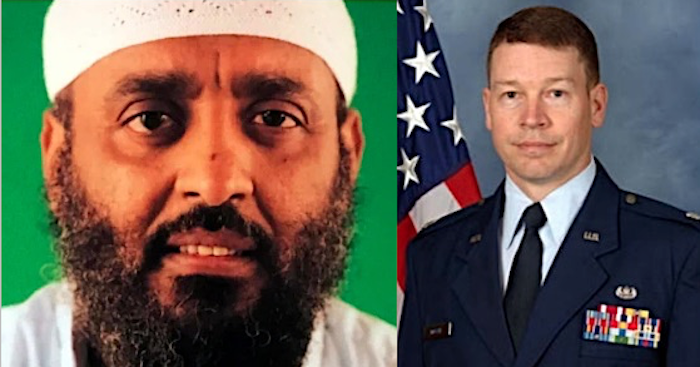
In startling news from Guantánamo four days ago, Air Force Col. Matthew McCall, the judge in the military commission case against the five men accused of involvement in the terrorist attacks of September 11, 2001, ruled that one of the men, Ramzi bin al-Shibh, is, as the Associated Press described it, “unfit for trial” after a medical panel found that “torture left him psychotic” — or “lastingly psychotic,” as the article’s opening line stated.
Bin al-Shibh, 51, a Yemeni, was 30 years old when he was seized in a house raid in Karachi, Pakistan on September 11, 2002, the first anniversary of the 9/11 attacks. He was subsequently held for four years in CIA “black sites” around the world — including Morocco, Poland, Romania and a “black site” that existed in Guantánamo in 2003-04 — before his final transfer to Guantánamo in September 2006, with 13 other “high-value detainees,” including the other four men accused of involvement in the 9/11 attacks.
After an abortive attempt, in 2008, to prosecute the five men in the military commissions under President Bush, and a subsequent commitment, in November 2009, to prosecute them in a federal court in New York, which was abandoned after a Republican backlash, the five were charged in a revived military commission system in May 2011.
Radio: I Discuss Guantánamo’s Collapsing Trials and “Forever Prisoners” with Misty Winston on TNT Radio

Please support my work as a reader-funded journalist! I’m currently trying to raise $2500 (£2000) to support my writing and campaigning on Guantánamo and related issues over the next three months. If you can help, please click on the button below to donate via PayPal.
On Monday, I was delighted to talk — for the first time in a while — with the US-based radio host Misty Winston, a fiercely independent thinker (and a massive supporter of Julian Assange) for her show on TNT Radio, an Australian-based online radio station that is more generally known for indulging conspiracy theorists. Misty is a great supporter of my work, and frequently amplifies my posts on Twitter — sorry, X — where she has over 70,000 followers, and I’m honoured that, on her Substack, she chose to describe me as a “legend”, a “fighter” and a “relentless champion.”
Our interview is available here, starting 19 minutes into the show, and I’ve also embedded it below (although in the embed you can’t fast forward as easily as in the link above).
We began by looking at the situation at Guantánamo right now, where 30 men are still held, 16 of whom have been unanimously approved for release by high-level government review processes, although, as I explained, despite being approved for release they continue to languish at Guantánamo with no sign of when, if ever, they will actually be freed. This is in spite of the fact that, as of September 6, they had been waiting to be freed for between 348 and 1,013 days, and, in three cases, 4,975 days.
The Long Struggle To Save Former Prisoner Ravil Mingazov From A Fate Worse Than Guantánamo — Seven Years’ Arbitrary Imprisonment in the UAE

Please support my work as a reader-funded journalist! I’m currently trying to raise $2500 (£2000) to support my writing and campaigning on Guantánamo and related issues over the next three months. If you can help, please click on the button below to donate via PayPal.
On Saturday, I was honoured to stand with the family of former Guantánamo prisoner Ravil Mingazov outside the Embassy of the United Arab Emirates (UAE) in London to call on the Emirati government to free him from the arbitrary detention to which he has been subjected for the last six years and eight months, following his transfer there, on the basis of grotesquely betrayed promises that he would be helped to rebuild his life and to be reunited with his family, after over 14 years’ imprisonment without charge or trial in Guantánamo.
Around 25 people gathered outside the publicly located but thoroughly inaccessible embassy in Belgravia, whose officials’ disdain for any complaints about the Emirati authorities is such that no one even deigned to answer the door when Ravil’s son Yusuf, his mother, his aunt and uncle and his cousin sought to hand in a letter urging his release. Nevertheless, we made our presence felt, and Yusuf and I both spoke (and you can see the video of my speech below), as did a representative of the UK Guantánamo Network (of which I’m also a member), which had organised the protest with the Muslim NGO CAGE.
It was an inspiring event — one of those where the solidarity of those present, and the charm and humanity of Ravil’s relatives came together to create exactly the kind of fortitude and determination that is required to prevail in circumstances of chronic injustice like that to which Ravil has been subjected for over 20 years, and I look forward to reconvening sometime soon outside the Home Office, where the home secretary Suella Braverman needs to be reminded of what mercy, kindness and generosity look like.
“Forever Prisoner” Muhammad Rahim, the Last Afghan in Guantánamo, Eloquently Pleads For His Release
Please support my work as a reader-funded journalist! I’m currently trying to raise $2500 (£2000) to support my writing and campaigning on Guantánamo and related issues over the next three months. If you can help, please click on the button below to donate via PayPal.
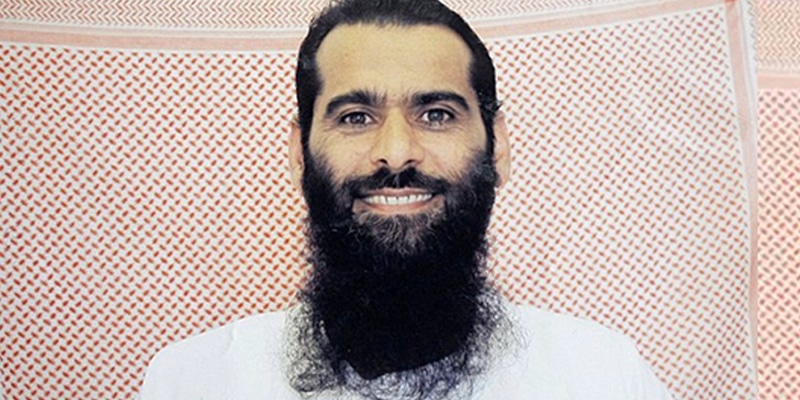
On August 15, completely unremarked on by the mainstream media, Muhammad Rahim, the last Afghan held at Guantánamo, issued a heartfelt and eloquent plea for a panel of military and intelligence officers to approve his release from the prison, where he has been held for over 15 years without charge or trial.
Rahim, who is 57 years old, and in poor health, made his plea at a Periodic Review Board hearing, a process described by the media, when they can be bothered to pay attention to it, as a type of parole hearing — disregarding the crucial aspect that distinguishes it from parole hearings in the federal prison system, where the men given an opportunity to ask for their freedom have been convicted of a crime in federal court, and have received a prison sentence as a result.
Established under President Obama, the Periodic Review Boards were created to review the cases of men regarded as “too dangerous to release,” but against whom insufficient evidence existed to put them on trial — men accurately described as “forever prisoners.” Since November 2013, 58 men have been approved for release by PRBs, with 20 of those decisions taking place since President Biden took office (although most of those 20 men, shamefully, have not yet been freed).
Please Write to the Guantánamo Prisoners, to Let Them Know We Remember Them

Please support my work as a reader-funded journalist! I’m currently trying to raise $2500 (£2000) to support my writing and campaigning on Guantánamo and related issues over the next three months. If you can help, please click on the button below to donate via PayPal.
I wrote the following article for the “Close Guantánamo” website, which I established in January 2012, on the 10th anniversary of the opening of Guantánamo, with the US attorney Tom Wilner. Please join us — just an email address is required to be counted amongst those opposed to the ongoing existence of Guantánamo, and to receive updates of our activities by email.
It’s 13 years since two Muslim activist friends in the UK initiated a project to get people to write to the Guantánamo prisoners still held at that time — 186 in total — and I adopted it, and have been running it ever since; initially, once or twice a year, although more sporadically in recent years.
When I last posted a request for people to write to the men still held, just over a year into the Biden presidency, 39 men were still held at the prison. That number has now fallen to 30, but, after a flurry of releases earlier this year, a kind of dreadful deadly stasis has once more descended on Guantánamo.
Although 16 of the men still held have been unanimously approved for release by high-level government review processes — mostly via the Periodic Review Boards (PRBs), introduced in 2013 — no one can say when they might actually be freed. This is because the majority of them cannot be sent back to their home countries, as a result of bans imposed by Republicans every year in the annual National Defense Authorization Act (NDAA), meaning that third countries must be found that are prepared to offer them new homes.
After First Ever Guantánamo Visit, UN Rapporteur Finds Dehumanized, Traumatized Men Subjected to Cruel, Inhuman and Degrading Treatment That May Rise to the Level of Torture
Please support my work as a reader-funded journalist! I’m currently trying to raise $2500 (£2000) to support my writing and campaigning on Guantánamo and related issues over the next three months. If you can help, please click on the button below to donate via PayPal.
I wrote the following article for the “Close Guantánamo” website, which I established in January 2012, on the 10th anniversary of the opening of Guantánamo, with the US attorney Tom Wilner. Please join us — just an email address is required to be counted amongst those opposed to the ongoing existence of Guantánamo, and to receive updates of our activities by email.
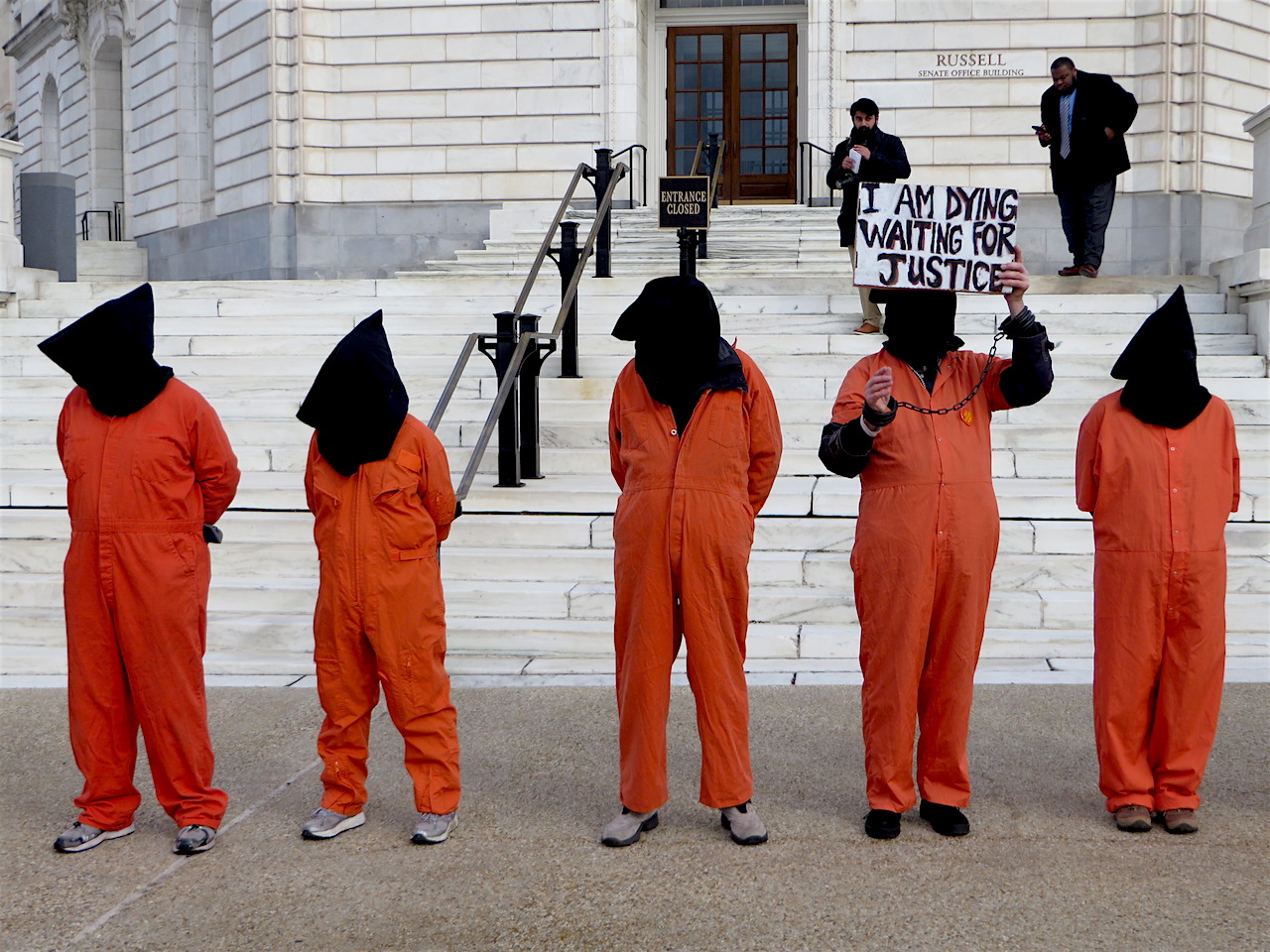
On Monday June 26, 7,837 days since the prison at Guantánamo Bay opened, and on the 25th anniversary of the establishment of the UN International Day in Support of Victims of Torture, the Special Procedures of the UN Human Rights Council (“independent human rights experts with mandates to report and advise on human rights from a thematic or country-specific perspective”) issued a devastatingly critical report about systemic, historic and ongoing human rights abuses at the prison, based on the first ever visit by a Special Rapporteur — Fionnuala Ní Aoláin, the Special Rapporteur on the Promotion and Protection of Human Rights and Fundamental Freedoms while Countering Terrorism, who visited the prison in February.
At the time of her visit, just 34 men were held at the prison (a number now reduced to 30), out of the 779 men and boys who have been held by the US military throughout the prison’s long history, and, as the Special Rapporteur admitted, she agreed with every “detainee or former detainee,” who, “[i]n every meeting she held” with them, told her, “with great regret,” that she had arrived “too late.”
However, it is crucial to understand that the lateness of the visit was not through a lack of effort on the part of the UN; rather, it was a result of a persistent lack of cooperation by the US authorities — part of a pattern of obstruction, secrecy and surveillance that prevented any UN visit because the authorities failed to comply with the Terms of Reference for Country Visits by Special Procedure Mandate Holders, which require “[c]onfidential and unsupervised contact with witnesses and other private persons, including persons deprived of their liberty.”
Have We Already Forgotten About New York’s Apocalyptic Orange Skies, and What It Told Us About the Climate Crisis?

Please support my work as a reader-funded investigative journalist, commentator and activist. If you can help, please click on the button below to donate via PayPal.
For a few days, from June 7 onwards, when toxic, apocalyptic orange skies engulfed New York City and Washington, D.C., caused by wildfires in Canada burning on an unprecedented scale, it seemed that the reality of the climate crisis had finally struck home in two of the places that counted most in terms of sounding alarms in the Global North, where so much of the world’s economic and political power still resides, and where people, in general, are largely oblivious to the disasters regularly afflicting the Global South, via unprecedented heat, droughts and flooding.
For the Global North to wake up to reality, climate change, it seemed, needed to arrive on their doorstep, and for a few days the media coverage was suitably sombre, although, even then, as the worst of the pollution passed, the relentless churn of the news cycle returned to its typical dreary pattern of distraction.
Few dwelt on the irony that, as the veteran environmental activist Bill McKibben explained for the New Yorker, the arrival the toxic skies coincided with Joe Biden’s approval — to save the Inflation Reduction Act, “the first truly serious climate bill our government has ever passed” — of “the MVP pipeline, which will carry fracked gas across West Virginia and Virginia”, and which “is precisely the kind of new fossil-fuel infrastructure that climate scientists have repeatedly said we must stop building”, and of “plans for an enormous new oil-drilling complex in Alaska (and liquefied-natural-gas exports), and huge new offshore-drilling leases in the Gulf of Mexico.”
The Broken Old Men of Guantánamo

Please support my work as a reader-funded journalist! I’m currently trying to raise $2500 (£2000) to support my writing and campaigning on Guantánamo and related issues over the next three months. If you can help, please click on the button below to donate via PayPal.
I wrote the following article for the “Close Guantánamo” website, which I established in January 2012, on the 10th anniversary of the opening of Guantánamo, with the US attorney Tom Wilner. Please join us — just an email address is required to be counted amongst those opposed to the ongoing existence of Guantánamo, and to receive updates of our activities by email.
In recent months, an often-submerged story at Guantánamo — of aging torture victims with increasingly complex medical requirements, trapped in a broken justice system, and of the US government’s inability to care for them adequately — has surfaced though a number of reports that are finally shining a light on the darkest aspects of a malignant 21-year experiment that, throughout this whole time, has regularly trawled the darkest recesses of American depravity.
Over the years, those of us who have devoted our energies to getting the prison at Guantánamo Bay closed have tended to focus on getting prisoners never charged with a crime released, because, since the Bush years, when, largely without meeting much resistance, George W. Bush released two-thirds of the 779 men and boys rounded up so haphazardly in the years following the 9/11 attacks and the US-led invasion of Afghanistan, getting prisoners out of Guantánamo has increasingly resembled getting blood out of a stone.
Apart from a brief period from 2008 to 2010, when the law finally reached Guantánamo through habeas corpus (before cynical appeals court judges took it away again), getting out of Guantánamo has involved overcoming government inertia (for several years under Obama) or open hostility (under Trump), repeated administrative review processes characterized by extreme caution regarding prisoners never charged with a crime, and against whom the supposed evidence is, to say the least, flimsy (which led to over 60 men being accurately described by the media as “forever prisoners”), and many dozens of cases in which, when finally approved for release because of this fundamental lack of evidence, the men in question have had to wait (often for years) for new homes to be found for them in third countries.
UN Condemns 21-Year Imprisonment of Abu Zubaydah as Arbitrary Detention and Suggests that Guantánamo’s Detention System “May Constitute Crimes Against Humanity”

Please support my work as a reader-funded journalist! I’m currently trying to raise $2500 (£2000) to support my writing and campaigning on Guantánamo and related issues over the next three months. If you can help, please click on the button below to donate via PayPal.
In what strikes me as the single most devastating condemnation by an international body that has ever been issued with regard to the US’s detention policies in the “war on terror” — both in CIA “black sites” and at Guantánamo — the UN Working Group on Arbitrary Detention has declared that the 21-year imprisonment of Zain al-Abidin Muhammad Husayn, better known as Abu Zubaydah, constitutes arbitrary detention, via the flagrant abuse of the relevant articles of the Universal Declaration of Human Rights, and the International Covenant on Civil and Political Rights, and has expressed “grave concern” that the very basis of the detention system at Guantánamo — involving “widespread or systematic imprisonment or other severe deprivation of liberty in violation of fundamental rules of international law” — “may constitute crimes against humanity.”
The UN also condemned other countries for their involvement in Abu Zubaydah’s arbitrary detention — specifically, Pakistan, where he was first seized, Thailand, Poland, Morocco, Lithuania and Afghanistan, where he was held and tortured in CIA ”black sites”, and the UK as “a State complicit in the extraordinary rendition programme that knowingly took advantage of it” (as discussed in a secret detention report by the UN in 2010, on which I was the lead author).
As the Working Group also explains, with reference to the British government, “The Intelligence and Security Committee of Parliament (United Kingdom) found, in 2018, that the Government had sent questions to interrogators and received intelligence obtained from detainees who the authorities knew or should have known had been mistreated. The parliamentary inquiry found that the United Kingdom had been directly aware of Mr. Zubaydah’s ‘extreme mistreatment,’ yet its intelligence agencies had provided questions for his interrogation.”











 Who's still at Guantánamo?
