Photos of the Paralympics Demonstration Against Atos Healthcare in London


The Paralympics Demonstration Against Atos Healthcare in London, a set on Flickr.
Yesterday, Friday August 31, was the last day of the Atos Games, a week of events organised by Disabled People Against Cuts (DPAC) and UK Uncut against the jaw-dropping hypocrisy involved in Atos Healthcare, the French IT giant, being allowed to sponsor the Paralympic Games, while the company is also in charge of running the government’s Work Capability Assessments, a review process that is designed to find disabled people fit for work.
As a result, huge numbers of disabled people, who are not fit for work by any genuinely objective measure, are being driven into poverty — a wretched and cruel policy for a government that claims to have Christian values — and the results are leading directly to suicides, or other deaths through the stress involved. Undeterred, however, the government recently renewed Atos’ contract, to the tune of £400 million, and ministers are permanently involved in ignoring the inconvenient truth that, on appeal, tens of thousands of decisions made by Atos’ representatives are being overturned. The average is 40 percent, but in Scotland campaigners discovered that, when claimants were helped by representatives of Citizens Advice Bureaux, 70 percent of decisions were overturned on appeal. Read the rest of this entry »
Photos of Lewisham: Hills, Rivers, Secret Corners and Blatant Skyscrapers


Lewisham: Hills, Rivers, Secret Corners and Blatant Skyscrapers, a set on Flickr.
For most of the last 16 years I have lived in the London Borough of Lewisham — first in Forest Hill, London SE23, and, since November 1999, in Brockley, London SE4, which overlooks Lewisham town centre, the commercial heart of the borough. Built up since Saxon times around the River Ravensbourne, which flows into the River Thames at Deptford, the town centre is also the place where the River Quaggy, flowing in from the south east, via Eltham and Kidbrooke, joins the Ravensbourne.
From its valley, Lewisham also wanders up the hills to the south east, towards Lee, and the east, more steeply uphill to Blackheath. These photos were taken between May and August, and capture some of Lewisham’s history, some of its contours, including the hills and rivers, and some of the new developments in the town centre — Prendergast Vale College, a new school on the former site of Ladywell Bridge primary school, which is a positive development, and the high-rise apartment blocks rising up along Loampit Vale, the road from Lewisham to New Cross that peaks in Brockley, whose contribution is almost entirely negative. Read the rest of this entry »
Photos of the Olympics: In Search of the Paralympic Torch

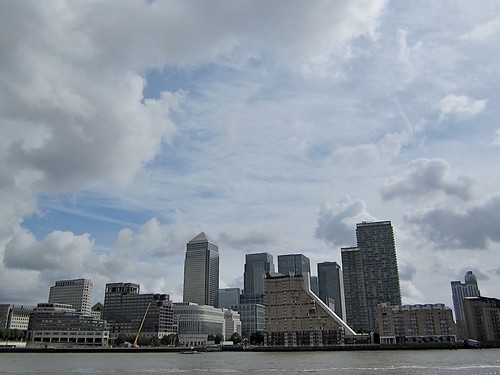


The Olympics: In Search of the Paralympic Torch, a set on Flickr.
With the main Olympic Games now a memory, the focus, for the next 11 days, is on the Paralympic Games, before Britain returns to the gloom of life under the crushing yoke of a myopic Tory-led government. While the Games were a great success, the emotional resonance of the Paralympic Games is much stronger, given the obstacles people have had to overcome to take part in the first place, and it is a tribute to the UK that the Paralympics began here in 1948. As Wikipedia explains:
The first organised athletic event for disabled athletes that coincided with the Olympic Games took place on the day of the opening of the 1948 Summer Olympics in London, United Kingdom. German born Dr. Ludwig Guttmann of Stoke Mandeville Hospital, who had been helped to flee Nazi Germany by the Council for Assisting Refugee Academics (CARA) in 1939, hosted a sports competition for British World War II veteran patients with spinal cord injuries. The first games were called the 1948 International Wheelchair Games, and were intended to coincide with the 1948 Olympics. Dr. Guttman’s aim was to create an elite sports competition for people with disabilities that would be equivalent to the Olympic Games. Read the rest of this entry »
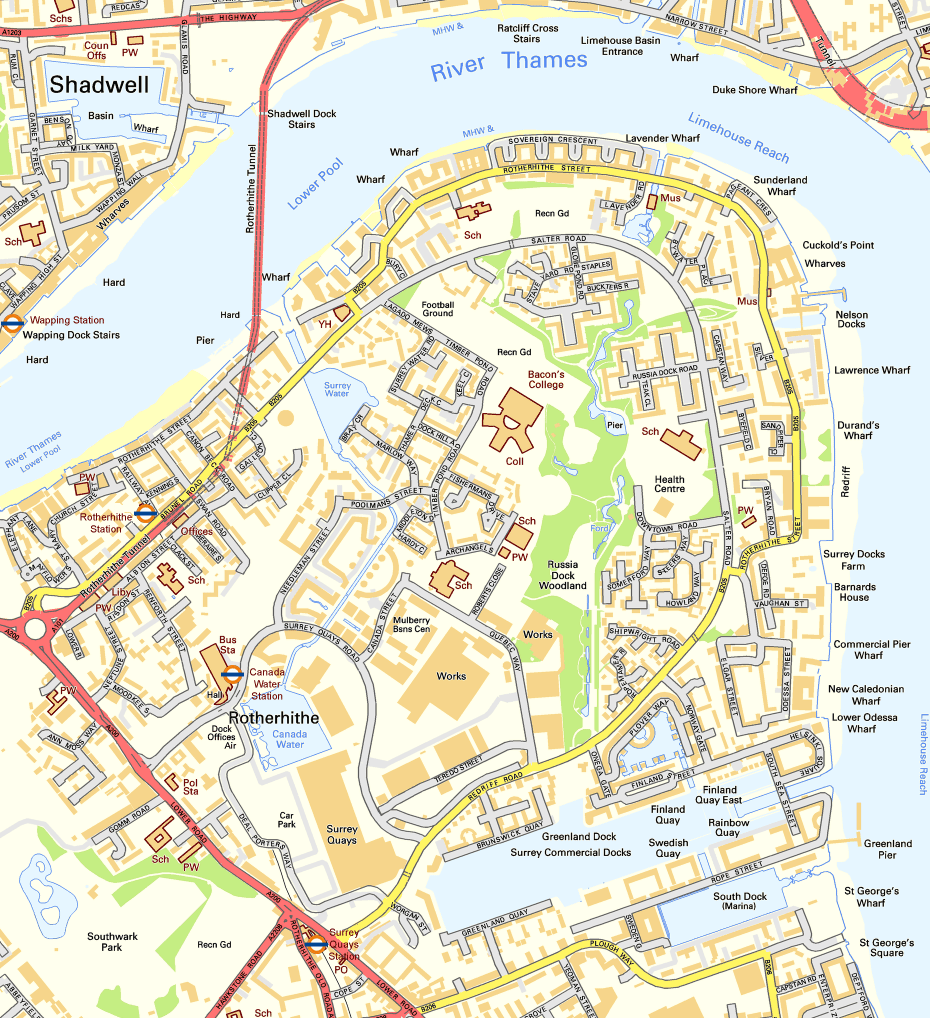
Parks, Water and Dreams: Photos of a Journey from Surrey Quays to Central London


Parks, Water and Dreams: A Journey from Surrey Quays to Central London, a set on Flickr.
On July 19, 2012, I had been invited to The Arts Catalyst, on Clerkenwell Road, in London EC1, to speak at an event marking the sixth anniversary of the arrest of Talha Ahsan, a British citizen and a Londoner, who has been held without charge or trial ever since, while fighting extradition to the US — an unjust situation that I have also written about here and here. Please also see this photo of me wearing an “Extradite Me, I’m British” T-shirt, to highlight the problems with the US-UK Extradition Treaty.
As I have become obsessed with cycling lately, both to keep fit and to chronicle the whole of London by bike (an ongoing project that I began three months ago) and, just as importantly, to feed my eyes and my brain and to allow my mind to roam free after six years of being cooped up writing about Guantánamo, I decided to cycle to the event. This journey took me primarily through Rotherhithe, the peninsula and area of the Borough of Southwark that was formerly made up almost entirely of docks — the Surrey Commercial Docks — until the demise of London’s docks over 40 years ago. As part of the regeneration of the former Docklands areas under Margaret Thatcher, Butler’s Wharf and Shad Thames near Tower Bridge, and Limehouse, Wapping and the Isle of Dogs were all regenerated, as were the docks of Rotherhithe. Read the rest of this entry »
A Place to Call Home: Photos of Brockley from Winter to Summer


A Place to Call Home: Brockley from Winter to Summer, a set on Flickr.
I have lived in London for 27 years, and for the last 12 years (13 in November) I have made my home — with my wife, and with the son who, prematurely, joined us shortly after moving here — in Brockley, on the hills above New Cross and Lewisham, and near the hill-top park of Hilly Fields, which commands fine views over to Blackheath and Greenwich, to the east, to Blythe Hill Fields to the south, and south east to Kent.
For decades, Brockley was a kind of secret village in south east London, home to artists, writers, musicians and various other bohemians, and affordable for those seeking to buy, whilst also providing generous allocations of social housing. In the 12 years since I came here, I have watched as coffee shops and delicatessens and bars and restaurants and gift shops have opened, where, in 1999, there were none — places like The Broca and Magi Gifts and The Orchard — which have brought the area to life, and although Brockley remains, at heart, the same clever, down-to- earth place it has been for decades, the upgrade of the East London Line and its incorporation into a London-wide Overground network, and regular publicity in the media’s property pages, has led to a recent influx of Yuppies. Read the rest of this entry »
Photos of London At Night: From the Olympics at Greenwich to Deptford and Surrey Quays


On August 8, 2012, as part of my ongoing project to photograph the whole of London by bike — and also to fully understand, both physically and mentally, the scale of the city and how its various neighbourhoods join together, I cycled down to Greenwich from my home in Brockley, and then along the River Thames through Deptford to Surrey Quays, and back, inland, to Deptford and home.
I was not alone on this journey, as I also took my son Tyler along as a bit of an adventure — for both of us — and we began by checking out the Olympic screen in the Old Royal Naval College in Greenwich, and then cycling through Deptford, partly on the Thames Path along the river, which I first recorded here, through the Pepys Estate (formerly part of Deptford’s extensive docks) to the remaining docks of Rotherhithe — the South Dock and the colossal Greenland Dock — which are the last of the docks that once covered the whole of Rotherhithe. Read the rest of this entry »
Real London: Photos of New Cross, Bermondsey and the Old Kent Road

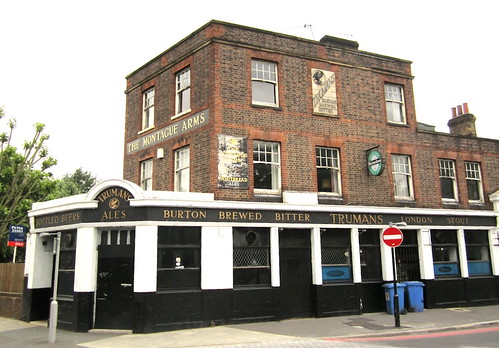


Real London: New Cross, Bermondsey and the Old Kent Road, a set on Flickr.
“Real London” is a short-hand, of course, for a London that is not the shiny one of glass and steel built and sold by property developers, and bought by those in the top few percent of earners — as well as by foreign investors. It is a world of workers, some of whom live in their own houses, having secured mortgages before the boom that began in the late 1990s, and often well before that, when it was still affordable for working people to take out mortgages and be able to repay them. Others live in social housing, built by local councils and run either by the councils or by housing associations, or, less frequently, owned or owned and managed by co-ops, and others have to cope with the increasingly greedy, unregulated private rental market . And amongst them, of course, are the unemployed — part of the current total of two and a half million unemployed people in the UK as a whole. According to the London Skills and Employment Observatory, 1.38 million people are currently either unemployed or “economically inactive” in London, and the unemployment rate is 8.9 percent.
These workers and homeowners were, perhaps, on salaries between the median and the average — currently £14,000 and £26,000, as I discussed in my article, The Housing Crisis and the Gulf Between the Rich and the Poor: Half of UK Workers Earn Less Than £14,000 A Year — but whereas in the past it would have been possible for a household on average or below average wages to buy a house, now it is completely impossible.
As I explained in a recent article, Unaffordable London: The Great Housing Rip-Off Continues, on a multiplier of three times earnings, which was how the housing market functioned before the Blair and Brown boom years, a couple buying a house in London for the average price — £388,000 — need a combined income of nearly £130,000, or something slightly less plus a whopping great deposit. Read the rest of this entry »
Photos of a Journey Across the Thames on the Olympics Cable Car


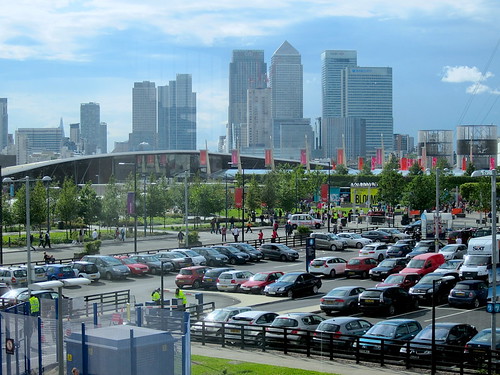


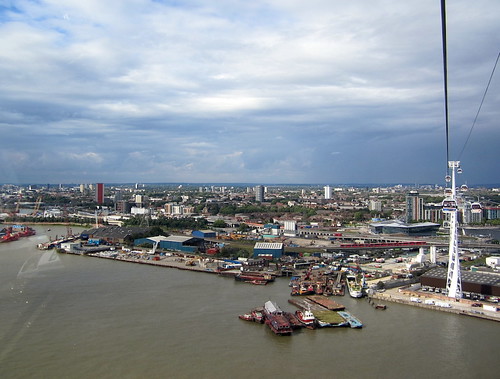


A Journey Across the Thames on the Olympics Cable Car, a set on Flickr.
On August 6, as I explained in a previous article, Jamaican Independence and a Giant Tent: Photos of a Visit to the Olympic Site at the O2, featuring photos and commentary, I cycled along the river from Deptford to Greenwich peninsula with my wife and son, to visit the O2 (recorded in that previous set of photos), and also to travel on the Emirates Air Line, the cable cars across the Thames, which run from North Greenwich, near the O2 (formerly the Millennium Dome) to the Royal Docks. The visit was for fun, but was also part of my ongoing project to photograph the whole of London by bike, which I have been recording here since June.
Intended to transport Olympics visitors from one venue to another, the Emirates Air Line project — named after the Emirates airline company, the biggest sponsor of the cable cars, who provided £36 million in a ten-year sponsorship deal — also provides a useful way of crossing the river at a point where there are few other options — just the Greenwich Foot Tunnel to the west, and the Woolwich Ferry to the east — and it is both remarkable and commendable that bicycles are also allowed. Read the rest of this entry »
Union Jack Summer: Photos of the Queen’s Diamond Jubilee and the Olympics


Union Jack Summer: The Queen’s Diamond Jubilee and the Olympics, a set on Flickr.
I have no great love for either the Royal Family or the Olympics, and, on this latter point, my articles should make clear where I stand — Our Olympic Hell: A Militarised, Corporate, Jingoistic Disgrace, Olympics Disaster: The G4S Security Scandal and Corporate Sponsors’ £600 Million Tax Avoidance and The Dark Side of the Olympics: Kettling Cyclists and Telling Fairytales About Our Heritage. You can also find some more photos here.
As for the Queen, I have long adored “God Save the Queen” by the Sex Pistols — one of the greatest rock songs of all time, along with “Anarchy in the UK” — and I did dream of mounting a black sound system to a black bike with a black flag, pumping out the Pistols’ “God Save the Queen,” and cycling around every street party I could find in London on the Diamond Jubilee weekend.
That never came to pass, and in truth, although I find the existence of the Royal Family objectionable, some of the individuals involved work hard (the Queen and Princess Anne come to mind) and I also don’t trust any politicians to preside over the dissolution of the Royal Family and the disposal of their assets in a way that would benefit the majority of the people. More sensible, then, would be for their role to be scaled down enormously, as in other European countries, but there appears to be no hint of that on the horizon, and so we are stuck with something that looks like the divine right of kings (or queens), but is in fact a very expensive charade. Read the rest of this entry »
The Olympics Minus One Day: Photos from the Frontline in Stratford


The Olympics Minus One Day: Photos from the Frontline in Stratford, a set on Flickr.
So the Games are nearly upon us! I won’t be here in London, as I’ll be at the WOMAD festival in Wiltshire; that’s World of Music, Arts and Dance, the wonderful world music festival celebrating its 30th anniversary this year, where my wife has been running children’s workshops since 2002, and a whole crowd of us has a wonderful escape from the normal routine for four days.
However, I couldn’t leave without paying one more visit to the Olympic Park in Stratford to see how everything was proceeding with preparations for the Games, with just one day to go before the Opening Ceremony on Friday July 27. I last paid a visit three weeks ago — the photos can be seen here — and I had wondered whether security would be hectic.
The bad news, of course, is the same as ever. In the run up to the Games, we have been subjected to jingoism, militarism, the corporate tax evasion of the Games’ sponsors, the brand police patrolling up and down the land, the International Olympic Committee’s inflexibility and arrogance, the dubious “cleansing” of the Lea Valley, and the inexcusable decision by two successive governments to write blank cheques for the Games without even a proper audit. Read the rest of this entry »












 Who's still at Guantánamo?