10 Years in Guantánamo: British Resident Shaker Aamer, Cleared for Release But Still Held
 Originally posted on the “Close Guantánamo” website, and written by Andy Worthington.
Ten years ago, on February 14, 2002, Shaker Aamer, a British resident, and originally one of 16 British prisoners in Guantánamo, arrived in Camp X-Ray, the rudimentary prison in the grounds of the US naval base in Cuba’s easternmost bay, which was used to hold prisoners until the first blocks of a more permanent facility, Camp Delta, opened for business in May 2002. On the same day, his fourth child, a son, was born.
A hugely charismatic figure, Aamer, born in Saudi Arabia in 1968, had moved to London in 1996, and had worked as an Arabic translator for a firm of solicitors working on immigration cases. He met and married a British woman and was granted residency. In June 2001, he took his family to Kabul — as did his friend Moazzam Begg — to volunteer for an Islamic charity. As his British solicitor Gareth Peirce noted in the Guardian on Tuesday, “Their work was teaching the sons and daughters of Arabic-speaking expatriates in the capital,” but after 9/11 and the US-led invasion, “the school was flattened in the first days of the bombing.”
Shaker made sure his pregnant wife and their three young children were safe, but was seized by Afghan bounty hunters, at a time when bounty payments of $5,000 a head were widespread. He was then sold on to other bounty hunters on two occasions, and on the third occasion was bought by Northern Alliance soldiers, who eventually handed him over — or sold him — to US forces. Read the rest of this entry »
London Events for the 10th Anniversary of the Opening of Guantánamo
 I arrived in New York yesterday, a year after my last visit, for 12 days of events to mark the 10th anniversary of the opening of Guantánamo (as described here), with a particular focus on a rally and march in Washington D.C. next Wednesday, January 11 (the actual date of the opening of Guantánamo). On arrival, I was met by Debra Sweet, national director of The World Can’t Wait, who arranged my visit, and we immediately made our way to the Brecht Forum on the West Side Highway for a fascinating event, “Building a Movement to Close Guantánamo and End All Unjust Detentions,” which focused on building bridges between those working to close Guantánamo and those campaigning against unjust trials and detentions in the US. There I was delighted to meet up, for the first time since last January, with Pardiss Kebriaei and Leili Kashani of the Center for Constitutional Rights (with whom I have been working on reports forthe 10th anniversary, to be published very soon), and also with another old friend, Guantánamo attorney and law professor Ramzi Kassem, and also Faisal Hashmi of the Muslim Justice Initiative, the brother of Fahad Hashmi, whose unfair extradition from the UK and unfair trial and disproportionately punitive sentence in the US in 2010 — after three and a half years kept in isolation in New York — I wrote about here.
I hope to write more about this event and others in the coming days, but for now, while I’m absolutely delighted to be here, meeting up with old friends, making new friends and campaigning for the closure of Guantánamo where it matters the most, I’m also pleased to note that a number of compelling events have been lined up in London, which I’m delighted to publicize below:
Saturday January 7, 2012, 2-4pm: Shut Guantánamo – End 10 Years of Shame
Public Rally, Trafalgar Square, London, at the top of the steps outside the National Gallery.
This event is organized by the London Guantánamo Campaign, the Save Shaker Aamer Campaign, Stop the War Coalition and CND. Read the rest of this entry »
On Guantánamo’s 10th Anniversary, British Ex-Prisoners Talk About Their Lives, and Call for the Release of Shaker Aamer
 With the 10th anniversary of the opening of Guantánamo fast approaching (on January 11), I was delighted that, on Sunday, the Observer not only ran a double-page feature about the British ex-prisoners (and Shaker Aamer, the last British prisoner still held), but also that Tracy McVeigh, Chief Reporter for the Observer, spoke to me on the phone, quoted me in the article, and used my phrase “toxic legacy” to describe Guantánamo since outgoing President George W. Bush handed it on to President Obama, who, notoriously, failed to close it within a year, as he promised when he took office three years ago.
As I have been explaining since the 9th anniversary of the opening of Guantánamo a year ago, it is now appropriate to regard most of, if not all of the remaining 171 prisoners as political prisoners, given that the Obama administration, Congress and the judiciary have all made sure that Guantánamo may never close, and that few, if any of the remaining prisoners will ever be released, even though 89 of them were cleared for release (or, technically, “approved for transfer”) by the interagency Guantánamo Review Task Force that President Obama established in January 2009.
The situation is no better for the other 82 prisoners, who are either scheduled to face trials that, in most cases, show no signs of materializing, or, in 46 cases, have been specifically designated as prisoners to be held indefinitely without charge or trial by President Obama, in an executive order last March. Although the President promised periodic reviews for these prisoners, his executive order essentially enshrines the indefensible — indefinite detention without charge or trial — as an official policy of his administration, even though he and senior officials have been at pains to point out that it applies only to these men, and is not to be construed as lending credibility to indefinite detention in general. Read the rest of this entry »
An Extraordinary Interview with Former Guantánamo Child Prisoner Mohammed El-Gharani
 When I began researching and writing about Guantánamo, nearly six years ago, one of the stories that seized my attention was that of Mohammed El-Gharani, a Chadian national, who had grown up with his parents in Saudi Arabia, and, after traveling to Pakistan to study, had been picked up in a random raid on a mosque in Karachi — many hundreds of miles from the battlefields of Afghanistan — when he was just 14 years of age. I included his story in my book, The Guantánamo Files, and also introduced him to readers in my April 2008 article, “Guantánamo’s forgotten child: the sad story of Mohammed El-Gharani.”
Mohammed was horribly abused in US custody, and was never held separately from the adult prisoners, even though that is a requirement of the Optional Protocol to the UN Convention on the Rights of the Child on the involvement of children in armed conflict, which the US ratified a year after his capture. The Optional Protocol also requires its signatories to promote “the physical and psychosocial rehabilitation and social reintegration of children who are victims of armed conflict,” and not to punish them — but in fact just three of the 22 confirmed juvenile prisoners held at Guantánamo (those under 18 when their alleged crimes took place) were ever held separately from the rest of the prisoners, and treated humanely.
Mohammed’s fortunes only finally turned in January 2009, when Judge Richard Leon, an appointee of George W Bush in the District Court in Washington D.C., granted his habeas corpus petition and ordered his release, after finding that the government’s claims — primarily, that he had traveled to Afghanistan for jihad — were based on statements made by a mentally unstable prisoner who had provided demonstrably false information against numerous other prisoners, confirming what I and other researchers had discovered in the files made available to the public, and preempting what has been made even more obvious in the classified military files released by WikiLeaks in April (on which I worked as a media partner). Mohammed had also been subjected to one of the most idiotic allegations of all, which Judge Leon also recognized as idiotic — namely, that, was a member of an al-Qaeda cell in London in 1998, when he was just 11 years old. As his lawyer, Clive Stafford Smith, explained in his book, The Eight O’Clock Ferry to the Windward Side: Seeking Justice In Guantánamo Bay, “he must have been beamed over to the al-Qaeda meetings by the Starship Enterprise, since he never left Saudi Arabia by conventional means.” Read the rest of this entry »
British Court Orders Release of Bagram Prisoner Rendered by UK from Iraq, Held for Seven Years
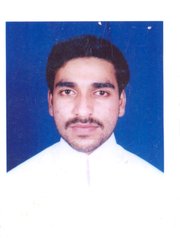 In an extraordinary ruling in the UK yesterday (PDF), the Court of Appeal ordered the British government to secure the release of a prisoner, Yunus Rahmatullah, who is 29 years old, and has been held in the US prison at Bagram airbase in Afghanistan since March 2004. Born in Pakistan but raised in the Gulf States, Yunus was seized by British forces nearly eight years ago, in February 2004, and was then “handed to the US and illegally rendered to Afghanistan,” as the London-based legal action charity Reprieve, whose lawyers represent him, along with lawyers from Leigh Day & Co., explained in a press release.
Despite being held for nearly eight years, Yunus, also known as “Saleh Huddin,” was held incommunicado, unable even to contact his family, for six years, and has only recently been allowed to establish telephone contact with his relatives. Reprieve noted its lawyers and investigators had been “told by multiple sources that, as a result of his abuse in UK and US custody, he is in catastrophic mental and physical shape, and now spends most of his time in the mental health cells at Bagram.”
As Reprieve explained, this “historic decision” also “marks the first time any civilian legal system has penetrated Bagram, a legal black hole where nearly three thousand prisoners — many rendered from all over the world — have been unlawfully held by the US military for up to a decade.” Unlike at Guantánamo, itself an opaque and unjust facility, but one where civilian lawyers have had access since the Supreme Court granted the prisoners habeas corpus rights in June 2004, no civilian lawyer has ever been allowed into Bagram, which, as Reprieve described it, “is notorious for torture and homicides and has been called ‘Guantánamo’s Evil Twin.'” Read the rest of this entry »
After Ten Years in US Custody, British Resident Shaker Aamer “Is Gradually Dying in Guantánamo,” Says Clive Stafford Smith
 Clive Stafford Smith, the director of the London-based legal action charity Reprieve, has just visited Guantánamo, for the first time in a number of years, as his colleagues have been undertaking visits instead, and has returned with a renewed sense of horror at the continued existence of Guantánamo, that bleak icon of the Bush administration’s disregard for the law, which President Obama has found himself unable to close.
This is a time of grim anniversaries. The 10th anniversary of the 9/11 attacks in September was followed, in October, by the 10th anniversary of the US-led invasion of Afghanistan, and, as the 10th anniversary of the opening of Guantánamo approaches, on January 11, 2012, we have now reached the point where we can begin to mark the 10th anniversary of the dates on which the 171 men still held there were first seized, and to reflect on what it says about America’s notions of justice and fairness that they are, for the most part, still held without charge or trial.
On his visit to Guantánamo, Stafford Smith was visiting Shaker Aamer, the last British resident in Guantánamo, whose case has long been of concern to British citizens and to opponents of Guantánamo in the US and elsewhere in the world. I have written about his case extensively over the years, and his story also features in the documentary film, “Outside the Law: Stories from Guantánamo,” which I co-directed with the filmmaker Polly Nash. Read the rest of this entry »
Ahmed Errachidi, Guantánamo Prisoner 590: The Cook Who Became The General
 Five and a half years ago, when I first began researching the stories of the Guantánamo prisoners in depth, for my book The Guantánamo Files, one of the most distinctive and resonant voices in defense of the prisoners and their trampled rights as human beings was Clive Stafford Smith, the director of the legal action charity Reprieve, whose lawyers represented dozens of prisoners held at Guantánamo.
One of the men represented by Stafford Smith and Reprieve was Ahmed Errachidi, a Moroccan chef who had worked in London for 16 years before his capture in Pakistan, were he had traveled as part of a wild scheme to raise money for an operation that his son needed. What made Ahmed’s story so affecting were three factors: firstly, that he was bipolar, and had suffered horribly in Guantánamo, where his mental health issues had not been taken into account; secondly, that he had been a passionate defender of the prisoners’ rights, and had been persistently punished as result, although he eventually won a concession, when the authorities agreed to no longer refer to prisoners as “packages” when they were moved about the prison; and thirdly, that he had been freed after Stafford Smith proved that, while he was supposed to have been at a training camp in Afghanistan, he was actually cooking in a restaurant on the King’s Road in London.
“The Cook Who Became The General” was the proposed title of a book telling Ahmed’s story, which Clive suggested I should write with him, after I wrote an article that Ahmed picked up on after his release in Morocco in April 2007. This never came about, although I remained in touch with Ahmed, and I sometimes regret that I have been too desk-bound in my Guantánamo work, and missed out on having Ahmed tell me his story while cooking for me at his home in Tangier. However, I was delighted when Ahmed wrote his story anyway, in Arabic, and when I saw an English translation last year. I thought that this was to be published by Cageprisoners, and hoped, once again, that I might work on it (as an editor), but as it happens Ahmed’s memoir, A Handful of Walnuts, has been picked up by Chatto & Windus, and will be published next year. Read the rest of this entry »
WikiLeaks and the Guantánamo Prisoners Released After the Tribunals, 2004 to 2005 (Part Four of Five)

Please support my work!
Freelance investigative journalist Andy Worthington continues his 70-part, million-word series telling, for the first time, the stories of 776 of the 779 prisoners held at Guantánamo since the prison opened on January 11, 2002. Adding information released by WikiLeaks in April 2011 to the existing documentation about the prisoners, much of which was already covered in Andy’s book The Guantánamo Files and in the archive of articles on his website, the project will be completed in time for the 10th anniversary of the prison’s opening on January 11, 2012.
This is Part 19 of the 70-part series. 247 stories have now been told. See the entire archive here.
In late April, WikiLeaks pushed Guantánamo back onto the international media’s agenda by publishing thousands of pages of classified military documents — the Detainee Assessment Briefs — relating to almost all of the 779 prisoners held at Guantánamo since the prison opened on January 11, 2002, which drew on the testimony of witnesses — in most cases, the prisoners’ fellow prisoners — whose words are unreliable, either because they were subjected to torture or other forms of coercion (sometimes not in Guantánamo, but in secret prisons run by the CIA), or because they provided false statements to secure better treatment in Guantánamo.
As an independent media partner of WikiLeaks, I liaised both before and after the publication of these documents with WikiLeaks’ mainstream media partners (including the Washington Post, McClatchy Newspapers, the Daily Telegraph, Der Spiegel, Le Monde and El Pais), and then, after the killing of Osama bin Laden pushed Guantánamo aside once more, and allowed apologists for torture, and those who engineered its use by US forces, to resume their malignant, criminal and deeply mistaken defense of torture, and of the existence of Guantánamo, I began to analyze all of the Detainee Assessment Briefs in depth.
I began, in May and June, with a five-part series, “WikiLeaks: The Unknown Prisoners of Guantánamo,” telling the stories of 84 prisoners, released between 2002 and 2004, whose stories had never been told before. These men and boys were amongst the first 201 prisoners released, and unlike the other prisoners, for whom information was released to the public from 2006 onwards, as a result of court cases involving Freedom of Information requests, no information had been officially released about the first 201 prisoners. Read the rest of this entry »
WikiLeaks and the Guantánamo Prisoners Released from 2002 to 2004 (Part Ten of Ten)

Please support my work!
Freelance investigative journalist Andy Worthington continues his 70-part, million-word series telling, for the first time, the stories of 776 of the 779 prisoners held at Guantánamo since the prison opened on January 11, 2002. Adding information released by WikiLeaks in April 2011 to the existing documentation about the prisoners, much of which was already covered in Andy’s book The Guantánamo Files and in the archive of articles on his website, the project will be completed in time for the 10th anniversary of the prison’s opening on January 11, 2012.
This is Part 15 of the 70-part series.
In late April, WikiLeaks released its latest treasure trove of classified US documents, a set of 765 Detainee Assessment Briefs (DABs) from the US prison at Guantánamo Bay, Cuba. Compiled between 2002 and January 2009 by the Joint Task Force that has primary responsibility for the detention and interrogation of the prisoners, these detailed military assessments therefore provided new information relating to the majority of the 779 prisoners held in the prison at Guantánamo Bay, Cuba throughout its long and inglorious history, including, for the first time, information about 84 of the first 201 prisoners released, which had never been made available before.
Superficially, the Detainee Assessment Briefs appear to contain allegations against numerous prisoners which purport to prove how dangerous they are or were, but in reality the majority of these statements were made by the prisoners’ fellow prisoners, in Kandahar or Bagram in Afghanistan prior to their arrival at Guantánamo, in Guantánamo itself, or in the CIA’s secret prisons, and in all three environments, torture and abuse were rife.
I ran through some of the dubious witnesses responsible for so many of the claims against the prisoners in the introduction to Part One of this new series, and, while this is of enormous importance in the cases of many of the men still held (and also in the cases of some of those released), it is not particularly relevant to the overwhelmingly insignificant prisoners released between 2002 and September 2004, whose detention was so pointless that the authorities didn’t even bother trying to build cases against them through the testimony of their fellow prisoners. Read the rest of this entry »
WikiLeaks and the Guantánamo Prisoners Released from 2002 to 2004 (Part Nine of Ten)
Please support my work!
Freelance investigative journalist Andy Worthington continues his 70-part, million-word series telling, for the first time, the stories of 776 of the 779 prisoners held at Guantánamo since the prison opened on January 11, 2002. Adding information released by WikiLeaks in April 2011 to the existing documentation about the prisoners, much of which was already covered in Andy’s book The Guantánamo Files and in the archive of articles on his website, the project will be completed in time for the 10th anniversary of the prison’s opening on January 11, 2012.
This is Part 14 of the 70-part series.
In late April, WikiLeaks released its latest treasure trove of classified US documents, a set of 765 Detainee Assessment Briefs (DABs) from the US prison at Guantánamo Bay, Cuba. Compiled between 2002 and January 2009 by the Joint Task Force that has primary responsibility for the detention and interrogation of the prisoners, these detailed military assessments therefore provided new information relating to the majority of the 779 prisoners held in the prison at Guantánamo Bay, Cuba throughout its long and inglorious history, including, for the first time, information about 84 of the first 201 prisoners released, which had never been made available before.
Superficially, the Detainee Assessment Briefs appear to contain allegations against numerous prisoners which purport to prove how dangerous they are or were, but in reality the majority of these statements were made by the prisoners’ fellow prisoners, in Kandahar or Bagram in Afghanistan prior to their arrival at Guantánamo, in Guantánamo itself, or in the CIA’s secret prisons, and in all three environments, torture and abuse were rife.
I ran through some of the dubious witnesses responsible for so many of the claims against the prisoners in the introduction to Part One of this new series, and, while this is of enormous importance in the cases of many of the men still held (and also in the cases of some of those released), it is not particularly relevant to the overwhelmingly insignificant prisoners released between 2002 and September 2004, whose detention was so pointless that the authorities didn’t even bother trying to build cases against them through the testimony of their fellow prisoners. Read the rest of this entry »












 Who's still at Guantánamo?
