The Guantánamo Files: Website Extras (7) – From Sheberghan to Kandahar
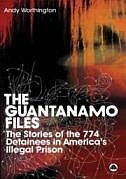
This article was originally published on November 7, 2008. For updated information, please check out the links (by prisoner name and number) in my four-part definitive Guantánamo prisoner list, last updated on April 25, 2012.
Chapter 9 of The Guantánamo Files: The Stories of the 774 Detainees in America’s Illegal Prison (published by Pluto Press/the University of Michigan Press) tells the stories of 20 prisoners seized in northern Afghanistan — mostly around the city of Kunduz — in November and December 2001. All were imprisoned in a notoriously bleak and overcrowded prison in Sheberghan, run by the warlord General Rashid Dostum, an Afghan Uzbek (and a former ally of the Russians during the Soviet occupation), who was one of the leaders of the Northern Alliance.
This was the prison featured in the film The Road to Guantánamo, in which three young Britons, Rhuhel Ahmed, Asif Iqbal and Shafiq Rasul (known as the Tipton Three) were held, but unlike these men and others discussed in Chapter 3, who first had to survive the journey from Kunduz to Sheberghan in container trucks, when hundreds — or even thousands — of prisoners died of suffocation, or by being shot through the sides of the containers, these prisoners were delivered directly to Sheberghan, having been picked up individually, or in small groups.
At its peak, in December 2001, the prison held around 3,000 people, but over the following months, many Afghans and Pakistanis were released by General Dostum, others died or “disappeared,” and around 80 men (including those discussed in Chapter 3) were picked out by US forces for transfer to Guantánamo, via the US prison at Kandahar airport, which was used to process the prisoners. Their transfer was often based on the flimsiest of reasons: because they could speak English, for example, or because the Northern Alliance commanders claimed that they were involved with al-Qaeda or the Taliban, when this was not necessarily the case.
This extra chapter tells the stories of 23 of these men, to complement the stories of the 20 discussed in The Guantánamo Files. At the time I completed the book (in May 2007), 16 of the 20 had been released, and another three — the Australian David Hicks, an Afghan named Abdul Rauf Aliza, and a Saudi named Yousef al-Shihri — were released in the months that followed. All but one of the prisoners discussed in this additional chapter has also been released.
I also include three other stories, unknown at the time I wrote The Guantánamo Files, which only surfaced in June 2008, when McClatchy Newspapers published a major report on 66 released prisoners. Unlike the rest of the prisoners discussed in Chapter 9 and this online chapter, they not only endured the overcrowding and brutality of Sheberghan, but also survived the “Convoy of Death” from Kunduz.
In addition, the names of another 31 Afghans and Pakistanis are listed at the end of the chapter. All were released before the tribunals began at Guantánamo in July 2004, and nothing is known about them because the Pentagon has not released any information relating to the 200 prisoners released in this period, and their stories have not surfaced in the media or in reports by human rights groups. It’s possible, therefore, that a number of these men were captured in different circumstances: some may have been survivors of the “Convoy of Death,” and others may have been seized in Afghanistan without being imprisoned in Sheberghan at all.
Five Saudis and a Yemeni
The first of five Saudis seized at this time, 21-year old Faizal al-Nasir (released in February 2007) volunteered to travel to Afghanistan for jihad, apparently to “fulfil his religious obligations,” according to allegations in his last military review before his release, in which it was also stated that he “liked the idea of being a martyr for Islam and accepted the fact that he might die.” He explained that his father sold his car to fund his trip, and, like many other prisoners, stated that his desire for jihad did not specifically relate to Afghanistan and the Taliban’s inter-Muslim civil war with the Northern Alliance; instead, he said, his “purpose for travelling to Afghanistan was to obtain training to fight in Chechnya.”
Like many others, al-Nasir discovered that, once in Afghanistan, the opportunity to travel to Chechnya was effectively non-existent, and that what existed instead was a system designed to train young fighters to aid the Taliban. After spending two weeks training at al-Farouq (the main training camp for Arabs), al-Nasir was transported to the front lines near Kabul, where he apparently “spent approximately two months in the forward area pulling guard,” and “guarded against an invasion from the Northern Alliance.” He was then wounded, and was taken to the city of Mazar-e-Sharif, where he surrendered to the Northern Alliance, and was then imprisoned in Sheberghan for “nearly 50 days.”
According to the US authorities, he “played no role other than that of a foot soldier jihadist,” and this was confirmed by al-Nasir, who said that he “never had a chance to fight and never killed anyone,” and that he only “fired two shots in the air to see the colors from the fired tracer rounds.” He added that he “only learned about al-Qaeda when interrogators began questioning him about their activities,” and it was also noted that a Saudi delegation at Guantánamo had identified him as being “of low intelligence or law enforcement value to the United States.”
Abd al-Hizani, a 25-year old (who is the otherwise unidentified “Abdullah al-Zahrani,” released in July 2007), admitted training at al-Farouq and spending six months as a Taliban guard in Kabul and Kunduz, but insisted that he had gone to Afghanistan primarily to find work, because he had heard that the Afghans needed help “because they were fighting the Russians.” He said that he surrendered to the Northern Alliance on his own, because he had a bad back and could not retreat with the rest of his colleagues, and maintained his opinions about the Russians throughout his tribunal, as the following exchange demonstrates:
Q: Do you know the Russians left Afghanistan?
A: Some of them are still there. In some places there are still Russians. The Taliban said there were Russians there.
Q: And you went to fight with the Taliban?
A: Yes.
Q: Did you know that the Northern Alliance is Muslim as well?
A: I didn’t know the Northern Alliance would be there, I thought it was Russians.
In a review in 2006, it was stated that, like Faizal al-Nasir, al-Hizani had actually hoped to “go on jihad to Chechnya.”
Hani al-Khalif, a 29-year old employee of the Ministry of Islamic Affairs (released in November 2007), had served as a soldier in the Saudi army during the Gulf War. He explained that he “had been taught the doctrine of jihad in the mosque he attended,” and “specifically that it was a Muslim’s duty to wage jihad against anyone who killed Muslims.” Like the two men described above, he added that he wanted to fight in Chechnya, which, he said, was “a greater jihad,” because “the fight was not against other Muslims as in Afghanistan.” However, he stated that he was unable to arrange travel to Chechnya, and settled on Afghanistan instead, where he trained at al-Farouq, and then fought on the front lines against the Northern Alliance until he was ordered to surrender to General Dostum. Despite the coherence of this narrative arc, however, it was also alleged that “a senior al-Qaeda operative” — interrogated under unknown conditions — had identified him as the leader of the Libyan Islamic Fighting Group in Karachi, Pakistan.
Nayif al-Usaymi, a 22-year old college student (released in January 2008) also stated that he had been inspired to travel to Afghanistan to receive military training so that he could fight in Chechnya. According to the allegations against him in a military review in 2006, in late 2000 he “read a fatwa which instructed young Muslim males to join the jihad in Chechnya. The fatwa stated the Russians were slaughtering Muslim brothers in the region, and fighting there was considered justified in accordance with the Koran, as well as meeting the status of martyr if killed.”
 After meeting with a facilitator, who “provided him with instructions on obtaining a Pakistani visa as well as a specific route to take,” he arrived in Afghanistan in March 2001, where, after meeting two men who told him the history of the Taliban, he agreed to be recruited. Trained at the front lines near Kabul, he then spent eight months on the front lines at Khawaja Ghar, in northern Afghanistan, and was captured after the fall of Kunduz. Although he was taken to Qala-i-Janghi, a fort run by General Dostum in Mazar-e-Sharif, where hundreds of foreign soldiers who had surrendered were killed after a number of them attempted to stage an uprising (see photo, left), he reported that he managed to escape from the fort. This was a rare occurrence, as most who tried to do so were shot and killed, but he was recaptured six weeks later.
In Guantánamo, he insisted that he “never saw any fighting because he was stationed at the rear of the front line,” and it was noted that he was regarded as “being of low intelligence or law enforcement value to the United States and also as unlikely to pose a threat to the US or its interests” by a Saudi delegation in 2002.
Another foot soldier, 18-year old Khalid al-Ghatani (also released in January 2008), was specifically recruited through a notorious pro-Taliban fatwa issued by the octogenarian Sheikh Hamoud al-Uqla, who, until his death in 2001, “encouraged people to fight jihad against the Christians and the Jews … condoned the September 11, 2001 attacks against the United States, and helped raise money for Osama bin Laden,” according to the US authorities.
After traveling to Afghanistan in autumn 2000, al-Ghatani spent six months at a camp named Pakistani Center No. 5, and then moved to the front lines at Khawaja Ghar, where he “guarded sleeping quarters/bunkers for Pakistani troops who fought at the front lines.” He was apparently captured after being shot by a sniper and spending time in a hospital in Kunduz, although in his tribunal it was alleged that he had fled to Pakistan, and, in a bizarre postscript, that he had stayed for two days with nine other mujahideen fighters in a stone house that was built into the mountain, and that “Approximately two weeks later Osama bin Laden came and stayed at the stone house.”
After his tribunal, the Presiding Officer noted that he “did not fire his weapon at any soldiers or persons,” and mention was also made of al-Ghatani’s own statement that he did not go to Afghanistan to fight for the Taliban, but to receive weapons training and to “stand guard.” He was, however, criticized for his behavior in Guantánamo, where, apparently, he had been “cited for assault, hostile activity and harassment of guards on numerous occasions,” and once for “making a weapon” — although how this would have been possible, in the paranoid, security-obsessed cell blocks of Guantánamo, was not explained.
The story of Abdul Rahman al-Zahri, a 22-year old Yemeni, first surfaced in September 2007, after the Pentagon’s second major release of documents relating to the prisoners. In an article announcing the release of the documents, the Associated Press focused on al-Zahri’s story, reporting that he “proudly proclaimed himself a holy warrior and ‘an enemy of the United States,’” and stating that he “praised the Sept. 11 attacks and other terrorist strikes and said they were retaliation ‘for your criminal acts and your military invasion [of] the Islamic countries.’” This was a fair précis of al-Zahri’s comments, but the AP failed to mention that al-Zahri was not actually a member of al-Qaeda. Clearly nothing more than a zealous foot soldier, he had not even come to the attention of al-Qaeda’s leadership, and was obliged to admit, rather sheepishly, that he would have been “honored” to have been chosen as a member.
Two Tajiks
Also transferred at this time were two Tajiks. The first, Maroof Salehove, a 23-year old, said that he had left his country during the civil war in 1997, and had stayed for four years in Pakistan, studying the Koran and working in a store, and had then been captured in Afghanistan on his way back to Tajikistan. He said that this shocked him, because “during the 25 years of fighting, the Afghanis were fighting each other and they would not bother travellers,” but the situation changed after 9/11, when “the Afghans were picking up all foreigners.” Refuting an allegation that he fought with the Taliban, he pointed out that the Northern Alliance “are Farsi speakers; they are my own blood and why would I fight against my own people?’” and explained that he was arrested after a Tajik he met at a café near Kunduz told him that it was too dangerous to be near Kunduz — because “if people capture you or find you they will turn you over to the Americans” — and took him to a place where a number of people from Badakhshan (the largely Tajik province in the north east that was never conquered by the Taliban) were preparing to leave by car.
We were riding in cars and we came to Mazar-e-Sharif. We were close to entering the city … and people of Jalalabad asked us to get out of the car and they handcuffed us. They made us sit on the ground. I don’t know what happened; maybe someone was trying to run away or something because I heard some shooting. When I open[ed] my eyes I found myself in the hospital. I did two petitions, one for the Red Cross and one for the United Nations, saying that I was just traveling and they captured me. They never answered. Some Americans came and questioned me. They told us don’t worry and don’t be upset, we are going to send you back to Tajikistan. They brought me to Kandahar and then here.
While Salehove was released in August 2005 (and there have been no reports of his subsequent imprisonment in Tajikistan), a more dire fate awaited the other Tajik captured at this time. 32-year old Wahldof Abdul Mokit (released in March 2007) said that he and other Tajiks had been tricked into joining the Islamic Movement of Uzbekistan (IMU), thinking that they were joining the Tajik army. He explained that his passport was taken away by a man called Zakir, whose armed guards made it clear that they would shoot him if he asked too many questions, and that in January 2001 he was flown by helicopter to Afghanistan, where he was made to work at IMU offices in Kunduz and Kabul. He said that he wanted to return to Tajikistan, but didn’t know how, until he met a teacher at a madrassa (an Islamic school) who told him that it would be easier to return home from Mazar-e-Sharif. Having escaped to Mazar, he said that he spent a further three months trying to return home, but was then captured by General Dostum’s forces while staying at a house. “Somebody knocked on the door,” he said. “I opened it and this person came and said, ‘Who are you?’ I told him I was a Tajik, and then he arrested me.”
 Released from Guantánamo in March 2007, Mokit, who was identified in Tajikistan as Muqit Vohidov, and was known to the Americans, rather confusingly, as “Sobit (Abdumukit) Valikhonovich (Vakhidov),” was put on trial with another former Guantánamo prisoner (see photo, left), and both were sentenced to 17 years’ hard labor in a prison camp for “serving as mercenaries in Afghanistan.”
Twelve Pakistanis
Of the 27 Pakistanis captured at this time, only twelve stories are known, and some of these are extremely sketchy. Jehan Wali, for example, who was 34 years old when he was seized, was released in May 2003 with a baker called Shah Mohammed, but did not speak about his experiences. Instead, Mohammed, who was quite talkative (although it was later revealed that he was deeply traumatized by his ordeal), told a BBC reporter that Wali had “not talked to anyone for the past eight months.”
Also released with Shah Mohammed was Sahibzada Osman Ali (identified by the Pentagon as Shabidzada Usman), who was 19 years old at the time of his capture. In September 2008, journalist Mark Bowden recalled traveling to Pakistan in 2003 to meet the men, who, as he noted, “hailed from tiny villages in the mountainous region of Pakistan where al-Qaeda and the Taliban have been hiding.” He wrote that, as an American, he “was nervous traveling in that region, and honestly didn’t know what to expect when I found them,” but explained,
I was greeted with warmth and elaborate courtesy. Both were men in their early 20s, uneducated, unworldly, and dirt poor. They had been rounded up by entrepreneurial Afghani warlords who were being paid $4000 a head to capture jihadis for the Americans. Four thousand dollars is a huge payday in Afghanistan, and the warlords were not discriminating. Both apparently hapless young Pakistanis were among the original herds of elaborately restrained detainees in orange jumpsuits delivered to Camp X-Ray, the ones who were all treated like mass murderers. Some of them were. Many, it turns out, were not.
He added, “Maybe the authorities and I both have it wrong. Perhaps these two are huddling right now with Osama bin Laden himself, but they have stood in my mind ever since as examples of why detainees deserve a hearing of some kind, whether in federal court or before some panel that is seen to be fair and reasonably concerned about basic justice.”
In an article in October 2003, Bowden also explained that both men “told me that except for some roughing up immediately after they were captured, they were not badly treated at Camp X-Ray. They both felt bored, lonely, frustrated, angry and helpless (enough for Shah Mohammed to attempt suicide), but neither believed that he would be harmed by his American captors, and both regarded the extreme precautions (shackles, handcuffs, hoods) that so outraged the rest of the world as comical. ‘What did the American soldiers think I could do to them?’ asked Sahibzada, who stands about 5ft 8in and weighs little more than 11st.”
Mohammed Ansar, one of 11 Pakistanis released in July 2003, was 20 years old when he was captured, and was seriously ill after his release. Speaking briefly to the Pakistan Daily Times, he alleged that during interrogation he was “threatened that I would be kept there forever or that I would be hanged.” In June 2004, the New York Times reported the following comments that Ansar made about his time in Guantánamo: “We were locked in cages. Each person was chained and sometimes made to work on our knees. At the camp, we were not allowed to say prayers. We couldn’t cover our heads. Prayers were allowed after we all went on a [hunger] strike.” He also said, “They let me go because I was innocent but what about all those days that I was kept in prison? Shouldn’t I be compensated? Where is the law that the Americans talk about?”
Also released in July 2003 was Abdul Maula, a 32-year old taxi driver from a village in Malakand district, who was “extremely bitter” about his wrongful arrest and detention, and did not want to talk about it when the BBC tracked him down with other released prisoners (including Shah Mohammed and Jehan Wali) in November 2003. “What purpose will it serve?” he asked the reporter. “You are all infidels.”
30-year old Abdul Sattar Safeesi, one of 35 prisoners transferred to Pakistani custody in September 2004 and released in June 2005, told the Nation (a Pakistani newspaper) that he was “tortured and his beard was forcibly shaved” by US troops at Guantánamo. “The Americans removed our beards and have been spitting over the holy Book,” he said, adding that the prisoners protested at the abuse of the Koran and went on hunger strikes.
Another of the 35, Salahuddin Ayubi, who was 27 years old when he was captured, spoke to the Associated Press on his release from Pakistani custody in June 2005, and said, “During interrogation, whenever I would make a reference to the Koran, they would hit me in the face with a copy. They would tear it into pieces. They would tell me that Koran teaches us terrorism. They would throw the Koran against the roof, which would tear it into pieces, and they would say, ‘This is the real source of terrorism.’” Speaking to the Nation, he reiterated his complaints, saying, “American soldiers having nefarious designs against Muslim Ummah, have been committing desecration of the holy Koran at Guantánamo,” and in the Pakistan Daily Times it was reported that he joined with Mohammed Hanif, who was 19 years old when he was seized, and another freed prisoner, Hafiz Ehsan Saeed (discussed in The Guantánamo Files) in saying that the prisoners were prevented from practicing their religion for the first year of their imprisonment, but that they were “given some religious freedom after the Red Cross’s intervention.”
While none of these men were asked about the circumstances of their capture (although it seems likely that they had mostly been recruited by militant groups in Pakistan to help the Taliban resist the US-led invasion, and had been released as a favor to President Musharraf), another Pakistani prisoner, Fazaldad, a 19-year old (released from Guantánamo in September 2004), was held for long enough to take part in a tribunal at Guantánamo. Addressing the three military officers, he told a rather confusing story in which he claimed to have gone to Kunduz with other Pakistanis to preach, but also admitted attending two training camps — one where he learned to use a Kalashnikov, because “everyone is fighting over there (in Pakistan),” and one that was religious, whose purpose, he said, was “to tell people to follow the Koran, do their duties, and not to fight against each other.” Settling on one particular story, he said that he went to Afghanistan “to serve,” adding that he “did not fight against anyone,” and that he was “making beds and giving food and water to the Pakistanis there.” Describing the circumstances of his arrest, he said, “an airplane came and there was a big light and people were dying. Then we started heading back toward our homes in Pakistan. We were captured by some ‘English people’ and were handcuffed. Then I was put in jail.”
Fortunately, rather more is known of four other Pakistanis seized at this time, because they were interviewed by a reporter from McClatchy Newspapers, in a team headed by Tom Lasseter, for a major review of 66 Guantánamo cases that was published in June 2008.
Hafiz Liaqat Manzoor, who was 24 years old when he was captured by troops loyal to General Dostum, was interviewed in Islamabad, where, over four years after his release from Guantánamo (in November 2003), he was now a third-year law student. Manzoor explained that, after being seized, he was held for about three weeks in Sheberghan, and was then transferred to the US prison at Kandahar airport, which was used to process the prisoners for Guantánamo. His recollections match those of many other released prisoners who have described how brutal the regime was at Kandahar (which is discussed at length in Chapter 8 of The Guantánamo Files).
The McClatchy report noted that Manzoor said that, on the plane to Kandahar, “US soldiers struck him with their guns every time he moved his head.” After he landed, “a soldier shaved off his beard,” and he spent his first night “naked and shackled, sleeping on the floor of an airport hangar with about ten other men, surrounded by concertina wire.” The next day, “guards gave him clothes and a number, 18, and told him that was his new name.” He explained that he spent about 17 days in Kandahar, but “was interrogated only once — he was asked basic questions such as his name and place of birth — then was left sitting in a tent outside for the rest of the time,” although he added that other prisoners “often came back bleeding” after interrogations. He also noted that on one occasion, “during a search of the tent next to his, a guard threw a Koran into a bucket that detainees used as a toilet.”
Describing his experiences at Guantánamo, he said, “They caged us there, in cages similar to what we use for poultry,” and proceeded to explain that, in his first interrogation, about 20 days after he’d arrived, “I told them I went to Afghanistan for the fight … They said, ‘You have been fighting against us. Do you know that?’ I said, ‘Yes, I know that; I accept that.’” Despite this admission, he said he “wasn’t interrogated again for about six months, when he was called in to repeat his previous remarks,” and stated, “I said that I will only tell the truth: I was there fighting you.” Several months later, after a new prisoner was moved into the neighboring cell, he was interrogated again, when he was informed that his new neighbor was telling interrogators that he was “a top Taliban commander.” He explained that he denied the allegation, “asking why he’d acknowledge being a jihadi fighter in his first questioning only to lie later.”
Manzoor was clearly fortunate to be a Pakistani, as the Pakistani government’s cooperation with the US facilitated the return of prisoners even when, as in Manzoor’s case, they had traveled to Afghanistan to engage US forces. Had he been from another country, it’s probable that he would have been held for much longer, and would also not have been so easily able to shrug off the allegation that he was a Taliban leader.
At the conclusion of the interview, he explained that he was imprisoned for about a year after his return, but that he then decided to devote himself to the law. As the report described it, “The only lesson he learned, he said, was the importance of the law; it was something that occurred to him during his days of sitting in a cell at Guantánamo without a lawyer or a trial.” He added, “Whatever I have been through so far in my life suggests that law is the only field” for working toward justice.
 Hamoodullah Khan, who was also seized by Northern Alliance troops towards the end of 2001, was released from Guantánamo in September 2004, and told the McClatchy reporter who interviewed him in Karachi that he was then “transferred to a series of Pakistani prisons and jails for nine and a half months.” 30 years old at the time of his capture, he claimed that he had traveled to Afghanistan because he was a pharmaceutical sales representative, and was “trying to set up a business.” The reporter seemed doubtful, noting that, because Khan was released before the tribunals were convened, there was “no transcript that lays out the military’s case against him or any indication of what American interrogators thought about the credibility of his claim that he decided to take a business trip to Afghanistan in November 2001, when battles raged between Taliban and al-Qaeda fighters on one side and American troops and their Afghan allies on the other.” For his part, Khan seemed unperturbed by any doubts the authorities might have had towards him. He explained that “the interrogators told him that he was lying, but they didn’t seem too upset as they asked the same questions and he gave the same answers in one session after the next.”
His treatment had not always been so benign, however, and his account of his treatment in US custody in Afghanistan echoed that of Hafiz Liaqat Manzoor. He explained that, as the helicopter taking him to Kandahar from Sheberghan banked and his body “slumped over,” an American soldier “kicked him and yelled, ‘Don’t move!’ His body shifted again as the helicopter pitched downward toward the landing zone, he said, and the soldier hit him with a rifle butt and screamed at him to sit still.” He added, “After we landed they told us to get on the ground. A soldier sat on me and another soldier came up, grabbed my hair and beat my face into the ground. My nose started bleeding, then I passed out. When I woke up, I was naked. They gave me some clothes.”
After less than three weeks at Kandahar — where, “on the way to and from interrogations, walking in shackles with hoods on, ‘the guards would slam us against the walls, punch us on the stomach’” — Khan was transferred to Guantánamo, enduring random violence on the plane, on the bus to Camp X-Ray, and on arrival at the prison. He said he “got the message,” and spent the rest of his time as “a model prisoner. He didn’t participate in hunger strikes. He didn’t argue with guards. He remained quiet, kept to himself and looked at the ground when soldiers walked by his cell.” As a result, he said, “he was never hit or kicked in his cell,” although “he saw it happen to other detainees all the time.” Citing the example of Juma al-Dossari, the joint Saudi-Bahraini national released in July 2007, who attempted suicide on at least 13 occasions, he said that he’d “seen what happened when men stepped out of line … The psychological effects of repeated trips to isolation cells and regular beatings, he said, drove some detainees out of their minds.”
Khan spent the last year in Camp Four, where compliant prisoners shared rudimentary dorm-like facilities, and explained, “They said that my behavior was good, that I was not a danger to them.” He noted that the authorities were “particularly pleased” with prisoners who refused to take part in hunger strikes. “I never participated in the hunger strikes,” he said. “There was no use … the hunger strikes would not free us, so why go on a hunger strike?” Instead, he “spent most of his time at Camp Four the same way he had in his previous cellblocks: memorizing the Koran and praying.”
Nowadays, Khan teaches at a madrassa, and has only one abiding question about his imprisonment. “There is still one big question that remains in my mind,” he said. “Why was I there? I keep wondering about that.”
Mohammed Irfan, the third Pakistani interviewed by the McClatchy team, was released from Guantánamo in 2004, and now fixes equipment at a sugar mill. Interviewed in Islamabad, he explained that he had traveled to Afghanistan in October 2001 as a volunteer medic, but was then seized by General Dostum’s troops with “hundreds of other men” outside Kunduz. He claimed not to be a combatant, but the reporter noted that, while describing what happened at Kunduz — “a broken treaty, then a standoff between Dostum and the Taliban” — he “said things like ‘when a skirmish broke out between us and Dostum’s men’ and ‘we should fight for our lives,’ which suggest that he was armed at the time, as was almost everyone around him.”
 He was then taken to Sheberghan (photo, left), where he was held for a year and half, in abysmal conditions. Once a week, he said, the prisoners were taken from their cells to be counted, and every time “he stood in a courtyard and shook because he knew what was about to happen: A guard would walk up and begin beating him with a plastic garden hose filled with dirt or with a stick, until he fell to the ground in pain. Then they’d beat him some more.” He added that “he knew of at least 30 other Pakistanis who died of starvation” during his time at the prison.
Astonishingly, however, he said that the 40 days that he subsequently spent at the US prison in Bagram airbase, before his transfer to Guantánamo, were even worse. “Bagram was the worst,” he said. “I was never treated so badly anywhere else as I was at Bagram.” The reporter explained that “while the violence at Sherberghan was more intense, it came only once a week,” whereas at Bagram, “he was beaten almost every day.” What’s particularly disturbing about this account is that the period Irfan was at Bagram, in early summer 2003, was around six months after two prisoners had been killed by guards, and indicates that there was no improvement in the conditions at the prison. “We were told we were being taken for a shower,” Irfan said. “But they would take pictures of us, laugh at us; they would beat us to the ground and then drag us around naked. When they took us to the interrogation room, they would punch us, kick us and knee us and push our head into the wall. They did this on the way to interrogation and in the interrogation room.”
After Bagram, Irfan said, his transfer to Guantánamo was “almost a relief,” although he stressed that he was still subjected to violence. “The guards still punched him occasionally,” the reporter noted, “and when he asked, in broken English, why they did, they laughed and punched him some more.” For the most part, however, he was left alone. Because, like Hamoodullah Khan, he “didn’t participate in hunger strikes and usually kept to himself, he spent most of his time sitting in his cell, waiting for the next meal.” He added that he was only interrogated “a handful of times,” and spent his last six months in Camp Four. “It wasn’t great,” he added, “but at least it wasn’t Bagram.”
The fourth Pakistani prisoner interviewed for McClatchy Newspapers’ report was Munir Naseer (described by the Pentagon as Munir bin Naseer). McClatchy’s reporter, Tom Lasseter, found Naseer, who was 22 years old at the time of his capture, speaking English with an American accent and working in a call center in Karachi, where he handled calls for a mortgage broker in the United States. “What’s up?” he asked, adding, “There are too many freaking mortgages in your country, but you gotta do what you gotta do.”
However, Naseer turned serious when the topic of Guantánamo was raised. “I went for jihad,” he said when asked why he had traveled to Afghanistan in late 2001. “I said let’s do it, and I went off. Everybody was astonished.” As Lasseter explained, there was “little to indicate that Naseer was anything other than what he appear[ed] to be: a guy who got swept up in radical Islam in his early 20s and went to fight in Afghanistan as much out of a sense of adventure as anything else.”
Naseer explained that his group of “mostly Taliban” fighters got lost on the outskirts of Mazar-e-Sharif, but that when they asked for help at a farm, they were betrayed. The men in the house, who “said they supported the Taliban,” invited Naseer and his companions to eat dinner and stay the night, but handed them over the next morning to a local Northern Alliance commander, who took them to Sheberghan prison.
Naseer explained that he “spent about two and a half months in the jail, sick with diarrhea and fever,” in a 6 by 10 feet cell, which he shared with 35 other men. He added that “the guards let him alone,” but that others “weren’t so lucky.” “The Northern Alliance guys used to take people outside and beat them with iron rods, half-naked in the snow … when a person didn’t stand up after the beating, it meant that he was dead. They would pick him up and throw him in a ditch. Guys would go out and not come back.” It was, he added, “kind of hellish.”
He was then transferred to Bagram, where he spent about a month before his flight to Guantánamo. “I was beaten a lot at Bagram,” he said. “I spoke English. I would say, ‘Why are you acting so tough? You didn’t catch us, you bought us.’ They [the guards] would say, ‘Shut the fuck up, you’re al-Qaeda.’” He added, as Lasseter described it, that “almost all the men he knew there had been handed over by Pakistani troops who’d caught them crossing over from Afghanistan and collected bounties for them, or, like himself, were picked up by Afghan Northern Alliance fighters who also collected bounties.”
In Guantánamo, he said that he was interrogated every two or three days for the first year, but that in the second year he was only interrogated once a month, or once every two months. “It was the same thing” as in Bagram, he said, where he thought the interviews “lacked imagination.” “Name? Address? Why did you come to Afghanistan? Where did you get your training? Have you seen Osama bin Laden?”
However, he was not subjected to physical violence in Guantánamo, and eventually he decided to stop cooperating. “They said you won’t go home if you don’t talk. I said OK, and didn’t answer their questions. So they sent me to isolation for three or four days.” He added that he ran into particular trouble in the cellblocks, where, because he could speak English, he got into arguments with the guards. “They would say all Muslims are terrorists,” he said. “I would say, ‘Shut up,’ which they hated. They said, ‘You are telling us to shut up?’ I would say, ‘Yes, shut the fuck up.’ I would get into an argument with them; they would send the men in black … they would tell you to kneel down. If you didn’t kneel down, they would spray you with pepper spray and then they would do the helicopter –- they would tie your arms and legs together and pick you up in the air, like a helicopter, you know? And then they took you to isolation.”
Naseer also explained that it was easy to despair in Guantánamo, thinking that you were “never going to see home again,” and added, “I saw a lot of people go mad.” He was released in November 2003, and was then imprisoned for another year, but although he had a wife and four-month child at the time of his interview, he explained that his misadventure had derailed his life. “Before, I wanted to do computers,” he admitted. “Now I’m kind of lost.”
Three Afghans
Of the sixteen Afghans seized at this time, only three stories are known. Murtaza Abdul Rahman, one of 18 Afghans released in March 2003, explained that he had been fighting with the Taliban when he was arrested in Kunduz province, but said that he had been forced to join the militia. Speaking after his release, he stated, “Initially they told us it would take one month for the investigation and we would be released immediately if we were proven innocent.” He added, however, “We spent two months in Sherberghan, five months in Kandahar, and more than one year in Guantánamo and finally now they release us because we are innocent.” Referring to his time in Guantánamo, he said, “we were in two-meter long cages. Some of us were interrogated 20 times, others 50 times, others 60. But the food was good and they did not beat us.”
A second Afghan, Shabir Ahmed, a 30-year old from Badakhshan province (who was released in November 2007, but then ended up in a wing of Kabul’s main prison, Pol-i-Charki, which appears to be run as a proxy prison by US forces) spent a year and half in Afghan custody before he was handed over (or sold) to US forces, and arrived at Guantánamo in the summer of 2003, shortly before the large-scale transfer of prisoners came to an end.
In a military review in 2005, after expressing concern that he would not remember everything that had been said to him in a meeting with his military representative beforehand, because he was “under medication to help him sleep,” Ahmed responded to allegations that he was a regional leader for the Taliban by giving the military review board a detailed explanation of the politics of northern Afghanistan at the time of the US-led invasion of October 2001.
Although he was described as “a commandant of Sheberghan village,” he stated that “this assignment was involuntary. Our city of Badakshan and tribe was anti-Taliban, but we feared them, so we were compelled to support them. In Afghanistan one always has to support whatever government is in power at the time.” He explained that “everybody knows that the Taliban were Pashtuns, and they didn’t like Farsi speakers, Tajiks, Uzbeks, so they would attack villages in the north. If there were any resistance they would burn their villages and kill their people. Most people had no choice. In order to survive they had to work for the Taliban and do whatever they had been told to do … they were Pashtun and they wanted Pashtunism over all Afghanistan. This is part of history, it is not something I am making up.”
In response to a second allegation that he “executed two men and one woman while acting as the director of security for the Taliban in Sheberghan,” he said that “this incident, a public stoning, did occur, but that the execution was the decision of the court and that he was responsible for maintaining security during the proceedings.” He was extremely upset that, after four years, he was still being blamed for this, when only Mullah Omar could make the decision to execute people, and he contrasted his position unfavorably with that of General Dostum, who had imprisoned him for 18 months after the fall of the Taliban: “This is sad that I keep explaining this and the Americans don’t believe me but they believe a known killer, General Dostum, who sold me for the money and he made this allegation against me just to make some money from the Americans and the Americans believe General Dostum and they don’t trust me.”
Following on from this, he denied an allegation that he was “considered a loyal member of the Taliban and had suspected ties to al-Qaeda and Mullah Omar,” although he accepted that a childhood friend was a Taliban governor who helped him get his job, and explained that the governor forced him to take the job, so that his own people would not suffer. He also explained that the Taliban needed to put Farsi speakers in positions where they could speak to the people they had conquered, but pointed out that “all the power was in the hands of the Taliban.” He added that when the Americans came he was happy to surrender to them, but was dismayed by his predicament, saying, “If you’ve kept me here for the past four years just because I’ve worked one year with the Taliban, the whole of Afghanistan had to work with the Taliban. Why don’t you bring the whole of Afghanistan and keep them here in Cuba?”
Explaining why he had been held for 18 months in Afghanistan, he told a complicated story about betrayal by General Dostum and one of his close advisers, which followed his surrender and imprisonment in Sheberghan. He said that when Dostum heard about him, he had him transferred to Mazar-e-Sharif so that he could see him, and told him that “the people of Sheberghan loved me and they were happy with me so they might send me back to Sheberghan.” He added, however, that Dostum’s “intelligence partner” Said Kamel “had a conversation with Dostum, and after that instead of sending me back they got rude with me and they put me in jail. Then Said Kamel removed me from Qala-i-Janghi and took me to an intelligence compound at Mazar-e-Sharif.”
As a result of this discussion, he said that he spent 13 months imprisoned in Mazar-e-Sharif, “and then there were lots of problems with General Dostum and President Karzai. Finally, the government of President Karzai took over that prison and then Said Kamel transferred me to the prison at Sheberghan.” Asked if he had any knowledge of “the convoy of death, the people who suffocated,” he replied, “Yes. When I was in prison in Sheberghan the other prisoners told me that they put some people in containers like a convoy and they purposely closed all the doors so they could not breathe. Many people got killed that way. They suffocated.”
Whether or not this is the whole story, it seems clear that Shabir Ahmed was, at best, a Taliban official who had nothing to do with al-Qaeda or the 9/11 attacks, and who was caught up in the games of General Dostum. As he explained in his discussion of Dostum and Kamel, “The only thing they care about is money. Once they found out that I was poor man and I did not have any money they just made up some stuff against me and they made some money off of me.”
Another Afghan who spent about a year and a half in Afghanistan before being transferred to Guantánamo was 25-year old Mohammed Yacoub, who was transferred to Pol-i-Charki in August 2007. Illiterate, with hemorrhoids and an ill-fitting artificial leg, Yacoub explained that he was captured by Northern Alliance soldiers in December 2001, after losing part of a leg during a mortar attack, and was held in Sheberghan prison in a cell with 75 others before being transported, with two Afghans and three Pakistanis, to Bagram, and then on to Guantánamo.
During a review board hearing in 2005, he denied an unsubstantiated allegation that he was the head of security in Baghlan province. Although he conceded that he had worked for a while as a servant for Mohammed Wali, a high-ranking Taliban official, he stated that he was merely a foot soldier for the Taliban, who had been recruited after representatives came to his house and told him to report to Kabul. According to the military officer assigned to represent him at his military review board, “Since he was having problems at home, he decided he would join because he thought he would die and put an end to his meaningless life.” At his first hearing, in 2004, he made similar comments, acknowledging that he was “associated with the Taliban,” but denying other allegations that he fought US forces and was a guide for foreign fighters, and making a salient point about the status of the Taliban at the time of his capture. “You were accusing me of joining the Taliban,” he said. “At that time, the Taliban was the government of Afghanistan. Even if I were in Afghanistan now I’d join the government, if any government came.”
Three survivors of the “Convoy of Death”
The first of the three “Convoy of Death” survivors, Tariq Aziz Khan, who was released from Guantánamo in July 2003, was 23 years old when he was seized, and now works as real estate agent in Karachi. A “large man with broad shoulders,” who “gave everyone a big hug” when he arrived for the interview, he wore a baseball cap that said, “I Feel Good,” but as his story unfolded a far grimmer story emerged.
According to Khan, in November 2001 he had traveled to Quetta, near the Afghan border, “to buy black-market cigarettes to take back and sell in his hometown of Hyderabad,” but, on impulse, when he met a group of missionaries who invited him to come and help them spread the word of God at the start of Ramadan, he decided to travel with them. “When we reached the Afghan border I knew, in my heart, that we were going too far,” he said, adding, “Most Americans don’t know the difference between missionary work and going on jihad.”
Eight or nine days into the trip, Khan said, he and his group were in the city of Mazar-e-Sharif, when people began fleeing, shouting that the Northern Alliance and the Americans were coming. “One of the missionaries said it had been a mistake to bring me,” he explained. “He advised me to try to go back to Pakistan. There were a lot of cars going in one direction, toward Kunduz; I jumped in one of them.” He said that he then spent the night in a hospital courtyard in Kunduz, “with American bombs booming in the distance,” but that the next day, as the convoy of vehicles headed for the Pakistani border, they were stopped and seized by Northern Alliance soldiers. It was then that his nightmare began.
“Before putting us into the containers they stripped us naked,” he said. “We were all stacked on each other.” He added, “I don’t want to remember it. I don’t want to talk about it.” Like other survivors of the convoy, he recalled how Alliance soldiers shot at the containers, ostensibly to make holes so that the suffocating prisoners could breathe, but often aiming low so that they killed those inside. “It was random,” he said. “Some people were shot in the eye; some were shot in the neck. The only thing running through my mind was that I wasn’t going to survive.” When the container arrived at Sheberghan, he said that Dostum’s men “began pulling the bodies out and checking the bodies with clothes still on them to see if they had money … Then they threw the bodies into a ravine.” Out of 200 to 250 men in the container, he added, he was one of only three survivors.
He then explained that he had spent 33 days in Sheberghan, and that there was “no food for the first six or seven days.” He also said that he had hidden a small amount of money in his clothes, but that when one of the guards found it, he stabbed him in the head and hand. One day, he said, US forces arrived to pick out prisoners they regarded as significant, and when one of the soldiers asked what he was doing in Afghanistan, and he replied, “I preaching Islam,” he was hooded and shackled and flown to Kandahar, where he stayed for six months. “They accused me all the time,” he said, “saying I was a dangerous man, saying that I went to Afghanistan for jihad. I told them I wasn’t so afraid of them that I would lie. I told them that if I went to jihad I would tell them.”
When the reporter asked Khan if he ever saw US soldiers abusing the Koran, he fell silent. He explained that Pakistani intelligence officers “had questioned him many times since he got back home, and he was worried about being sent to jail for talking with a Western reporter.” “I have to check with (Pakistani) security officers every day,” he said. “It’s not possible for me to speak about that.” And with that, the interview effectively came to a close. Asked about Guantánamo, he said only, “Some guards would for no reason tease people, and other times detainees did this to the guards, and they would react. The soldiers would scream, the detainees would scream, but no one could understand what anyone was saying.”
The second survivor, Ijaz Khan (identified by the Pentagon as Ejaz Ahmad Khan), who was released in November 2003, was 26 years old when he was seized. Interviewed in Islamabad, he admitted that he had traveled to Afghanistan as a fighter, and explained that he had ended up in the “Convoy of Death” after surrendering to General Dostum’s men at Kunduz. “They threatened to kill us,” he said. “They pointed their guns like they were going to shoot us, then they made us get in the containers. When I woke in the morning, there were piles of bodies lying around me; I don’t know if they were dead or alive.” On arrival at Sheberghan, after he had “stumbled over the mounds of bodies and out into the daylight,” Dostum’s men, he said, “herded the prisoners” through the gates “by hitting them with sticks and iron rods.”
He added, “The commanders were treated differently than the common Taliban. They were taken away for three days, and when they came back they were unable to lie down, they were urinating on themselves … they had injuries all over them, they had bruises on every part of their skin. The normal fighters like me were hit with sticks and punched and kicked. They would take me out of the cell to beat me; it was too crowded to do it in the cell. They beat me unconscious many times.”
After a month, he said, he was taken to Kandahar, where he was stripped naked, thrown to the ground, so that “gravel tore into his skin,” and subjected to an anal probe. He also explained how the prisoners had tried to resist the everyday brutality of the guards. “We protested,” he said, “we made a lot of noise. We were shaking the fence walls of our cells. It gave us some kind of release. I’m not a human? Why did they keep me in this cage? I’m not an animal. I don’t keep my pets in a cage in my house. But the Americans caged us.” He added, “Luckily I have not lost my mental balance, because it was nothing short of madness.”
Although he declined to talk about Guantánamo, he made it clear that his experiences in Kandahar had tainted the rest of his life. He said that he “frequently lost his temper and that he was very angry about how the Americans had treated him,” and added, as an example of his lingering fury, that “he once saw a guard at Kandahar toss a Koran into a bucket that detainees used as a toilet. The Koran, he said, is at the very center of his life; it is the reason he lives.” He told the reporter, “You can imagine what I felt when I saw this.”
The third survivor, Bashir Ahmad, released in September 2004, was 25 years old when he was seized. Like Ijaz Khan, he admitted that he “was fighting for the Taliban,” but as Tom Lasseter noted, although he had “little training and no concept of the structure or detail of al-Qaeda or the Taliban,” and seems, therefore, “to have known nothing of much value to US interrogators,” his story indicates that “American military officials had a hard time distinguishing between foot soldiers and jihadist leaders.”
Speaking of the “Convoy of Death,” Ahmad said that ten to 15 men survived in his container. “There was a mini-revolt in the container” he explained, “which caused Dostum’s men to fire. Many died of bullet wounds; many suffocated. When the door opened, suddenly there was light. All the bodies fell out. They sprinkled water on the bodies and felt their pulse to see if they were alive.” Held for 16 to 17 months at Sheberghan, he recalled some examples of extraordinary brutality. “The Northern Alliance soldiers were very cruel,” he said. “They asked a Taliban commander to shave his beard. He refused. They took him off and chopped off one arm, and then another, and then they killed him.”
When he was finally picked out from the dwindling population of Sheberghan, he was taken to the US prison at Bagram airbase, where he was held for 40 days. “When I was taken to interrogation and then taken back to our area, they (guards) would kick me and slap me,” he said. “Sometimes three guards would come take me to a separate room and tie my hands to a chain that was hanging from the ceiling. They would pull the chain tightly so that I rose up in the air. Sometimes they did it the other way, pulling me up by my feet. And then they would punch me or hit me with a wood rod they used to carry.”
His life did not improve in Guantánamo, where he was subjected to regular assaults by the team of five armored guards responsible for quelling the most minor infringements of the rules. “Five soldiers would come with bulletproof jackets and weapons to my cell, to my cage,” he said. “One of them would spray me in the face. My eyes would burn and water. They would come in and punch and kick me until they were satisfied.”
Unable to endure “the beatings, the fear, the loneliness, the hunger strikes, the anger,” he said that he tried to commit suicide by hanging himself. When he awoke in the prison hospital, a psychologist asked him why he had tried to kill himself. “I had lost all hope in life,” he said. “I decided to die instead of living in that hell.” He added, “What can I say about my mental health? My friends say I am half-mad.”
Notes
Al-Nasir (ISN 437): CSRT Set 44, pp. 121-3; ARB 2 Factors Set 6, pp. 54-7; al-Hizani (ISN 370): CSRT Set 44, pp. 124-7; ARB 2 Factors Set 6, pp. 38-40; al-Usaymi (ISN 436): ARB Factors Set 1, pp. 3-5; al-Khalif (ISN 438): ARB Factors Set 2, pp. 87-89; al-Ghatani (ISN 439): ARB 2 Factors Set 6, pp. 62-4; al-Zahri (ISN 441): ARB 2 Set 3, pp. 74-82; Salehove (ISN 208): CSRT Set 4, pp. 39-46; Mokit (ISN 90): CSRT Set 3, pp. 31-44; Wali (ISN 444); Usman (ISN 12); Ansar (ISN 304); Maula (ISN 442); Safeezi (ISN 11); Ayubi (ISN 138); Hanif (ISN 305); Fazaldad (ISN 142): CSRT Set 41, p. 61; Manzoor (ISN 139); Hamoodullah Khan (ISN 145); Irfan (ISN 1006); bin Naseer (ISN 85); Murtaza Abdul Rahman (ISN 361); Ahmed (ISN 1003): ARB Set 10, pp. 203-16; Yacoub (ISN 1004): CSRT Set 2, 51-64; ARB Set 1, 164-73; Tariq Khan (ISN 97); Ejaz Khan (ISN 135); Ahmad (ISN 1005).
The following released prisoners are those about whom nothing is known:
Pakistanis: Zafar Iqbal (ISN 14); Jamal Muhammad al-Deen (ISN 16); Mohammed Sayed (ISN 18); Mohammed Ishaq (ISN 20); Salah Hudin (ISN 21); Ghaser Zaban Safollah (ISN 134); Tarik Mohammad (ISN 136); Mohammed Tariq (ISN 137); Said Saim Ali (ISN 140); Haseeb Ayub (ISN 141); Muhammed Kashif Khan (ISN 146); Mohammed Arshad Raza (ISN 147); Zahid Sultan (ISN 300); Mohammed Ijaz (ISN 302); and Ali Ahmed (ISN 303).
Afghans: Ezat Khan (ISN 314); Yarass Ali Must (ISN 315); Ghuladkhan (ISN 316); Mohammadullah (ISN 347); Abdullah Ghofoor (ISN 351); Abdul Hadi Sayed (ISN 352); Abdul Waheed (ISN 353); Nabu Abdul Ghani (ISN 354), who was 50 years old at the time of his capture; Nassir Malang (ISN 355); Abdullah Edmondada (ISN 360); Shaibjan Torjan (ISN 362); Shai Jahn Ghafoor (ISN 363); Mohammed Kakar (ISN 364); Sabit Layar (ISN 365); Hazrat Sangin Khan (ISN 366); and Juma Khan (ISN 443).
Abbreviations used in the Notes (amended April 2012)
“CSRT” and “ARB” refer to the Combatant Status Review Tribunals, which were held at Guantánamo from July 2004 to March 2005, and the first round of Administrative Review Boards, annual reviews held from December 2004 onwards. The transcripts of these hearings, released by the Pentagon in March and April 2006, can be found here. In addition to the transcripts of the CSRT and ARB hearings, this page also provides access to the Unclassified Summaries of Evidence for over a hundred ARB hearings.
“CSRB” refers to the Combatant Status Review Boards. These documents, which comprise the Unclassified Summaries of Evidence for 517 of the 558 CSRT hearings, were released by the Pentagon in 2005 under Freedom of Information legislation, although they are no longer online. For these transcripts, I have chosen a numbering system similar to that used for the CSRT and ARB hearings, so that, for example, “March 2005 Release” becomes “CSRB Set 3.”
“ARB 2” refers to the second round of Administrative Review Boards. The transcripts of these hearings, released by the Pentagon in September 2007 (after I completed The Guantánamo Files) can be found on the same Pentagon page as linked to above, under the heading “Administrative Review Board (ARB) Documents –- Round Two” and the sub-heading “Transcripts and Certain Documents from Administrative Review Boards (ARB) Round Two (held at Guantánamo in 2006).” Also included are the Unclassified Summaries for all the second round ARB hearings, under the sub-heading “Summaries of Detention-Release Factors for Administrative Review Boards (ARB) Round Two (held at Guantánamo),” which are referred to in the Notes as “ARB 2 Factors,” and below these are heavily redacted documents explaining decisions relating to the release or transfer of detainees. Also included are links to detailed and very useful indexes.
The documents released in September 2007 also augmented the information contained in previously released documents. This release has now been incorporated into the Pentagon page linked to above, but in the Notes above there are references to all the Unclassified Summaries from the CSRT process (with names and ISN numbers) — only 517 of which had been previously issued without names or numbers (see “CSRB” above) — which were included in this release of documents, and references to these documents are labeled as “CSRT Factors.” This release also included all the Unclassified Summaries from the first round ARBs, instead of the limited number released in 2006 (see “ARB Factors” above), and references to these documents in the Notes are labeled “ARB Factors Sep 07.” Also included are heavily redacted documents explaining decisions relating to the release or transfer of detainees.
“ISN” refers to “Internment Serial Numbers,” the unique number assigned to each prisoner in Guantánamo. A list of the 558 prisoners (identified by name, nationality and ISN) who went through the CSRT process can be found here. A list of 759 prisoners, including the 201 released or transferred before the CSRT process began (identified by name, nationality, date and place of birth and ISN), can be found here.
Some of the references in the Notes will not correspond to the files on the Pentagon’s current CSRT/ARB page, and if this is the case, then readers are directed to the New York Times‘ excellent project, The Guantánamo Docket, where all the CSRT and ARB documents can be searched for using the prisoners’ names or ISN numbers.
Andy Worthington is the author of The Guantánamo Files: The Stories of the 774 Detainees in America’s Illegal Prison (published by Pluto Press, distributed by Macmillan in the US, and available from Amazon — click on the following for the US and the UK) and of two other books: Stonehenge: Celebration and Subversion and The Battle of the Beanfield. To receive new articles in your inbox, please subscribe to my RSS feed (and I can also be found on Facebook, Twitter, Digg and YouTube). Also see my definitive Guantánamo prisoner list, updated in June 2011, “The Complete Guantánamo Files,” a 70-part, million-word series drawing on files released by WikiLeaks in April 2011, and details about the documentary film, “Outside the Law: Stories from Guantánamo” (co-directed by Polly Nash and Andy Worthington, and available on DVD here — or here for the US). Also see my definitive Guantánamo habeas list and the chronological list of all my articles, and please also consider joining the new “Close Guantánamo campaign,” and, if you appreciate my work, feel free to make a donation.












 Who's still at Guantánamo?
